Best Salt for Water Softener – 7 Types to Use
Are you tired of dealing with hard water problems and unsure which salt to use for your water softener? You’re not alone—many people struggle with finding the right type that balances effectiveness, cost, and eco-friendliness.
Choosing the right salt can make a big difference in how well your softener works and how often you need to refill it.
You should choose salt based on your water hardness, system type, and budget.
Solar salt is affordable and eco-friendly but dissolves slowly, while evaporated salt provides high purity for better efficiency.
Rock salt is cheaper but may contain impurities and require more frequent refills.
Salt pellets offer quick dissolution and less mess.
For best results, keep water quality in mind, and if you want detailed guidance, you’ll find more useful tips ahead.
Key Takeaways
- Choose high-purity evaporated or solar salt for efficient regeneration and minimal system buildup.
- Pellets are great because they dissolve quickly, produce less dust, and are easier to handle.
- Rock salt is a budget-friendly option but might contain impurities and dissolves more slowly.
- Make sure to regularly test your water hardness. This way, you can pick the right salt type and keep your system running smoothly.
- Always follow the manufacturer’s guidelines to ensure your salt is compatible and to help your water softener last longer.
What Are the Main Types of Water Softener Salt and How Do They Differ?

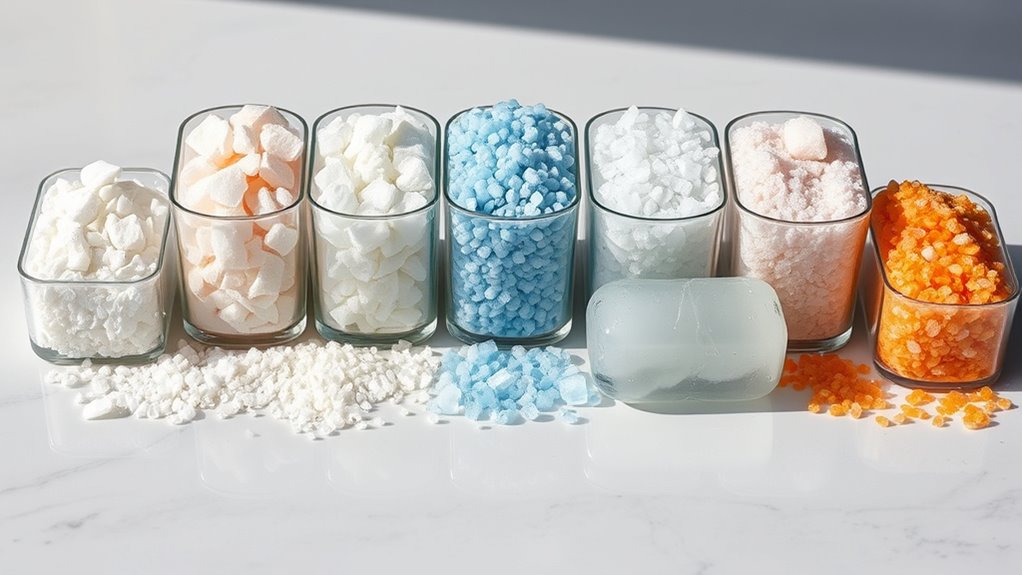
When choosing water softener salt, it’s important to understand the main types available, as each differs in composition and performance. The most common types are solar salt, which is produced through evaporation and comes in large crystals or blocks.
Evaporated salt is refined to a high purity and usually sold as pellets or crystals. Rock salt is mined directly from the earth and typically in large, coarse chunks.
Solar salt is cost-effective but may contain impurities. Evaporated salt offers the highest purity and dissolves easily. Rock salt is often the least expensive but dissolves more slowly and may leave residue.
Solar salt is affordable but may contain impurities; evaporated salt is purer and dissolves easily; rock salt is cheapest but dissolves slowly.
Knowing these differences helps you select the best salt based on your water softening needs and system compatibility.
Which Salt Formats Are Best for Water Softening? Pellets, Solar, or Rock?
When choosing a salt format for your water softener, think about how pellets compare to solar salt in terms of solubility and cost. Pellets tend to dissolve quickly and are easy to handle.
Solar salt is a popular choice because it’s affordable and works well for most systems. Rock salt is usually the cheapest option but might need more frequent refilling and maintenance.
Your choice affects not just how well the softener works but also how easy it is to handle and maintain over time.
Pellet Versus Solar Salt
Choosing the right salt format for your water softener can really affect how well it works and how long it lasts. Pellets and solar salt are common options, each with their own advantages and disadvantages.
Pellets are uniform in size, dissolve quickly, and help prevent bridging issues in the brine tank. They’re easy to handle and tend to be less messy.
Solar salt, made from evaporated sea water, comes in large crystals. It dissolves more slowly but is usually cheaper for big households.
Solar salt can leave more residue if not used properly, but it’s a natural choice if you prefer environmentally friendly options. Both types work well, so your decision depends on your softener’s design and what you prefer.
Think about ease of use, cost, and your water conditions when choosing between pellets and solar salt.
Rock Salt Effectiveness
Rock salt is often considered a cost-effective option for water softening, especially in large-scale or rural settings. Its effectiveness depends on proper usage and water conditions. When choosing rock salt, keep in mind:
- Purity: Lower-quality rock salt may contain impurities that can clog your system.
- Granule Size: Larger chunks last longer but may dissolve more slowly, affecting efficiency.
- Application: Regularly check and refill to prevent salt bridges or buildup, ensuring continuous softening.
While rock salt is affordable, its effectiveness can be limited if impurities or improper handling occur. It’s best suited for homes with high water demand or those on a tight budget. Proper maintenance and quality control are key to maximizing its softening ability.
Handling and Maintenance
Selecting the right salt format can make a big difference in how easy it is to handle and maintain your water softener. Pellets are popular because they dissolve quickly and create less dust, which makes refilling less messy.
Solar salt, usually in crystal form, is also easy to handle and costs less. However, it might need more frequent refills depending on your water usage.
Rock salt is affordable but tends to produce more dust and can clog the softener’s bottom distributor. This means you’ll need to clean it regularly.
To keep maintenance simple, pick a salt type that fits your softener’s design and your handling preferences. Always keep the salt level topped up to prevent channeling and salt bridging.
Regularly inspect and clean your softener as recommended to ensure it performs at its best.
What Are the Benefits of Using Salt Pellets?
Salt pellets offer several advantages for water softeners, making them a popular choice among users. First, they dissolve quickly and evenly, ensuring efficient regeneration without clogging the system.
Second, their dense shape minimizes dust and waste, reducing the need for frequent refills. Third, salt pellets tend to last longer because they contain fewer impurities, which helps maintain the softening process and protects your equipment.
Using pellets also means less fuss, as they are easy to handle and load into your softener. Overall, salt pellets improve system performance, reduce maintenance, and save you money in the long run.
Their consistent quality and ease of use make them a top option for keeping your water softener running smoothly.
Is Solar Salt a Cost-Effective and High-Purity Choice?
Is solar salt a cost-effective and high-purity option for your water softener? It’s generally affordable and provides high purity, making it a popular choice.
Solar salt is produced through natural evaporation, which results in fewer impurities compared to other salts. It’s ideal if you want a cleaner resin bed and better softening efficiency.
Here’s a quick comparison:
| Salt Type | Purity Level | Cost |
|---|---|---|
| Solar Salt | High | Moderate |
| Rock Salt | Lower | Cheapest |
| Evaporated Salt | Very High | Most Expensive |
While solar salt offers a good balance of cost and purity, keep in mind that it may need more frequent replenishment than evaporated salt. Overall, it’s a reliable, cost-effective choice for most households.
When Should You Use Rock Salt for Your Softener?
You should consider using rock salt when your water conditions are typical and your softener needs efficient salt melting.
It works well in situations where water hardness isn’t extreme, helping ensure your system regenerates properly.
Knowing these factors can help you decide if rock salt is the best choice for your softener.
Ideal Water Conditions
Knowing when to use rock salt depends on your water’s mineral content and the softener’s regeneration needs. If your water has high levels of calcium and magnesium, and the softener needs frequent regeneration, rock salt is ideal. You should consider using it when:
- Your water test shows hardness levels above 10 grains per gallon.
- You notice mineral buildup on fixtures or soap scum in the tub.
- The softener regenerates more often than every couple of days.
In these conditions, rock salt helps maintain efficient operation and reduces the risk of salt bridging. It’s best suited for areas with consistently hard water and when your softening system requires frequent regeneration cycles. Proper timing guarantees peak performance and longevity of your water softener.
Salt Melting Efficiency
When using a water softener with rock salt, salt melting efficiency is a key factor in keeping things running smoothly. If your system has trouble dissolving salt quickly, it can cause buildup and lower effectiveness.
Rock salt works best when the water temperature is above 40°F because colder water slows down the melting process. If your softener cycles often or leaves excess salt behind, it’s a sign that melting isn’t happening efficiently.
Use rock salt when you have high hardness levels and need a cost-effective, readily available solution. Regularly checking for salt bridges or crust buildup helps ensure optimal melting.
In these cases, rock salt can be a good choice, but only if your system conditions allow for proper melting.
How Do Packaged or Purified Salt Options Improve Efficiency?
Packaged or purified salt options can really boost your water softener’s efficiency by cutting down on impurities that cause clogs. They have fewer contaminants, which means less residue builds up on the resin beads. This helps your softener regenerate more effectively, saving you both time and money.
For example, fewer impurities prevent blockages, so the system runs smoothly. Consistent salt quality also means predictable regeneration cycles, keeping your soft water flow steady. Plus, reduced cleaning needs lower maintenance, helping your system stay at its best.
Choosing purified or packaged salt makes your water softener work better, last longer, and produce high-quality water with less hassle.
How to Pick the Right Salt Based on Your Water Quality and System Needs
Choosing the right salt for your water softener depends on your water quality and your system’s specific needs. First, test your water to identify mineral levels like calcium and magnesium.
If your water is very hard, you might need a high-purity salt to prevent buildup and keep your softener working efficiently. For water with iron or other impurities, pick a salt that minimizes staining or clogging.
Check your system’s manufacturer recommendations, as some softeners work best with certain types of salt. Think about your budget and how much maintenance you’re comfortable with—whether you prefer pellets, blocks, or crystals.
Frequently Asked Questions
Can Using the Wrong Salt Damage My Water Softener?
Yes, using the wrong salt can damage your water softener. Low-quality or incompatible salts can cause salt bridges, clogs, or scale buildup, which makes the system less efficient.
Over time, this can lead to corrosion or parts wearing out faster. To avoid this, always choose high-purity, recommended salt types and follow your manufacturer’s guidelines.
Regular maintenance and using the right salt will help your softener run smoothly and last longer.
How Often Should I Refill My Water Softener Salt?
In the blink of an eye, you should refill your water softener salt every 4 to 6 weeks, depending on your water usage and the hardness level.
Check the salt level regularly, at least once a month, and refill when it drops below the fill line.
This routine helps prevent salt bridges and keeps your system working smoothly, ensuring your water stays soft and your appliances stay happy.
Does Water Temperature Affect Salt Performance?
Yes, water temperature affects salt performance in your water softener. When water is too cold, the salt dissolves more slowly, which can reduce its effectiveness and cause uneven regeneration.
Warmer water temperatures, typically between 40-100°F, help salt dissolve faster and work more efficiently. If your water is consistently cold, consider adjusting your softener’s settings or using a different type of salt designed for low temperatures to maintain maximum performance.
Are There Eco-Friendly Salt Options Available?
Yes, eco-friendly salt options are available for your water softener. Look for solar or natural sea salts, which contain fewer harmful chemicals and have a lower environmental impact.
These salts often come in more biodegradable packaging and are processed with fewer additives. By choosing these options, you help reduce chemical runoff and conserve resources.
This makes your water softening process more sustainable and environmentally responsible.
What Are Signs My Softener Needs Maintenance or Salt Adjustment?
Signs your softener needs service or salt switch-up include suds shortages, spotty surfaces, or a sudden smell of sulfur. You might notice decreased soap suds, stubborn stains, or a slimy feeling on your skin.
When salt levels drop or resin beads become blocked, your system’s performance can really suffer. Regularly check salt levels, clean the brine tank, and listen for leaks or strange sounds to keep your water softener working wonders.
Conclusion
Choosing the best salt for your water softener doesn’t have to be a chore. By considering the types—pellets, solar, or rock—you can match your water’s needs with the right resource.
Remember, the right salt boosts system efficiency, extends equipment life, and guarantees pure, softened water. So, stay savvy, select smart, and enjoy the sparkling, sediment-free water that your system can deliver.
When it comes to the best salt for water softeners, picking the right one makes all the difference.