What Is Beef Loin Flap Meat Steak and How to Cook It
Cooking the perfect beef steak can be tricky, especially when you’re aiming for that ideal tenderness and flavor. Many people struggle with choosing the right cut and getting it just right on the grill or stovetop.
If you’re looking to elevate your steak game, beef loin flap meat might just become your new go-to.
Beef loin flap meat is a flavorful, tender cut from the bottom part of the sirloin, located near the hip. It’s perfect for quick, high-heat cooking methods like grilling, broiling, or pan-searing for about 3-4 minutes per side for medium-rare.
To get the best results, choose high-quality, fresh meat. Marinate it to boost flavor and tenderness, and let it rest before slicing against the grain.
Keep going to uncover more tips for perfect flap steak.
Key Takeaways
- Beef loin flap meat is a tender, flavorful cut from the bottom of the sirloin, perfect for quick cooking methods.
- When choosing your meat, look for bright red, firm pieces with minimal marbling. Try to avoid any discoloration to get the best quality.
- Marinate the meat with acidic ingredients like vinegar or citrus, along with flavor enhancers, for 30 minutes to 4 hours. This helps improve tenderness and boosts the flavor.
- Cook the meat using high-heat methods such as grilling, broiling, or pan-searing. Aim for about 3-4 minutes per side for a nice medium-rare finish.
- Once cooked, let the steak rest for a few minutes. Then, slice against the grain to serve. This step helps make the meat more tender and flavorful.
What Is Beef Loin Flap Meat and Where Does It Come From?
Beef loin flap meat is a flavorful, tender cut that comes from the bottom of the sirloin section. You’ll find it just beneath the top sirloin, near the hip area.
This muscle works a lot, which gives the meat its rich, beefy flavor and slightly fibrous texture. Its thin, flat shape makes it perfect for quick cooking methods like grilling or pan-searing.
The cut is often called flap steak because of its loose, flappy appearance when whole. Since it’s a lesser-known cut, it tends to be more affordable than premium steaks.
Despite that, it offers excellent taste and tenderness when cooked properly. Knowing where it comes from helps you appreciate its unique qualities and how best to prepare it for delicious results.
How to Choose High-Quality Flap Meat for Steaks
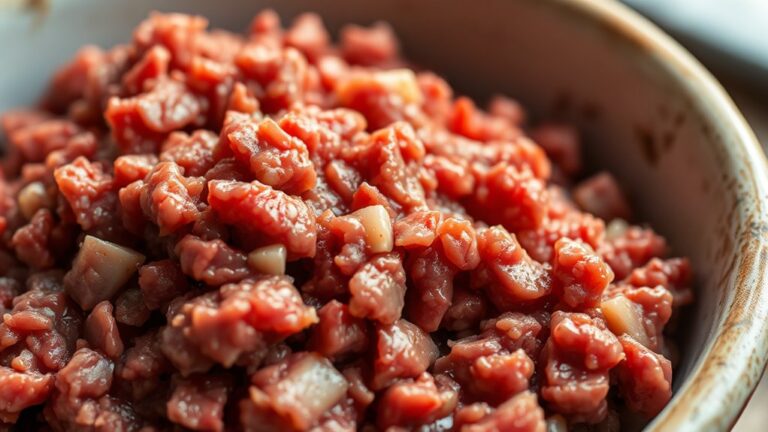
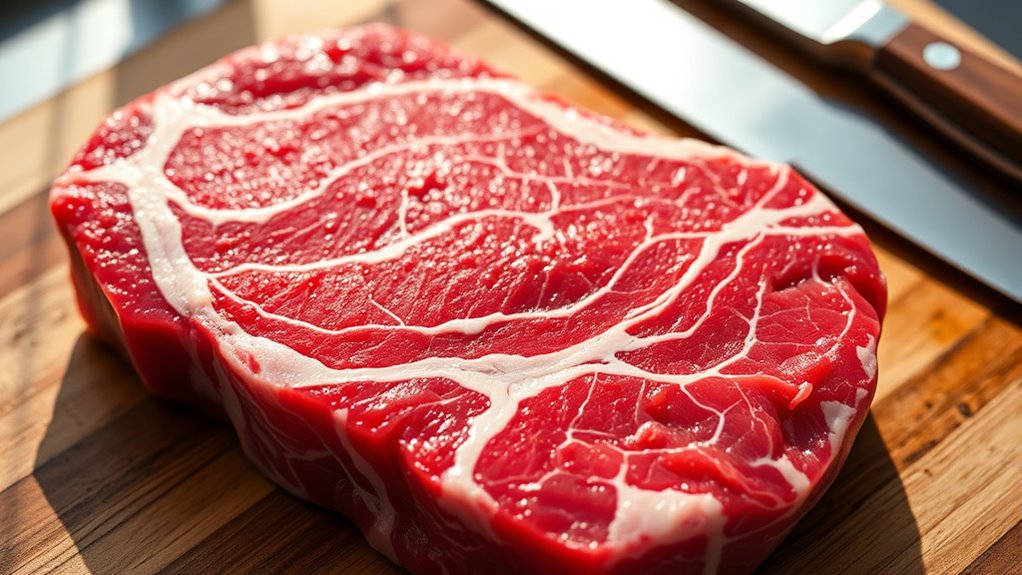
Choosing high-quality flap meat starts with inspecting the meat’s appearance and texture. Look for a vibrant, cherry-red color, which shows it’s fresh. The meat should feel firm but not too hard, with a slightly moist surface—avoid slimy or sticky textures.
Good flap meat has fine grain and visible muscle fibers without too much marbling. Steer clear of meat with dark spots, discoloration, or dried edges. These signs can mean it’s not fresh or not of good quality.
| Quality Indicator | What to Look For | Why It Matters |
|---|---|---|
| Color | Bright red | Freshness and quality |
| Texture | Firm and slightly moist | Tenderness and proper handling |
| Marbling | Thin streaks of fat | Flavor and juiciness |
| Grain | Fine and even | Consistent tenderness |
| Surface | No slime or dried edges | Freshness and safety |
Preparing and Marinating Your Flap Steak for Flavor and Tenderness
To get the best flavor and tenderness from flap steak, proper prep and marinating are key. Start by patting the meat dry with paper towels so the marinade sticks well.
For the marinade, use acidic ingredients like vinegar, citrus juice, or wine to help tenderize the meat. Add flavor boosters such as garlic, herbs, soy sauce, or Worcestershire sauce.
Marinate the steak for at least 30 minutes, but 2-4 hours is ideal to really boost flavor and tenderness. Just avoid over-marinating, since acids can break down the meat too much and make it mushy.
Once marinated, take the steak out and let the excess drip off before cooking. Proper preparation makes for a flavorful, juicy, and tender flap steak.
Best Cooking Methods for Beef Loin Flap Meat
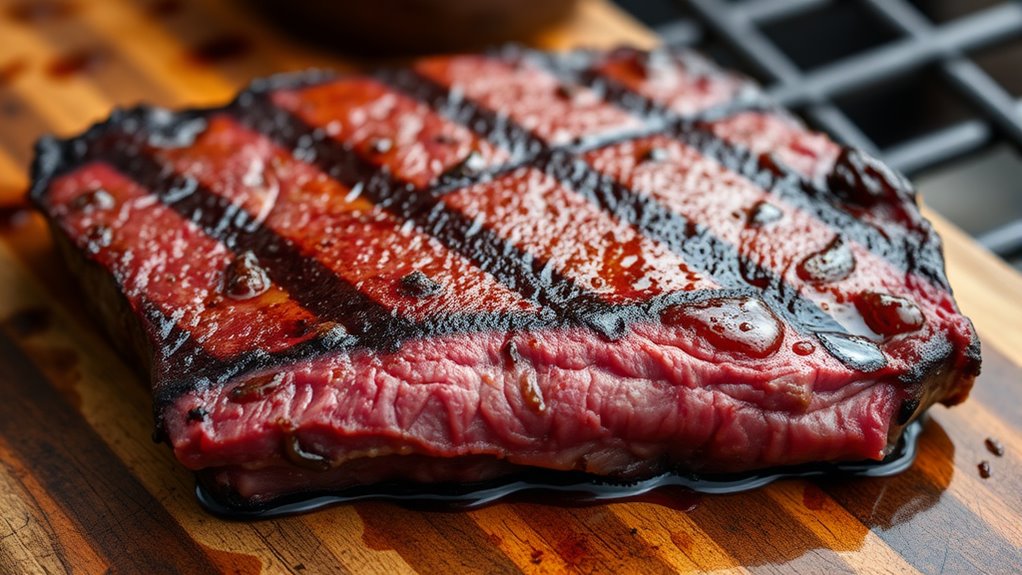
In the domain of cooking beef loin flap meat, high-heat methods like grilling and broiling are great choices to develop a flavorful crust while keeping the inside tender. Grilling creates a smoky char and enhances natural flavors, so preheat your grill and cook the steak for about 3-4 minutes per side for medium-rare.
Broiling offers similar results indoors. Place the meat close to the heat source and cook for a few minutes on each side. You can also pan-sear flap meat in a hot skillet, which gives a great sear.
Whichever method you pick, avoid overcooking. Flap meat is best enjoyed medium-rare to medium to keep it juicy and tender. Rest the meat briefly before slicing to help retain its juices.
Top Mistakes to Avoid When Cooking Flap Steak
Even with the best cooking methods, mistakes can easily turn a perfectly cooked flap steak into a disappointment. One common error is overcooking it, which makes the meat tough and chewy. Keep a close eye on the temperature—aim for medium-rare to medium for ideal tenderness.
Another mistake is not letting the steak rest after cooking. Skipping this step causes juices to escape, leading to dryness. Using high heat without proper preparation can burn the outside while leaving the inside undercooked.
Slicing the steak too soon or against the grain can ruin the texture. Avoid these pitfalls by monitoring your heat, timing your cook, and resting the meat properly. Doing so guarantees your flap steak stays tender, juicy, and flavorful.
Serving Tips for Perfect Flap Steak
Once you’ve cooked your flap steak to perfection, the way you serve it can really enhance its flavor and tenderness. Start by letting it rest for about 5 minutes; this helps the juices redistribute so each bite stays juicy and tender.
Slice the steak against the grain to make it more tender and easier to chew. For a nice presentation, arrange the slices neatly on a warm plate.
Pair it with simple sides like roasted vegetables or a fresh salad to balance the rich flavors. Serve immediately if hot to keep it juicy.
Finally, a light sprinkle of sea salt or a squeeze of fresh lemon can boost the flavor without overpowering the meat’s natural taste.
Frequently Asked Questions About Beef Loin Flap Meat Steak
You might wonder which cooking methods bring out the best in beef loin flap meat and how its flavor and texture compare to other cuts. Understanding these points can help you prepare it perfectly every time.
Let’s look at common questions about cooking techniques, taste, and texture to get the most out of this cut.
Best Cooking Methods
With regards to cooking beef loin flap meat steak, choosing the right method can really make a difference in how tender and flavorful it turns out.
To get the best results, consider these methods:
- Grilling – Cook quickly over high heat to lock in juices and add a smoky flavor.
- Pan-Searing – Use a hot skillet to create a tasty crust while keeping the inside tender.
- Broiling – Similar to grilling, it exposes the steak to direct high heat from above, perfect for fast cooking.
- Stir-Frying – Slice thin and cook rapidly in a hot wok for a juicy, tender bite, ideal for quick meals.
Pick a method based on your preferred flavor and texture, and always avoid overcooking to keep the meat tender.
Flavor and Texture
Choosing the right cooking method greatly influences the flavor and texture of beef loin flap meat steak. When cooked properly, this cut delivers a rich, beefy flavor with a slightly charred, smoky taste if grilled.
The meat’s texture is naturally tender but can become chewy if overcooked, so aim for medium-rare to medium doneness for the best results. Cook it too long, and it can toughen, losing its juiciness.
Marinating beforehand enhances the flavor, adding savory or spicy notes. Proper resting after cooking allows the juices to redistribute, ensuring each bite is moist and flavorful.
Frequently Asked Questions
What Is the Best Side Dish to Serve With Flap Steak?
The best side dish to serve with flap steak is a fresh, crisp salad or roasted vegetables. You could also go for garlic mashed potatoes or grilled corn to complement the rich, flavorful meat.
These sides add balance and texture to your meal, making the steak’s flavors stand out even more. Keep it simple and colorful, and you’ll end up with a well-rounded, satisfying dinner.
How Long Can I Store Raw Flap Meat Safely?
Think of raw flap meat as a delicate treasure that needs gentle handling. You can safely store it in your fridge for up to 1-2 days.
If you’re not planning to cook it within that time, wrap it tightly and freeze it. It can stay good for up to 3-4 months in the freezer.
Always check for signs of spoilage, like an off smell or slimy texture, before cooking.
Can Flap Steak Be Used for Grilling Kebabs?
Yes, you can definitely use flap steak for grilling kebabs. Its rich flavor and tender texture make it perfect for skewering.
Just cut the meat into even cubes, marinate it for extra flavor, and thread it onto skewers with your favorite vegetables. Grill over medium-high heat, turning frequently, until the meat reaches your desired doneness.
Enjoy your flavorful, juicy kebabs straight off the grill!
Is Flap Meat Suitable for Slow Cooking or Braising?
Think of flap meat as a flexible friend—perfect for quick grills or slow, tender dishes. You can absolutely braise or slow cook it; the low, moist heat breaks down its connective tissues, transforming it into melt-in-your-mouth goodness.
Just remember, this cut shines when cooked slowly, becoming tender and flavorful. So, if you want a rich, satisfying meal, give flap meat the patience it deserves through braising.
How Do I Tell if My Flap Steak Is Overcooked?
You can tell your flap steak is overcooked if it feels very firm and loses its natural pink or red color, turning gray or brown.
When sliced, the meat should be slightly pink inside. If it’s dry or tough, it’s a sign it’s overdone.
Use a meat thermometer to check—aim for 130-135°F for medium-rare.
Overcooking causes moisture loss, making the steak less tender and harder to chew.
Conclusion
Think of beef loin flap meat as a hidden gem waiting to be uncovered and appreciated. When you cook it right, it becomes a tender, flavorful steak—like a well-tuned orchestra.
With the right care and technique, your beef loin flap meat steak transforms into a true showcase of your culinary skills. It’s all about bringing out the best in this often-overlooked cut.
Welcome the journey from selection to serving. Let each bite remind you that great flavors often come from the most unexpected places, especially when you choose beef loin flap meat.