What Is the Best Salt: Top 10 Types Ranked
Many home cooks and food lovers often find themselves overwhelmed by the countless types of salt available. You’re not alone—choosing the right salt can feel confusing with so many options promising different benefits.
Finding the perfect salt for your dishes can truly elevate your cooking and flavor experience.
If you’re choosing the best salt, consider options like flaky sea salt for texture, kosher salt for seasoning control, Himalayan pink salt for mineral benefits, and smoked salt for smoky flavor.
Each type offers unique features, from health perks to appearance. Fine salts are great for baking, while coarse salts add crunch and bursts of flavor.
Investigating these varieties helps you enhance dishes—if you want to find out more about each, there’s plenty to learn below.
Key Takeaways
- The best salt really depends on what you’re using it for, how it tastes, and health considerations. Options like Himalayan pink salt and sea salt are often highly recommended.
- Different types of salt have unique textures and appearances. Some are flaky, others are coarse or fine, and this influences how you can use them in cooking.
- For cooking, flaky sea salt and kosher salt are popular choices because of their texture and how they help control flavor.
- Mineral content varies among salts. Natural salts usually have trace minerals that can offer health benefits, whereas refined table salt often lacks these trace elements.
- Remember, moderation is key. Enjoy the flavor benefits without overdoing it, especially since too much salt can lead to health issues like high blood pressure.
Understanding How Salt Affects Taste and Flavor in Cooking
Salt plays an essential role in shaping the overall flavor of your dishes, as it improves certain tastes while balancing others. When you add salt, it boosts sweetness, amplifies umami, and suppresses bitterness, making your food more vibrant.
Proper seasoning with salt brings out the natural flavors of ingredients, making them more pronounced and appealing. It also helps create a sense of depth, giving dishes a well-rounded taste.
However, too much salt can overpower delicate flavors and make food unpleasant. The key is to find the right amount, which varies depending on the dish and your preferences.
Health Benefits and Minerals in Different Salt Types
Different types of salt offer varying health benefits and mineral contents that can impact your well-being. For example, Himalayan pink salt contains trace minerals like magnesium, potassium, and calcium, which support hydration and muscle function.
Sea salt often retains small amounts of beneficial minerals from ocean water, helping maintain electrolyte balance. Celtic sea salt is known for its high magnesium content, promoting relaxation and muscle recovery.
Meanwhile, refined table salt typically lacks these minerals due to processing. While all salts provide sodium essential for nerve function, consuming mineral-rich salts can offer additional health perks, like improved hydration and mineral intake.
However, moderation is key since eating too much salt can lead to health issues like hypertension. Choosing mineral-rich salts can enrich your diet with extra nutrients while supporting overall health.
How Salt Texture and Appearance Influence Your Choice
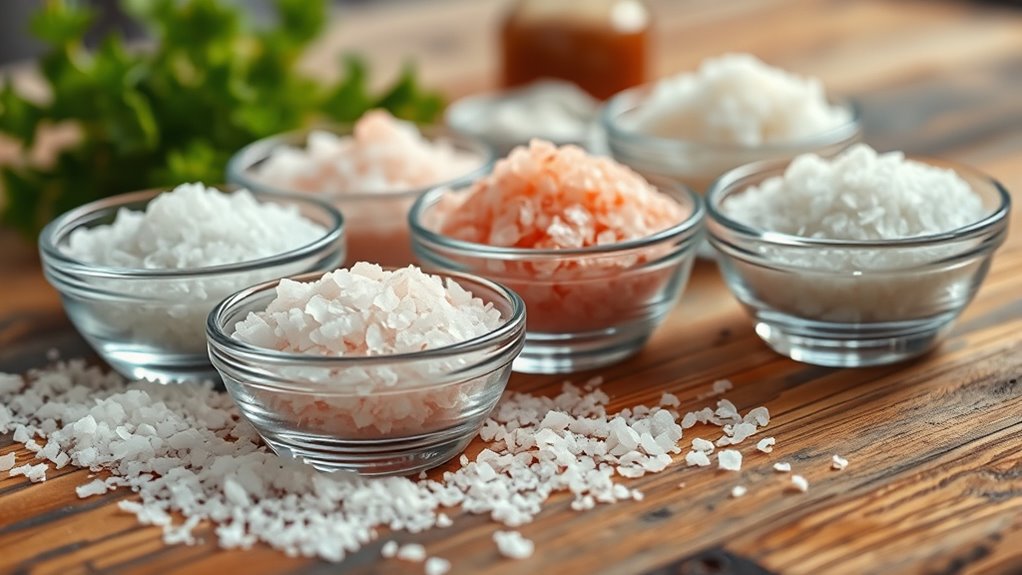
The way salt looks and feels can really influence your choice, often guiding you toward specific types for cooking or health reasons. Texture affects how salt dissolves and flavors your dishes; flaky salts add crunch and visual appeal, while fine salts blend seamlessly.
Appearance also matters—coarse salts have a rustic look, making them perfect for finishing dishes. Fine salts are versatile and great for everyday use. If you prefer a subtle texture, fine-grain salts are discreet and easy to measure.
On the other hand, textured salts like Himalayan pink or sea salt crystals stand out visually. They’re ideal for garnishing or presentation, adding a pop of color and interest.
Your choice depends on whether you care more about the tactile experience, visual impact, or ease of use. Picking the right salt ensures it complements both the look and feel of your culinary creations.
The Best Types of Salt for Cooking and Seasoning
When choosing salt for cooking and seasoning, think about the flavor profiles and how each type can enhance your dishes. Different salts bring unique tastes that can elevate your cooking.
Your choice of texture and grain size also matters. It affects how quickly the salt dissolves and how evenly it spreads, impacting both taste and presentation.
Plus, some salts offer nutritional benefits. These can influence your decision, especially for everyday use where health considerations come into play.
Flavor Profiles and Uses
Choosing the right salt can really elevate your dishes since each type has its own flavor and uses. For example, flaky sea salt adds a crunchy texture and a mild, briny flavor, making it perfect for finishing dishes.
Kosher salt offers a clean, pure taste and dissolves easily, so it’s great for seasoning meats and vegetables. Himalayan pink salt brings a subtle mineral note, perfect for enhancing both savory and sweet recipes.
Fine table salt is versatile and dissolves quickly, making it ideal for baking and everyday seasoning. Smoked salts add a smoky depth, which works wonderfully with grilled dishes and steaks.
- Flaky sea salt for finishing and texture
- Kosher salt for seasoning meats
- Himalayan pink salt for mineral flavor
- Fine table salt for baking and everyday use
- Smoked salt for added smoky aroma
Texture and Grain Size
Texture and grain size play an essential role in how salt interacts with your food, influencing both flavor and appearance. Coarse salts like sea salt or kosher salt dissolve slowly and add crunch, making them great for finishing dishes or seasoning meats before cooking.
Fine salts, such as table salt, dissolve quickly and provide even seasoning during cooking or baking. Flaky salts like Maldon have a light, delicate texture that adds a subtle crunch and visual appeal when sprinkled on dishes.
Smaller grains are better for uniform seasoning, while larger grains give you more control for finishing touches. Choosing the right grain size depends on your cooking style and the look you want, helping ensure balanced seasoning and an appealing presentation.
Nutritional Benefits
Salt isn’t just about flavor; it also offers various health benefits depending on its type. For example, natural salts like sea salt and Himalayan salt contain trace minerals that can support your health.
These minerals may help improve hydration, balance electrolytes, and promote proper nerve function. Some salts are lower in sodium, which can help reduce the risk of high blood pressure.
Unrefined salts retain more nutrients, offering added nutritional value. Conversely, processed table salt is often stripped of minerals but is usually iodized to prevent deficiencies.
Choosing the right salt can improve your diet while providing essential minerals. It’s a simple way to add extra nutrients without many calories.
Pros and Cons of Table Salt for Everyday Use
Table salt is a kitchen staple that offers quick and convenient seasoning, but it also has drawbacks you should consider for everyday use. Its fine texture dissolves easily, ensuring your dishes are flavorful in seconds.
However, consuming too much can lead to health issues like high blood pressure and heart problems. Since table salt is heavily processed, it often lacks the natural minerals found in less refined salts.
Furthermore, many brands include additives like anti-caking agents, which some prefer to avoid. While it’s affordable and widely available, relying solely on table salt might limit your intake of beneficial minerals and increase health risks.
Moderation is key, and balancing its convenience with awareness of health implications helps you make better choices in your daily cooking.
Why Choose Sea Salt for Natural Flavor and Essential Minerals
Choosing sea salt adds natural flavor to your dishes without artificial additives. It makes your meals taste better naturally.
It’s also packed with essential minerals your body needs, making it a healthier choice overall.
Plus, the natural harvesting process keeps its purity and fresh taste intact.
Rich in Essential Minerals
Sea salt is naturally rich in essential minerals like magnesium, potassium, and calcium, which aren’t present in refined salts. These minerals help support your overall health and keep your electrolytes balanced.
When you choose sea salt, you’re getting more than just flavor—you’re also supporting important bodily functions. Its mineral content can improve hydration, help with muscle function, and strengthen your bones.
Plus, these minerals add a natural, complex flavor to your dishes. Unlike processed salts, sea salt keeps these nutrients because it’s minimally refined.
Incorporating sea salt into your diet means naturally nourishing your body with beneficial trace elements. Whether for seasoning or finishing your meals, it offers a mineral-rich alternative that boosts both health and flavor.
- Supports hydration and electrolyte balance
- Promotes muscle function
- Strengthens bones
- Enriches natural flavor
- Provides beneficial trace minerals
Naturally Harvested Process
A key reason to prefer sea salt is its naturally harvested process, which preserves its authentic flavor and essential minerals.
Unlike refined salts that go through extensive processing, sea salt is simply collected through evaporation of seawater. It avoids artificial additives or bleaching, keeping things natural.
This minimal processing helps retain its natural nutrients like magnesium, calcium, and potassium, which are important for your health.
When you use sea salt, you’re getting a product that reflects its natural environment, offering a richer, more complex flavor.
Its harvesting method also supports sustainable practices, as it often involves eco-friendly techniques.
Choosing sea salt means opting for a product that stays true to nature, giving you a pure, mineral-rich seasoning straight from the ocean.
Enhances Food Flavor
Because of its natural composition, sea salt enhances food flavor more authentically than processed salts. It amplifies the natural taste of ingredients without overpowering them, giving a balanced, richer flavor.
The trace minerals in sea salt, like magnesium and potassium, subtly influence the taste, adding complexity and depth to your dishes. When you use sea salt, you’ll notice a fresher, more vibrant flavor compared to refined salts.
Its coarse texture allows for better seasoning control, giving your food a more nuanced finish. Plus, the natural minerals can help bring out the inherent flavors of vegetables, meats, and seafood.
Incorporate sea salt into your cooking for a taste that’s more authentic, lively, and satisfying. It adds subtle mineral notes that improve flavor complexity and provides a balanced, less bitter taste than refined salts.
Himalayan Pink Salt: Benefits and Unique Features
Himalayan pink salt stands out for its striking color and mineral-rich composition, making it a popular choice among health-conscious consumers. Its beautiful pink hue comes from trace minerals like magnesium, potassium, and calcium, which can support your body’s overall health.
Many believe these minerals help balance electrolytes and improve hydration. Unlike regular table salt, Himalayan pink salt is minimally processed, preserving its natural mineral content.
Many think these minerals support electrolyte balance and boost hydration naturally.
It’s often used in cooking, finishing dishes, or as a bath salt for relaxation. Its unique appearance also adds a decorative touch to salt shakers and platters.
While some claim health benefits, it’s primarily valued for its purity and aesthetic appeal. If you want a salt that combines flavor, beauty, and potential minerals, Himalayan pink salt could be a great choice.
Using Kosher Salt: Why It’s a Kitchen Favorite
Kosher salt is a favorite in the kitchen because of its coarse, flaky texture that spreads easily over food. Its large grains make it simple to measure by hand, giving you more control over the amount of salt.
Many cooks like it because it’s versatile and straightforward to use in all kinds of recipes. It’s a go-to for seasoning, thanks to its easy application and reliable results.
Ideal For Seasoning
Many home cooks prefer kosher salt for seasoning because of its coarse texture and clean, pure flavor. Its large grains make it easy to control seasoning, so you can taste as you go.
Kosher salt dissolves slowly, giving you more time to adjust flavors during cooking. It’s versatile enough for everything from meats to vegetables, and its mild saltiness enriches dishes without overpowering.
Its clean taste helps highlight the natural flavors of ingredients. You’ll find it especially useful for seasoning meats before cooking or finishing dishes with a pinch.
Its texture also makes it great for dry brining, ensuring even distribution. Overall, kosher salt’s balance of flavor, texture, and ease of use makes it a top choice for seasoning across many recipes.
- Easy to sprinkle evenly over foods
- Enriches flavor without overpowering
- Ideal for dry brining and marinating
- Adds texture for a pleasing bite
- Perfect for finishing dishes with a light sprinkle
Easy To Measure
Because of its large, coarse grains, kosher salt is especially easy to measure accurately. Unlike fine salts that can easily be over- or under-measured, the chunky crystals give you a clearer sense of volume.
When a recipe calls for a teaspoon of kosher salt, you can simply level it off. The size of each grain guarantees consistent results, making it simple to get the right amount every time.
This makes kosher salt ideal for cooks who want quick, reliable measurements without needing a scale. Plus, its texture prevents clumping, so you won’t accidentally scoop too much or too little.
Whether you’re seasoning meat or adjusting a dish, kosher salt’s structure helps you measure with confidence. Its user-friendly nature saves time and reduces guesswork.
That’s why it’s a kitchen favorite for both beginners and experienced chefs.
Fine vs. Coarse Salt: Which Works Best for Your Recipes?
When choosing between fine and coarse salt, think about how each one interacts with your recipes. Fine salt dissolves quickly and evenly, making it perfect for seasoning dishes during cooking or in sauces.
Coarse salt adds a nice crunch and burst of flavor, which is great for finishing salads or steaks. Use fine salt when you need precision and smooth textures, like in baking or dressings.
Opt for coarse salt when you want added texture or a more noticeable salt flavor. It’s also ideal for rubbing onto meats or creating a crust.
Gourmet Salt Varieties Worth Investing In
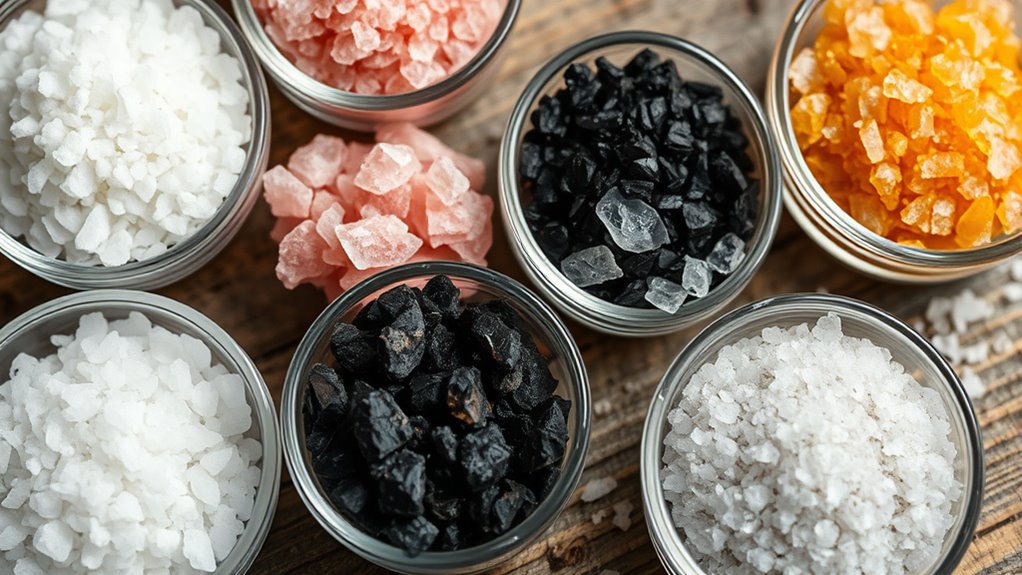
Investing in gourmet salts can elevate your cooking with unique flavors and textures that go beyond ordinary table salt. Himalayan pink salt has a mild, earthy taste and a striking color, making it perfect for finishing dishes.
Flake salts like Maldon offer a delicate crunch and subtle saltiness, ideal for salads or seafood. Fleur de Sel provides a clean, mineral-rich flavor and is often used as a finishing touch.
Sel gris has a moist texture and mineral complexity, making it great for seasoning meats and vegetables. Black Hawaiian salt adds a smoky, mineral note and is excellent for grilled dishes.
These varieties bring depth and sophistication to your meals, turning everyday cooking into a gourmet experience. Investing in them adds flavor, visual appeal, and culinary versatility.
Frequently Asked Questions
How Do Different Salts Impact the Final Dish’s Texture?
Different salts can really change the texture of your dish. Fine salts dissolve quickly, blending seamlessly for a smooth, uniform feel—great for seasoning during cooking.
Coarse salts add crunch and visual appeal when sprinkled on finished dishes or used as finishing salts. They give that satisfying texture and a bit of extra flair.
Flaky salts like fleur de sel offer a delicate crunch that enhances mouthfeel. Mineral-rich salts can also add subtle textural nuances to your dish.
Are There Environmental Concerns Associated With Harvesting Certain Salts?
Think of salt harvesting like gathering treasure from the Earth’s vault, but some methods can cause environmental harm. For example, sea salt production may disrupt marine ecosystems and deplete coastal resources if not managed responsibly.
Rock salt mining can lead to habitat destruction and water contamination. You should look for sustainably sourced salts, as responsible harvesting helps protect ecosystems while still enjoying your favorite seasonings.
Can Salt Type Influence Cooking Time or Temperature?
Yes, the type of salt you use can influence cooking time or temperature. Fine salts dissolve faster, which speeds up seasoning and cooking processes.
Coarser salts take longer to dissolve, so they might extend cooking times, especially in baking or simmering. For quick seasoning, go for fine salt.
But if you’re finishing a dish, coarser salts add texture and flavor. They give you more control over how the dish turns out.
Which Salt Types Are Best for Specific Dietary Restrictions?
Himalayan pink salt and sea salt are great choices for specific dietary needs. Himalayan pink salt has trace minerals that help with electrolyte balance, making it useful for low-sodium diets if used carefully.
Sea salt usually contains fewer additives and is preferred by those looking for natural options. Always consider your dietary restrictions and talk to a healthcare professional to pick the best salt for your health goals.
How Should I Store Different Types of Salt for Optimal Freshness?
You should store different types of salt in airtight containers in a cool, dry place. Keep them away from moisture, which can cause clumping or spoilage.
For finer salts like table salt, a sealed jar works well. Coarser salts, such as sea salt or Himalayan pink salt, benefit from larger containers to prevent contamination.
Regularly check for moisture or discoloration, and reseal tightly after each use to keep them fresh.
Conclusion
Choosing the best salt really depends on what you’re cooking and your health preferences. Think of salt like a trusty sidekick—each type has its own personality and purpose, boosting flavors just like a good friend lifts your spirits.
Whether you prefer the delicate crunch of sea salt or the mineral richness of Himalayan pink, your perfect match is out there. Investigate and try different types—after all, the right salt can turn a simple dish into a culinary masterpiece.
When it comes to top choices, understanding the differences can help you pick the best salt for your kitchen. From flaky sea salts to mineral-rich Himalayan pink, exploring these options will elevate your cooking.