How to Make Scrambled Eggs Without Milk in 7 Simple Steps
Many people love adding scrambled eggs to their breakfast, but achieving fluffy, creamy eggs without milk can be tricky. If you’ve struggled with dry or flat eggs, you’re not alone. Luckily, there are simple tricks to make perfect scrambled eggs without milk that are easy to master.
To make fluffy scrambled eggs without milk, start by cracking your eggs into a bowl and whisk vigorously for about 30 seconds to add air, adding a pinch of baking powder for extra fluffiness.
Use a preheated, lightly greased pan over medium-low heat and stir gently. You can improve creaminess with coconut or almond milk, herbs, or nutritional yeast.
For best results, focus on low heat and constant movement. Keep exploring for more tips and flavor ideas to perfect your dish.
Key Takeaways
- Whisk eggs vigorously for 30 seconds to incorporate air and achieve a light, fluffy texture.
- Use dairy-free liquids like coconut or almond milk to add moisture without dairy.
- Cook on low to medium-low heat, stirring gently for creamy, soft scrambled eggs.
- Incorporate herbs, salt, and pepper for flavor. You can also add optional ingredients like nutritional yeast or turmeric.
- Use a non-stick pan and a silicone spatula for easy stirring and to prevent sticking.
How to Make Fluffy Scrambled Eggs Without Milk
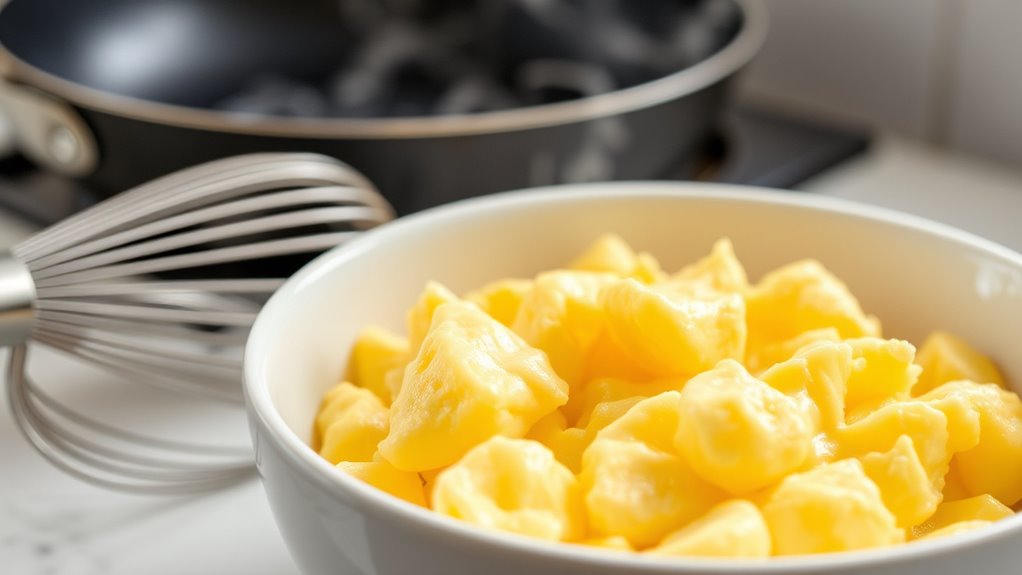
If you want fluffy scrambled eggs without milk, the trick is to add air into the eggs before cooking. Crack your eggs into a bowl and whisk vigorously.
Use a fork or a whisk to beat the eggs briskly for about 30 seconds to a minute. This introduces air, making the eggs light and fluffy. Just avoid overbeating, which can make the eggs tough.
Whisk eggs vigorously for 30 seconds to 1 minute to create fluffy, airy scrambled eggs.
For extra fluffiness, add a tiny pinch of baking powder while whisking. Once the eggs look frothy and well-blended, pour them into a preheated, lightly greased pan.
Cook on medium-low heat and gently stir. This helps keep the eggs soft and airy, ensuring fluffy scrambled eggs without any milk.
Essential Ingredients for Dairy-Free Scrambled Eggs
To make dairy-free scrambled eggs, you’ll need a few essential ingredients that replace traditional dairy products. First, choose high-quality eggs, as they’re the base of your dish.
To add moisture and richness, use a dairy-free alternative like coconut milk, almond milk, or cashew cream—just a splash or two will do. For flavor, consider adding a pinch of salt and pepper.
If you want extra flavor, herbs such as chives or parsley can improve the taste. You might also include a little nutritional yeast for a cheesy flavor or a dash of turmeric for color and health benefits.
These ingredients guarantee your scrambled eggs are creamy, flavorful, and dairy-free, giving you a satisfying meal without sacrificing texture or taste.
Tips for Whisking Eggs to Achieve Perfect Texture
To get the perfect scrambled eggs, you need to whisk them properly. Use a fork or a whisk to incorporate air bubbles and create a light, fluffy mixture.
Aim for a smooth, uniform blend to guarantee even cooking and a creamy texture.
Use a Whisk Properly
Using a whisk properly is essential for achieving fluffy, evenly textured scrambled eggs. Hold the handle firmly and use quick, circular motions to break up the yolks and mix the whites thoroughly. Keep the whisk at a slight angle to maximize contact with the eggs.
Focus on incorporating air as you whisk, but don’t overdo it. Here are some tips to help: use brisk, consistent movements to blend ingredients smoothly. Whisk in a figure-eight or circular pattern for even mixing.
Apply light pressure to avoid toughening the eggs. Incorporate air by whisking briskly but gently. Make sure all eggs are fully combined before cooking.
Mastering proper whisking techniques creates a silky, well-textured scramble every time.
Incorporate Air Bubbles
For airy, fluffy scrambled eggs, focus on incorporating plenty of tiny air bubbles while whisking. The goal is to beat air into the eggs, which creates a light, tender texture.
To do this effectively, whisk briskly in a rapid, circular motion. Lift your whisk slightly as you go to trap more air. Don’t just stir the eggs gently; instead, vigorously whisk until the mixture is slightly frothy and visibly bubbly.
This process introduces micro-bubbles that expand when cooked, giving your eggs their signature fluffiness. Be patient and consistent. Rushing or using a slow pace won’t trap enough air.
The more air you incorporate, the softer and more voluminous your scrambled eggs will be.
Achieve Uniform Mixture
Achieving a uniform mixture of eggs is key for consistent texture and flavor. To do this, whisk thoroughly until the yolks and whites are fully blended.
Use a fork or whisk and move in quick, circular motions. Break up the yolks completely for an even color. Scrape the sides of the bowl to incorporate all the liquid.
Whisk until the mixture is slightly frothy and uniform. Be careful not to over-whisk, as this can introduce too much air into the eggs.
Best Cooking Techniques for Creamy, Fluffy Eggs
To get your eggs creamy and fluffy, focus on gentle, low heat during cooking. High temperatures can make them rubbery, so keep the heat in check.
Constantly stirring or folding the eggs helps incorporate air and keeps their texture light. It’s all about gentle movement to prevent overcooking.
Using a non-stick pan and a silicone spatula makes a big difference. They ensure smooth, even cooking without breaking up the curds.
Achieving Perfect Creaminess
Creating perfectly creamy scrambled eggs depends on gentle heat and continuous stirring. Keep the heat low to prevent curdling and guarantee a smooth texture.
As you stir, focus on slow, deliberate movements to break up curds and mix them evenly. Using a spatula, scrape the bottom of the pan regularly to prevent sticking and promote uniform cooking.
Incorporate these techniques for ideal creaminess: maintain low, steady heat throughout cooking, stir constantly with gentle, sweeping motions, and avoid rushing the process—patience yields better texture.
Use a non-stick pan for easy movement and control. Remove eggs from heat slightly before they’re fully set, letting residual heat finish the process.
Following these tips ensures rich, velvety eggs every time.
Fluffiness Through Technique
Focusing on technique can turn your scrambled eggs from creamy to irresistibly fluffy. To do this, use a gentle, low heat and stir constantly. This helps prevent the eggs from becoming dense or rubbery.
Whisk your eggs thoroughly until the whites and yolks are fully combined, incorporating air into the mixture. Pour the eggs into a preheated, non-stick pan, then immediately start stirring with a silicone spatula.
Use slow, steady motions, scraping the bottom and sides of the pan. Don’t rush the process; patience ensures air stays trapped in the eggs, making them light.
Remove the eggs from heat just before they’re fully cooked. They’ll finish cooking off the heat and stay fluffy. Mastering these techniques guarantees soft, airy scrambled eggs every time.
How to Flavor and Moisturize Without Dairy
Even without dairy, you can keep your scrambled eggs flavorful and moist by adding ingredients that improve texture and taste. You can augment moisture and richness with simple alternatives.
For example, stir in a splash of vegetable broth or a dollop of dairy-free yogurt to create a creamy texture. Fresh herbs like chives or parsley add brightness, while a touch of nutritional yeast offers a cheesy flavor.
Avocado or olive oil can boost creaminess and mouthfeel, and even a bit of tahini adds depth. These ingredients work together to make your eggs flavorful, tender, and satisfying without relying on dairy.
Experiment with these options to find your perfect combination for moist, tasty scrambled eggs.
Common Mistakes When Making Dairy-Free Scrambled Eggs
One common mistake when making dairy-free scrambled eggs is overcooking them, which can make them dry and rubbery. To avoid this, cook the eggs on low to medium heat and take them off the stove a little before they’re fully set.
Overcooking causes moisture loss, making the eggs tough and less creamy. Using too high heat can also burn the eggs or cook them unevenly. Make sure to stir gently and often to prevent sticking or large curds.
Don’t forget to season properly. Adding salt and pepper at the right time boosts flavor without affecting the texture. Being mindful of these mistakes helps you get soft, fluffy, dairy-free scrambled eggs every time.
Serving Tips and Ways to Customize Your Scrambled Eggs
Once you’ve nailed making perfect dairy-free scrambled eggs, adding some extra flair can really elevate your breakfast. You can customize your eggs to match your taste and make them more eye-catching.
Try tossing in fresh herbs like chives or parsley for a splash of color and flavor. Topping your eggs with sliced avocado or cherry tomatoes can make the dish look vibrant and inviting.
Add fresh herbs and colorful toppings like avocado or cherry tomatoes for a vibrant, flavorful breakfast upgrade.
Sprinkle some nutritional yeast or paprika for a bit of extra seasoning. Serve your eggs with toasted bread, crispy bacon, or sautéed veggies for more variety.
Adding cooked spinach or mushrooms can give your eggs extra texture and richness. Using pretty plates and garnishing with herbs can make your breakfast feel even more special.
These simple tips can transform your basic eggs into a beautifully personalized meal.
Frequently Asked Questions
Can I Add Cheese to Dairy-Free Scrambled Eggs?
Yes, you can add cheese to dairy-free scrambled eggs. Just pick dairy-free cheese options like almond-based, soy-based, or coconut-based cheeses that melt well and add flavor.
Stir the cheese into the eggs just before they finish cooking so it melts evenly. This way, you get creamy, cheesy scrambled eggs without any dairy.
Just make sure the cheese you choose fits your taste and dietary needs.
How Long Does It Take to Cook Scrambled Eggs Without Milk?
It takes about 3 to 5 minutes to cook scrambled eggs without milk. You start by heating your pan, then pour in your beaten eggs.
Stir constantly, and you’ll see them gently curdling. The key is to keep moving the eggs so they cook evenly.
When they’re soft and slightly runny but no liquid remains, they’re ready. Timing can vary a little based on heat and your preferred texture.
What Are Alternative Liquids I Can Use Instead of Milk?
You can use water, broth, or plant-based alternatives like almond, soy, or oat milk instead of regular milk.
These options keep your eggs moist and flavorful without dairy. For extra richness, try a splash of yogurt or coconut milk.
Just remember, these substitutions won’t change the cooking process much. You can swap them in easily to suit your taste and dietary needs.
Can I Make Scrambled Eggs Ahead of Time?
Did you know that many people prep breakfast ahead of time? Yes, you can make scrambled eggs in advance!
Simply cook them fully, let them cool, then store in an airtight container in the fridge.
Reheat gently in the microwave or on the stove, stirring to restore texture.
Keep in mind, they may be slightly softer, but this method saves you time during busy mornings.
Are There Any Health Benefits to Making Dairy-Free Scrambled Eggs?
Yes, making dairy-free scrambled eggs offers health benefits. You avoid lactose if you’re lactose intolerant, which can reduce digestive discomfort.
Plus, skipping dairy can lower saturated fat intake, supporting heart health. Using plant-based ingredients often means fewer allergens and added preservatives.
Moreover, dairy-free eggs are suitable for vegans and those with dairy allergies. Overall, choosing dairy-free options can help with better digestion, fewer allergies, and a more balanced diet.
Conclusion
Now that you know the secrets to perfect dairy-free scrambled eggs, the real question is: are you ready to level up your breakfast game? With these simple steps, you’ll never settle for dull, flavorless eggs again.
Imagine that creamy, fluffy texture you can achieve—each bite more satisfying than the last. It’s easier than you think to make eggs that taste amazing without milk.
But wait, there’s one more trick that could change everything. Curious? Stay tuned—you’re just one step away from your new favorite breakfast, made without milk.