
Best Salt to Use – 7 Essential Types Compared
Cooking can be tricky, especially when it comes to choosing the right salt. Many people struggle with finding the perfect type to enhance their dishes without overpowering flavors. You’re not alone—navigating the world of salts can be confusing.
For the best results, choose your salt based on your cooking needs. Use fine sea salt or Himalayan pink salt for ease in recipes, and flaky salts like Maldon for finishing dishes for added texture.
Rock salt works well for brines, while specialty salts like black salt add unique flavors. Each type offers different mineral benefits and flavor profiles.
Keep exploring to uncover which salts suit your taste and cooking style perfectly.
Key Takeaways
- Choose fine-grain salts like sea salt or Himalayan pink salt for versatile cooking and easy dissolution.
- Use finishing salts such as flaky sea salt or Himalayan pink salt to add texture and enhance flavor.
- Consider mineral-rich salts like Himalayan pink or Celtic salt for potential health benefits and mineral intake.
- Match flavor profiles to your dishes: sea salt works well with seafood, black salt adds a savory touch, and fleur de sel is perfect for delicate finishing touches.
- Store your salts properly in a cool, dry place. This helps maintain their quality and prevents moisture or clumping.
Where Do Different Types of Salt Come From?
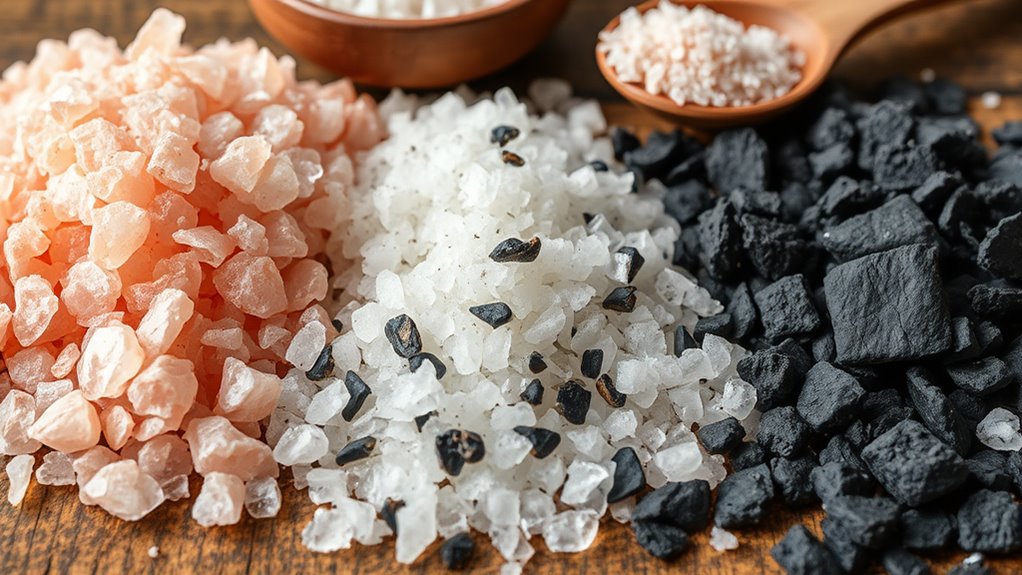
Salt comes from a variety of sources, each with its own unique process. Some salts are harvested from evaporated seawater, like sea salt, which you can collect by evaporating water in shallow pools.
Salt is harvested from seawater through evaporation in shallow pools, resulting in natural sea salt.
Others come from underground deposits, such as rock salt or halite. These are mined through traditional quarrying or solution mining.
Evaporated sea salt often retains minerals from the ocean, giving it distinct flavors. Mineral-rich salts like Himalayan pink salt are mined from ancient seabeds that dried up millions of years ago.
Depending on where and how it’s sourced, the salt’s mineral content, texture, and flavor can vary widely. Your choice depends on the flavor profile, texture, and culinary use you’re aiming for.
Understanding their origins is essential to making the right choice.
What Are the Flavors and Textures of Salt Varieties?
Different salt varieties offer a range of flavors, from mild and clean to bold and briny. They can really enhance your dishes in unique and interesting ways.
Their textures also vary, with grain sizes from fine to coarse. This affects how you season and finish your meals.
Understanding these differences helps you choose the perfect salt for every culinary purpose.
Flavor Profiles and Notes
Each variety of salt offers a unique combination of flavors and textures that can improve your dishes. Understanding their flavor profiles helps you pick the right salt for your culinary needs.
- Sea Salt: Has a mild, mineral-rich flavor with a clean, briny taste that improves seafood and salads.
- Himalayan Pink Salt: Slightly sweet and earthy with subtle mineral notes, adding depth to meats and roasted vegetables.
- Fleur de Sel: Features a delicate, floral aroma with a crisp, clean finish, making it perfect as a finishing salt.
- Black Salt (Kala Namak): Has a sulfurous, pungent aroma with a hint of smokiness, ideal for savory, spicy dishes.
These flavor notes help you tailor your salt choice to complement specific recipes.
Texture and Grain Size
The texture and grain size of salt can really influence how it interacts with your dishes, affecting both flavor release and mouthfeel. Fine-grain salts dissolve quickly, making them perfect for seasoning during cooking or for finishing dishes with a subtle saltiness.
Coarser salts, like sea salt flakes or Himalayan salt crystals, dissolve more slowly, giving bursts of flavor and a satisfying crunch. Small grains blend seamlessly, while larger grains add texture and visual interest.
If you want a more pronounced salt experience, go for coarser varieties. For even seasoning without disrupting textures, fine salts work best. Grain size impacts not just taste but also how you control saltiness, so think about your dish’s texture and presentation when choosing your salt.
Which Salt Is Best for Cooking? And Which Is Better for Finishing?
In terms of cooking, you want a salt that dissolves easily and enhances flavors without overpowering them.
For finishing, a salt with a distinctive crunch or burst of flavor can elevate your dish just before serving.
Choosing the right salt depends on whether you’re building layers of taste during cooking or adding a final touch for texture and visual appeal.
Best Salt for Cooking
Choosing the right salt for cooking can really boost your dishes’ flavor and texture. When picking salt, think about its mineral content, grain size, and how it dissolves during cooking.
The best options include:
- Kosher Salt – Its coarse grains make it easy to control seasoning, and it dissolves well in hot dishes.
- Sea Salt – Offers a clean, mineral-rich flavor perfect for seasoning during cooking.
- Table Salt – Fine grains dissolve quickly, making it ideal for baking and precise measurements.
- Himalayan Pink Salt – Contains trace minerals, adds subtle flavor, and works well in various cooking methods.
Choose based on your recipe needs, flavor preferences, and how easy it is to use. The right salt enhances your dish without overpowering it.
Optimal Finishing Salts
While different salts excel in cooking, finishing salts are designed to add a final touch of flavor and texture to your dishes. They’re usually coarser and more delicate, offering a burst of saltiness and crunch right before serving.
Fine salts dissolve quickly, but finishing salts stay intact, improving the dish’s presentation and mouthfeel. Popular options include flaky sea salts like Maldon, which add a light, crisp texture.
Himalayan pink salt offers a subtle mineral flavor and appealing color. Use finishing salts sparingly, sprinkling just before serving to elevate your dish without overpowering it.
The goal is to improve flavors and add visual appeal, making your dishes look as good as they taste.
How Do Mineral Content and Health Benefits Vary Among Salt Types?
Different types of salt contain varying levels of minerals that can impact your health in different ways. For example, some salts have trace minerals that may support your body’s functions, while others are more refined. Here’s how they differ:
Different salts offer varying mineral levels that can influence your health and flavor choices.
- Sea salt: Rich in magnesium and calcium, which may help with hydration and bone health.
- Himalayan pink salt: Contains over 80 minerals and may offer detoxifying benefits.
- Table salt: Mostly pure sodium chloride with minimal minerals. It’s mainly used for flavor and preservation.
- Celtic salt: Has a high mineral content, which can help maintain electrolyte balance.
Your choice affects not just flavor but also the mineral intake you get every day.
What Is the Cost and Availability of Different Salts?
The cost and availability of various salts can vary widely depending on their type and origin. Regular table salt is affordable and easy to find in almost any grocery store, making it the most accessible option.
Sea salts and Himalayan pink salt tend to be more expensive because of how they’re harvested and their limited sources. Gourmet salts, like fleur de sel or infused varieties, are often priced higher due to their artisanal production and special packaging.
Availability also depends on where you live. Coastal regions may have fresher, more abundant sea salts, while Himalayan salts are usually imported. While budget-friendly options are plentiful, premium salts typically come with a higher price tag and may require shopping at specialty stores or online.
How to Use and Pair Different Types of Salt in Your Cooking?
Wondering how to get the most flavor out of your salt? The secret is knowing when and how to pair different types with your dishes. Here are some simple tips:
Use flaky sea salt as a finishing touch on salads, steaks, or baked goods for a burst of texture and flavor.
Incorporate kosher salt during cooking to enhance the overall taste without overwhelming the dish.
Salt your ingredients early with regular table salt to let flavors develop more deeply.
Match delicate salts like Himalayan or fleur de sel with lighter dishes, and use robust salts like smoked or flavored salts to add depth.
Try these pairings to elevate your cooking and highlight the unique qualities of each salt type.
How to Store Salt for Maximum Freshness and Flavor?
To keep your salt fresh and flavorful, store it in an airtight container away from moisture and direct sunlight. Moisture can cause clumping or spoilage, so pick a container with a tight seal.
Keep it in a cool, dry place like a pantry or cupboard, away from heat sources like stoves or ovens. Avoid storing salt near strong-smelling spices or ingredients, as it can absorb odors.
Store salt in a cool, dry place away from heat and strong-smelling spices to maintain freshness.
If you’re using flavored or specialty salts, consider dividing them into smaller containers to preserve their unique flavors longer. Regularly check your salt for moisture or clumping, and toss out any that shows signs of spoilage.
Proper storage helps maintain the salt’s texture, flavor, and longevity. This way, it stays a versatile staple in your kitchen.
Frequently Asked Questions
Are There Any Health Risks Associated With Consuming Different Types of Salt?
Yes, consuming different types of salt can pose health risks. Too much salt, no matter the kind, can raise your blood pressure and increase your chances of heart disease and stroke.
Some salts, like processed table salt, may contain additives. Unrefined salts can have trace minerals, which might cause issues if eaten in large amounts.
Moderation is key. Choosing the right salt depends on your health needs and preferences.
How Do I Identify High-Quality, Pure Salt Varieties?
You can identify high-quality, pure salt by checking the ingredients list for minimal additives or anti-caking agents.
Look for salts labeled as “sea salt,” “Himalayan pink salt,” or “Celtic salt,” which often indicate natural sources.
Examine the texture and color—pure salts tend to be coarse, mineral-rich, and free from artificial colors.
Furthermore, opt for reputable brands that provide transparency about their sourcing and processing methods.
Can I Substitute One Type of Salt for Another in Recipes?
Yes, you can usually swap one type of salt for another in recipes. Just remember that different salts have different textures, flavors, and saltiness levels.
For example, if you’re replacing fine table salt with coarse sea salt, use less because coarse salts aren’t as densely packed. Adjust the amount to taste, and keep in mind that the mineral content can subtly change the flavor of your dish.
Which Salts Are Best for Specific Dietary Restrictions or Preferences?
Think of salts as tools in your culinary toolbox, each suited for different needs. For low-sodium diets, look for potassium-based salts or sea salts labeled “low sodium.”
If you’re sensitive to additives, choose pure sea salt or Himalayan salt. For flavor improvement, regular table salt works well.
Always read labels, and pick salts that match your health goals and taste preferences. This way, your cooking stays both safe and delicious.
Are There Environmentally Sustainable Options for Salt Production?
Yes, environmentally sustainable salt options are available. You can choose salts made using eco-friendly methods like solar evaporation or minimal industrial processing, which use less energy and create less pollution.
Look for brands that focus on sustainable harvesting practices. This includes sourcing from environmentally managed salt flats or salt lakes.
Choosing these options helps reduce your environmental impact, supports sustainable agriculture, and encourages healthier ecosystems.
Conclusion
Choosing the right salt improves your cooking in surprising ways. Whether you come across a rare sea salt or find a Himalayan variety, each adds its unique touch to your dishes.
Sometimes, it feels like the perfect pinch appears just when you need it most, almost like fate guiding your hand. Welcome these varieties, experiment, and enjoy the journey of elevating every meal. After all, the best salt might be waiting where you least expect it, especially when you’re exploring different types like sea salt or Himalayan salt.