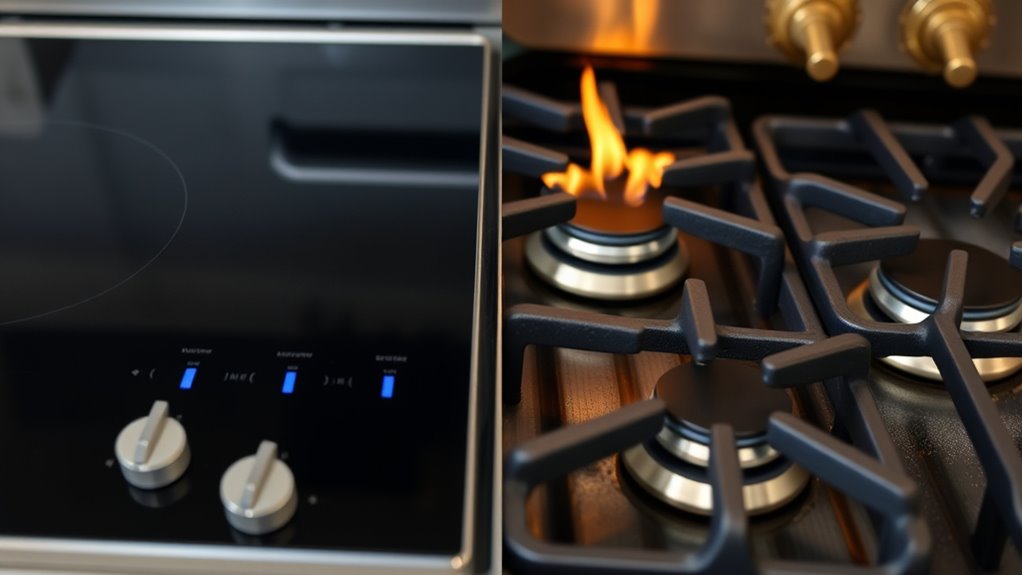
10 Key Differences Between Induction Ranges Vs Gas Stoves
Are you overwhelmed by the many options when choosing between induction ranges and gas stoves? You’re not alone—many people struggle with deciding which cooking surface best suits their needs.
Whether you’re after speed, safety, or cost, understanding the key differences can make your decision easier.
Induction ranges heat cookware directly using electromagnetic fields, offering faster, precise control. Gas stoves rely on open flames, providing visual cues but higher heat loss.
Induction is more energy-efficient and safer, as it turns off when cookware is removed and stays cooler on the surface.
Gas stoves typically cost less upfront but need more maintenance. They also differ in installation needs and cleanup.
To uncover more about these key differences, keep exploring further.
Key Takeaways
– Induction ranges heat cookware directly through electromagnetic fields. This means they can heat up quickly and give you precise control over the temperature.
Unlike gas stoves, which use open flames, induction cooktops don’t produce a visible flame. This makes them feel safer and more modern.
– Induction stoves are generally more energy-efficient and better for the environment. They waste less heat because they directly energize the cookware.
Gas stoves lose heat through the flames and can emit pollutants into your kitchen. This makes induction a cleaner choice overall.
– Safety features on induction cooktops include automatic shut-off and cooler surfaces. These features help prevent accidents and burns.
On the other hand, gas stoves can pose risks like fire hazards and potential gas leaks. It’s important to be cautious with these.
– Induction units need specific electrical outlets and don’t require much ventilation space. You’ll want to make sure your kitchen is set up for them.
Gas stoves require proper gas connections and good ventilation to handle the fumes and heat they produce. This can mean more installation work.
– When it comes to cleaning and maintenance, induction cooktops have the edge. They tend to be easier to clean because they don’t have grates or burners that trap grease.
Gas stoves can be more challenging to keep clean since grease and food can get trapped in the burners and grates. They often require disassembly for thorough cleaning.
Let me know if you’d like any further adjustments!
Induction vs. Gas Stoves: What’s the Difference?
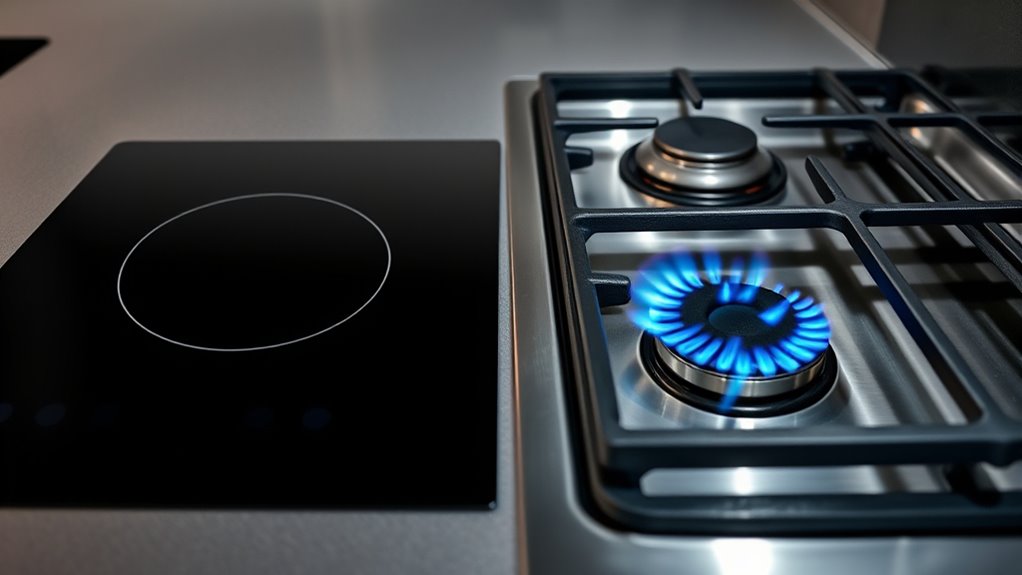
When choosing between induction and gas stoves, understanding their fundamental differences is key. Induction stoves use electromagnetic fields to heat cookware directly, making them very efficient and quick to respond.
Induction stoves heat cookware directly with electromagnetic fields, offering efficiency and rapid response for modern cooking.
They require pots and pans that are magnetic-compatible, and the surface stays relatively cool. This reduces the risk of burns and makes cleanup easier.
Gas stoves rely on open flames fueled by natural gas or propane. They heat cookware directly through combustion, giving you instant heat adjustments and visible flames.
Gas stoves work with most types of cookware and offer a traditional cooking experience. The main difference is how they heat—induction uses magnetic energy for rapid, precise control, while gas provides visual cues with flames and immediate heat changes.
Knowing these core differences can help you pick the stove that best fits your cooking style and needs.
How Do Performance and Temperature Control Compare?
Have you ever wondered which stove offers better performance and temperature control?
Induction ranges heat up quickly and respond instantly to your adjustments, giving you precise control over cooking temperatures. Gas stoves, on the other hand, provide visual feedback with their flames, making it easier to gauge heat levels at a glance.
Feel confident in your ability to simmer delicate sauces or sear steaks to perfection.
Experience rapid changes that keep your cooking smooth and responsive.
Enjoy consistent heat that prevents hot spots and uneven cooking.
Gain peace of mind knowing you can fine-tune temperatures with accuracy.
Both types excel, but your choice depends on whether you prioritize swift responsiveness or visual control.
Either way, your cooking becomes more enjoyable and reliable.
Energy Efficiency of Induction and Gas Cooktops
Induction cooktops are generally more energy-efficient than gas stoves because they directly transfer heat to cookware using electromagnetic fields. This method minimizes heat loss, so more energy goes into cooking your food rather than heating the surrounding air or stove surface.
Gas stoves, on the other hand, lose a significant amount of heat through the open flame and uneven heat distribution. As a result, induction ranges typically use less energy and heat up faster.
They also maintain consistent temperatures with less effort, which reduces overall energy consumption. If efficiency is a priority, induction cooktops offer a clear advantage by converting more electrical energy into heat directly in your cookware.
This makes them a smarter choice for conserving energy and reducing utility costs.
Safety Features and Risks of Induction and Gas Stoves
You should consider the fire hazards linked to both stove types. Gas stoves have open flames, which can be a safety concern, while induction stoves can heat unexpectedly, even without visible flames.
Child safety measures like knob locks or automatic shut-offs are common, but their presence can vary. Knowing these risks helps you pick a safer option for your household.
Fire Hazard Potential
While both induction and gas stoves have safety considerations, gas stoves generally pose a higher fire hazard risk because of open flames and exposed burners. The risk of accidental fires goes up if you leave the flame unattended or if combustible materials come into contact with the flame.
Gas leaks can also be dangerous, potentially leading to explosions or inhalation hazards. Be aware of these risks to stay safe.
An unattended flame can ignite nearby objects unexpectedly. Gas leaks might go unnoticed until it’s too late. Flammable materials near burners can catch fire quickly.
Open flames also increase the chance of accidental burns or fires. Knowing these dangers helps you stay vigilant and prioritize safety in your kitchen.
Child Safety Measures
Have you ever wondered how safe your stove is for children?
Induction stoves have a safety feature that turns off the heat when the pot is removed, which helps reduce burn risks. They also have smooth surfaces that stay cool, making accidental touches less harmful.
Gas stoves, on the other hand, pose risks like gas leaks or open flames. These can be dangerous if kids touch or tamper with them. To keep kids safe, always use child locks on induction controls and keep gas knobs covered or out of reach.
Never leave the stove unattended, especially when children are nearby. While induction stoves are generally safer, both types need active supervision. That way, you can prevent accidents and keep your child safe in the kitchen.
Installation Requirements for Induction and Gas Cooktops
When installing an induction or gas cooktop, you need to consider space and ventilation to ensure safety and efficiency. Adequate clearance around the unit is important for proper operation.
Induction units often require specific electrical outlets, so double-check your electrical setup before installation. Gas stoves need proper gas line connections to work safely and effectively.
Making sure these requirements are met will help your cooktop perform well and keep your kitchen safe to use.
Space and Ventilation Needs
Installing an induction cooktop usually takes up less space and needs simpler ventilation than gas stoves. You can often fit it into tighter kitchens without big modifications.
Gas stoves, however, require proper ventilation to handle fumes and heat. This might mean installing range hoods or vents. It can seem overwhelming but ensures safety and air quality.
With induction, you avoid bulky vent systems and heavy installations. Imagine a sleek, uncluttered countertop that’s easier to clean and maintain.
Feel confident knowing your kitchen stays safer with proper ventilation, whether you’re making a quick upgrade or doing a full remodel.
Enjoy a cleaner, more organized cooking space. Feel the freedom of a minimalist kitchen design.
You’re also reducing fire and gas risks. Plus, setup tends to be smoother and more efficient.
Electrical and Gas Connections
Electrical and gas connections are the foundation of a safe and functional cooktop setup. For induction ranges, you’ll need a dedicated 240-volt circuit with proper grounding to handle their high power demands.
Make sure your electrical system can support the required amperage, and consider professional installation for safety. Gas stoves, on the other hand, require a secure gas supply line, usually connected to your home’s natural gas or propane system.
You’ll also need a nearby electrical outlet for igniters and control panels. Both setups demand careful attention to local building codes and manufacturer instructions.
Proper connections prevent leaks, electrical hazards, and ensure the appliance operates efficiently. Consulting a licensed technician guarantees a safe, compliant installation tailored to your home’s specifications.
Cost of Buying and Maintaining Induction vs. Gas
The cost of buying and maintaining induction ranges versus gas stoves can greatly impact your budget over time. Induction cooktops often have a higher upfront price but can save you money with lower energy bills and fewer repairs.
Gas stoves typically cost less initially but may incur higher maintenance costs and gas expenses. You’ll need to evaluate the long-term financial implications before making a choice.
- Feel the relief of lower energy bills with induction’s efficiency
- Experience peace of mind with fewer repair worries
- Avoid unexpected expenses from gas line issues
- Enjoy the satisfaction of a smarter investment for your home
Cleaning and Maintenance: Induction vs. Gas
Cleaning and maintaining induction ranges usually takes less effort compared to gas stoves. Their smooth, flat surfaces make it easy to wipe away food spills with a damp cloth, so there’s no need for deep scrubbing.
Gas stoves have grates and burners that trap food and grease, making cleaning more involved. You’ll often need to disassemble parts, clean the burners, and remove stubborn grease buildup.
Regular maintenance for gas stoves means removing grates, cleaning burner heads, and checking for clogs. Induction ranges, on the other hand, require minimal upkeep thanks to their simple surface.
Here’s a quick comparison to help you decide:
| Aspect | Induction Range | Gas Stove |
|---|---|---|
| Surface | Flat, smooth | Grates and burners |
| Cleaning | Easy, quick wipe | Disassemble required |
| Spills | Wipe immediately | Clean trapped grease |
| Maintenance | Minimal | Regular deep cleaning |
| Durability | Long-lasting | Parts may need replacement |
Best Cooking Styles for Induction and Gas Stoves
While both induction and gas stoves excel in different cooking styles, your choice depends on your preferred techniques and habits. If you love precise temperature control and quick adjustments, induction stoves are perfect for delicate sauces or stir-fries.
They’re great for quick, consistent results and modern cooking methods. Gas stoves, on the other hand, shine with their instant flame responsiveness, making them ideal for high-heat searing, flambéing, or cooking with live flames.
You’ll feel more connected to your cooking with the visual flame, which is perfect for traditional techniques. Experience the thrill of precise, quick adjustments with induction.
Capture the authenticity of flames for classic cooking. Welcome the speed of rapid heating and cooling. Uncover the joy of mastering high-heat searing.
Environmental Impact of Induction and Gas for Home Kitchens
Choosing between induction and gas for your home kitchen also means thinking about their environmental impacts. Gas stoves burn fossil fuels, releasing carbon dioxide and other pollutants that contribute to climate change and air pollution. They also produce greenhouse gases directly during cooking.
Induction stoves, on the other hand, are more energy-efficient because they transfer heat directly to cookware, which reduces energy waste. When powered by renewable energy sources, induction stoves can significantly lower your carbon footprint.
However, their environmental benefits depend on how the electricity is generated. Gas stoves emit pollutants during operation, while induction stoves have a cleaner operation but require manufacturing processes involving electronic components.
Which Cooktop Fits Small or Limited Spaces?
When space is limited in your kitchen, selecting a compact cooktop becomes essential. You want something that fits seamlessly without sacrificing functionality. Induction cooktops are often sleek, with a smaller footprint and easy-to-clean surfaces, making them perfect for tight spaces. Gas stoves usually need more room for burners and ventilation.
Consider these options:
- Slim design that maximizes counter space
- Portable models for flexibility and easy storage
- Built-in units that integrate smoothly into your kitchen layout
- Energy-efficient features that save space and power
Choosing the right cooktop guarantees your kitchen stays functional and inviting, even in a small space. It’s about making smart decisions that improve your cooking experience without clutter.
Frequently Asked Questions
Can You Use Any Cookware on Induction and Gas Stoves?
You can’t use any cookware on induction and gas stoves. For induction, your cookware needs to be magnetic, like cast iron or stainless steel, to work properly.
Non-magnetic materials like aluminum or copper won’t heat unless they have a magnetic base, so check your cookware before using it. Gas stoves are more versatile and allow almost any cookware, including glass or aluminum.
Always verify if your cookware is compatible before cooking. This helps ensure safety and makes sure your food cooks efficiently.
How Do Induction and Gas Stoves Impact Indoor Air Quality?
Induction stoves generally improve indoor air quality because they don’t produce combustion byproducts like carbon monoxide or nitrogen dioxide, which gas stoves emit.
Gas stoves can release pollutants that may affect your health, especially in poorly ventilated spaces.
If you’re concerned about air quality, induction ranges are a cleaner option. Just make sure your kitchen is well-ventilated to keep air fresh and safe.
Are There Specific Cookware Materials Incompatible With Induction?
Yes, not all cookware works with induction stoves. You need magnetic materials like cast iron or stainless steel, which respond to induction’s electromagnetic field.
Aluminum, copper, and glass cookware won’t work unless they have a magnetic base. To check, see if a magnet sticks to your cookware. If it does, you’re good to go. Using incompatible cookware will prevent your induction stove from heating properly.
What Are the Typical Lifespan Differences Between Induction and Gas Stoves?
Induction stoves typically last around 10-15 years thanks to their fewer moving parts and modern technology. Gas stoves often last 15-20 years with proper maintenance because they have more durable mechanical components.
You might find that induction units require less upkeep and can have a longer lifespan if you take good care of them. But keep in mind, the actual lifespan really depends on how often you use them, their quality, and how well you maintain your appliance.
Do Induction Stoves Require Special Electrical Wiring or Outlets?
If you’re installing an induction stove, you’ll need a dedicated, high-voltage outlet, typically a 240-volt circuit, similar to what an electric dryer requires. For example, a homeowner in a recent case study had to upgrade their kitchen wiring to support the induction range’s electrical demands.
Unlike gas stoves, induction units won’t work with standard 120-volt outlets. So, planning for proper wiring is essential before installation.
Conclusion
Ultimately, choosing between induction ranges and gas stoves depends on your preferences and kitchen needs. Think about your cooking style, safety concerns, and available space as you make your decision.
Whether you prefer the fast, sleek performance of induction or the traditional, tactile feel of gas, your choice should match your lifestyle and kitchen setup.
By weighing these differences, you’ll find the perfect fit for your cooking habits. This way, you can enjoy your culinary adventures with more comfort and convenience in your kitchen.