Easily Perform a KitchenAid Serial Number Lookup
Many people struggle with finding the right information about their KitchenAid appliances. If you’re trying to figure out details like the model, manufacturing date, or warranty, you’re not alone. It can be confusing to locate and interpret the serial number.
To easily perform a KitchenAid serial number lookup, first locate the serial number on your appliance, typically inside the door frame, on the back, or near the control panel.
Then, note the format and use trusted online tools or the official KitchenAid website to enter the number.
Double-check for accuracy to confirm details like model, manufacturing date, and warranty status.
Keep your serial number safe, and if you’re curious, there’s more helpful guidance ahead.
Key Takeaways
- Locate the serial number on the appliance’s door frame, back panel, or inside the lid.
- Understand the format of the serial number to make sure you’re identifying it correctly.
- Use the official KitchenAid website or trusted tools to verify the serial number online.
- Double-check the serial number for accuracy before entering it into lookup tools.
- If the serial number is faded or hard to read, don’t hesitate to contact customer support for help.
Why Knowing Your KitchenAid Serial Number Matters
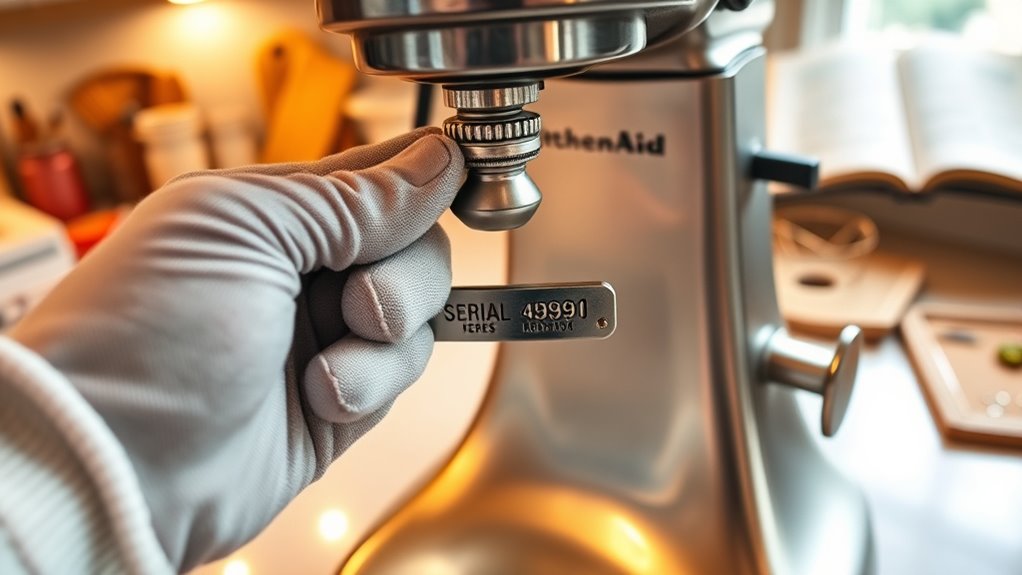
Knowing your KitchenAid serial number is important because it helps you identify the exact model and when it was made. This info is key when ordering parts, requesting repairs, or checking your warranty.
Without the serial number, finding compatible accessories or confirming if your appliance is part of a recall can be tough. It also helps verify if your product is authentic, protecting you from fake items.
Without the serial number, identifying accessories, recalls, or authenticity becomes much more difficult.
Having your serial number makes it easier to access user manuals and troubleshooting guides specific to your model. Overall, it ensures you get the right support and maintenance, saving you time and money later on.
It’s a simple step that gives you valuable insights into your KitchenAid appliance.
How to Find Your KitchenAid Serial Number
To find your KitchenAid serial number, start by checking the appliance label. It’s usually located on the back, bottom, or inside the door.
If you have the product manual, the serial number is often listed there as well. Once you find these sources, you’ll have the information you need to proceed.
Locating Appliance Label
Locating the appliance label on your KitchenAid is a simple step that helps you quickly find your serial number. The label is usually in specific, easy-to-access spots.
Check these common locations: inside the door frame or door edge, on the back panel or behind the kickplate, near the control panel or console, or inside the lid or lid hinge area.
Look carefully in these spots, as labels can vary by model. If you need to move or tilt the appliance, make sure it’s unplugged first.
Once you find the label, note the serial number clearly for your lookup process.
Checking Product Manual
Have you checked your kitchen appliance’s manual yet? Many KitchenAid models include the serial number details in the product manual, often in the specifications or troubleshooting sections.
If you still have the manual that came with your appliance, try locating the index or table of contents to find the relevant page quickly. Manuals can also be stored digitally—check KitchenAid’s official website or your email if you registered your product.
Look for sections labeled “Product Details,” “Specifications,” or “Troubleshooting,” where the serial number is usually listed. If you can’t find your manual, searching online for your specific model’s manual might help.
Understanding Your Serial Number Format
Understanding your KitchenAid serial number format can seem tricky at first. But once you get the hang of its structure, it’s much easier to find key details about your appliance.
Typically, the serial number includes coded info about the manufacturing date, location, and model.
Here’s what you should look for:
- Letters and numbers: These usually indicate the production plant and the year.
- Date codes: Often embedded inside the serial number, showing the manufacturing month and year.
- Model identifiers: These help confirm the specific version of your appliance.
- Sequence numbers: Unique numbers for each unit produced.
How to Read and Decode Your Serial Number
Once you have a general idea of your serial number’s format, the next step is to learn how to interpret its specific parts. Usually, a KitchenAid serial number has info about the manufacturing date, plant location, and production batch.
Look for patterns like letters and numbers that show the year and week of production. For example, some serial numbers include a letter or number code that indicates the year, followed by a sequence that shows the week.
The first few characters might tell you which factory or plant made the appliance. By understanding these key parts, you can figure out important details like how old your appliance is and where it was made.
Carefully examine each part of the serial number to decode the embedded information accurately.
How to Lookup Your KitchenAid Serial Number
To look up your KitchenAid serial number, start by finding the serial number plate on your appliance. It’s usually located on the back, bottom, or side.
Next, identify the format of the serial number to make sure you’re reading it correctly. Different models might have different styles.
Finally, use online lookup tools or manufacturer resources to find detailed info about your model. This makes it easier to get the help or parts you need.
Locate Serial Number Plate
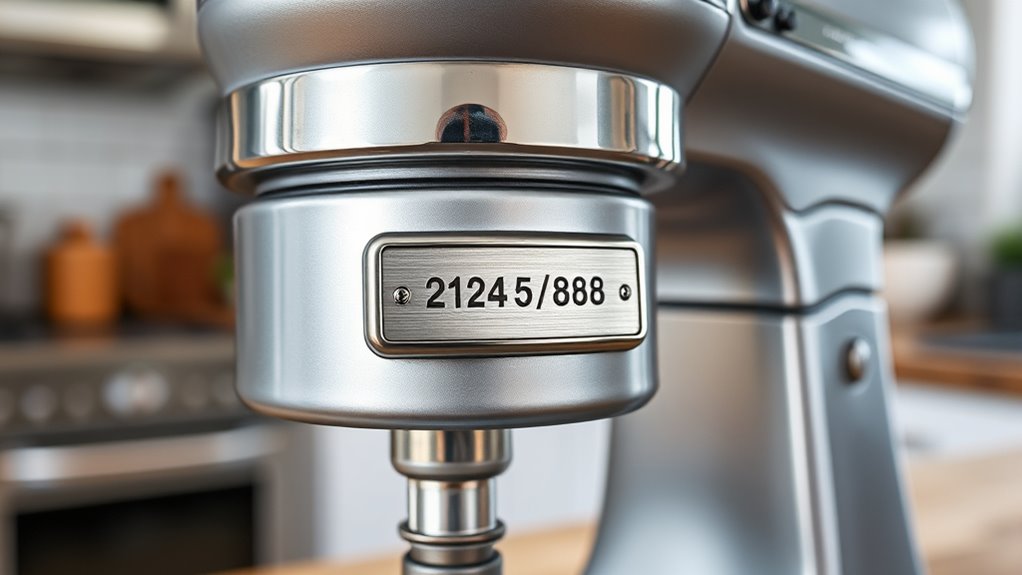
Locating the serial number plate on your KitchenAid appliance is pretty straightforward, but the exact spot depends on your model. Usually, you’ll find it in one of these common places:
- Inside the door frame or lid
- On the back panel
- Near the bottom edge or base
- Inside the access panel or behind removable parts
Check carefully around these areas because the plate is usually small and made of metal or plastic. Use a flashlight if needed to see clearly. Remember, each model might have a slightly different location, so take your time.
Once you find it, record the serial number accurately for quick reference during your lookup process.
Identify Serial Number Format
The serial number on your KitchenAid appliance usually follows a specific format that helps identify the model and manufacturing details. Most serial numbers include a mix of letters and numbers, typically around 10 to 12 characters long.
The first few characters often indicate the manufacturing date, like the year and week. For example, a serial number might start with a letter or a combination of letters and numbers that show the production batch.
Some models use a straightforward alphanumeric sequence, while others have a more complex pattern. Recognizing the format is important because it helps you quickly find key information about your appliance.
Keep in mind that serial number formats can vary depending on the product line and when it was made.
Use Online Lookup Tools
Using online lookup tools makes it quick and easy to find detailed information about your KitchenAid appliance once you have its serial number. These tools are user-friendly and save you time by providing instant access to model details, manufacturing date, and warranty status.
To get started, just enter your serial number into the search box on the official or trusted third-party websites. Make sure the serial number is accurate and complete to get the correct results.
Here are four tips to maximize your lookup success:
- Use official manufacturer websites for reliable info.
- Double-check your serial number before searching.
- Bookmark trusted lookup sites for future use.
- Keep your serial number handy for quick access.
Verify Your Serial Number Online
Ever wonder if your KitchenAid serial number is valid? Verifying it online is quick and straightforward.
First, find your serial number on the appliance — it’s usually on the back or bottom. Then, visit the official KitchenAid website or trusted third-party verification tools.
Locate your serial number on the back or bottom of your KitchenAid appliance before verifying online.
Enter your serial number into the search box, making sure you input it accurately. Some sites will automatically confirm if it’s genuine and give details about your model, manufacturing date, and warranty status.
If the system says your serial number isn’t valid, double-check for typos or errors. Keep in mind, verifying online is a convenient way to confirm authenticity and get information fast without contacting support directly.
Alternative Ways to Find Model and Manufacturing Details
If you can’t easily find your serial number, check the labels on your appliance for the model and manufacturing details. These labels often have the information you need.
You can also use online resources like manufacturer websites or appliance databases. They can help you quickly identify your appliance’s details.
These methods are reliable alternatives when a serial number lookup isn’t possible.
Checking Appliance Labels
Sometimes, the easiest way to find your appliance’s model and serial number is by checking its labels directly. Most KitchenAid appliances have labels in spots that are easy to access. These labels hold important info like the serial number, model number, and manufacturing date.
To find these labels, start by looking inside the door or lid of your appliance. You might also check the back or bottom panel for a sticker or metal plate. For larger appliances like mixers or refrigerators, inspect the sides or rear.
For smaller units, examine the control panel or areas near the power cord. These simple checks can save you time and help you get the info you need quickly.
Using Online Resources
Looking for your KitchenAid appliance’s model and serial number online can be a quick and convenient option if labels aren’t easy to access. Many manufacturers have online databases or resources where you can search for your model details.
Visit the official KitchenAid website and check their support or product registration sections. Some third-party sites also specialize in appliance data and may offer search tools by entering your appliance’s details or descriptions.
You can also find tips on locating model info in online forums, appliance repair sites, and social media groups. Just be sure to double-check the online info against your appliance’s physical labels to ensure accuracy.
Using these online resources can save you time and help you find the details you need quickly.
Troubleshooting Serial Number Issues
Have you ever run into a problem where your KitchenAid serial number isn’t clear or seems to be missing? It can be pretty frustrating, but there are some simple ways to troubleshoot.
Start by checking common spots like the back, bottom, or inside the door for faded or worn labels.
If you can’t see the serial number, try these tips:
Gently clean the area with a soft cloth to help reveal any faint engravings or labels.
Use a flashlight or a magnifying glass to spot small or hidden numbers.
Make sure the serial number matches typical KitchenAid patterns.
If you still can’t find or read the number, contact customer support. They can guide you on other ways to identify your appliance.
How Serial Number Info Helps With Repairs and Warranty
Having your KitchenAid serial number on hand is key when it comes to repairs and warranty service. It helps identify your specific model and production date, making sure you get the right parts and service.
When you contact customer support, sharing the serial number speeds things up. They can quickly verify if your product is still under warranty and access its history.
This info also helps technicians figure out the right troubleshooting steps and parts needed, which cuts down repair time. If you need to claim a warranty, the serial number confirms your product’s authenticity and coverage period.
Tips to Keep Your KitchenAid Serial Number Safe and Accessible
Keeping your KitchenAid serial number safe and easily accessible ensures you can quickly provide it when needed, whether for repairs, warranty claims, or support. To do this, store the serial number somewhere secure but easy to reach.
Consider writing it down and keeping it in a dedicated folder or notebook. Taking a clear photo of the serial number and saving it on your phone is also a good idea.
Using a digital note app can make quick access simple whenever you need it. You might also attach a label or sticker with the serial number directly on the appliance or its manual for added convenience.
Frequently Asked Questions
Can I Find My Serial Number on the Product Packaging?
Yes, you can find your KitchenAid’s serial number on the product packaging. Usually, it’s printed on a sticker or label, often near the barcode or product details.
Look for a sequence of letters and numbers. If you’ve already thrown away the packaging, check the appliance itself—usually on the bottom, back, or inside the lid.
This serial number is useful for warranty and support inquiries.
Does the Serial Number Indicate the Production Location?
Yes, your serial number often indicates the production location. Many manufacturers embed location codes within the serial number, so you can figure out where your KitchenAid was made.
You can usually find this information by checking the manufacturer’s serial number guide or reaching out to customer service. That small tag tells a story of time and place, helping you connect your appliance to its origin.
It offers insight into its journey from the factory to your kitchen.
How Often Do Serial Numbers Change for Kitchenaid Models?
Serial numbers for KitchenAid models typically change with each new product release or manufacturing batch. This can be monthly, quarterly, or yearly, depending on how often new models come out.
They’re unique identifiers that help track production details, so they’re updated regularly to reflect new models or updates. When you look up a serial number, it helps determine the manufacturing date and location.
This ensures you get accurate info about your appliance’s history without any hassle.
Are Serial Numbers the Same for Different Appliance Types?
No, serial numbers aren’t the same for different appliance types. Think of them as unique fingerprints, tailored to each product.
When you look at a KitchenAid appliance, its serial number is specific to that model and type. This makes it easy to identify and track.
This uniqueness helps ensure you get the right parts or service, much like finding the right key to open a particular door.
Can I Register My Appliance Without Knowing the Serial Number?
No, you typically can’t register your appliance without knowing the serial number. The serial number is essential because it uniquely identifies your specific unit, making sure everything is accurate.
Without it, the manufacturer might not be able to verify your appliance’s details or offer warranty services. To register smoothly, find your serial number—usually on the back, bottom, or inside the door—and enter it during the registration process.
Conclusion
Now that you know how to find and decode your KitchenAid serial number, imagine the possibilities it unlocks—faster repairs, easier warranty claims, and peace of mind.
But what if your serial number reveals something unexpected? Stay prepared and keep that number safe—you never know when it might come in handy.
Ready to access the full potential of your KitchenAid appliance? The next step could be closer than you think, especially with your serial number in hand.