Unclog Your Kitchen Sink With Garbage Disposal: a Step-By-Step Guide
Dealing with a clogged kitchen sink is one of those home problems that many people struggle with. It’s frustrating when your sink won’t drain, especially when you’re in the middle of cooking or cleaning up.
If you’re tired of calling the plumber or using harsh chemicals, your garbage disposal can often be a handy tool to clear the clog.
If your kitchen sink is clogged, using your garbage disposal can often clear it up. First, turn off and unplug the disposal for safety.
Check for visible blockages and manually rotate the blades if needed. Run cold water and turn on the disposal to see if the clog clears.
For stubborn issues, try ice cubes or citrus peels to clean and freshen.
If you’re keen to get your sink flowing smoothly again, learn more about effective unclogging techniques and maintenance tips.
Key Takeaways
- Turn off and unplug the garbage disposal before inspecting or removing blockages for safety.
- Check for visible debris near the drain opening. If needed, manually rotate the blades with a hex key.
- Use a plunger or drain snake to clear stubborn clogs if manual removal isn’t enough.
- Run cold water and turn on the disposal to see if the drainage improves.
- Regularly maintain the disposal with ice, citrus peels, and baking soda. This helps prevent future clogs.
How a Garbage Disposal Helps Unclog Your Kitchen Sink
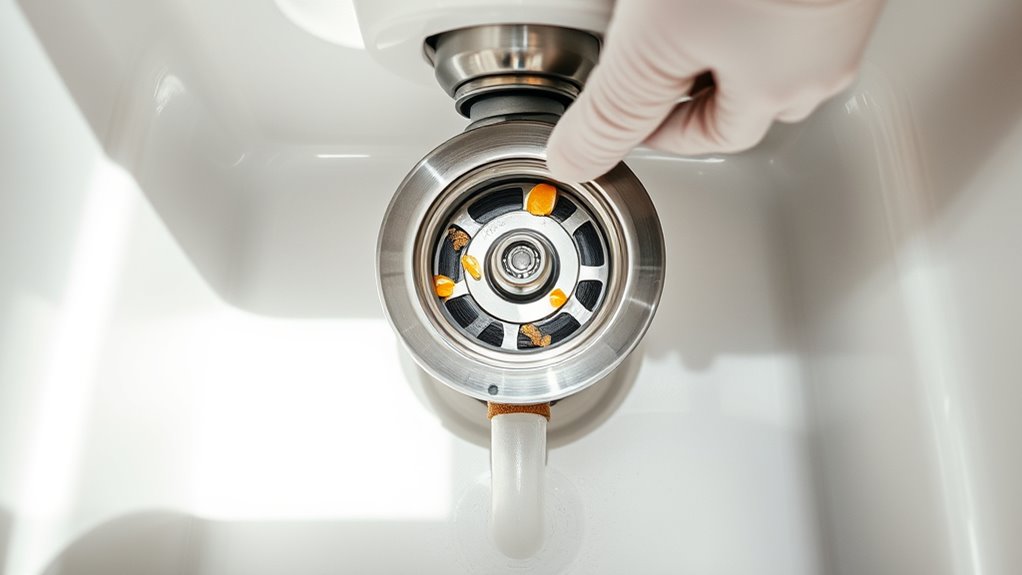
A garbage disposal can be a handy tool for preventing clogs in your kitchen sink. It works by breaking down food waste into small particles, making it easier for your plumbing system to carry it away.
When used properly, it reduces the amount of food debris that might otherwise build up in the pipes and cause blockages. Grinding food waste into fine bits prevents larger chunks from getting stuck and creating clogs.
Running the disposal regularly helps flush out any small buildup before it becomes a problem. This keeps your sink flowing smoothly and minimizes the risk of stubborn clogs forming over time.
Running your disposal regularly prevents buildup and keeps your sink flowing smoothly.
Using your disposal correctly is an effective way to keep your drain clear and avoid blockages, helping your kitchen run efficiently.
Signs Your Sink Is Clogged and When to Act
Ever notice water draining slowly or pooling in your sink? That’s a clear sign of a clog forming. You might also hear gurgling sounds or see water backing up when you run the disposal. These signs mean buildup is blocking the pipes, and delaying action can make things worse.
| Symptom | What it Means |
|---|---|
| Slow drainage | Partial clog or debris buildup |
| Water pooling | Complete blockage in the pipes |
| Gurgling sounds | Air trapped in the pipes |
| Unpleasant odors | Food debris rotting in the trap |
| Water backing up | Severe clog requiring immediate attention |
Act quickly when you notice these signs to avoid a bigger mess.
How to Prepare Your Kitchen Before Unclogging
Before you start unclogging your sink, it’s important to get your kitchen ready to avoid messes and keep things safe. Clear the area around the sink by removing dishes, utensils, and food debris.
Lay down old towels or newspapers to catch any water or debris that might spill during the process. Turn off the garbage disposal and disconnect the power if needed to prevent accidents.
Gather your tools, like gloves, a plunger, or a drain snake, and keep a bucket nearby to catch water or debris that comes up. Make sure to ventilate the area if you’re using chemical cleaners or dealing with strong odors.
Taking these simple steps helps keep your workspace organized, safe, and ready for an effective unclogging.
Step-by-Step: Unclogging Your Sink With a Garbage Disposal
To unclog your sink with a garbage disposal, start by turning off the disposal and unplugging it to ensure safety. Next, check for obvious blockages near the drain opening. Use tongs or pliers to remove any visible debris, avoiding your hands.
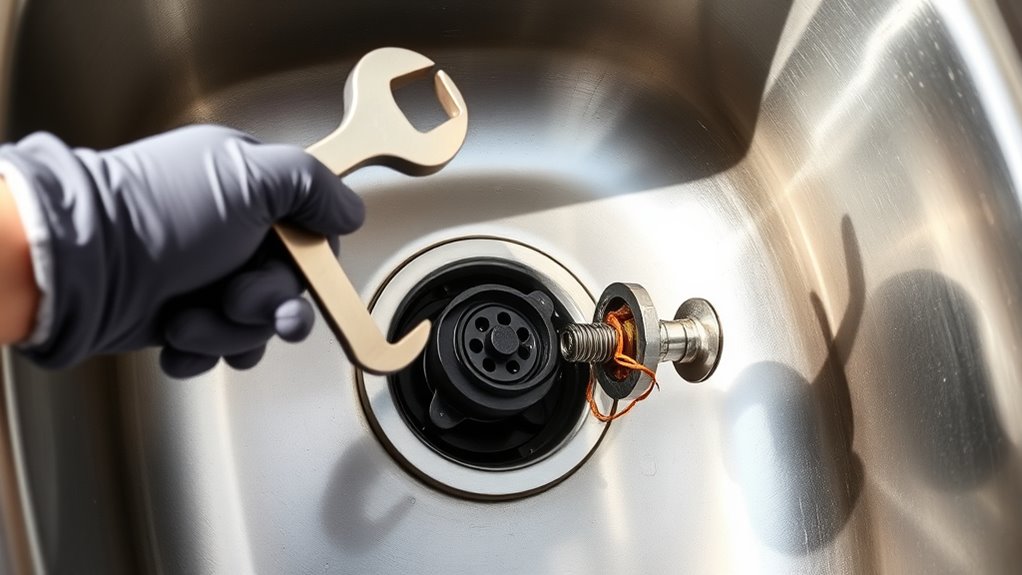
If the clog isn’t visible, try manually rotating the disposal blades with a hex key or an Allen wrench through the bottom access panel. This can help loosen the obstruction.
Run cold water into the sink, then turn the disposal back on briefly to see if the clog clears. If water drains smoothly, the clog is gone. Repeat the process if necessary, making sure the disposal is unplugged during any manual adjustments.
Always prioritize safety and proceed carefully to avoid injury.
What to Do If the Disposal Doesn’t Clear the Clog
If your garbage disposal doesn’t clear the clog after multiple tries, it’s time to look for other solutions. First, turn off and unplug the disposal to stay safe. Use a flashlight to peek inside and spot any visible obstructions.
You might need to remove debris manually with tongs or pliers—just never put your hand inside. Check the sink trap for blockages and clear out any debris you find. Next, reset the disposal by pressing the reset button on the bottom.
If the clog still won’t budge, try using a drain snake or auger to break up or pull out the blockage. Avoid pouring chemical drain cleaners, as they can damage your disposal. If nothing works, it’s best to call a professional plumber to take a look.
Tips to Prevent Future Sink Clogs With Your Disposal
To prevent future sink clogs, avoid putting hard or fibrous materials down the disposal.
Regularly run hot water and clean the disposal to keep it working smoothly.
Sticking to these simple habits can help you avoid frequent clogs and expensive repairs.
Proper Disposal Practices
Proper disposal practices are essential for keeping your kitchen sink clog-free and ensuring your garbage disposal works smoothly. To prevent future issues, follow these tips:
- Avoid disposing of fibrous or starchy foods like celery, potato peels, and pasta, which can cause clogs or jam the blades.
- Run cold water before, during, and after using the disposal to help flush debris and keep the unit working efficiently.
- Do not pour grease, oil, or fat down the drain because they solidify and stick to pipes, leading to blockages.
Regular Maintenance Tips
Regular maintenance is key to preventing future sink clogs and keeping your garbage disposal in top shape. First, run cold water before, during, and after use to solidify grease and carry debris away.
Avoid putting fibrous, starchy, or hard items like potato peels, celery, or bones down the drain. Regularly clean the disposal by grinding citrus peels or ice cubes to remove buildup and freshen it up.
Use a mixture of baking soda and vinegar monthly to break down grease and grime. Always turn off the disposal before cleaning or inspecting it.
Periodically check for leaks or strange noises and address issues early. These simple steps help keep your disposal running smoothly, reduce clogs, and extend its lifespan.
Common Mistakes to Avoid When Using Your Garbage Disposal
Many homeowners make the mistake of overloading their garbage disposal with large or tough food scraps, which can cause jams or damage the unit. To avoid this, don’t push your disposal beyond its capacity. Here are some common mistakes to watch out for:
Overloading your disposal with large or tough scraps can cause jams and damage. Use it wisely.
- Putting fibrous or starchy foods down the drain. Items like potato peels or celery can tangle or clog the disposal.
- Ignoring running water during use. Always keep water flowing to flush debris and prevent buildup.
- Grinding non-food items or hard materials. Avoid disposing of plastic, glass, or metal, as these can damage blades or the motor.
When to Call a Plumber for Sink Clogs
If your sink stays clogged despite your efforts, it’s time to call a plumber.
Severe odors or water backing up are clear signs that professional help is needed.
Don’t wait if these issues keep happening, as they could mean a bigger plumbing problem.
Persistent Blockages Indicating Professional Help
When a sink stays clogged despite trying to clear it multiple times, it’s a clear sign you should call in a professional. Persistent blockages often point to a deeper issue that DIY fixes can’t fix.
If you notice any of these signs, don’t hesitate to reach out to a plumber:
- The clog won’t go away after using a plunger or drain cleaner several times.
- Water drains very slowly or not at all, even after attempts to fix it.
- You hear gurgling sounds or see water backing up in other fixtures.
These signs usually mean there’s a more complex problem, like a blocked main drain or pipe damage. Forcing the clog can make things worse or damage your pipes.
Knowing when to call a professional can save you time and prevent further issues. It’s better to get expert help early rather than risk causing more damage.
Severe Odors and Water Backup
Persistent blockages often indicate underlying pipe problems, but they’re not the only signs something’s wrong. Severe odors and water backing up into your sink are clear warnings you need professional help.
If you notice a foul smell that won’t go away despite cleaning, it’s likely caused by trapped debris or a sewer line issue. Water backing up, especially when using the dishwasher or garbage disposal, suggests a serious clog deeper in the pipes.
Ignoring these signs can lead to more extensive damage or costly repairs. If DIY efforts don’t resolve the problem quickly, it’s time to call a plumber. They can identify the root cause, clear stubborn blockages, and prevent further plumbing issues in your kitchen.
Maintaining Your Garbage Disposal for Long-Term Performance
Regularly maintaining your garbage disposal helps it run smoothly and last longer. To keep it in top shape, follow these tips:
- Run cold water during and after use to wash away debris and solidify grease. This prevents buildup and keeps things flowing smoothly.
- Clean with ice and citrus—drop ice cubes and citrus peels into the disposal. It’s a great way to scrub the blades and get rid of odors.
- Avoid harsh chemicals. Instead, use a mix of baking soda and vinegar once a month to break down grime and refresh the unit.
Frequently Asked Questions
Can Certain Foods Damage My Garbage Disposal During Clog Removal?
Yes, certain foods can damage your garbage disposal during clog removal. Hard or fibrous foods like bones, shells, celery, or corn husks can jam or dull the blades.
Greasy or starchy foods, such as pasta or potato peels, can cause clogs or buildup. To protect your disposal, avoid putting these items down and stick to safer, biodegradable waste.
Regular maintenance also helps prevent damage and keeps your garbage disposal running smoothly.
How Often Should I Run My Garbage Disposal to Prevent Clogs?
Did you know that regular use can help prevent 80% of clogs? You should run your garbage disposal daily, especially after meals with food scraps.
Doing this keeps the blades moving and prevents buildup. Run cold water for about 15 seconds before and after use.
This routine helps break down waste efficiently and keeps your disposal and pipes clear, reducing the chances of clogs and backups.
Is It Safe to Use Chemical Drain Cleaners With a Garbage Disposal?
It’s generally not safe to use chemical drain cleaners with a garbage disposal. These chemicals can damage the disposal blades and piping, and sometimes cause harmful reactions.
Instead, try natural methods like baking soda and vinegar or use a plunger for minor clogs. Regular maintenance and cautious disposal habits help prevent clogs, keeping your sink clear and safe without risking damage from harsh chemicals.
What Tools Are Best for Manually Removing Stubborn Sink Clogs?
Ever feel frustrated when your sink won’t drain? To manually remove stubborn clogs, grab a plunger, a drain snake or auger, and a pair of rubber gloves.
A plunger creates pressure to loosen debris, while a drain snake reaches deep into the pipe to dislodge blockages. These tools are effective and safe for most clogs, helping you clear your sink without harsh chemicals.
How Can I Tell if My Disposal Motor Is Failing?
You can tell your disposal motor is failing if it makes unusual noises, struggles to turn, or doesn’t activate at all.
If you press the reset button and it still doesn’t run smoothly or you notice persistent burning smells, that’s a sign the motor might be failing.
Furthermore, if the unit trips the circuit breaker frequently, that indicates an electrical issue possibly related to a failing motor.
Conclusion
Now that you’re armed with this step-by-step guide, you can confidently tackle kitchen sink clogs. Think of your garbage disposal as a trusty sidekick, ready to save the day and keep your kitchen flowing smoothly.
With proper care and a little know-how, you’ll prevent future backups and keep your sink singing a happy, clog-free tune. Remember, a well-maintained garbage disposal is the secret to a kitchen that’s always in sync.