
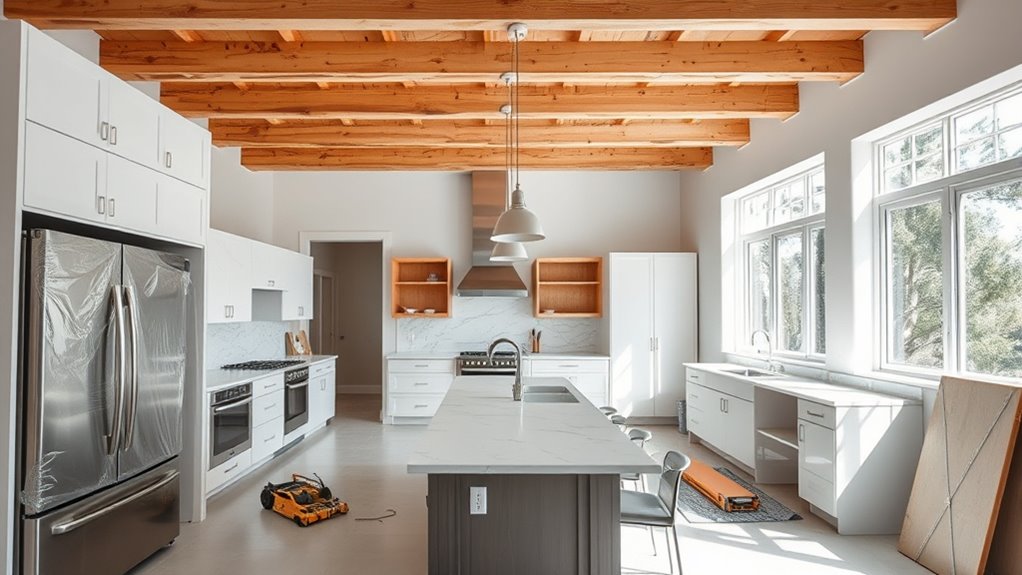
How Long Does a Kitchen Remodel Take?
Thinking about a kitchen remodel but feeling overwhelmed by how long it might take? You’re not alone—many people struggle with estimating project timelines and managing expectations. Knowing how long a kitchen remodel usually lasts can help you plan better and stay patient through the process.
A kitchen remodel usually takes between six to eight weeks, but the timeline varies based on the project’s complexity and scope. Simple updates can be done in four to six weeks, while more extensive or custom projects may take several months.
Delays from permits, materials, or contractor schedules can also affect your timeline.
If you want to know how to keep your remodel on track and handle unexpected setbacks, keep exploring the details below.
Key Takeaways
- Typical kitchen remodels last around 6 to 8 weeks, but it really depends on how big the project is.
- If you’re just making some simple updates, it might take about 4 to 6 weeks.
- For more extensive renovations, it can easily go over 10 weeks.
- Different stages like demolition, framing, electrical work, plumbing, and installation each have their own timelines.
- Keep in mind that permits and waiting for materials can cause delays, which might extend the overall timeline.
- Staying clear with your contractor and planning ahead can help keep things on track and set realistic expectations.
How Long Does a Kitchen Remodel Usually Take?

Have you ever wondered how long a typical kitchen remodel takes? On average, it lasts about 6 to 8 weeks. This includes planning, permits, demolition, installation, and finishing touches.
If you’re doing a simple update, like replacing cabinets and countertops, it might take closer to 4 to 6 weeks. More extensive remodels, with layout changes or custom features, can take 10 weeks or more.
Keep in mind, unexpected delays like material availability or contractor scheduling can affect the timeline. Overall, the duration depends on the scope, but most projects fit within this range.
Being prepared for these timeframes helps you plan better and ensures your kitchen renovation goes smoothly.
Key Factors That Affect Your Kitchen Renovation Timeline
Several factors can influence how long your kitchen renovation takes, shaping the overall timeline from start to finish. The scope of your project plays a big role—more extensive changes like knocking down walls or relocating appliances naturally take longer.
Your choice of materials and fixtures can also impact the timeline. Custom or high-end options often require extra lead time. The availability of permits and inspections can cause delays if not managed properly.
Furthermore, the skill and scheduling of your contractors matter. Experienced professionals tend to work efficiently, but unexpected issues like hidden water damage or electrical problems can extend the process. Finally, your responsiveness to questions and decision-making speed can keep things moving or cause hold-ups.
All these factors combine to determine how quickly your kitchen remodel progresses.
Getting Ready: Planning Your Kitchen Remodel Timeline
Before breaking ground on your kitchen remodel, it’s essential to lay a solid groundwork through careful planning. Start by setting clear goals—know what you want to achieve and prioritize your must-haves.
Create a detailed budget, including a contingency fund for unexpected expenses. Develop a realistic timeline by researching typical project durations and factoring in your contractor’s schedule.
Obtain necessary permits early to avoid delays. Choose your materials, fixtures, and appliances well in advance so you’re ready to order.
Communicate your plan with everyone involved to guarantee expectations align. Being organized and proactive helps prevent surprises and keeps your project on track.
Proper preparation guarantees you’re ready to move forward smoothly once construction begins.
Stages of a Kitchen Remodel and How Long They Take
A kitchen remodel usually happens in several stages, each with its own timeframe. First up is demolition, which takes about 1 to 3 days. This involves removing old cabinets, appliances, and flooring.
Next, the framing and structural work happen over 3 to 7 days, where walls or support structures might be changed. Then, electrical and plumbing rough-ins usually take 3 to 5 days, with wiring and pipes installed before the walls are closed up.
After that, you get to the installation of cabinets, countertops, and appliances, which can take anywhere from 7 to 14 days. Finally, finishing touches like painting, backsplash, and flooring wrap things up in 3 to 7 days.
Permits and Material Delays That Can Lengthen Your Remodel
Permits and material delays are common factors that can unexpectedly extend your kitchen remodel timeline. Securing permits from local authorities can take longer than expected, especially if your project needs multiple approvals or if regulations change.
Delays in obtaining permits often halt work until approval is granted, adding days or even weeks to your schedule. Material delays happen when suppliers face shortages or shipping issues, causing essential items like cabinets, countertops, or appliances to arrive later than planned.
Permit approval delays can add weeks, while material shortages may push back essential deliveries. Stay proactive to keep your remodel on track.
These setbacks can stall progress and force you to adjust timelines. To minimize delays, plan ahead by checking permit requirements early and ordering materials well in advance.
Staying flexible and keeping communication open with contractors and suppliers can help you adapt quickly if issues arise, keeping your remodel on track.
How Contractors and Diy Projects Impact Your Timeline
Choosing between hiring a contractor or taking on a DIY project can really impact your kitchen remodel timeline. Contractors have experience, efficiency, and a team that can work on different tasks at the same time. This often speeds things up, but it depends on their availability and how big the project is.
Doing it yourself gives you more control and can save you money. However, it might also take longer because of limited skills, scheduling conflicts, or unexpected problems that come up along the way.
Think about these factors:
- Scheduling conflicts with contractors or your own availability
- Your skill level and experience with specific tasks
- Access to the right tools and materials
- How quickly you can handle unexpected issues
- Coordinating multiple tasks at once
Your choice affects how smoothly and quickly your remodel goes. So, weigh these elements carefully before making a decision.
Proven Tips to Speed Up Your Kitchen Renovation
Speeding up your kitchen renovation is all about strategic planning and efficient execution. Start by creating a detailed timeline and sticking to it so everyone knows what needs to happen and when.
Hire experienced professionals who can work quickly without sacrificing quality. Clear communication with contractors and suppliers is key—delays often happen from miscommunication or waiting on materials.
Pre-order everything you need before the project begins to prevent hold-ups. Keep your project organized by setting up a designated space for tools and supplies.
Regularly check in on progress and address issues promptly. By staying proactive and focused, you can minimize downtime and keep your renovation moving forward smoothly.
With these proven tips, you’ll cut down on unnecessary delays and enjoy your upgraded kitchen sooner.
Managing Unexpected Delays and Staying on Track
Unexpected delays happen, but recognizing common issues like supply chain problems or permit holdups can help you prepare.
Flexibility with your timeline and plans lets you adapt quickly without losing momentum. Staying proactive and communicating with your contractor keeps you on track despite surprises.
Identifying Common Delays
While most kitchen remodels go smoothly, delays can still happen unexpectedly, often throwing off your schedule. Recognizing common delays helps you prepare and stay on track.
Material delivery problems are frequent and can cause project hold-ups. Unforeseen structural issues, like hidden water damage or mold, may extend timelines.
Permitting delays from local authorities might slow progress. Changes in design or scope mid-project can also cause setbacks.
Ultimately, contractor scheduling conflicts and labor shortages could impact the timeline. Being aware of these issues lets you communicate proactively with your team.
Planning for contingencies and adjusting your expectations accordingly is key. Staying vigilant about these delays helps keep your remodel on schedule and reduces frustration.
Strategies for Flexibility
Flexibility is key when delays pop up during a kitchen remodel. Expect the unexpected and plan for extra time in your schedule.
Keep open communication with your contractor and ask for regular updates. If delays happen, consider adjusting your timeline or prioritizing tasks to keep things moving.
Be willing to switch suppliers or materials if needed. Staying adaptable helps you handle surprises more smoothly.
A positive attitude makes problem-solving easier and reduces stress. Remember, setbacks are normal, so don’t get discouraged.
Focus on solutions and keep your end goal in mind. Flexibility will help your remodel stay as close to your original timeline as possible.
What’s the Typical Duration for Different Types of Kitchen Remodels?
The time needed for a kitchen remodel depends on how extensive the work is.
Minor renovations can often be finished in just a few days or a couple of weeks.
But if you’re doing a major overhaul, it might take several months.
If you’re planning a custom kitchen project, expect it to take even longer, depending on the design and materials you choose.
Minor Renovations Duration
Minor kitchen renovations usually take anywhere from a few days to a few weeks, depending on what you want to do. These upgrades are often cosmetic or small updates that don’t need major construction.
You might replace cabinet hardware, update backsplash tiles, or repaint walls. Since these tasks are less invasive, they tend to fit into a tight schedule.
Some common quick projects include replacing cabinet handles and knobs, painting walls or cabinets, installing a new backsplash, upgrading lighting fixtures, or replacing faucets or sinks.
These small projects can often be finished over a weekend or within a short workweek. They’re great if you want a fresh look without causing much disruption.
The exact timeline depends on how many tasks you’re doing and whether you hire professionals or tackle it yourself.
Major Overhauls Timeline
Major kitchen overhauls usually take longer than minor updates, involving a lot of planning, demolition, and rebuilding. Depending on what’s involved, a full remodel can last anywhere from 3 to 6 weeks or more.
Larger projects might require relocating plumbing or electrical systems, which can extend the timeline. Here’s a quick breakdown to help you get a sense of what to expect:
| Remodel Type | Typical Duration | Key Tasks |
|---|---|---|
| Complete gut and rebuild | 4-8 weeks | Demolition, framing, new cabinets |
| Structural changes | 6-10 weeks | Walls, supports, layout shifts |
| Appliance upgrade | 2-4 weeks | Removal and installation of appliances |
| Cosmetic overhaul | 2-3 weeks | Painting and finishing touches |
Knowing these timelines can help you plan better for your major kitchen renovation.
Custom Kitchen Projects
When undertaking custom kitchen projects, the timeline can vary a lot depending on how complex the work is. These projects usually involve tailored designs, unique materials, and special features, which can extend the timeline.
You might spend extra time choosing custom cabinetry, designing personalized layouts, or sourcing rare materials. Because of these details, custom projects often take longer than standard remodels but end up with a highly personalized space.
Consider these factors that influence how long the project takes:
- Designing unique features or layouts
- Sourcing specialty materials
- Fabricating custom cabinetry
- Coordinating multiple contractors
- Handling unforeseen delays or revisions
Frequently Asked Questions
Can I Live in My House During a Kitchen Remodel?
Yes, you can live in your house during a kitchen remodel, but it depends on how big the project is. Expect some inconvenience like dust, noise, and limited access to appliances.
You might need to set up a temporary kitchen somewhere else or change your routines to get by. Talk with your contractor to plan everything out, so safety isn’t compromised and disruptions are minimized.
With good planning, you can handle daily life while your kitchen gets a fresh new look.
How Do I Choose the Right Contractor for My Project?
You choose the right contractor by researching their experience, checking references, and reviewing their portfolio.
Make sure they’re licensed and insured, and ask for detailed bids so you can compare costs easily.
Trust your instincts during interviews—pick someone who communicates clearly and listens to your needs.
Confirm they understand your vision and timeline to ensure everyone’s on the same page.
A reliable contractor will provide a solid plan, transparent pricing, and quality workmanship, making your kitchen remodel go smoothly.
What Are Common Causes of Delays in Kitchen Renovations?
Delays in kitchen renovations often happen due to unforeseen issues like hidden water damage, electrical or plumbing problems, or material shortages.
Poor planning, late deliveries, or contractor scheduling conflicts can also cause setbacks. Weather conditions may slow outdoor work, and changes in project scope midway can lead to delays.
To avoid these problems, stay in clear communication with your contractor. Being flexible and planning for possible issues helps keep things on track.
Regular updates from your team are key to making sure your project stays on schedule.
How Much Should I Budget for a Kitchen Remodel?
You should budget between $15,000 and $30,000 for your kitchen remodel, but think of it as planting a garden—costs vary with your choices and size.
High-end upgrades or complex layouts can push expenses higher, while simpler updates keep it affordable.
Plan for unexpected hiccups that might turn your budget into a flexible vessel, ready to accommodate surprises and guarantee your dream kitchen blossoms beautifully.
Are There Quick-Fix Options for Updating My Kitchen?
Yes, you can go for quick-fix updates like painting cabinets, replacing hardware, or installing new backsplash tiles to refresh your kitchen.
These small changes are cost-effective and usually take just a weekend or a few days to finish. While they won’t completely transform your space, they give your kitchen a fresh, new look.
Focusing on simple, impactful updates is a great way to make noticeable improvements fast without the hassle of a full remodel.
Conclusion
A kitchen remodel is like a symphony—you’ll need patience and coordination to keep every note in harmony. While the timeline varies by project, understanding the stages and potential delays helps you stay on course.
With careful planning and a proactive mindset, you can turn a chaotic whirlwind into a smooth dance. Remember, every moment invested now will soon reveal a beautiful masterpiece—your dream kitchen, ready to serve up memories for years to come.
The length of a remodel depends on factors like the scope of work and contractor schedules. Typically, it can take anywhere from a few weeks to several months. Being flexible and prepared for unexpected delays keeps things on track.
Staying involved throughout each phase ensures you’re aware of progress and any issues that arise. With patience and proper planning, your kitchen remodel will be a success, and you’ll enjoy your new space for years to come.