Safe Ways to Dispose of Kitchen Knives
Getting rid of old or damaged kitchen knives can be a real challenge. Many people struggle with finding safe and responsible ways to dispose of them without risking injury or environmental harm. If you’re wondering how to do it properly, you’re not alone—safety is key when handling sharp blades.
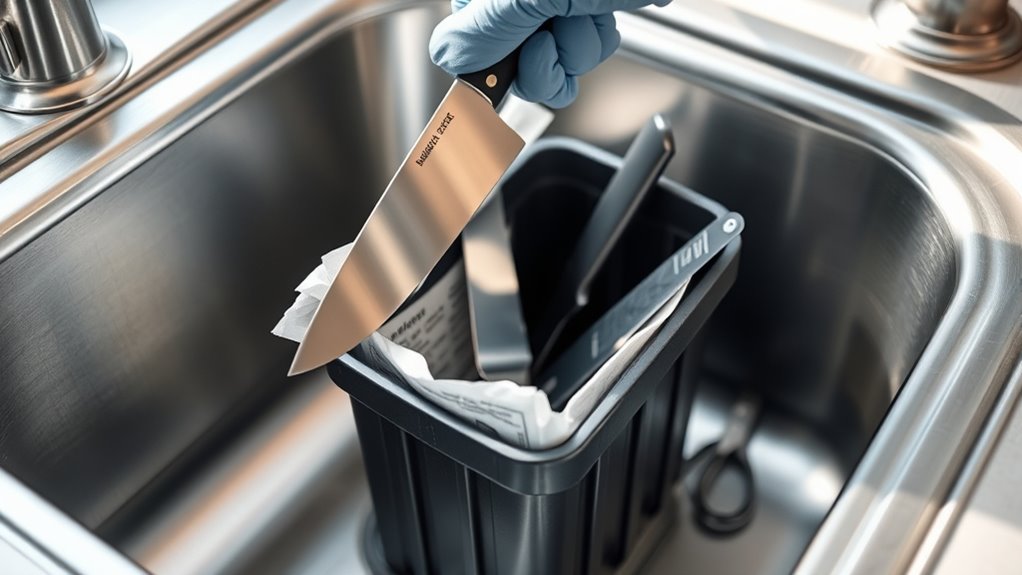
To safely dispose of kitchen knives, first wear cut-resistant gloves and carefully wrap the blade in thick material like newspaper or duct tape.
Place the wrapped knife in a sturdy, puncture-proof container labeled “Sharps Disposal” or “Hazardous Waste,” and seal it tightly.
Use tongs or pliers to handle the knife to avoid injuries. Many local recycling centers or specialized programs can help you dispose of or recycle old knives properly.
Keep your safety practices sharp—continue for more detailed tips.
Key Takeaways
- Wrap blades securely in thick material like newspaper or duct tape before disposal. This helps prevent injuries and keeps everyone safe.
- Use a sturdy, puncture-resistant container labeled “Sharps Disposal” to store knives safely until you can dispose of them properly.
- When handling knives, use tongs or gloves to avoid direct contact. It’s just safer that way.
- Make sure to follow your local regulations for recycling, donation, or special hazardous waste collection for knives.
- Educate yourself and follow community guidelines to ensure you’re disposing of knives responsibly. This helps prevent accidents and keeps everyone safe.
How to Safely Handle Old or Damaged Kitchen Knives
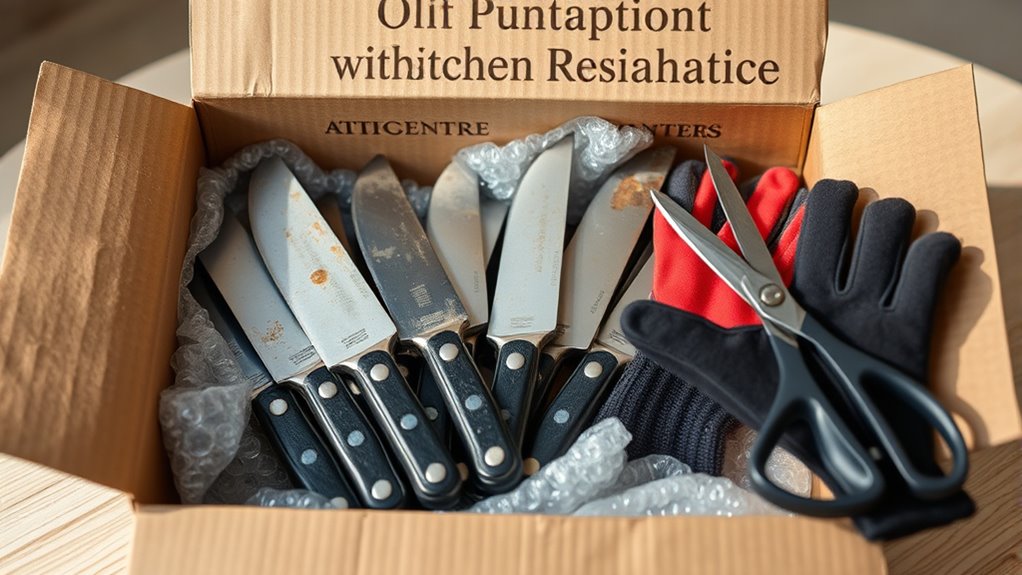
When dealing with old or damaged kitchen knives, it’s important to handle them carefully to avoid injury. If you have cut-resistant gloves, wear them for extra protection. Grip the blade firmly but gently to keep control.
Handle old knives with care, using gloves and a gentle grip to prevent injury.
Avoid rushing or using too much force, as this could make the knife slip and cause injury. If the handle is loose or damaged, stabilize the knife with a towel or a thick cloth for safety.
Check the blade for sharp or jagged edges, and be cautious around these spots. If the handle is broken or the blade is badly damaged, consider wrapping it securely with duct tape to reduce the risk of cuts while moving it.
Store the knife in a safe place away from children and pets until you can dispose of it properly. This helps prevent accidents and keeps everyone safe.
Immediate Ways to Dispose of Knives Safely
If you need to dispose of a knife immediately, take quick but careful steps to ensure safety. First, wrap the blade securely to prevent accidental cuts. Use thick cardboard, tape, or a sturdy cloth.
Next, put the wrapped knife in a rigid, puncture-resistant container like a metal can or a dedicated sharps container. Label it clearly as “Hazardous Waste” to alert others.
Here’s a quick reference:
| Step | Action |
|---|---|
| 1 | Wrap the blade securely with thick material |
| 2 | Place in a sturdy, puncture-resistant container |
| 3 | Label the container as hazardous waste |
Following these steps helps minimize risk during disposal and keeps everyone safe.
How to Make a DIY Knife Disposal Container at Home
Start by choosing a sturdy, puncture-proof container that’s easy to seal, like an old paint can or a thick plastic bottle.
Make sure to clearly label it as a sharps disposal to prevent accidents. When disposing of knives, always use safe procedures, such as wrapping blades securely before placing them inside.
Choosing a Suitable Container
Creating a DIY knife disposal container starts with picking a sturdy, puncture-resistant material that can safely hold sharp blades. You want something that won’t easily tear or let blades poke through, reducing risk.
Think about materials like thick plastic, metal cans, or heavy-duty cardboard lined with tape. The container should have a secure lid to prevent accidental spills. When choosing, consider durability, accessibility, and safety.
Use this table to help guide your choice:
| Material | Pros | Cons |
|---|---|---|
| Thick Plastic | Lightweight, cheap | Can crack over time |
| Metal Cans | Durable, puncture-resistant | Hard to modify |
| Reinforced Cardboard | Easy to craft, affordable | Less durable, wet damage |
Pick a container that balances safety, ease of use, and durability for peace of mind.
Safe Disposal Procedures
To guarantee safe disposal of your kitchen knives, you’ll need a sturdy container that can securely hold the blades without risking injury. Use a thick cardboard box or a plastic container with a tight-fitting lid. Reinforce the container’s sides with tape to prevent accidental punctures.
Cut a small slot in the lid or side to insert the blades carefully. Wrap the knives in thick newspaper, cardboard, or old towels to prevent them from piercing the container. Place the wrapped blades into your DIY container, making sure they’re fully enclosed.
Seal the lid tightly and label the container as “Sharp Objects” to alert others. Store it out of reach of children until you can dispose of it properly at a recycling or hazardous waste facility.
What Gloves and Tools Are Best for Safe Knife Disposal?
When disposing of knives safely, choosing the right gloves and tools is key to protecting yourself from cuts and injuries. First, wear cut-resistant gloves made from materials like Kevlar or rubber-coated fibers to shield your hands.
Always wear cut-resistant gloves to protect your hands when disposing of knives safely.
Second, use a sturdy, puncture-proof container or a dedicated knife disposal box to keep the blades secure. Third, grab a pair of tongs or pliers to handle the knives without direct contact, reducing the risk of cuts.
Fourth, wrap the blade in thick newspaper or duct tape before placing it in the container. This adds an extra layer of safety. Using these gloves and tools minimizes injury risk and keeps the disposal process safe and controlled.
Always prioritize safety when handling sharp knives.
Can You Recycle or Donate Old Kitchen Knives?
You might wonder if you can recycle or donate your old kitchen knives.
Recycling options are limited and require careful handling to ensure safety.
Donating depends on the condition of the knives and the policies of the recipient.
Knowing the best ways to responsibly dispose of your knives helps keep everyone safe.
Recycling Options for Knives
Recycling or donating old kitchen knives isn’t always straightforward, but it’s worth exploring to reduce waste and give your tools a second life. Most municipal recycling programs don’t accept knives due to safety concerns, but there are options.
Consider these recycling methods:
- Specialized Metal Recycling: Take blades to a scrap metal recycler that accepts stainless steel or other metals.
- Knife-Sharpening Services: Some services recycle blades or repurpose the metal.
- Community Tools Programs: Donate to organizations that refurbish or repurpose knives.
- Local Recycling Centers: Check if your local center accepts metal items and follow their guidelines.
Always handle knives carefully during disposal, and confirm specific recycling policies in your area to avoid hazards.
Donation Considerations
Deciding whether to recycle or donate old kitchen knives depends on their condition and local policies. If your knives are still sharp and functional, consider donating them to community kitchens, shelters, or culinary schools. Just make sure the blades are clean and safely packaged to avoid injury during handling.
Some organizations accept gently used knives, especially if they’re stainless steel or high-quality. But if the knives are heavily rusted, bent, or damaged, donation probably isn’t the best option. Always check with local charities or organizations first.
Keep in mind that some places have restrictions on donating sharp objects, so it’s a good idea to verify their policies. Donating responsibly helps others and reduces waste, but safety and condition are key in deciding if your knives are suitable for donation.
How to Properly Sharpen and Maintain Your Knives
Maintaining a sharp edge on your kitchen knives is key for safe and efficient cutting. To keep them in great shape, just follow these simple steps.
Use a sharpening stone or whetstone regularly to grind the blade at the right angle, usually around 20 degrees. This helps keep the edge sharp and effective.
Hone your knives with a honing rod after each use. It realigns the edge and prevents dullness, making your knives feel like new every time.
Make sure to clean and dry your knives thoroughly after sharpening. This helps prevent rust and corrosion, keeping your tools in top condition.
Store knives properly in a knife block or on a magnetic strip. It protects the edge and keeps everyone safe from accidental cuts.
What Are the Local Regulations for Disposing of Knives?
Before discarding your knives, it’s important to know the local regulations that govern their disposal. Many areas have specific rules to ensure safety and protect the environment.
Some municipalities require you to wrap blades securely in cardboard or heavy-duty tape before throwing them away. Others may have designated drop-off points or special collection days for knives and sharp tools.
Check with your local waste management authority or city website for detailed instructions. Some regions prohibit disposing of knives in regular trash to prevent injuries to sanitation workers.
Always follow these rules carefully to avoid fines or safety hazards. Staying informed and compliant helps keep everyone safe and ensures responsible disposal of your kitchen knives.
Tips to Prevent Injuries When Disposing of Knives
To prevent injuries when disposing of knives, always handle them carefully and use proper techniques. First, grip the knife by the handle, avoiding contact with the blade.
Handle knives carefully, gripping by the handle and avoiding contact with the blade.
Second, don’t rush—take your time to maintain control. Third, wrap the blade securely in thick cardboard or bubble wrap to prevent accidental cuts.
Next, place the wrapped knife in a sturdy container or a designated sharps container, and make sure it’s clearly labeled.
Always keep the blade covered until disposal. Never toss knives loosely into trash bins, as they can injure sanitation workers or anyone handling the waste.
Frequently Asked Questions
Are There Eco-Friendly Options for Disposing of Kitchen Knives?
Yes, there are eco-friendly ways to dispose of kitchen knives. You can take the blades to local recycling centers that accept metal for recycling.
Another option is repurposing old knives for gardening tools or art projects if they’re still safe to handle. Just make sure to wrap the blades in thick cardboard or cloth before disposal to prevent injuries.
Avoid throwing knives in the regular trash to protect sanitation workers and the environment.
How Can I Identify if a Knife Is Too Damaged to Save?
Think of your knife like a knight’s sword. If it’s chipped, bent, or has a dull edge that no sharpening can fix, it’s time to retire it.
You’ll notice wobbling blades, cracks in the handle, or rust spots that won’t clean off. When these signs appear, it’s safer to dispose of the knife properly.
Recycle if possible or wrap it carefully before discarding to avoid injury.
What Are the Risks of Improper Knife Disposal?
If you dispose of knives improperly, you risk injuring yourself or others. Sharp blades can cut through trash bags, causing accidental cuts during handling or recycling.
Someone might get hurt when sorting through trash or recycling if they encounter an exposed blade. There’s also the environmental concern—discarding knives irresponsibly can lead to pollution.
Always use proper disposal methods to keep everyone safe and prevent harm.
Can Kitchen Knives Be Safely Disposed of in Regular Trash?
You shouldn’t toss kitchen knives into your regular trash because sharp blades can be hidden dangers. Someone rummaging through the bin might accidentally get cut or injured.
Instead, carefully wrap the blade in thick newspaper or bubble wrap. Then, place it in a sturdy container before discarding.
This method helps protect you and others from harm. It ensures the knives are disposed of safely and responsibly.
What Should I Do if a Neighbor’s Knife Is Found Damaged?
If you find a neighbor’s damaged knife, handle it carefully to prevent injury. Wear thick gloves to protect your hands.
Wrap the blade securely in thick tape or cloth. Then place it in a sturdy, puncture-proof container like a plastic or metal container with a lid.
Check with your local waste management or recycling center to see if they accept sharp objects. Alternatively, arrange for proper disposal through a community hazardous waste collection.
Conclusion
Think of disposal as passing the torch—carefully handing over the old to make way for the new.
By following safe steps, you’re not just discarding a knife; you’re guiding safety and responsibility through every cut and turn.
With mindful disposal, you’re shaping a safer kitchen where sharp edges become symbols of care, not danger.
Adopt these practices for safe ways to dispose of kitchen knives, and let your actions be the steady heartbeat that keeps your home secure and sound.