
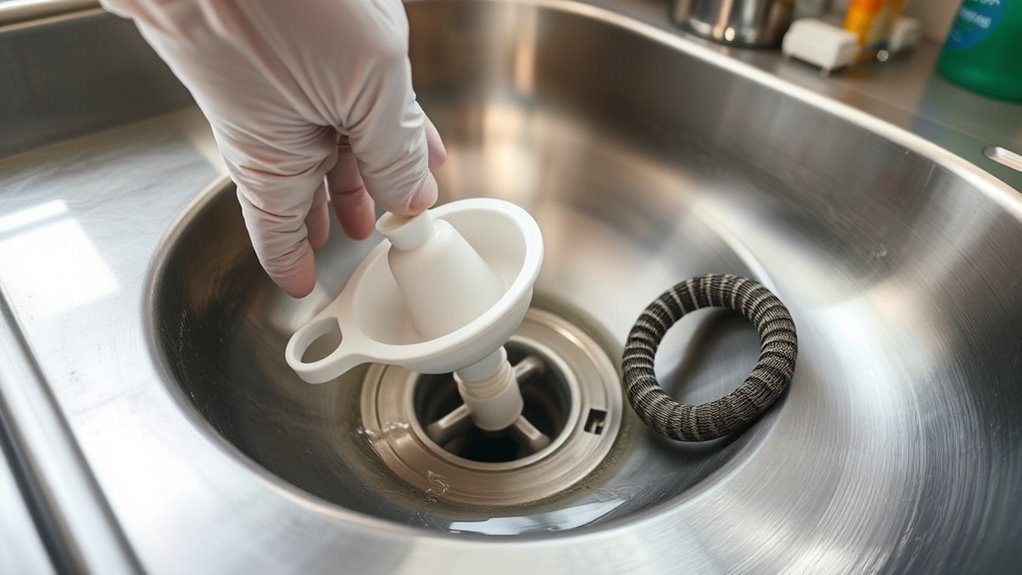
7 Simple Steps to Unclog Your Kitchen Sink Drain
Dealing with a clogged kitchen sink drain is one of those household frustrations that many people struggle with. It can be messy, smelly, and just plain annoying when your sink refuses to drain properly.
If you’re tired of dealing with slow or backed-up sinks, you’re not alone—there are simple, effective ways to fix the problem.
To unclog your kitchen sink, start by inspecting the basin and removing visible debris like food particles or hair. Use a plunger to break up the blockage, ensuring a good seal before pushing firmly.
Try a natural fix with baking soda and vinegar, then flush with hot water. Check and clean the P-trap or use a drain snake for deep blockages.
Regular maintenance, like using strainers and avoiding grease, can prevent future clogs.
Keep exploring for more tips to keep your sink flowing smoothly.
Key Takeaways
– Remove visible debris and food particles from the sink basin to prevent deeper clogs.
This is a quick step that can save you from bigger problems later.
Use a plunger to apply firm, steady pressure and dislodge the blockage.
Just make sure there’s enough water in the sink to cover the plunger cup for better suction.
Pour baking soda followed by vinegar into the drain, then cover and wait for fizzing to break up buildup.
It’s a simple, natural method that can help clear minor clogs.
Check and clean the P-trap, removing any accumulated gunk or debris.
This is often the culprit behind slow drains, so giving it a good clean can make a big difference.
Rinse the drain with hot water regularly and use a drain strainer to prevent future clogs.
Keeping debris out of your drain helps maintain good flow and avoids annoying backups.
Why Is My Kitchen Sink Clogged? Common Causes Explained
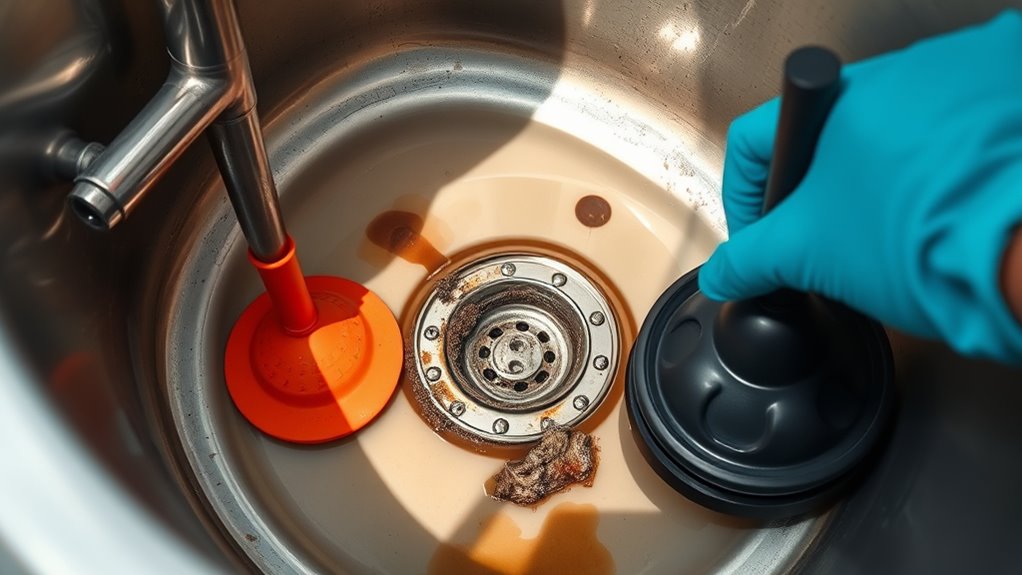
A clogged kitchen sink is a common frustration that often happens unexpectedly. You might notice water draining slowly or not at all after washing dishes or rinsing food.
The main causes usually involve buildup or blockages in the pipes. Grease and oil from cooking solidify inside the pipes, trapping other debris and forming stubborn clogs.
Food particles, especially starchy or fibrous items like potato peels or rice, can also accumulate, creating a blockage. Soap scum and hair, though less common in kitchens than bathrooms, can contribute if they stick to grease.
Over time, these materials combine, narrowing the pipe diameter and preventing smooth drainage. Understanding these common causes helps you pinpoint the problem and take appropriate steps to fix it.
Inspect and Remove Visible Debris From Your Sink
Start by checking your sink basin for any obvious debris or blockages.
Remove any visible objects like food particles or tangled hair that might be clogging the drain.
Taking out these debris can often give your sink drainage an immediate boost.
Examine Sink Basin Area
Before trying to clear a clog, take a close look at the sink basin for any visible debris or obstructions. Check the surface and edges for food scraps, hair, or soap buildup that might be causing the blockage.
Use a flashlight if needed to spot debris hidden around the drain or in corners. Remove any loose debris you see with your hands or a paper towel, making sure not to push it further down the drain.
Look for small objects or buildup just beneath the surface. Clearing out visible debris early can help prevent it from moving deeper into the plumbing and causing a bigger clog.
Once the basin is clear, you’ll be better prepared to tackle any remaining blockages.
Clear Visible Blockages
Once you’ve checked the sink basin and removed any loose debris, it’s time to look for visible blockages that might still be there.
Carefully examine the drain opening for trapped food particles, hair, or soap scum. Use gloves and a flashlight if needed to see clearly.
Gently remove anything you find with your fingers or a tool like tweezers. Here’s a quick guide:
| Obstruction Type | Removal Tip |
|---|---|
| Hair and Fibers | Use tweezers or a bent wire hanger |
| Food Particles | Scoop out with a spoon or gloved hand |
| Soap Scum or Gunk | Wipe away with a cloth or paper towel |
Removing these visible blockages helps improve drainage and prevents future clogs.
Remove Obvious Debris
Inspect your sink thoroughly for any obvious debris that might be blocking the drain. Look for food scraps, hair, soap scum, or other visible obstructions around the opening. Use gloves to protect your hands and a flashlight to get a clear view.
Once you spot debris, remove it carefully with your fingers or a tool like tongs or a small scoop. Be gentle to avoid pushing debris further down the pipe. Clear away all visible blockages completely, making sure the drain opening is free of obstructions.
If debris is stubborn, try using pliers or a bent wire hanger to dislodge it. Taking this step helps restore proper water flow and prevents minor clogs from worsening.
Unclog With a Plunger: Step-by-Step Guide
To effectively use a plunger, gather your tools and make sure you have a good seal over the drain.
You’ll need proper technique, like firm, steady pushes, to break up the clog.
Once the water flows freely again, clear the area of any remaining debris to keep your sink clear.
Prepare Your Tools
Before you start plunging, gather the necessary tools to make the process go smoothly. You’ll need a sturdy plunger, preferably a cup or flange type designed for sinks. Make sure the plunger creates a good seal around the drain opening.
It’s also helpful to have gloves to keep your hands clean and a bucket or towel nearby to catch any water spills. Check that the sink has enough water to cover the rubber part of the plunger—this helps build the right pressure.
If you’re dealing with a tough clog, having a drain snake or a wire hanger can be useful for extra help.
Having all your tools ready before you begin prevents interruptions and makes the unclogging process more efficient.
Proper Plunging Technique
Start by placing the plunger over the drain so it completely covers the opening, making sure you get a good seal. Once it’s in place, follow these steps for effective plunging:
Push down firmly with steady pressure to force air and water into the pipe. Then, pull up sharply without breaking the seal to lift the clog. Repeat this motion 10-15 times, keeping the pressure consistent.
After several attempts, lift the plunger to see if the water drains freely.
Clear After Unclogging
Once you’ve finished plunging and notice the water starts to drain freely, it’s important to make sure the clog is fully gone. Run hot water down the drain for a minute or two to flush out any leftover debris.
If the water flows smoothly without backing up, you’ve probably cleared the clog completely. Keep an eye on the drain for a few minutes to confirm the blockage is gone.
If water still drains slowly or begins to back up again, try plunging again. You can also use a drain snake or a cleaning solution if needed.
When the flow is steady and the drain is clear, wipe down the sink and remove any tools or debris. Your sink should now be fully functional.
Natural Drain Cleaning: Baking Soda and Vinegar Method
Mixing baking soda and vinegar is a simple, eco-friendly way to clear a clogged kitchen sink drain. When you pour baking soda into the drain, it starts breaking down grease and debris.
Follow it with vinegar, which reacts with the baking soda to create fizzing action that helps loosen the clog. This natural method works best when you:
- Use hot water to pre-wet the drain.
- Pour 1/2 cup of baking soda directly into the drain.
- Add 1 cup of vinegar and cover the drain to contain the fizz.
- Wait 15-30 minutes before flushing with hot water to clear residue.
This process cleans without harsh chemicals, refreshes your pipes, and keeps your kitchen eco-friendly.
Check and Clean the P-Trap to Remove Built-Up Gunk
After using natural methods to clear minor clogs, it’s a good idea to check your P-trap for any built-up gunk that might be causing ongoing drainage issues. The P-trap is a curved pipe under your sink that traps debris and prevents odors from escaping.
To clean it, place a bucket underneath, then unscrew the slip nuts and remove the trap. Clear out any gunk or debris with a brush or cloth. Make sure to reassemble it tightly to prevent leaks. Regular cleaning can help prevent future blockages.
| Step | Tools Needed | Key Tip |
|---|---|---|
| Locate the P-trap | Pliers or wrench | Turn off water supply before starting |
| Remove the trap | Bucket, towel | Check for damage or cracks |
| Clear debris | Brush, cloth | Dispose of gunk properly |
| Reassemble and test | Wrench, water supply | Verify tight fit to avoid leaks |
Use a Drain Snake or Auger for Deep Blockages
When minor clogs stick around despite your efforts, a drain snake or auger can reach deeper blockages that simple plunging or cleaning can’t clear.
Using one is pretty straightforward: insert the snake into the drain and turn the handle to break up or hook the clog. Here’s what to keep in mind:
- Choose the right size for your drain to avoid damage.
- Insert slowly and feel for resistance to prevent pushing the clog further.
- Rotate the snake to latch onto debris or break it apart.
- Pull out carefully to remove the clog or debris, then flush with water.
This tool is effective for stubborn blockages, helping you clear your drain without costly repairs.
Prevent Future Clogs With Simple Maintenance Tips
To prevent future clogs, establishing simple maintenance habits can save you time and hassle. Start by always using a drain strainer to catch food scraps, grease, and debris before they go down the drain. Regularly clean the strainer to prevent buildup.
Avoid pouring fats, oils, and grease down the sink, as they solidify and clog pipes. Rinse your drain with hot water once a week to flush out small particles. Consider pouring a mixture of baking soda and vinegar down the drain monthly; let it sit, then flush with hot water.
Keep an eye on slow-draining sinks and address minor issues promptly. These small steps can greatly reduce the risk of future clogs and keep your sink flowing smoothly.
Frequently Asked Questions
How Often Should I Clean My Kitchen Sink Drain?
You should clean your kitchen sink drain at least once a month to prevent buildup and clogs. Regular maintenance helps remove soap scum, grease, and food debris that can accumulate over time.
If you notice slow drainage or odors, it’s a good idea to clean it more often. Using a mixture of baking soda and vinegar once a month keeps the pipes fresh and clear.
This simple routine helps ensure your sink functions smoothly and stays odor-free.
Can I Use Chemical Drain Cleaners Safely?
You can use chemical drain cleaners safely if you follow the instructions carefully. Always wear gloves and eye protection, and avoid mixing different chemicals.
Use the recommended amount and never pour more than advised. Keep the area ventilated, and don’t leave the cleaner in the drain longer than instructed.
If you’re unsure or have a sensitive plumbing system, consider natural alternatives or calling a professional instead.
What Are Signs My Drain Needs Professional Help?
If your drain is slow, emitting foul odors, or making gurgling sounds, it’s time to call a professional.
You might also notice water backing up or a persistent clog that won’t clear with basic methods.
These signs indicate a more serious problem that needs expert attention.
Ignoring them can lead to bigger plumbing issues or water damage.
Are There Eco-Friendly Alternatives to Chemical Cleaners?
Back in the day, folks relied on baking soda and vinegar to tackle clogs, and today, it’s still a great eco-friendly choice.
You can pour half a cup of baking soda followed by half a cup of vinegar down your drain, let it fizz for 15 minutes, then flush with hot water.
This natural method is safe for your pipes, eco-conscious, and effective without harsh chemicals.
How Do I Prevent Grease Buildup in My Sink?
To prevent grease buildup, don’t pour fats and oils down the drain. Instead, let them cool and solidify in a container, then throw it in the trash.
Use hot water and a splash of dish soap regularly to wash away any leftover grease. Pouring boiling water down the drain weekly can also help melt any grease that might be starting to accumulate.
These simple habits can keep your pipes clear and help prevent clogs before they happen.
Conclusion
Regularly maintaining your kitchen sink can prevent 80% of clogs caused by everyday debris.
By following these simple steps, you’ll save time and money on costly repairs. Remember, tackling minor blockages early keeps your drains flowing smoothly and avoids unpleasant backups.
Stay proactive with routine cleaning and inspections. A little effort now can make a big difference—keeping your kitchen running efficiently and your home stress-free.
Focusing on regular drain cleaning and maintenance is key to preventing stubborn clogs.