Benefits of Induction Stoves and Ovens
Many of us struggle with traditional stoves that take forever to heat up, are hard to clean, or pose safety risks.
If you’re looking for a modern upgrade, induction stoves and ovens might be just what you need.
Induction stoves and ovens heat cookware directly with electromagnetic fields, making cooking faster, safer, and more precise.
They stay cool to the touch, reducing burn risks and allowing instant temperature adjustments.
Plus, they’re energy-efficient, using less power and producing fewer emissions.
Their sleek, compact design simplifies cleaning and saves space.
Curious about how induction can transform your kitchen?
Keep exploring to uncover all the benefits this innovative technology offers.
Key Takeaways
- Rapid heating and precise temperature control make cooking quicker and easier. You can adjust the heat instantly, which helps save time.
- The surface stays cool to the touch, so there’s less risk of burns. This makes the kitchen safer for everyone, especially kids.
- Induction stoves are energy-efficient, meaning they use less power. That’s good for the environment and can help lower your energy bills.
- Cleaning is a breeze because the surfaces are smooth and flat. Plus, spills don’t stick as much, so you spend less time scrubbing.
- They also come with automatic safety features that shut off the stove if the cookware is removed or if it overheats. This adds an extra layer of safety while cooking.
How Do Induction Stoves and Ovens Work?
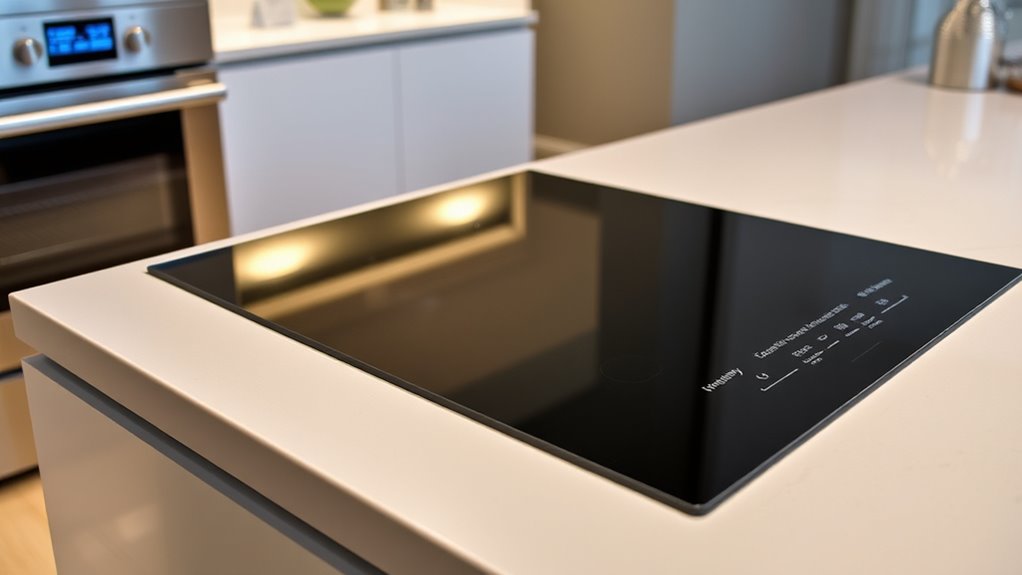
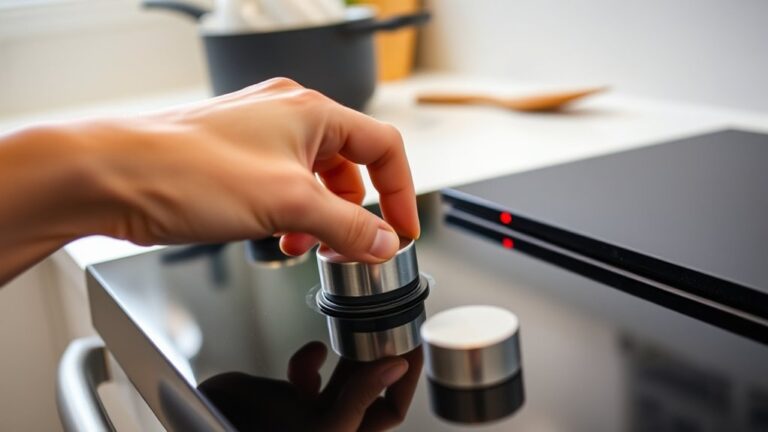
Induction stoves and ovens work by using electromagnetic fields to directly heat cookware. When you turn on an induction cooktop, an electric current flows through a coil beneath the glass surface, creating an oscillating magnetic field.
This magnetic field interacts with the ferromagnetic material in your cookware, generating heat through electrical resistance. Unlike traditional stoves that heat the cooktop surface first, induction heats only the cookware directly.
As a result, the heat is transferred quickly and efficiently from the pot to your food. You’ll notice that the surface remains relatively cool, reducing the risk of burns and making cleanup easier.
This process allows for precise control over cooking temperatures, giving you a responsive and efficient cooking experience.
Benefits of Induction Cooking: Faster, Safer, and More Precise
The advantages of induction cooking become clear once you experience its speed, safety, and precision firsthand. You’ll notice how quickly it heats up, saving you time in the kitchen.
Because the heat is generated directly in the cookware, temperature changes happen almost instantly. This gives you precise control over your cooking, whether you’re simmering, searing, or boiling.
You can avoid burnt or undercooked food with this level of accuracy. Induction stoves also stay cool to the touch, which reduces the risk of burns and accidents.
Plus, the efficient heat transfer means less energy waste. You’ll appreciate how responsive and consistent your cooking becomes, making meal prep smoother and more enjoyable.
Why Induction Is Safer Than Traditional Cooktops
With no open flame, induction stoves lower the risk of fires and burns.
The automatic shutoff feature ensures the stove turns off when not in use or if it overheats, adding an extra layer of safety.
These design elements make induction cooktops a safer choice for your kitchen.
No Open Flame
Since there’s no open flame involved, induction stoves eliminate a common safety hazard found in traditional cooktops. With gas or electric burners, the flame or hot surface can cause accidental burns or fires if touched or left unattended.
Induction cooking uses magnetic fields to heat cookware directly, so the cooktop itself stays cool to the touch. This reduces the risk of burns, especially if you have children or pets around.
You also don’t need to worry about gas leaks or flare-ups, making your kitchen safer overall. Because the surface only heats when compatible cookware is present, it minimizes accidental ignitions.
Automatic Shutoff Feature
Because induction stoves are designed to detect cookware presence and temperature, they automatically shut off when the cookware is removed or if the surface overheats. This feature helps prevent accidents caused by forgetting to turn off the stove or overheating.
If you leave food unattended, the stove will turn itself off after a certain period, reducing the risk of fire. The safety mechanism also ensures the heating element doesn’t stay on without cookware, lowering the chance of burns or damage.
You don’t need to worry about accidental fires or wasting energy since the stove responds instantly to changes in cookware presence or temperature. This automatic shutoff makes induction cooking safer, especially for busy households or families with children.
How Induction Saves Energy and Reduces Costs
Induction stoves heat up faster and use energy more efficiently, saving you money over time.
With precise temperature control, you avoid wasting power on unnecessary heat, making your cooking more economical.
Faster Heating Efficiency
Induction stoves heat up much faster than traditional cooking methods, so you can start cooking almost immediately. The quick response comes from electromagnetic fields directly heating your cookware, instead of heating the stovetop first.
As a result, heat transfers instantly when you turn up the temperature, saving you time. This rapid heating also means less energy is wasted, making your cooking more efficient.
You don’t have to wait for the burner to warm up, so you can prepare meals faster and more efficiently. The swift heat adjustments help prevent overcooking or burning, giving you better control.
Precise Temperature Control
When you have precise control over temperature settings, you can adjust heat levels instantly, which helps prevent energy waste. With induction stoves, there’s no need to wait for the burner to heat up or cool down; you just turn the control dial or touch the screen.
This immediate response means you’re using only the energy needed for your cooking, rather than excess heat. You can fine-tune the temperature to match your recipe, avoiding overheating or undercooking.
As a result, you save electricity and lower your utility bills. Plus, because induction stoves respond quickly, you’re less likely to leave the heat on longer than necessary. This exact control makes cooking more efficient and cost-effective, helping you cut down on unnecessary energy use.
Lower Energy Waste
Because induction stoves heat cookware directly through electromagnetic energy, they waste less heat compared to traditional burners. This means more of the energy you use goes into cooking, not lost as heat.
Since induction stoves heat only the pan, the surrounding air stays cooler. That reduces the energy needed to cool your kitchen. They also heat up quickly, so you spend less time and energy on cooking.
Plus, because heat is transferred directly to the cookware, there’s less energy wasted during the process. Over time, this efficiency lowers your electricity bills and reduces overall energy consumption.
Design Features That Make Induction Appliances Space-Savers
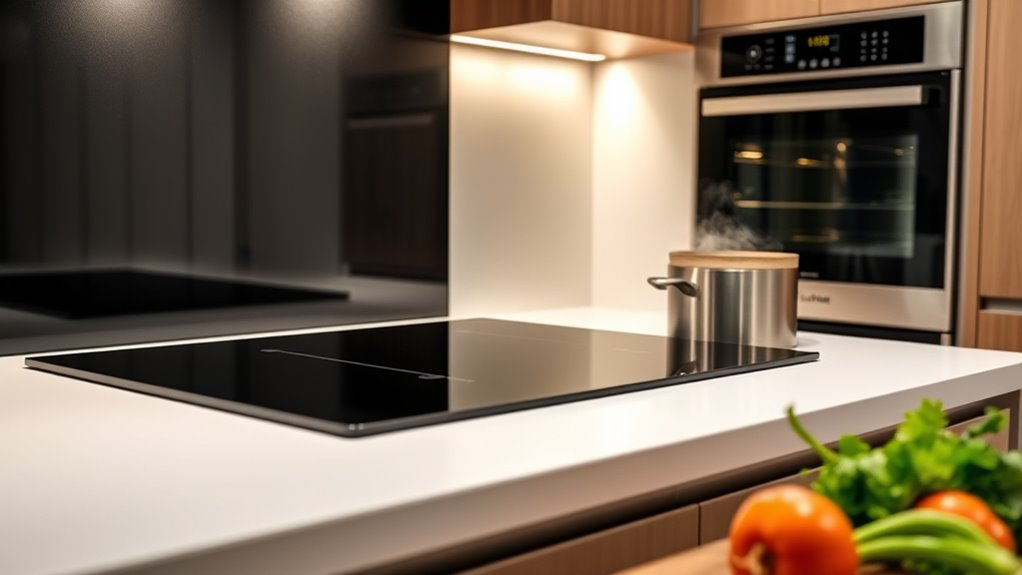
Thanks to their sleek, compact design, induction appliances are great space-savers in any kitchen. Their minimalist profiles easily fit on countertops or inside cabinets, freeing up valuable workspace. Key features include:
- Built-in Size Efficiency: Many models have integrated controls and flat surfaces, which cut down on bulky knobs or vents.
- Multi-Functionality: Some appliances combine cooking functions, so you don’t need multiple devices, saving even more space.
- Streamlined Design: Smooth, flat surfaces without protruding parts make cleaning simple and let the appliances sit flush with counters.
These features help maximize your kitchen’s layout, making induction appliances modern, efficient, and essential space-savers.
What to Consider When Buying an Induction Stove or Oven
Choosing the right induction stove or oven requires careful consideration of several key factors. First, think about your cooking needs—do you need multiple burners, or is a single, compact unit enough?
Next, look at the power levels. Higher wattage means faster heating and better temperature control, so keep that in mind.
Check the size and make sure it fits comfortably in your kitchen space. You don’t want it to be too bulky or hard to fit.
Consider the control panel’s ease of use—whether it’s touch controls or knobs—and see which one feels more comfortable for you.
Safety features like auto shut-off and child locks are important, especially if you have little ones around.
Price and the reputation of the brand matter too. Investing in a reliable, well-known brand can save you trouble and money in the long run.
Finally, make sure the features match your cooking habits so you can enjoy maximum convenience and efficiency.
How Induction Appliances Are Easy to Clean and Maintain
Induction appliances are remarkably easy to clean and maintain, making them a popular choice for busy households. Their smooth, flat surfaces prevent food from getting trapped, which makes cleanup simple.
To keep your stove looking new, just wipe spills immediately with a damp cloth to prevent stains. Use a gentle scraper for stubborn residue, avoiding scratches. Regularly clean the surface with a non-abrasive cleaner to keep it shiny.
Unlike traditional stoves, induction surfaces don’t have burners or grates that collect grease and debris, so they need less maintenance. The lack of complex parts means fewer components to repair or replace.
Environmental Benefits of Choosing Induction Cooking
Choosing induction cooking helps you save energy and reduce your carbon footprint. These stoves use less power and produce fewer emissions compared to traditional methods.
As a result, you contribute to a cleaner, healthier environment with every meal you prepare.
Reduced Energy Consumption
Induction stoves use energy more efficiently than traditional cooking methods, helping you cut down on electricity and reduce your carbon footprint. They transfer heat directly to cookware, which means less wasted energy.
This leads to faster cooking times, saving energy by reducing the time heat is applied. Plus, you get precise temperature control, so there’s less risk of overheating and wasting energy.
Induction stoves also produce less heat loss into your kitchen, keeping the space cooler and reducing the need for extra cooling. All these efficiencies mean you use less electricity for each meal.
Over time, this lowers your energy bills and lessens your environmental impact. Choosing induction supports a more sustainable lifestyle by making your kitchen more energy-conscious.
Lower Emission Levels
Since induction cooking produces fewer greenhouse gases compared to traditional methods, it markedly reduces your kitchen’s environmental impact. Induction stoves heat cookware directly through electromagnetic fields, eliminating the need for fossil fuel combustion.
This process results in lower carbon dioxide emissions, helping combat climate change. Plus, induction stoves generate less indoor air pollution, like smoke and fumes, which is better for your health and the environment.
Because they are more efficient, less energy gets wasted, further reducing your carbon footprint. Choosing induction over gas or electric coil stoves means fewer pollutants are released into the atmosphere.
Which Foods and Cooking Styles Are Best With Induction?
Foods that benefit most from induction cooking usually include those that need precise temperature control or quick heating and cooling. You’ll find induction perfect for dishes like delicate sauces, soups, and stir-fries, where maintaining steady heat is key.
Cooking styles that work well with induction include sautéing, where fast heat adjustments help prevent burning. Boiling pasta or rice quickly and efficiently is also a great fit.
Simmering stews is another good example, allowing for steady, controlled temperatures over a long time.
Induction’s responsiveness means you won’t overshoot your target temperature, making it ideal for recipes that need precision. Its quick heating cuts down wait time, and rapid cooling helps avoid overcooking.
Common Myths About Induction Cooking: Debunked
Many people assume induction cooking is complicated or unreliable, but these beliefs are often based on misconceptions. For example, some think it’s dangerous because of the magnetic fields, but it’s actually safe. These fields are confined to the cooktop and stop when you remove your pot.
Others believe induction stoves only work with certain cookware, but most pots and pans made of ferrous metal are compatible. You can check with a simple magnet test to be sure.
Some worry induction stoves are expensive, but prices have become more affordable. Plus, the efficiency saves money in the long run.
Many think induction cooking is slow or inconsistent, but it provides rapid, precise heat control. These myths often prevent people from experiencing the many benefits induction stoves truly offer.
Is Induction Cooking Right for Your Kitchen?
Induction cooking offers many benefits, but it’s important to see if it fits your kitchen setup and cooking habits. Consider these factors:
- Kitchen Compatibility: Do you have ferromagnetic cookware like cast iron or stainless steel? Induction needs compatible pots and pans to work properly.
- Cooking Style: If you like quick, precise temperature control, induction is a great choice. But if you prefer traditional methods or baking, think about how induction will fit with those habits.
- Space and Power Supply: Make sure your kitchen has enough room for an induction stove and the right electrical capacity. If your kitchen isn’t set up for high-power appliances, installation might be tricky.
Thinking about these points can help you decide if induction matches your needs and kitchen layout.
How to Transition to Induction Cooking in Your Home
Switching to induction cooking requires some planning, but it can go smoothly if you’re prepared ahead of time. First, check if your current cookware works with induction—look for magnetic materials like cast iron or stainless steel.
Switching to induction cooking is easy with some prep—check your cookware first.
If your pots and pans aren’t compatible, you’ll need to buy new ones. Next, take a look at your kitchen’s electrical setup to make sure it can handle the power needs of an induction stove.
Once you have the right equipment, swap out your traditional cooktop for the induction unit. Get familiar with the controls and safety features so you’re comfortable using it.
Practice cooking with your new stove to get used to how responsive it is. And finally, ease into using induction by replacing one or two appliances gradually if that feels better for you.
With a little preparation, you’ll soon enjoy all the benefits induction cooking has to offer.
Frequently Asked Questions
Can Induction Stoves Be Used With All Types of Cookware?
No, induction stoves can’t be used with all types of cookware. They need magnetic cookware like cast iron or some stainless steel to work properly.
If your pots and pans aren’t magnetic, the stove won’t heat them. You can test this easily—hold a magnet to the bottom of your cookware.
If the magnet sticks, your cookware is compatible. If not, you might need to buy new cookware made for induction cooking.
Are Induction Stoves Suitable for Outdoor or Portable Use?
Induction stoves are generally not suitable for outdoor or portable use because they need a stable power source and a flat surface to work properly.
They’re also sensitive to environmental factors like moisture, dirt, and temperature changes, which are common outdoors.
If you’re looking for a portable cooking option, a gas or propane stove might be a better choice since they’re more durable and easier to use outside.
Do Induction Ovens Require Special Installation or Electrical Wiring?
Yes, induction ovens often require special installation and dedicated electrical wiring because they need a high power supply to work efficiently.
You might need a professional electrician to set up the proper circuit, especially if your current wiring isn’t designed for high wattage appliances.
It’s important to follow the manufacturer’s guidelines to ensure safety and top performance.
Proper installation helps prevent electrical issues and makes sure your oven works correctly.
How Long Do Induction Appliances Typically Last?
Induction appliances usually last around 10 to 15 years if you take good care of them.
You can make them last longer by avoiding power surges, cleaning the surfaces often, and not overheating them.
Since they use advanced electronic parts, regular maintenance can help prevent early breakdowns.
Keep an eye on how your device is working, and fixing problems early can keep it reliable for years to come.
Are There Any Health Risks Associated With Induction Cooking?
Thinking of your kitchen as a scene from the Jetsons, you might wonder if induction cooking poses health risks. Rest assured, induction stoves emit non-ionizing electromagnetic fields, which are generally considered safe.
They don’t produce harmful radiation like X-rays or UV rays. However, if you have a pacemaker or other electronic implants, it’s wise to consult your doctor.
Conclusion
Switching to induction cooking transforms your kitchen into a powerhouse of efficiency, safety, and speed—faster than you ever dreamed possible! With its sleek design and energy-saving magic, you’ll wonder how you ever cooked without it.
Bid farewell to old-school stovetops and welcome the future, where every meal is prepared in a flash, safer than ever, and so precise it feels like you’ve revealed a secret cooking superpower.
Your kitchen’s next-level upgrade awaits with induction stoves and ovens, making cooking easier, safer, and more efficient than ever before.