How Much Does a Kitchen Island Cost?
Thinking about upgrading your kitchen but feeling overwhelmed by the options and costs? You’re not alone—many people struggle with finding the perfect balance between style and budget when it comes to kitchen islands.
A kitchen island usually costs between $1,000 and $3,000, depending on factors like size, materials, and design complexity.
Simple models with standard wood finishes or laminate tend to be more affordable, while larger or customized islands with premium materials like granite or marble can be pricier.
To get the best value, consider your needs and budget carefully.
Keep exploring to find ways to make your kitchen island more affordable while still being stylish.
Key Takeaways
- Basic kitchen islands usually cost somewhere between $1,000 and $3,000, depending on their size and the materials used.
- If you go with options like laminate or reclaimed wood, you’ll find these are more budget-friendly compared to granite or marble.
- Keep in mind that bigger or more intricate designs, especially those with custom features, tend to drive up the overall cost.
- Adding features like sinks or built-in appliances can also significantly increase the price.
- Don’t forget about installation costs, permits, and potential upgrades—they can add hidden expenses beyond the initial price tag.
How Much Does a Basic Kitchen Island Usually Cost?
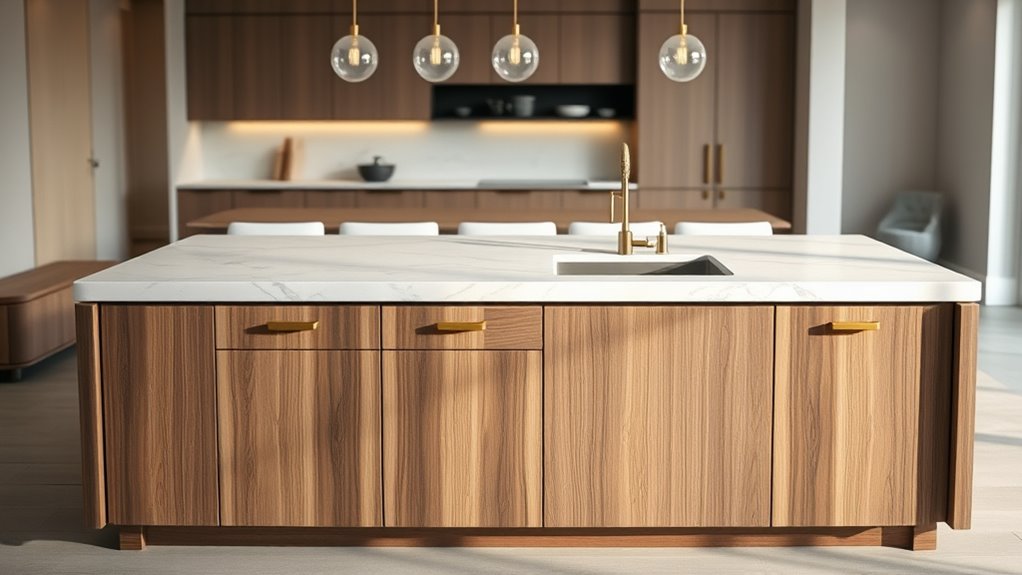
A basic kitchen island usually costs between $1,000 and $3,000. This range covers simple designs made from standard materials like particleboard with laminate or basic wood finishes.
These islands typically include essential features like a flat surface, storage cabinets, and sometimes a small sink or cooktop. The size of the island affects the price, with larger surfaces costing more.
Basic kitchen islands feature a flat surface, storage, and sometimes a sink or cooktop; size impacts the overall cost.
If you choose a straightforward design without extra features, you can stay within this budget. They’re perfect if you want to add functionality without overspending.
Keep in mind that prices vary based on the brand, materials, and craftsmanship. But overall, this range is a good starting point for a basic setup.
What Factors Affect the Price of a Kitchen Island?
The price of a kitchen island depends on several key factors, including the materials you choose and their quality.
Its size, complexity, and the features you add also influence the overall cost. Understanding these elements helps you figure out what fits your budget and needs.
Material Quality and Type
Material quality and type play a big role in determining the cost of a kitchen island. High-end materials like solid hardwoods, natural stone, or premium quartz tend to be more expensive because they’re durable and look great.
If you go with lower-quality plywood or laminate surfaces, you’ll save money but might sacrifice longevity and style. The material you choose impacts both the initial cost and ongoing maintenance.
For example, marble countertops look elegant but need regular sealing, which adds to the expenses over time. On the other hand, engineered materials like laminate or quartz offer a good balance of affordability and durability.
Your choice will influence your budget and the overall look you want to achieve in your kitchen.
Size and Complexity
Size and complexity directly affect the cost of a kitchen island because larger and more detailed designs need more materials, labor, and time to build.
A bigger island with features like a sink, cooktop, or built-in storage will naturally cost more than a simple, small surface.
Complex shapes, custom curves, or fine craftsmanship also raise costs, as they require specialized skills and extra effort.
The number of tiers, extensions, or added features further influences the price.
If you choose a multi-level or uniquely shaped island, you can expect to pay a premium.
Design and Features
Design and features play a big role in how much your kitchen island costs. Adding built-in appliances, seating, or custom finishes can quickly drive up the price. The more complex the design, the higher the overall cost you’ll face.
Think about these factors:
- Built-in appliances like sinks, cooktops, or wine coolers will increase expenses.
- Seating options such as bar stools or custom seats add to the cost.
- Material choices like granite, quartz, or exotic woods tend to be pricier.
- Custom finishes like unique paint, stain, or decorative accents also raise the total price.
Your choices directly impact your budget, so it’s important to weigh your priorities. Balance functionality, style, and cost to get the right kitchen island for you.
Should You Choose a Ready-Made or Custom Kitchen Island?
Are you trying to decide between a ready-made or custom kitchen island? If you want something quick to install and budget-friendly, a ready-made option could be the way to go.
These islands come pre-built, so you get convenience and a variety of styles to choose from. But if you have a specific vision or a unique space, a custom island might be better.
Pre-built islands offer convenience and style, but custom options suit unique spaces and specific visions better.
Custom islands let you choose the size, materials, and features that fit your needs perfectly. Just keep in mind they usually cost more and take longer to build.
Think about your budget, timeline, and what style you prefer. In the end, your choice depends on whether you value speed and affordability or personalized design and function.
How Much Do Different Materials for Kitchen Islands Cost?
When choosing materials for your kitchen island, you’ll find options that fit various budgets, from affordable laminates to high-end stone.
Consider how much you’re willing to spend because premium materials like granite or marble can significantly increase costs.
Also, think about durability and maintenance needs to make sure your island stays beautiful and functional for years to come.
Budget-Friendly Material Options
If you’re looking to keep costs down, choosing budget-friendly materials for your kitchen island is a smart move. You can create a stylish look without overspending by selecting affordable options.
Here are some popular choices:
1. Plywood
Versatile and cost-effective, it can be painted or stained to match your style.
2. Laminate
Durable and available in many patterns, laminate is easy on your budget.
3. Reclaimed Wood
Eco-friendly and inexpensive, it adds a rustic charm.
4. Tile
Affordable tiles can add color and texture while keeping costs low.
These materials help you stay within budget while still creating a functional and attractive kitchen centerpiece.
Premium Material Choices
While budget-friendly options are great for saving money, upgrading to premium materials can really enhance your kitchen island’s look and durability. Choosing high-end materials adds sophistication and makes your island last longer, but it will also cost more.
For example, natural stone like granite or marble offers unique patterns and a luxurious feel. These typically cost between $80 and $200 per square foot. Alternatively, solid hardwood provides warmth and strength, usually priced from $50 to $150 per square foot.
Here’s a quick comparison:
| Material | Cost per Square Foot | Features |
|---|---|---|
| Granite | $80 – $200 | Durable, unique patterns |
| Marble | $100 – $200 | Elegant, prone to staining |
| Hardwood | $50 – $150 | Warm, strong |
Premium materials can really boost your island’s style and help it last longer.
Durability and Maintenance
Choosing the right material for your kitchen island isn’t just about looks, but also about how durable and easy to maintain it will be over time. Some materials handle daily wear better and require less upkeep.
Quartz is highly durable, resistant to scratches and stains. It’s easy to clean with just mild soap and water.
Granite is strong and heat-resistant but needs periodic sealing to prevent stains.
Butcher Block has a warm, attractive look but is prone to scratches and water damage. It requires regular oiling to keep it in good shape.
Marble is elegant but softer and more porous. It’s vulnerable to stains and chips and needs frequent sealing and careful cleaning.
Choosing a material really depends on your lifestyle and how much maintenance you’re willing to do.
How Do Size and Design Impact Kitchen Island Prices?
The size and design of your kitchen island directly influence its cost. Larger and more intricate options usually need more materials and labor.
A bigger island gives you extra workspace and storage but also raises material costs. Complex designs like curved edges, built-in features, or custom cabinetry add to the price because they require more craftsmanship.
Simple islands with straight edges and basic finishes tend to be more affordable. On the other hand, elaborate styles with high-end materials can significantly increase expenses.
Simple, straight-edged islands are budget-friendly; high-end, elaborate designs increase costs significantly.
Features like sinks, cooktops, or seating areas also impact the overall cost. The more detailed and customized your island is, the higher the price will likely be.
Balancing size and design choices with your budget helps you find a functional yet cost-effective solution.
What Are Some Affordable Ideas for Kitchen Islands?
Looking for budget-friendly ways to add a kitchen island? You can create a stylish and functional space without breaking the bank. Here are some affordable ideas:
- Repurpose furniture like a sturdy table or vintage dresser for a unique island. It’s a great way to get something one-of-a-kind without spending much.
- Use ready-made countertop materials such as laminate or butcher block to keep costs low. These options are both affordable and durable.
- Build a simple base with inexpensive materials like plywood, then paint or stain it for a polished look. It’s easy and customizable.
- Incorporate open shelving instead of cabinets to save money and add visual interest. Plus, it gives your kitchen a more open feel.
These ideas let you personalize your kitchen island and stay within your budget. With a little creativity, you can have a practical and attractive centerpiece without overspending.
What Mid-Range Kitchen Islands Offer Style and Functionality?
Mid-range kitchen islands strike a good balance between style and practicality, offering elegant design options that can really elevate your space. They add a touch of sophistication without going over budget.
Plus, they come with smart storage solutions that help keep your kitchen organized and clutter-free. With these features, you get both beauty and function without overspending.
Elegant Design Options
Because mid-range kitchen islands balance affordability and style, they often feature elegant design options that enhance both look and function. You can choose from a variety of finishes and materials that brighten up your space.
For example, sleek granite or quartz countertops add a sophisticated touch, while distressed wood finishes create a warm, rustic vibe. You might also go for decorative details like ornate legs or stylish hardware to boost visual appeal.
Integrated lighting fixtures can highlight your island’s design, making it a true focal point. Here are some popular options:
- Marble or quartz surfaces for a luxurious look
- Two-tone finishes for added visual interest
- Customizable cabinetry with decorative accents
- Elegant hardware and lighting fixtures
These choices let you create a stylish, functional centerpiece that reflects your personal taste.
Practical Storage Solutions
Practical storage solutions are a key feature of mid-range kitchen islands, helping you stay organized without sacrificing style. These islands often include built-in shelves, drawers, and cabinets that maximize storage while keeping a sleek look.
You can easily access utensils, cookware, and pantry items, which helps reduce countertop clutter. The following table highlights common storage options:
| Storage Type | Benefits | Ideal For |
|---|---|---|
| Drawers | Easy access, organized storage | Cutlery, utensils |
| Cabinets | Concealed, spacious storage | Pots, pans, small appliances |
| Open Shelves | Display and quick reach | Cookbooks, décor |
With thoughtful storage, your kitchen stays functional and stylish, making everyday cooking more efficient.
When Do High-End Kitchen Islands Justify Their Price?
High-end kitchen islands can be a worthwhile investment when they offer features and craftsmanship that greatly improve your cooking experience and overall home value. You should consider a high-end island if it includes:
- Premium materials like marble, granite, or custom wood finishes that add durability and elegance.
- Advanced appliances such as built-in wine coolers or additional sinks that elevate functionality.
- Custom design elements tailored to your space and style, increasing both aesthetics and usability.
- Superior craftsmanship ensuring longevity and a flawless appearance, making the investment worthwhile over time.
If these features align with your needs and lifestyle, the higher price tag can translate into better performance, aesthetics, and a potential boost in your home’s worth.
What Hidden Costs Should You Expect When Installing a Kitchen Island?
Even after choosing the perfect kitchen island, unexpected expenses can pop up during installation. You might need to upgrade your wiring or plumbing to support new appliances or fixtures, which can add to the costs.
If your floors or countertops aren’t level or suitable, you’ll have to fix these before installing the island. That can be pricey and might cause delays.
Permits and inspections could also come into play, especially for large or structural islands. These often aren’t included in your initial estimates, so it’s good to be prepared.
You might also find hidden damage or issues with your kitchen’s framing that need repairs. Shipping delays or special delivery fees could surprise you if your island is custom or large.
All these hidden costs can quickly add up, so it’s smart to plan for extra expenses beyond the initial price tag.
How Can You Save Money on Your Kitchen Island Project?
To save money on your kitchen island project, start by setting a clear budget and sticking to it. This helps prevent overspending and makes it easier to prioritize what’s really important.
Set a clear budget and stick to it to prioritize what truly matters in your kitchen island project.
Next, consider these cost-saving tips:
- Choose budget-friendly materials like laminate or plywood instead of expensive stone or hardwood.
- Keep the design simple—avoid custom shapes or intricate details that can drive up costs.
- Repurpose existing furniture or materials you already own to cut expenses.
- Do some of the work yourself, like painting or assembly, to save on labor costs.
Focusing on these strategies lets you create a functional kitchen island without breaking the bank. Planning carefully ensures you get the best value for your money while staying within your financial limits.
Is Investing in a Kitchen Island Worth It?
Is investing in a kitchen island a decision worth making? If you often entertain or cook big meals, a kitchen island can really boost your space’s functionality and style.
It provides extra storage, prep space, and a cozy gathering spot for friends and family. But think about your kitchen’s size and layout—if space is tight, an island might feel crowded.
Also, consider your budget and whether the benefits are worth the cost. For many, the convenience and look a kitchen island adds make it a good investment.
If you use your kitchen often and want to make it more efficient, adding an island can be a smart move. Ultimately, it’s about balancing your needs, space, and budget to see if it’s a worthwhile addition.
Frequently Asked Questions
What Are the Maintenance Costs Associated With Different Kitchen Island Materials?
Maintenance costs for kitchen island materials vary. For wood, you’ll need to seal and polish regularly to prevent stains and scratches, which can add up over time.
Stone surfaces like granite or quartz require occasional sealing to keep their look and durability in check. Metal islands might need rust prevention treatments if exposed to moisture.
How Long Does It Typically Take to Install a New Kitchen Island?
Rome wasn’t built in a day, and neither is a kitchen island. Typically, installation takes about one to three days, depending on how complex the project is.
If you’re adding plumbing or electrical outlets, expect it to take longer. You might need to coordinate with contractors, check permits, and plan for some minor disruptions.
Proper planning helps ensure your new island fits seamlessly into your kitchen.
Are There Any Permits Required for Installing a Kitchen Island?
Yes, you might need permits when installing a kitchen island, especially if it involves plumbing, electrical work, or structural changes.
You should check with your local building department to see what’s required in your area.
Not getting the necessary permits can lead to fines or problems when selling your home.
It’s a good idea to talk to professionals or contractors who know local codes to make sure everything is up to standard.
Can a Kitchen Island Increase My Home’s Resale Value?
A kitchen island can boost your home’s resale value by making your kitchen more functional and attractive. Buyers often see it as a desirable feature, especially if it adds extra counter space or storage.
If you choose a stylish design that complements your home’s aesthetic, it can stand out in listings. Just make sure the island matches your overall kitchen style and meets the needs of potential buyers for maximum value.
What Are the Most Durable Materials for a Busy Kitchen Island?
Granite and quartz are your top choices for a busy kitchen island because they’re highly durable and resistant to scratches, heat, and stains.
Hardwood, like maple or oak, can work if properly sealed, but it’s more prone to wear over time.
Stainless steel surfaces are extremely tough and easy to clean, making them perfect for high-traffic areas.
Choose materials that balance durability, maintenance, and style to keep your island looking great.
Conclusion
In the dance of kitchen upgrades, your budget guides each step, and knowledge is your rhythm. Whether you choose a humble island or a luxurious centerpiece, weigh the costs like a seasoned conductor.
With careful planning and savvy choices, you’ll craft a culinary island that sings in harmony with your home’s melody. This will transform your space into a symphony of style and function—without missing a beat.
Considering the cost of a kitchen island is essential to making the right decision. Knowing what fits your budget helps you create a beautiful and functional centerpiece that truly complements your kitchen.