How Much Does Your New Kitchen Cost?
Thinking about updating your kitchen but feeling overwhelmed by the costs? You’re not alone—many people struggle to figure out how much a new kitchen might actually cost and what factors influence the final price.
Your new kitchen can cost anywhere from $13,000 to $42,000, depending on your choices and project scope. If you opt for minor updates, you’ll spend less, while full renovations with high-end materials and custom features push costs higher.
Remember, appliances, cabinets, fixtures, labor, and hidden fees can all influence your budget.
To get a clearer picture and tips for saving, keep exploring what impacts renovation costs and how to plan effectively.
Key Takeaways
- Kitchen remodel costs typically range from $13,000 to $42,000, depending on the scope and quality choices.
- Budget options include cosmetic refreshes, mid-range remodels, and high-end luxury renovations.
- Material quality, appliance choices, and cabinet design all play a big role in how much you’ll spend.
- Keep in mind that labor, permits, and unexpected issues can add another 10-15% to your total costs.
- Doing some DIY projects and shopping strategically can help save money without sacrificing quality.
How Much Does a Kitchen Remodel Usually Cost?
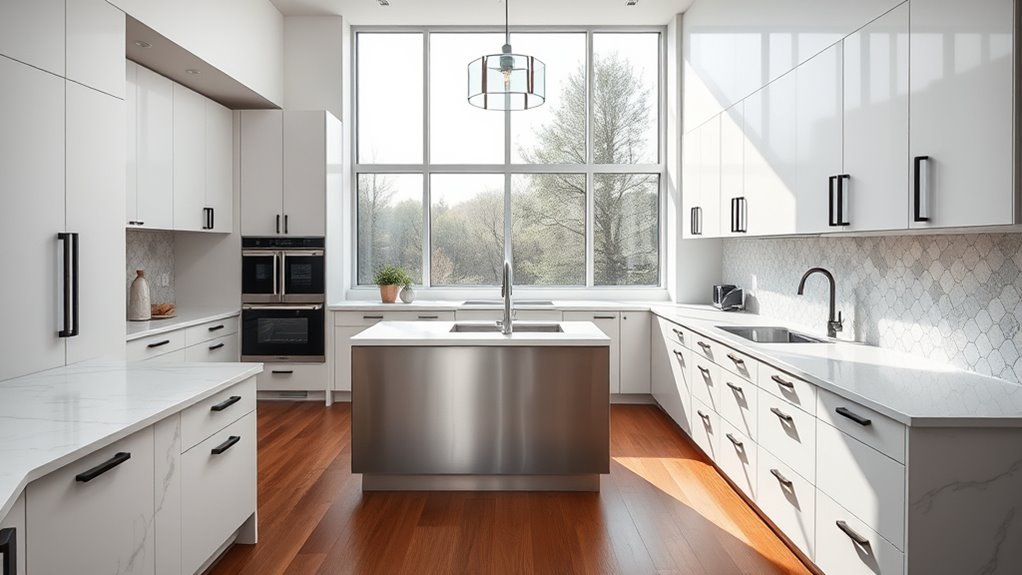
Wondering how much a typical kitchen remodel costs? On average, it ranges from $13,000 to $42,000, depending on the scope and quality of materials.
A typical kitchen remodel costs between $13,000 and $42,000, depending on scope and material quality.
If you’re making minor updates like new paint, fixtures, or appliances, costs tend to stay on the lower end. But a full gut renovation with high-end cabinets, countertops, and appliances can push expenses well above $40,000.
Keep in mind that labor costs, permits, and unexpected issues can also add to your budget. You should consider whether you’re doing a DIY project or hiring professionals, as this makes a big difference in overall costs.
Ultimately, your renovation price depends on your choices, the size of your kitchen, and the level of quality you want.
What Are Your Kitchen Renovation Budget Options?
When planning a kitchen renovation, you have several budget options to consider, each suited to different goals and financial situations. Your choices can range from small upgrades to complete overhauls.
First, a cosmetic refresh focuses on repainting, new hardware, and lighting. It’s cost-effective and quick, perfect for a simple update.
Second, a mid-range remodel involves replacing cabinets, appliances, and countertops. This gives you a balanced upgrade without breaking the bank.
Third, a high-end renovation includes custom cabinets, premium appliances, and luxury finishes. It creates a fully personalized and luxurious space.
Each option reflects your priorities and budget constraints. Think about what’s most important—do you want a quick fix or a high-end transformation? Your choice will influence your overall costs and the scope of work.
Knowing your options helps you make informed decisions that align with your financial goals.
What Factors Affect Your Kitchen Remodeling Costs?
Your choice of materials and their quality directly impacts your renovation costs, with higher-end options costing more.
The scope of your remodel, whether you’re updating just cabinets or gutting the entire kitchen, also influences the overall price.
Understanding how these factors interact can help you plan a budget that fits your needs.
Material Quality and Selection
Material quality and selection play a big role in shaping your kitchen remodeling costs. The materials you pick directly affect both the initial expenses and long-term durability. Higher-quality materials might cost more upfront but can save you money over time through longevity and fewer repairs.
Think about these factors:
- Material Type: Premium woods or natural stone countertops cost more but offer better durability and looks.
- Finish and Details: Custom finishes or intricate details tend to increase costs compared to standard options.
- Sustainability: Eco-friendly, sustainable materials often come with a higher price tag but can add value and reduce environmental impact.
Your choices reflect your style and budget, influencing overall costs. Carefully consider each factor to find a balance between quality, aesthetics, and long-term value for your kitchen.
Scope of Renovation
The extent of your kitchen renovation directly impacts the overall cost because it determines the scope of work and materials needed. If you’re planning a simple update, like new cabinets, countertops, and fresh paint, costs stay relatively low.
But if your project involves knocking down walls, relocating plumbing, or installing new flooring, expenses will go up significantly. The more extensive the renovation, the more labor, permits, and materials you’ll need.
Custom features, high-end appliances, and specialty finishes also add to the bill. To estimate costs accurately, clearly define your renovation goals.
Keep in mind that larger or more complex projects tend to be more expensive. Understanding your scope helps you budget effectively and avoid surprises along the way.
How Much Should You Budget for Cabinets and Storage?
Budgeting for cabinets and storage is a key step in planning your kitchen remodel because these elements really shape both how your kitchen looks and how well it works.
To figure out your budget, think about three main factors:
- Material quality – Going for higher-end woods or custom finishes costs more but gives you durability and a polished look.
- Design complexity – Custom cabinets or special storage solutions will be pricier but help you make the most of your space and add a personal touch.
- Quantity needed – The number of cabinets and storage units you require will directly impact your overall costs.
Balancing these factors allows you to set a realistic budget. Investing in quality cabinets can pay off with longer-lasting beauty, while smart design choices help maximize storage without breaking the bank.
Good planning ensures your kitchen stays functional and stylish without overspending, making the most of your budget.
What Are the Typical Appliance and Fixture Costs?
Understanding the costs of appliances and fixtures helps you plan your budget more accurately.
You can expect to pay a range of prices for essential appliances like refrigerators, ovens, and dishwashers.
Fixtures such as sinks and lighting also vary in cost.
Knowing these typical prices helps you make informed choices without overspending.
Average Appliance Prices
When estimating your kitchen renovation costs, knowing the typical prices of appliances and fixtures can help you plan effectively. Appliance prices vary based on quality and brand. For example:
- Refrigerators: Range from $600 for basic models to over $2,500 for high-end units.
- Ovens and Stoves: Basic models start around $500, while premium ranges can cost $3,000 or more.
- Dishwashers: Expect to spend between $400 and $1,200 depending on features and brand.
Being aware of these price points helps you allocate your budget wisely. Remember, investing in quality appliances can save you money in the long run by reducing repair costs and increasing efficiency. This ultimately enhances your kitchen’s functionality.
Fixture Cost Estimates
Fixture costs can vary greatly based on the quality, brand, and style you choose, but there are general price ranges you can expect. Basic faucets and fixtures typically cost between $100 and $300 each, while high-end options can run $500 or more.
Standard sinks usually fall in the $150 to $400 range, with designer models costing considerably more. Light fixtures vary from $50 for simple designs to $500 or more for high-end or custom pieces.
Toilets generally range from $100 to $300, with luxury models reaching $700 or higher. Keep in mind that installation costs may add to the overall expense when budgeting.
Choosing fixtures wisely helps you stay within your budget while achieving the style and functionality you want for your new kitchen.
How Much Do Countertops and Surfaces Cost?
Countertops and surfaces are a big part of your kitchen renovation budget, and their costs can vary quite a bit depending on materials, size, and style.
You’ll want to think about these key factors:
- Material choice: Options range from budget-friendly laminate to luxury granite or quartz, which affects your total cost.
- Size and shape: Larger countertops or custom shapes tend to increase both material and installation costs.
- Finish and edge details: Fancy edges or polished finishes can add to the price but can really make your kitchen look polished.
Knowing these things helps you find a balance between quality and your budget. For example, durable quartz is a mid-range choice that lasts long, while marble gives a luxurious look but costs more.
Your decisions will directly influence your kitchen’s style and how much you end up spending.
What Are Plumbing and Electrical Installation Expenses?
After choosing your countertops and surfaces, it’s time to look at the costs for plumbing and electrical work. Plumbing expenses include moving or installing sinks, faucets, and necessary pipes.
If your kitchen layout changes a lot, expect those costs to go up. Electrical work covers wiring for lighting, outlets, and appliances. Upgrading your system to meet current codes or adding circuits for big appliances can also increase expenses.
Costs depend on how complex the work is and what existing infrastructure is in place. On average, plumbing and electrical installations range from $2,000 to $10,000, depending on the scope.
Proper planning ensures safe, functional connections and helps avoid future problems. Remember, these expenses are essential for a fully operational, modern kitchen.
How Do Labor and Contractor Fees Impact Your Budget?
Labor and contractor fees can greatly influence your overall kitchen renovation costs, often making up a large part of your budget. These fees depend on factors like project complexity, location, and contractor experience.
To understand their impact, consider that skilled labor costs can vary by region, affecting your total expenses. The complexity of your design also influences how many hours contractors need, which can raise prices.
Reputable contractors may charge more, but they often guarantee quality work, saving you money in the long run. Keep in mind that choosing cheaper labor might lead to subpar results or delays, which could increase costs later.
Properly evaluating contractor quotes and understanding what’s included helps you avoid surprises. Ultimately, balancing quality with affordability is key to sticking to your budget.
Watch Out for Hidden Costs in Kitchen Renovations
When planning your kitchen renovation, watch out for hidden costs like unexpected permit fees, which can add to your expenses.
You might also encounter hidden material costs from changes or upgrades, and extra labor expenses if unexpected issues come up.
Being aware of these potential surprises helps you stay on budget and avoid unpleasant surprises.
Unexpected Permit Fees
Unexpected permit fees can quickly add to your kitchen renovation costs if you’re not prepared. These fees vary depending on your location and project scope, often catching homeowners off guard. To avoid surprises, consider these three key points:
- Research local regulations. Know what permits are required for plumbing, electrical, or structural changes.
- Budget extra funds. Permit fees can range from a few hundred to thousands of dollars, so plan accordingly.
- Factor in processing time. Delays in approval can extend your timeline and increase costs.
Ignoring these steps might lead to unexpected expenses and project delays. Always check with your local building department beforehand to get an accurate estimate of permit requirements and fees. This way, your kitchen renovation stays within budget.
Hidden Material Costs
While budgeting for your kitchen renovation, it’s easy to overlook hidden material costs that can quickly inflate your expenses. For example, the price of tiles or countertops might seem straightforward, but unexpected issues can raise costs. You may need extra backing, adhesive, or special tools for installation.
Cabinets often come with hidden fees, like custom modifications or high-end finishes, that aren’t included in the base price. Plumbing fixtures and hardware might look cheap initially but can add up once you select premium options or encounter compatibility issues.
Be prepared for surprises, such as additional drywall, primer, or sealants needed to finish surfaces properly. These hidden costs can sneak up on you, so always budget an extra 10-15% for unforeseen material expenses.
Additional Labor Expenses
Additional labor expenses can catch you off guard if you’re not careful, as many renovation projects require skilled workers whose rates vary a lot. These costs can add up quickly if you’re not prepared. To manage this, consider these key factors:
- Complexity of the job: More intricate designs or structural changes require more hours from specialists.
- Location: Labor rates differ by region, with urban areas usually costing more.
- Contractor experience: Highly experienced professionals may charge higher rates but often finish work faster and with better quality.
Being aware of these factors helps you avoid unexpected costs. Always get detailed estimates upfront and include potential overtime or delays. Proper planning helps keep your budget on track and ensures your renovation runs smoothly.
How Can You Save Money Without Sacrificing Quality?
Wondering how to cut costs without sacrificing quality? Focus on smart choices instead of just going for the cheapest options.
Pick durable, mid-range materials that last longer and look good without costing a fortune. Refacing cabinets can be a great way to refresh your kitchen without the expense of replacing them.
Choose durable, mid-range materials and reface cabinets to refresh your kitchen affordably.
Shop during sales or clearance events for appliances and fixtures, and compare brands to find reliable yet affordable options. Prioritize essential upgrades over luxury features to stay within budget.
Doing simple tasks yourself, like painting or installing backsplash tiles, can save you a lot on labor. Planning ahead helps you avoid costly mistakes and rework.
Setting a Realistic Kitchen Remodel Budget and Planning Your Finances
Setting a realistic kitchen remodel budget is key to keeping your project on track and avoiding surprises. Start by looking at your finances and decide on a maximum amount you’re comfortable spending.
Next, think about your must-have features versus nice-to-haves, and assign your funds accordingly. It’s also a good idea to research average costs in your area so you don’t overspend and set realistic expectations.
Finally, include a contingency fund of about 10-20% for unexpected expenses. This way, you’ll be prepared no matter what surprises come up along the way.
Frequently Asked Questions
How Long Does a Typical Kitchen Renovation Take?
A typical kitchen renovation usually takes about 6 to 8 weeks. You’ll spend the first couple of weeks planning and choosing materials.
Then, you’ll move into demolition and construction, which can take around 3 to 4 weeks. Final touches like painting, installing fixtures, and cleaning up usually add another week.
Keep in mind, delays can happen, especially if you encounter unexpected issues or supply chain disruptions.
What Are the Most Cost-Effective Kitchen Upgrade Options?
You should consider paint or new hardware as your first step. They’re surprisingly affordable and can dramatically transform your space.
Upgrading lighting fixtures or adding a peel-and-stick backsplash can also make a big impact without breaking the bank.
These cost-effective options give your kitchen visual appeal and functionality, giving it a fresh look while keeping expenses low.
Don’t underestimate the power of small changes—they often provide the biggest return.
How Can I Finance My Kitchen Remodel?
You can finance your kitchen remodel through various options like home equity loans, personal loans, or credit cards.
Consider applying for a loan with favorable interest rates and manageable monthly payments. You might also look into contractor financing or government programs that support home improvements.
Before committing, compare terms and conditions to ensure you choose the best plan that fits your budget and financial situation.
Are There Any Permits Required for Kitchen Renovations?
Your kitchen renovation is like planting a garden. You need the right permits to see it flourish. Typically, permits are required for major changes like plumbing, electrical work, or structural alterations.
You should check with your local building department to determine specific requirements. Failing to get permits can lead to fines or needing to undo your work later.
How Does the Size of the Kitchen Influence the Overall Cost?
The size of your kitchen directly impacts the overall cost because larger spaces require more materials, fixtures, and labor.
You’ll spend more on cabinets, countertops, and appliances for a bigger area.
Plus, the complexity of layout and modifications needed for a larger kitchen can increase costs.
Smaller kitchens tend to be more affordable, but keep in mind that high-end finishes or custom features can raise expenses regardless of size.
Conclusion
Now that you have a clearer picture of kitchen remodeling costs, you’re better equipped to plan your project wisely.
Remember, a penny saved is a penny earned, so weigh your options carefully and keep an eye on hidden expenses.
By setting a realistic budget and sticking to it, you’ll avoid biting off more than you can chew.
With smart planning, your dream kitchen is well within reach. Just don’t let it slip through your fingers.