7 Facts About How Many Calories Are in a Ground Beef Patty
Many people struggle with figuring out how many calories are in a ground beef patty. Whether you’re trying to cut back or just stay mindful of your intake, it can feel confusing. You’re not alone—these questions come up a lot.
Your ground beef patty’s calorie count mainly depends on its fat percentage, with leaner options having fewer calories. The size of the patty, cooking method, and toppings also impact the total calories.
Grilling or draining fat can lower calories, while frying or adding cheese increases them. Portion control helps manage intake effectively.
If you want to understand how these factors work together to influence calories, keep exploring for more detailed insights.
Key Takeaways
- The calorie content of a ground beef patty depends on its fat percentage. Leaner options tend to have fewer calories.
- Cooking methods also play a role. Grilling or broiling can lower calories because they drain excess fat. On the other hand, frying adds calories due to the oil used.
- Portion size is another important factor. Larger patties naturally contain more calories, even if the fat percentage stays the same.
- Be mindful of toppings like cheese and sauces. They can significantly increase the overall calorie count of your burger.
- Using nutritional labels and controlling your portions are key for estimating and managing your calorie intake from ground beef patties.
What Factors Determine Calories in Ground Beef?
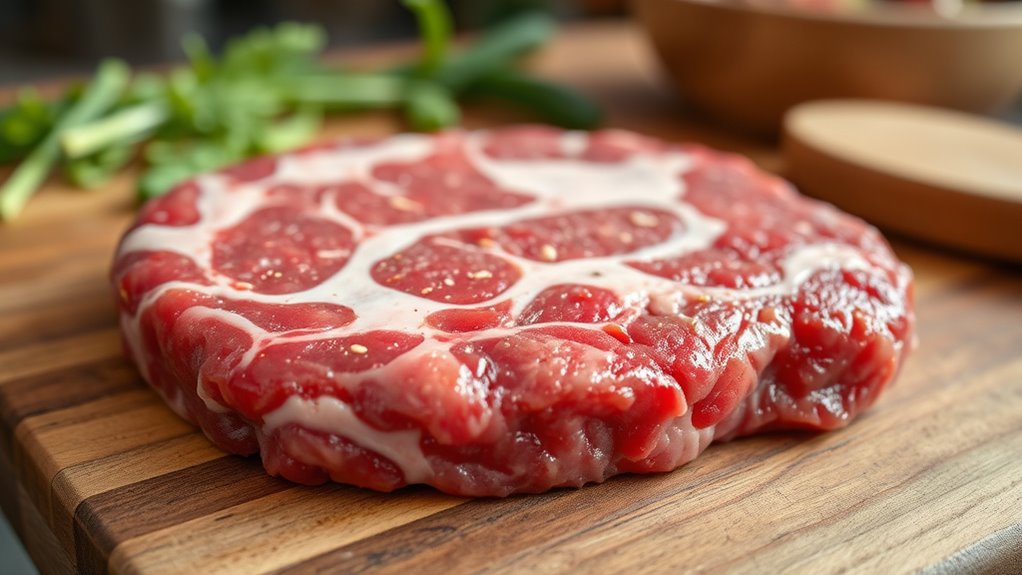
Several key factors influence the calorie content of ground beef. First, the fat percentage plays a big role. Leaner beef, like 90% lean, has fewer calories than higher-fat options such as 80% or 70%.
The cut of beef also matters; sirloin or round tend to be leaner than chuck or brisket. Moreover, how the beef is prepared affects calories—adding oils or breading increases the calorie count.
The grinding process itself doesn’t greatly change calories but can influence texture and fat distribution. Finally, portion size makes a difference; larger servings naturally contain more calories.
How Does Fat Content Impact Ground Beef Calories?
The fat content in ground beef directly impacts its calorie count, with higher fat levels meaning more calories per serving. For example, 80% lean ground beef has less fat and fewer calories than a 70% lean version.
As you increase the fat percentage, the calorie count goes up because fat provides about 9 calories per gram, while protein and carbs offer only 4. This means a higher-fat patty will give you more energy, making it more calorie-dense.
If you’re watching your calorie intake, choosing leaner ground beef can help reduce calories without sacrificing protein. Knowing the fat content helps you make smarter choices that fit your dietary goals.
How Cooking Methods Change the Calorie Count?
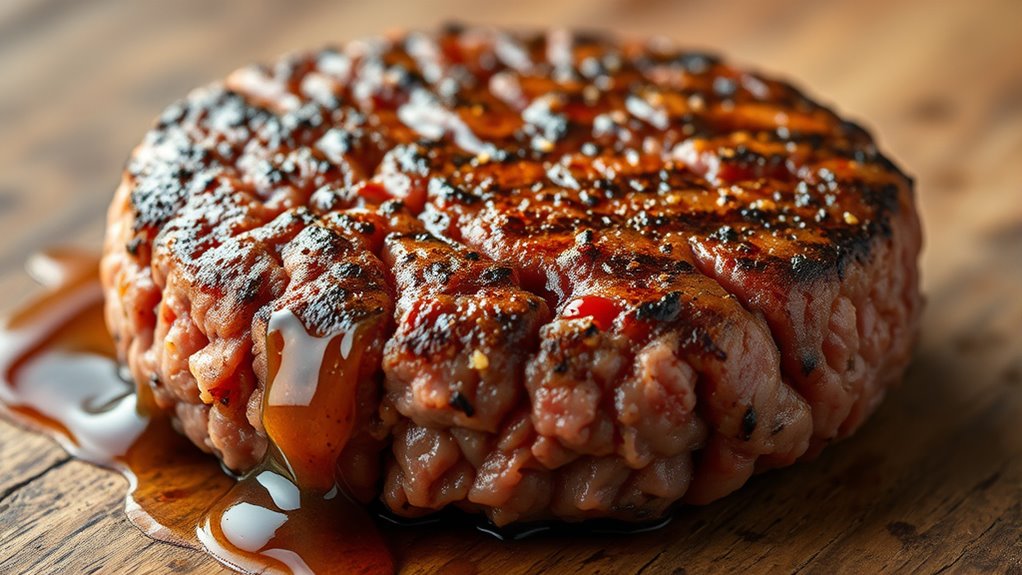
Cooking methods can really change the calorie content of ground beef by affecting its moisture and fat levels. For example, grilling or broiling lets excess fat drip away, which lowers the calories.
On the other hand, frying in oil adds calories and boosts fat content. Searing or pan-frying can trap some fat, making the patty more calorie-dense.
Cooking at high temperatures causes moisture loss, which concentrates calories in the remaining meat.
Adding ingredients like butter or sauces during cooking also increases the calorie count.
To keep calories in check, choose methods that drain fat and avoid using too much oil.
Knowing these differences helps you make healthier choices when preparing ground beef and controlling your calorie intake based on your goals.
Why Patty Size Affects Calorie Content?
The size of your patty directly influences its calorie count because a larger patty contains more meat. Thicker patties naturally have more calories than thinner ones of the same weight.
Keep in mind that portion size also affects your overall calorie intake, so choosing the right size matters.
Patty Weight Determines Calories
A larger ground beef patty has more calories because it contains more meat. That means more protein, fat, and overall weight.
When you increase the patty’s size, you’re adding more of these nutrients, which directly boosts its calorie count. For example, an 8-ounce patty has more calories than a 4-ounce one, assuming both are made from the same ground beef with similar fat content.
The extra weight means more grams of protein and fat, which are the main calorie sources in beef. So, if you want to keep track of calories, paying attention to the patty’s size is key.
Larger patties pack a more calorie-dense punch, making weight a big factor in how many calories you’re eating per serving.
Thicker Patties Have More
Thicker patties naturally contain more meat, which means they pack in more calories than thinner ones. When you increase the thickness, you’re adding more weight to each patty, directly raising its calorie count.
Even if the meat’s fat content stays the same, a thicker patty simply has more meat overall. This means you’ll consume more calories with each bite.
If you’re watching your calorie intake, choosing thinner patties can help manage your consumption. Conversely, thicker patties are more filling but also contribute more calories.
Portion Size Impacts Intake
Since larger patties contain more meat, they naturally deliver more calories per serving. When you choose a bigger patty, you’re consuming a greater portion, which means more protein, fat, and overall calories.
Even if the meat is lean, increasing the size raises your calorie intake simply because there’s more food. Conversely, smaller patties help control calories if you’re watching your intake.
Portion size directly impacts your total calorie consumption, so paying attention to the size of your patty can make a big difference in managing your diet.
Lean vs. Fatty Ground Beef: Which Is Lower in Calories?
When choosing ground beef, knowing the calorie differences between lean and fatty options can help you make healthier choices.
Lean ground beef, usually labeled as 90% lean or higher, has fewer calories because it contains less fat. For example, a 3-ounce cooked patty of 90% lean beef has about 180 calories, while the same size of 80% lean beef contains around 220 calories.
Lean ground beef (90% lean or higher) has fewer calories—about 180 per 3-ounce cooked patty—compared to 80% lean at 220 calories.
The extra fat in fattier ground beef increases the calorie count quite a bit. If you’re keeping track of calories, going for leaner ground beef can help you cut down without losing protein.
Keep in mind that cooking methods also affect the final calorie content, but overall, lean ground beef is your best bet for lower calories.
Toppings and Additions: How They Add Calories?
Adding cheese or sauces to your ground beef patty can really boost its calorie count. Some cheeses have more calories than others, so choosing the right one makes a difference.
Creamy or sugary sauces can quickly turn a low-calorie meal into a calorie-heavy one. Knowing how these toppings affect your meal helps you make smarter choices.
Calorie Impact of Cheese
Have you ever thought about how much extra calories cheese adds to your ground beef patty? A slice of cheddar or American cheese usually adds around 70 to 100 calories.
The type of cheese really makes a difference. For instance, mozzarella has about 80 calories per slice, while Swiss clocks in at roughly 105 calories.
Melting cheese on your burger can quickly boost the calorie count, especially if you pile on multiple slices. Choosing lower-fat options like part-skim mozzarella can cut calories without sacrificing flavor.
Remember, cheese also provides fats and protein, making your burger more calorie-dense. If you’re watching your intake, moderation is key.
A small slice can boost flavor without adding too many calories, but larger portions can add up fast.
Effect of Sauces
Sauces and toppings can really boost the calorie content of your burger, often more than you’d expect. A dollop of mayonnaise or creamy dressing adds hidden calories that can double or triple the patty’s total.
Ketchup, mustard, and BBQ sauce may seem light, but if you use a lot, they can add a good amount of sugar and calories. Cheese, bacon, and fried toppings also increase the calorie count.
Even small amounts of rich sauces like ranch or avocado crema can make a difference. If you’re mindful of calories, pay attention to how much sauce you add.
Choose lighter options like mustard or salsa, and use sauces sparingly. These small changes let you enjoy your burger without consuming extra calories unintentionally.
Tips for Estimating Calories in Homemade Burgers
Estimating the calories in homemade burgers can be straightforward if you pay close attention to the ingredients and portion sizes you use. Start by weighing your ground beef before cooking to know the exact amount.
Use a reliable nutrition calculator or label to find the calorie content per ounce or gram. Don’t forget to account for added ingredients like cheese, bacon, or sauces, which can greatly increase calories.
Use measuring cups or spoons for toppings and condiments to keep track. Track everything in a food journal or app for accuracy.
When cooking, drain excess fat or choose leaner meat options to lower calorie content. Being precise with portion sizes and ingredient details helps you estimate your burger’s calorie count more accurately.
Frequently Asked Questions
How Does the Type of Ground Beef (Organic, Grass-Fed) Affect Calorie Content?
The type of ground beef you choose can slightly affect the calorie content. Organic and grass-fed options often have a bit more fat, which can increase calories compared to conventional ground beef.
However, the difference isn’t huge—mostly a few extra calories per serving. If you’re watching your intake, check the label for fat content, as higher fat means more calories.
Do Seasoning or Marinades Significantly Change the Calorie Count?
Seasonings and marinades can add some calories, but the change usually isn’t significant unless they contain high-calorie ingredients like sugar, honey, or oil. Most herbs and spices have minimal calories, so they won’t impact your overall count much.
If you’re watching calories closely, check the marinade ingredients and use them sparingly. Small adjustments in seasonings won’t drastically change the calorie content of your ground beef patty.
Are There Calorie Differences Between Fresh and Frozen Ground Beef?
Yes, there can be calorie differences between fresh and frozen ground beef. Freezing itself doesn’t change the calorie content, but sometimes, added preservatives or solutions used during processing frozen beef can slightly increase calories.
Fresh beef usually has no added ingredients, so it contains only its natural calories. Always check labels or packaging for any added solutions or ingredients that might affect the calorie count.
How Does Resting Cooked Ground Beef Influence Its Calorie Density?
Think of cooked ground beef as a sponge soaking up flavors and juices. Resting it allows the juices to redistribute, slightly reducing moisture loss.
While this process doesn’t drastically change calorie density, it guarantees each bite is tender and flavorful. By letting it sit, you’re fundamentally locking in the richness, making every mouthful more satisfying without adding calories.
It’s a simple step that improves taste and texture, not calorie count.
Can Different Burger Bun Types Impact Overall Calorie Intake?
Yes, different burger bun types can really impact your overall calorie intake.
White buns tend to have more calories and refined carbs, while whole-grain or lettuce wraps are lower in calories and packed with fiber.
Choosing a whole-grain bun or a lettuce wrap lets you enjoy your burger without piling on unnecessary calories.
Pay attention to bun size and ingredients, as they can make a big difference in your meal’s calorie content.
Conclusion
Knowing how many calories are in your ground beef patty helps you make smarter choices. Did you know that a typical 4-ounce beef patty can range from 200 to 300 calories depending on fat content?
Being mindful of factors like size, fat level, and toppings can make a big difference in your meal. So next time you fire up the grill, you’ll be better equipped to enjoy your burger without overdoing it.
Understanding the calories in a ground beef patty, especially a 4-ounce one, helps you stay on track with your health goals.