How Many Calories Are in a Slice of Roast Beef?
Many people want to enjoy roast beef without the guilt or the surprise of hidden calories. If you’re trying to watch your intake but still love that savory, hearty flavor, you’re not alone.
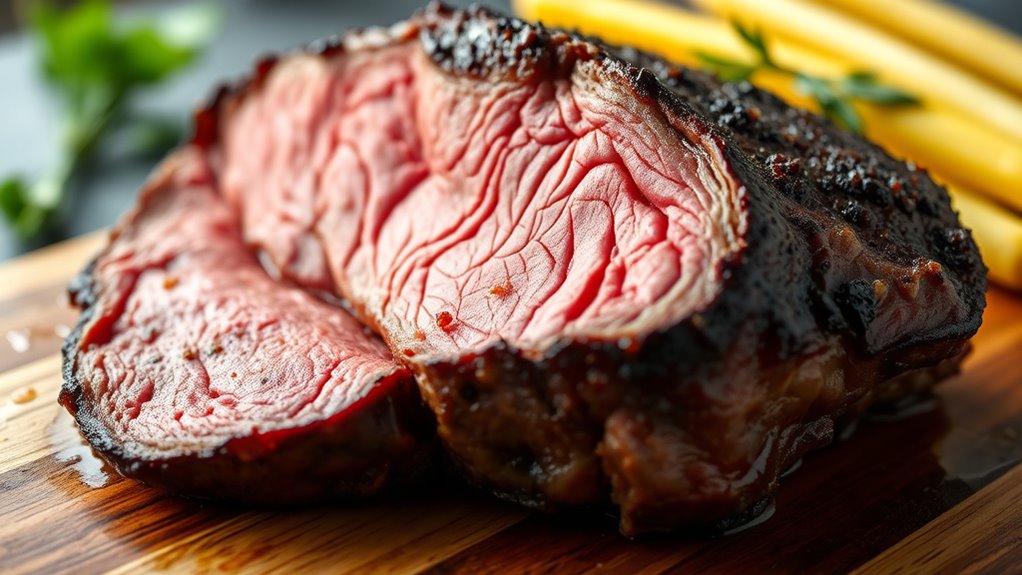
Understanding how different cuts and cooking methods impact calories can make a big difference. A typical 3-ounce slice of roast beef has about 180 calories, but this can vary based on the cut and how it’s cooked.
Leaner cuts like sirloin have fewer calories, while fattier options like ribeye contain more. Cooking methods also matter—grilling reduces calories, while frying adds extra.
If you want to enjoy roast beef without overdoing it, understanding these factors can help you make smarter choices. Keep exploring to learn how to optimize your servings.
Key Takeaways
- A typical 3-ounce slice of roast beef has about 180 calories.
- The calorie count can change depending on the cut. Leaner cuts tend to have fewer calories.
- How you cook it also makes a difference. Roasting or grilling can affect the final calorie amount.
- Fattier cuts like ribeye might have over 250 calories for the same 3-ounce slice.
- Trimming off some fat and watching your portion size can help reduce your calorie intake.
How Many Calories Are in a Typical Slice of Roast Beef?
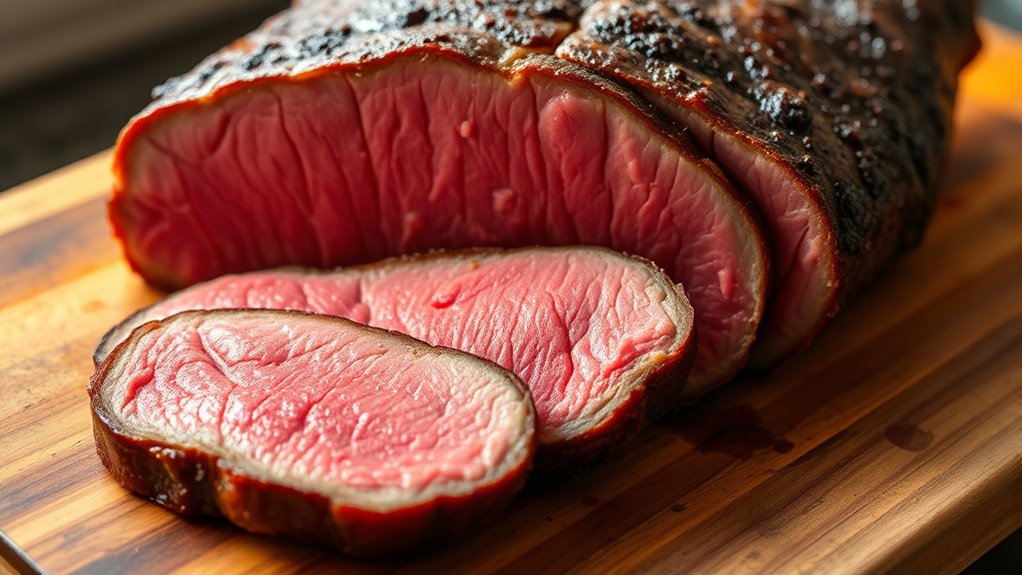
Ever wonder how many calories are in a typical slice of roast beef? On average, a 3-ounce slice contains around 180 calories. This can vary depending on the cut and how it’s prepared, but generally, leaner cuts like sirloin or round have fewer calories.
Fattier cuts, like ribeye, pack more calories because of their higher fat content. The thickness of your slice also makes a difference—thicker slices mean more meat and calories. If you trim off the excess fat, you’ll cut down the calorie count quite a bit.
Cooking methods matter too. Roasting without added fats keeps the calorie count lower. Overall, a standard slice is a good source of protein, with calories reflecting the cut’s fat and lean muscle content.
What Factors Affect Roast Beef’s Calorie Content?
Several factors influence the calorie content of roast beef beyond just the size of your slice. The cut of beef you choose matters—leaner cuts like sirloin have fewer calories than fattier options like brisket.
Cooking methods also play a role. Roasting without added fats keeps calories lower, while frying or adding oils increases them. Trimming visible fat before cooking helps cut down on calories too.
The doneness level can impact moisture and fat content, which subtly affects calorie count. Here’s a quick overview:
| Factor | Effect on Calories |
|---|---|
| Cut of beef | Leaner cuts = fewer calories |
| Cooking method | Less fat = fewer calories |
| Fat trimming | Trimming fat lowers calorie content |
| Added fats/oils | Increase overall calories |
| Doneness level | Slight impact on calorie variation |
Compare Calories in Different Cuts of Roast Beef
Are you curious about how the calorie content varies between different cuts of roast beef? Generally, leaner cuts like sirloin or round tend to have fewer calories per serving than fattier options like ribeye or prime rib.
For example, a 3-ounce cooked sirloin might have around 180 calories, while the same amount of ribeye could contain over 250 calories. The fat content greatly influences calorie count, so fattier cuts pack more energy.
Moreover, trimming excess fat reduces calories further. Keep in mind that cooking methods and trimming can also alter calorie levels, but the cut itself largely determines the baseline calorie content.
Choosing leaner cuts helps you enjoy roast beef without consuming too many calories.
How Do Cooking Methods Influence Roast Beef Calories?
Cooking methods greatly impact the calorie content of roast beef because they can add or reduce fat and moisture. For example, roasting at high heat can create a crispy exterior without adding extra fat, while frying or broiling in oil increases calories.
Grilling allows excess fat to drip away, lowering calorie content. In contrast, braising or stewing retains more fat and moisture, which boosts calories. Here’s a quick comparison:
| Method | Fat Content Impact | Moisture Retention | Calories Effect |
|---|---|---|---|
| Roasting | Maintains, slight increase | Moderate | Slightly higher or similar |
| Frying | Adds fat | Retains moisture | Considerably increases |
| Grilling | Fat drips away | Keeps moisture | Lower calories |
| Braising | Retains fat and moisture | High | Increases overall calories |
Choosing your cooking method carefully can really influence the final calorie count of your roast beef.
Tips to Enjoy Roast Beef Without Overdoing Calories
To enjoy roast beef without overdoing calories, focus on portion control and mindful eating. Stick to smaller slices or servings to keep your calorie intake in check. Using a food scale or measuring tools can help you get accurate portions.
Pay attention to how you eat—chew slowly and savor each bite. This helps you recognize fullness cues faster. Incorporate vegetables or salads on the side to add volume and nutrients without many calories.
Chew slowly and savor every bite to better recognize when you’re full and prevent overeating.
Avoid high-calorie condiments or heavy sauces. Instead, opt for herbs, spices, or a squeeze of lemon to boost flavor. Mindful eating also means avoiding distractions like screens so you can better gauge your hunger and fullness levels.
These simple strategies will help you enjoy roast beef while maintaining a balanced diet.
Are There Lower-Calorie Roast Beef Options?
If you’re looking to enjoy roast beef while keeping calories in check, exploring lower-calorie options can make a big difference. You can choose lean cuts like sirloin or eye of round, which naturally contain less fat.
Opt for trimming excess fat before cooking to reduce calorie content further. Cooking methods matter too—grilling, roasting, or broiling without added fats help cut calories.
You might also consider portion control, enjoying smaller slices to satisfy your craving without overdoing it. Furthermore, some pre-packaged or deli roast beef options are labeled lower-fat or lean, making them easier choices.
Incorporating Roast Beef Into a Healthy, Balanced Diet
Incorporating roast beef into a healthy, balanced diet involves more than just choosing lean cuts. It’s about mindful portioning and pairing it with nutrient-rich foods. Focus on control—stick to recommended serving sizes—and balance your plate with vegetables, whole grains, and healthy fats.
This approach helps you get essential nutrients without taking in excess calories. Think about how you combine foods for the best health benefits. Here’s a simple guide:
| Food Group | Portion Size | Benefits |
|---|---|---|
| Lean Proteins | 3-4 oz of roast beef | High in protein, low in fat |
| Vegetables | Fill half your plate | Vitamins, fiber, antioxidants |
| Whole Grains | 1/2 cup cooked | Fiber, sustained energy |
Smart pairing allows you to enjoy roast beef while supporting your overall health.
Frequently Asked Questions
Can Portion Size Change the Calorie Count of Roast Beef?
Yes, portion size definitely changes the calorie count of roast beef. When you increase the slice size, you’re eating more meat and, therefore, more calories.
On the flip side, smaller slices have fewer calories. So, paying attention to portion sizes is important if you’re tracking your intake or trying to manage calories.
Is Leaner Roast Beef Lower in Calories?
A leaner roast beef is lower in calories because it has less fat, which provides more calories per gram than protein. Think of it as choosing a clear stream over a muddy pond—less fat means a cleaner, healthier option.
How Does Marinating Affect Roast Beef Calories?
Marinating roast beef can slightly increase its calorie content, especially if you use oil, sugar, or high-calorie ingredients in the marinade. These additions add calories that absorb into the meat.
If you choose low-calorie marinades like herbs, vinegar, or lemon juice, the calorie increase stays minimal. Overall, marinating doesn’t drastically change the calorie count but can add a bit, depending on the ingredients used.
Are There Specific Seasonings That Add Calories?
Think of seasonings as tiny artists adding flavor strokes to your dish. Most herbs and spices, like rosemary, thyme, or pepper, are calorie-free, so they won’t tip the calorie scale.
However, if you use ingredients like sugar, honey, or marinades with oil, they can add calories. So, choose your seasoning palette wisely. Simple herbs elevate your roast beef without sneaking in extra calories.
Does Resting the Meat Impact Its Calorie Content?
Resting the meat doesn’t impact its calorie content considerably. When you let roast beef rest, the juices redistribute, but the overall calorie count stays the same.
The meat’s weight may slightly change due to moisture loss, which could slightly alter calorie density per gram. However, the total calories remain consistent.
Conclusion
Now that you know how many calories a slice of roast beef contains, you can confidently include it in your meals without guilt. Think of each slice as a precious gem, glowing with flavor yet mindful of your health.
By choosing lean cuts, controlling portions, and using mindful cooking methods, you turn your plate into a canvas of nourishment. Incorporate roast beef into your diet thoughtfully, and it can be part of a balanced, satisfying meal.
Adopting these tips ensures your diet remains both delicious and nutritious. Remember, knowing the calorie content of your favorite foods helps you make smarter choices for your health and energy.