8 Best Salts for Your Water Softener
Dealing with hard water can be a real hassle, and you’re not alone in this struggle. Many people find that their water softener isn’t working as well as it should, leading to buildup, scale, and even damage to appliances.
Finding the right water softener salt can make a huge difference in keeping your system running smoothly and extending its lifespan.
For the best water softener salts, consider evaporated salt for purity, solar salt for affordability, or high-purity options to reduce buildup.
Rock salt is budget-friendly but may cause system issues, while eco-friendly salts contain natural minerals and minimal packaging.
The grain size, cost, and manufacturer recommendations also matter. Choosing the right salt helps your system run smoothly and last longer.
Keep exploring to find out which options suit your needs best.
Key Takeaways
- Prioritize high-purity salts like evaporated and solar salts to reduce mineral buildup and improve system efficiency.
- Check manufacturer recommendations to make sure the salt you choose is compatible and will keep your water softener running smoothly.
- Consider eco-friendly options that contain natural minerals and come in recyclable packaging if you’re aiming to be more environmentally conscious.
- Opt for salts with appropriate grain sizes—finer salts dissolve faster, while larger grains last longer and require fewer refills.
- Regularly monitor your salt levels and look out for issues like bridging or clogging.
Keeping an eye on these things helps maintain the best water softening performance and keeps your system working efficiently.
What Are the Different Types of Water Softener Salt?
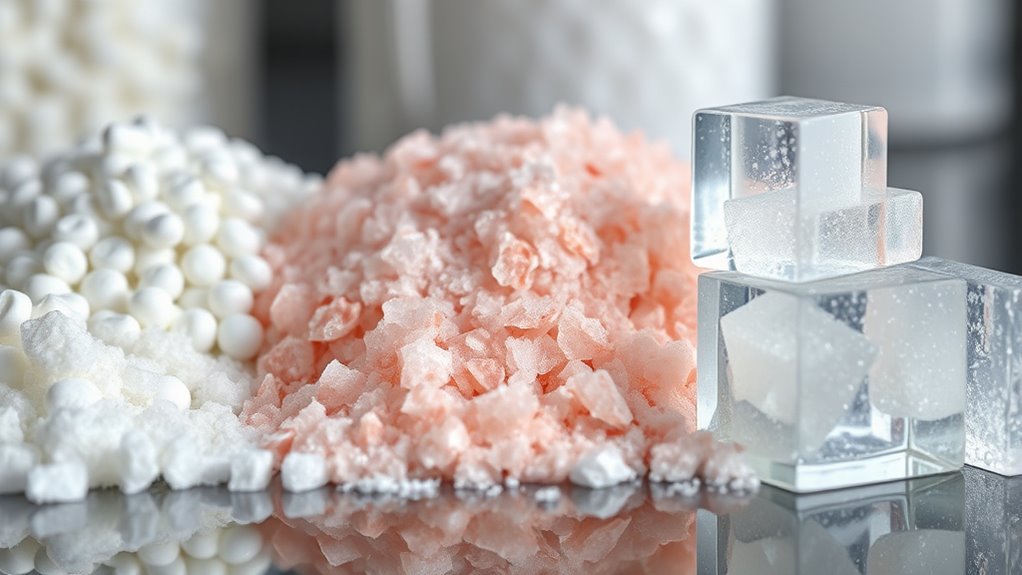
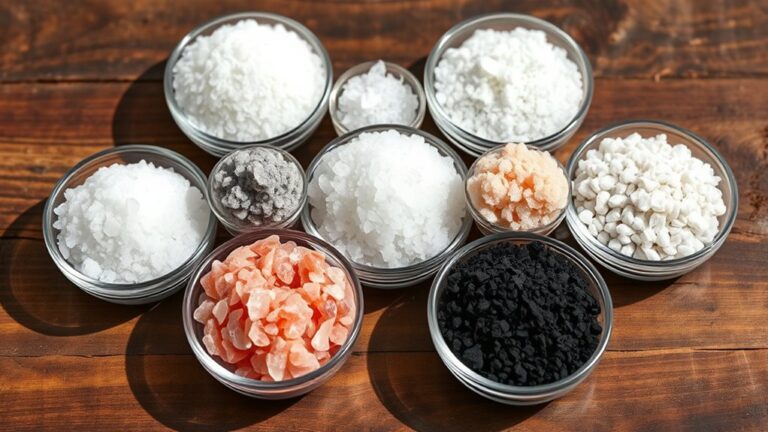
With regard to maintaining a water softener, understanding the different types of salt available is essential. There are three main types: solar salt, rock salt, and evaporated salt.
Solar salt is produced by evaporating seawater in the sun, creating large crystals that are affordable but may leave residue. Rock salt, mined from underground deposits, is less refined and often contains impurities that could clog your system.
Evaporated salt, also known as refined salt, is processed in a vacuum to produce pure, small crystals that dissolve easily and are gentle on your equipment. Each type has its advantages and disadvantages, so knowing what’s available helps you make an informed choice for your water softener.
How to Choose the Best Water Softener Salt for Your Needs
Choosing the right water softener salt depends on your specific needs and your system’s requirements. First, check your softener’s manufacturer recommendations to guarantee compatibility.
Select the best water softener salt by considering your system’s needs and manufacturer guidelines for optimal performance.
Consider the water hardness level in your area. If it’s very hard, you might need a more efficient salt type, like high-purity or solar salt.
Budget also plays a role. Regular rock salt is usually cheaper but may require more frequent refills.
Think about maintenance needs. Some salts produce less residue and reduce clogging issues.
If you prefer a low-sodium option, look for salts with lower sodium content.
Finally, examine the purity and grain size. Finer grains dissolve faster, but larger ones last longer.
Matching the salt type to your system and water conditions helps optimize performance and prolongs your softener’s lifespan.
Best Eco-Friendly Water Softener Salts for Sustainable Living
Are eco-friendly water softener salts truly better for sustainable living? They can be, especially if you care about reducing environmental impact. These salts often have fewer harmful chemicals and produce less waste.
To make an eco-conscious choice, think about these factors:
- Mineral Content: Pick salts with natural minerals that need less processing.
- Biodegradability: Go for salts that break down easily and don’t pollute waterways.
- Packaging: Choose brands that use minimal or recyclable packaging to cut down on waste.
High-Purity Water Softener Salts for Optimal Performance
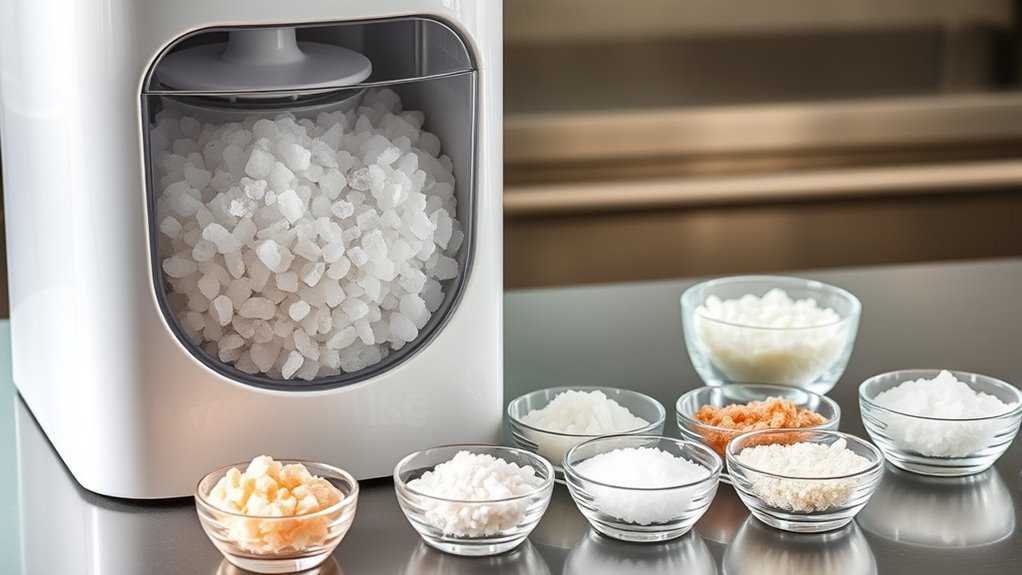
High-purity water softener salts are essential for getting the best performance from your softening system. They help reduce mineral buildup and increase efficiency by minimizing impurities that can clog your unit.
These salts are usually made from high-quality sodium chloride, which ensures consistent ion exchange and a longer lifespan for your softener. Using high-purity salts also helps prevent resin fouling, keeping your water quality at its best.
Look for salts labeled as food-grade or pharmaceutical-grade for the highest purity. Here’s a quick comparison:
| Salt Type | Purity Level | Best For |
|---|---|---|
| Solar Salt | 99% pure | General softening |
| Evaporated Salt | 99.9% pure | Sensitive systems |
| Block Salt | 98-99% pure | Space-saving, easy handling |
Choosing high-purity salts ensures your system runs smoothly and lasts longer.
Cost-Effective Water Softener Salts That Save You Money
If you’re looking to save money on water softening, cost-effective salts can be a smart choice without sacrificing performance. These salts usually cost less but still do a good job of removing hardness minerals.
To get the most savings, consider these options:
Explore affordable salt options like rock, solar, or evaporated salt for efficient water softening savings.
- Regular Rock Salt – It’s widely available and affordable, making it suitable for most residential systems.
- Solar Salt Pellets – Slightly more expensive than rock salt but they dissolve easily and last longer.
- Evaporated Salt – While it costs more upfront, it’s very pure and reduces how often you need to refill, saving you money over time.
Choosing the right type depends on your water usage and system, but these options help balance cost and efficiency effectively.
Why Salt Purity Matters for Your Water Softener
The purity of your water softener salt really affects how well it works and how long it lasts. Impurities like dirt, clay, or minerals can clog up the resin beads in your system, making it less effective at softening water.
Low-quality salt often has high levels of contaminants, which can cause buildup and lead to costly repairs. Using pure salt ensures only sodium ions are exchanged during the process, helping your system perform at its best.
Pure salt also reduces the risk of scaling and mineral deposits that can damage your equipment over time. When you choose high-purity salt, you’re helping your water softener run smoothly and last longer.
In the end, investing in good-quality salt saves you money by avoiding maintenance issues and giving you better water quality at home.
How Often Should You Refill Your Water Softener With Salt?
You should refill your water softener with salt regularly to keep it working efficiently. How often you need to do this depends on your water use, the size of your softener, and the type of salt you use.
Refill your water softener with salt regularly to ensure optimal performance and prevent hard water issues.
Usually, it’s a good idea to check the salt level once a month. Keep an eye on it so you don’t run low, which can affect how well the softener works.
When the salt reaches about 2 inches above the brine line, it’s time to refill. This helps ensure the system regenerates properly and stays effective.
Use the amount of salt recommended by your softener’s manufacturer. That’s typically one to two bags per month, depending on your water usage.
Regularly refilling the salt keeps your system running smoothly, prevents hard water problems, and helps your softener last longer.
Troubleshooting Common Water Softener Salt Issues
Even when you regularly refill your water softener with salt, issues can still come up that affect how well it works. One common problem is salt bridging, where a hard crust forms in the brine tank and blocks the salt from dissolving properly. To fix this, gently break up the bridge with a broomstick or similar tool.
Another issue is salt clogging, which happens if you use the wrong type of salt or overfill the tank. This causes salt to build up and interfere with the regeneration process. To fix it, switch to high-quality salt and avoid overfilling the tank.
Also, check for low salt levels. If your softener isn’t regenerating properly, it might be because there’s not enough salt. Regular maintenance, choosing the right salt, and keeping the tank clean can help prevent these common problems.
Frequently Asked Questions
Can Using the Wrong Salt Damage My Water Softener?
Yes, using the wrong salt can damage your water softener. Low-quality or incompatible salts may cause salt bridges, clogs, or buildup inside the resin tank, which can lead to poor performance or even damage over time.
Always choose high-quality, appropriate salt like evaporated or solar salt. This helps ensure your system runs smoothly and efficiently.
Regular maintenance and using the correct type of salt can extend your water softener’s lifespan and keep it working effectively.
How Does Water Hardness Affect Salt Choice?
Water hardness shapes your salt choice, kind of like a painter picking the right brush for vibrant strokes.
Hard water, full of minerals, needs high-quality salt to prevent buildup and keep your softener working smoothly.
Soft water, with fewer minerals, lets you go for a gentler salt.
Your goal is to match the salt type to your water’s mineral content.
That way, your softener stays efficient, and your pipes stay clear and trouble-free.
Are There Health Concerns With Certain Water Softener Salts?
Yes, some water softener salts can raise health concerns. Sodium chloride, which is common in many salts, adds sodium to your water. This might be a problem for people on low-sodium diets.
Potassium chloride is a healthier alternative, especially for those with hypertension. But keep in mind, drinking excessive softened water can lead to health issues.
Always choose high-quality salts, and if you have specific health concerns, it’s a good idea to talk to a healthcare professional.
What Are the Signs That My Water Softener Needs New Salt?
Your water softener will scream for new salt when the water starts feeling slimy, spots appear on dishes, or the softener’s regeneration cycle shortens dramatically.
You might also notice decreased water pressure or mineral buildup around your fixtures.
If any of these signs occur, don’t ignore them. Changing the salt promptly will keep your system running smoothly and guarantee you always have soft, clean water.
Does Water Temperature Impact Salt Dissolution Efficiency?
Yes, water temperature impacts salt dissolution efficiency. When your water is warm, salt dissolves faster because heat helps break down the salt crystals more quickly.
Conversely, cold water slows this process, making it take longer for the salt to dissolve completely. To keep your water softener working well, aim for a moderate temperature around 60-70°F.
This temperature range helps optimize salt dissolution and keeps your system running smoothly.
Conclusion
In the quest for perfect water, choosing the right salt is your secret weapon. Without it, your softener could be a disaster, leaving you with hard water chaos!
With the right salt, you’ll conquer mineral buildup, save heaps of cash, and even help the planet. So don’t settle for less—arm yourself with the best, keep that salt tank full, and transform your water woes into pure, silky perfection.
Your sparkling, problem-free water empire awaits!