8 Best Salts for Melting Ice Effectively
Dealing with icy walkways and driveways can be a real headache, especially when temperatures drop below freezing. You’re not alone—many people struggle with finding the right way to melt ice safely and efficiently.
For effective ice melting, consider salts like calcium chloride and magnesium chloride, which work in extremely cold temperatures.
Sodium chloride is common but less effective below 20°F, while potassium chloride is suitable down to about 12°F.
Specialty blends with organic compounds boost melting success in tougher conditions and are safer on surfaces.
Choosing the right salt depends on your climate and needs. Keep exploring to find the best options for safe, efficient ice removal.
Key Takeaways
- Calcium chloride is highly effective down to -25°F, making it perfect for really cold conditions. It works quickly to melt ice and is a popular choice for harsh winters.
- Magnesium chloride also performs well at temperatures as low as -13°F. Plus, it’s gentle on surfaces, so it’s less likely to cause damage.
- Finer salt particles dissolve faster, which means they melt ice more quickly. This speeds up the process and makes your efforts more efficient.
- Specialty ice melts that contain calcium magnesium acetate tend to work better in extreme cold. They are also eco-friendly, so they’re a good choice if you’re concerned about the environment.
- Remember, applying the right amount at the right time is key. Responsible use helps maximize the melting power and reduces potential damage to surfaces and the environment.
How Salt Melts Ice: Key Factors to Know
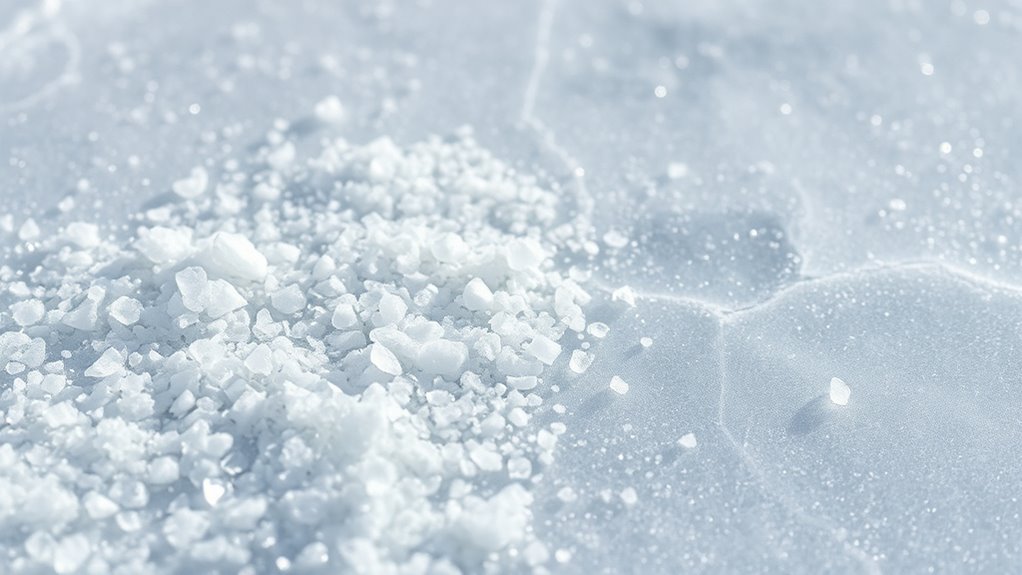
Understanding how salt melts ice is important if you want to pick the right type for your needs. When salt touches ice, it lowers the freezing point, causing the ice to melt. This process is called freezing point depression.
The effectiveness depends on factors like salt type, temperature, and ice thickness. Common salts like sodium chloride work best just below freezing but are less effective in colder weather. The size of the salt particles also matters; finer grains dissolve faster and work quicker.
Keep in mind, salt’s ability to melt ice drops as temperatures go further below freezing. Knowing these factors helps you choose the most efficient salt for your winter conditions.
Top Salts for Melting Ice in Cold Weather
When temperatures drop well below freezing, not all salts are equally effective at melting ice. Calcium chloride stands out because it works down to about -25°F, making it great for severe cold.
Calcium chloride effectively melts ice down to -25°F, ideal for extremely cold winter conditions.
Magnesium chloride also performs well in cold weather, melting ice at temperatures as low as -13°F. Sodium chloride, or rock salt, is common but less effective in extreme cold, melting at around 20°F.
Potassium chloride is a good alternative, effective up to about 12°F, but it’s usually more expensive. When choosing a salt for cold temperatures, consider how low the temperature drops and the salt’s melting capabilities.
Using the right salt guarantees safer, clearer roads and walkways even in the harshest winter conditions.
Calcium Chloride: Fast-Acting Ice Melter for Severe Cold
Calcium chloride is one of the most effective salts for melting ice in severe cold conditions because it works quickly and at very low temperatures. Its rapid melting ability makes it ideal for urgent situations, especially when temperatures drop below freezing.
Unlike other salts, calcium chloride can melt ice down to -25°F (-32°C), ensuring safety even in extreme cold. It releases heat as it dissolves, which speeds up the melting process.
This makes it highly efficient, reducing the time needed to clear walkways and driveways. Furthermore, calcium chloride is less corrosive than some alternatives, though it can still harm certain surfaces if not used carefully.
Magnesium Chloride: Gentle and Effective on Surfaces
Magnesium chloride is known for being gentle on surfaces while still melting ice effectively.
You can trust it to protect your driveway and walkways from damage during winter use. Its balance of safety and efficiency makes it a popular choice for many households.
Surface Safety Assurance
Magnesium chloride is a top choice for ice melting because it balances effectiveness with surface safety. It’s gentle on concrete, asphalt, and stone, helping to reduce cracks or damage that harsher salts might cause.
Unlike some other options, magnesium chloride minimizes corrosion to metal fixtures and vehicles, so you can protect your property’s infrastructure. It’s also less likely to leave sticky residue or stains, keeping surfaces cleaner and safer.
This salt works well at lower temperatures without needing a lot of product, so you use less overall. Its non-abrasive nature gives you peace of mind, making sure your walkways and driveways stay intact while melting ice efficiently.
Melting Efficiency
Magnesium chloride not only protects your surfaces but also excels at melting ice efficiently, even in challenging temperatures. It works quickly, lowering the freezing point of water to prevent ice from forming or to melt existing ice faster.
Unlike some salts that lose effectiveness in very low temperatures, magnesium chloride remains active, making it reliable during harsh winter conditions. Its hygroscopic nature allows it to absorb moisture, speeding up the melting process.
You’ll notice it works well on driveways, sidewalks, and steps without causing surface damage. Plus, it generates less residue and is less corrosive than traditional salts, so it’s gentler on your concrete and vegetation.
Eco-Friendly Salt Alternatives for Melting Ice
In regard to melting ice responsibly, eco-friendly salt alternatives offer a safer option for both the environment and your property. These options typically use natural ingredients that reduce soil and water contamination, unlike traditional salts.
Products like calcium magnesium acetate, beet juice, and sand provide effective traction and melting power without harming plants or wildlife. They are especially useful for environmentally sensitive areas or where runoff might reach water sources.
While these alternatives may sometimes be less aggressive than conventional salts, they still help clear pathways and reduce ice buildup safely. Choosing eco-friendly options demonstrates a commitment to sustainability while maintaining safety during winter.
Always read product labels to verify they meet your environmental standards, and apply them carefully for the best results.
Best Ice Melt Salts: Cost, Safety, and Effectiveness Compared
When choosing the best ice melt salts, it’s important to compare their cost, safety, and effectiveness to find the right balance for your needs. Sodium chloride, or rock salt, is affordable and widely available but can damage concrete and plants over time.
Calcium chloride melts ice faster and works at lower temperatures, but it’s more expensive and can cause corrosion. Magnesium chloride strikes a balance, offering good melting power with less corrosiveness, though it costs more than rock salt.
Consider safety too. Some salts can irritate skin or harm pets if ingested. Ultimately, your choice depends on your budget, environmental concerns, and safety priorities.
Weigh these factors carefully to select a salt that melts ice effectively without unnecessary risks or costs.
How to Safely Apply Salt for the Best Results
To get the best results, you need to apply salt evenly and at the right time, avoiding overuse.
Make certain to wear gloves and keep pets and children away during application to stay safe.
Following proper techniques and safety tips guarantees effective melting and prevents accidents.
Proper Application Techniques
Applying salt correctly guarantees you get the best melting results while staying safe and cost-effective. Start by spreading the salt evenly across the icy surface, avoiding clumps or thick patches. Use a scoop or spreader for consistent coverage, especially on larger areas.
For maximum effectiveness, apply salt before the snow or ice has built up too much. This helps prevent bonding and makes melting easier. Avoid over-salting, as excess salt won’t speed up melting and can cause damage.
Instead, focus on targeted application where the ice is thickest or most hazardous. Regularly check and reapply salt as needed, especially during ongoing cold weather.
Proper technique guarantees efficient melting, reduces waste, and protects your property and environment.
Safety Precautions to Follow
Using proper application techniques not only guarantees effective melting but also helps you stay safe. Wear gloves and protective eyewear to prevent salt irritation or eye injury during application.
Avoid over-salting because too much salt can damage surfaces and harm nearby plants. Keep children and pets away from salted areas until the salt is fully absorbed or rinsed away.
Use a broadcast spreader or scoop to evenly distribute the salt. This prevents uneven melting and reduces chemical waste. Be mindful of weather conditions—apply salt before a forecasted storm or during light snowfall for best results.
After melting, wash your hands thoroughly. Following these precautions ensures you stay safe while efficiently melting ice and protecting your property and environment.
When and How to Use Specialty or Combined Ice Melts
Specialty and combined ice melts are best suited for specific situations where regular salts just aren’t enough. Use them when temperatures fall below the effectiveness of standard salt, usually under 15°F or -9°C, and when ice is really thick or stubborn.
These products often include ingredients like calcium magnesium acetate or organic compounds that work better in extreme cold or on sensitive surfaces. Apply them evenly over the icy area, following the manufacturer’s instructions for how much to use.
Timing is key. Use these melts early, before the ice bonds strongly, or during ongoing cold spells. Be careful not to over-apply, as this can damage surfaces or harm the environment.
Save specialty blends for tough conditions to get the best melting results and protect your property.
Frequently Asked Questions
How Long Does It Take for Salt to Melt Ice Completely?
It usually takes anywhere from 15 minutes to an hour for salt to melt ice completely, depending on conditions. When you spread salt on ice, it starts working right away by lowering the freezing point.
Warmer temperatures speed up the melting process, while colder weather slows it down. For quicker results, use more salt and spread it evenly.
Keep in mind, thicker ice might take longer to melt fully.
Can Salt Damage Concrete or Asphalt Surfaces?
Yes, salt can damage concrete and asphalt surfaces over time. When it dissolves, it creates a brine that can seep into cracks, weakening and deteriorating the material.
This damage is especially common with repeated salt use or during freeze-thaw cycles. To protect your surfaces, consider using less corrosive options like calcium magnesium acetate or sand.
Try to avoid applying too much salt. Regularly cleaning and sealing your concrete and asphalt can also help minimize damage over time.
Is There a Difference Between Rock Salt and Table Salt for Melting Ice?
Think of rock salt and table salt as siblings with different roles. Rock salt is larger and better for melting ice quickly because it lowers the freezing point more effectively.
Table salt, being finer, dissolves faster but isn’t as efficient for large-scale melting.
How Does Temperature Affect Salt’s Melting Efficiency?
Temperature greatly impacts how effectively salt melts ice. When it’s above 20°F (-6°C), common salts like rock salt work well, lowering the freezing point and melting ice efficiently.
However, as temperatures drop below this, their effectiveness decreases. You might need to use specialty salts or additional measures.
Always apply salt before ice fully forms or when temperatures are just above freezing for the best results.
Are There Environmental Impacts of Using Different Types of Ice Melt Salts?
You might think all ice melt salts are similarly eco-friendly, but studies suggest otherwise.
Some salts, like calcium chloride, can harm plants, soil, and aquatic life by increasing salinity and introducing chemicals.
Others, such as potassium chloride, have similar issues but may be less damaging.
Always consider environmental impacts when choosing a salt, as improper use can lead to long-term ecological harm.
Even if the immediate melting seems effective, it’s worth thinking about the bigger picture.
Conclusion
When choosing the right salt for melting ice, it all comes down to your specific needs—whether you want quick results, safety, or an eco-friendly option. Sometimes, the best choice pops up unexpectedly, like a neighbor’s helpful tip or a lucky discovery.
Remember, with a little knowledge and patience, you’ll find the perfect ice melt for your situation. The most effective salt is the one that keeps you safe and preserves your surfaces, no matter what winter throws at you.