What Temp Should You Cook Beef Short Ribs in the Oven?
Many home cooks love the idea of making tender, flavorful beef short ribs in the oven but often struggle with getting the perfect result. You’re not alone—finding the right temperature can be tricky and frustrating.
But don’t worry, with a little guidance, you’ll be on your way to melt-in-your-mouth short ribs in no time.
You should cook beef short ribs in the oven at a temperature between 275°F and 300°F. This range allows the collagen to break down slowly, making the meat tender and juicy.
Cooking at too high a temperature can dry out or toughen the ribs, while too low may leave them undercooked. Proper temperature control is key to perfect results, and staying within this range helps you achieve flavorful, melt-in-your-mouth short ribs.
Keep going to find out more tips for perfect results.
Key Takeaways
- Cook beef short ribs at 275°F to 300°F (135°C to 150°C) for the best tenderness and collagen breakdown.
- Use an oven thermometer to keep the temperature steady and accurate during cooking.
- Keeping the heat low and slow, around 275°F, helps produce tender, juicy ribs with rich flavor.
- Aim for an internal temperature of 200°F to 210°F to ensure the ribs are fully tender and flavorful.
- Avoid cranking up the heat above 375°F, as that can dry out or toughen the meat.
Why Do Short Ribs Need Precise Oven Temperatures?
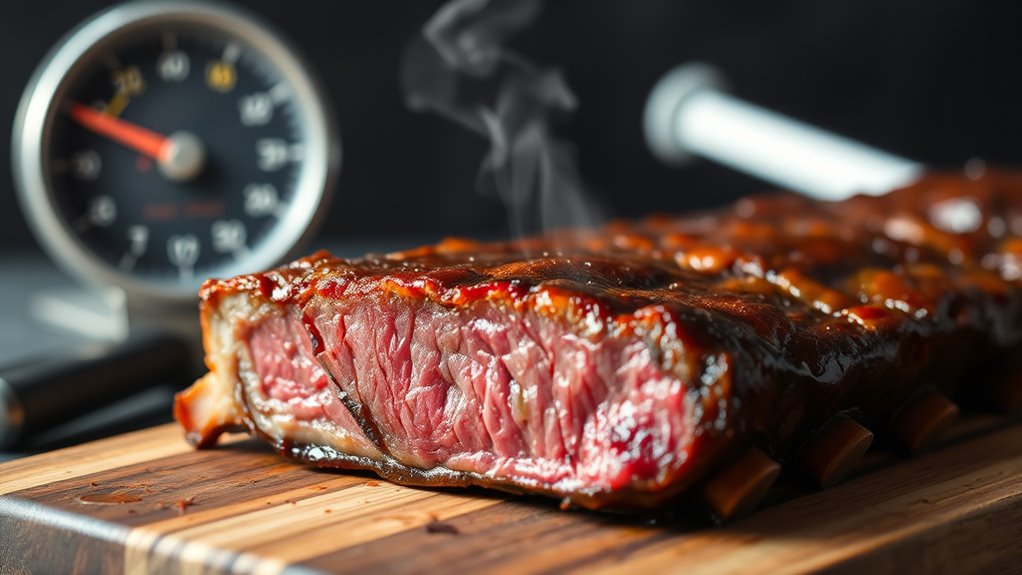
Why do short ribs require precise oven temperatures? The answer lies in their unique structure and fat content.
Short ribs have a tough connective tissue called collagen that needs slow, steady heat to break down into tender gel. If your oven is too hot, the meat can dry out or become tough before the collagen melts.
Too low, and the ribs won’t cook evenly, resulting in uneven tenderness. Keeping a consistent temperature ensures the heat penetrates evenly, allowing the collagen to soften without overcooking the meat.
Precise temperatures also help preserve moisture, keeping the ribs juicy. This careful control results in tender, flavorful short ribs that fall off the bone, making your effort worthwhile.
What’s the Best Temperature for Cooking Short Ribs?
What’s the ideal temperature for cooking short ribs to get that tender, flavorful meat? The best way is to cook them slowly at a low temperature, around 275°F to 300°F (135°C to 150°C).
This range helps collagen break down gently, making the meat melt-in-your-mouth tender. If you cook them too hot, you risk drying out the meat or making it tough.
On the other hand, cooking too low or for too short a time means the connective tissues won’t fully soften. Aim for steady, gentle heat that encourages slow braising.
Using an oven thermometer is a great idea to keep the temperature just right. This method ensures your short ribs stay juicy, tender, and packed with flavor, perfect for your next meal.
Should You Cook Short Ribs Low and Slow or Hot and Fast?
Deciding whether to cook short ribs low and slow or hot and fast depends on the outcome you want. Low and slow cooking breaks down connective tissues, making the meat tender and fall-off-the-bone.
Choose low and slow for tender, fall-off-the-bone short ribs or hot and fast for a quicker, crispier finish.
Hot and fast cooking is quicker and can give you a firmer texture with a caramelized exterior. It’s a different style that works well if you’re short on time.
Consider these options:
- Low and Slow: Perfect for melt-in-your-mouth tenderness, great for braising or slow roasting.
- Hot and Fast: Good when you’re in a rush, creates a flavorful crust and a firmer bite.
- Personal Preference: Decide based on whether you want tenderness or a crispy exterior, and adjust your cooking time accordingly.
Your choice will influence the texture, flavor, and overall experience of your short ribs.
How to Adjust Your Oven Temperature for Different Cooking Methods
When adjusting your oven temperature, think about whether you’re baking or slow-cooking your short ribs.
For slow cooking, set a lower temperature to make sure the meat stays tender without drying out.
If you’re baking for a quicker result, turn up the heat to help develop a flavorful crust while keeping the inside moist.
Adjusting for Baking Styles
Different baking styles demand specific temperature adjustments to guarantee your beef short ribs turn out perfectly. Whether you’re slow roasting, braising, or high-temperature roasting, each method needs a tailored approach.
Slow roasting usually calls for lower temperatures around 275°F (135°C). This gentle heat helps break down connective tissues and develop rich flavors.
Braising involves cooking at a moderate 300°F (150°C), combining oven heat with liquid for tender results.
High-temperature roasting may require cranking up to 400°F (200°C) for a caramelized crust. Just keep an eye on the internal temperature to avoid overcooking.
Adjust your oven settings based on the texture and flavor you want, so each style produces perfectly cooked short ribs.
Temperature for Slow Cooking
Adjusting your oven temperature for slow cooking is simple once you know the ideal range for tender, flavorful beef short ribs. Set your oven between 275°F and 300°F. This low, steady heat helps the collagen break down gradually, making the meat juicy and falling off the bone.
If you want a softer texture, aim closer to 275°F for gentler cooking. For slightly quicker results that still stay tender, go toward 300°F. Keep the oven at a consistent temperature during cooking to prevent uneven results.
Cover the ribs with foil or a lid to keep them moist. Remember, cooking at the right temperature is key to developing rich flavor and perfect tenderness in your beef short ribs.
How Long Should You Cook Short Ribs at Different Temperatures?
Ever wondered how long you should cook beef short ribs at different temperatures to get that perfect tenderness?
Wondering how to achieve tender beef short ribs at the perfect temperature?
The cooking time depends on the oven temperature you choose. Higher temperatures cook the ribs faster but can dry them out if you’re not careful.
Lower temperatures take longer but help break down connective tissues for tender meat.
Here’s a quick guide:
- At 300°F (150°C): Cook for about 2.5 to 3 hours for tender, fall-off-the-bone ribs.
- At 325°F (160°C): Expect 2 to 2.5 hours for a good balance of tenderness and moisture.
- At 350°F (175°C): Cook for 1.5 to 2 hours, but check frequently to prevent overcooking.
Adjust times based on rib size and your desired tenderness.
Monitoring Oven Temperature for Perfect Short Ribs
To get perfect short ribs, keep your oven temperature between 275°F and 300°F.
Using a reliable cooking thermometer helps you monitor the heat and keep it steady.
This way, your ribs cook evenly and turn out tender.
Maintaining a consistent oven temperature is key to achieving that perfect result.
Ideal Oven Temperature Range
Maintaining the right oven temperature is key to getting tender, flavorful beef short ribs. The right range helps break down connective tissue without drying out the meat. Usually, you’ll want to set your oven between 275°F and 325°F.
Here are three main points to consider:
- Low and slow (around 275°F): Great for super tender, fall-off-the-bone ribs. It allows collagen to turn into rich gelatin for that melt-in-your-mouth feel.
- Moderate heat (around 300°F): Offers a good balance between tenderness and cooking time. It’s ideal if you want moist ribs without a long wait.
- Upper range (around 325°F): Perfect if you’re short on time but still want tender results. Just be careful not to dry out the meat.
Choosing the right temperature depends on how you want your ribs to turn out and how quickly you need them.
Using a Cooking Thermometer
Using a cooking thermometer is essential for monitoring your oven’s temperature and guaranteeing your short ribs cook perfectly. It helps you verify that your oven stays within the ideal range, preventing undercooking or overcooking.
When setting your oven, insert the thermometer probe into a sturdy, heat-resistant spot to get an accurate reading. Keep the probe away from heating elements or oven walls, which can give false readings.
Regularly check the thermometer during cooking to see that the temperature remains steady. This way, you’ll know exactly when your short ribs are reaching the right internal temperature and cooking at the right oven temperature.
Using a reliable thermometer simplifies the process, giving you confidence that your short ribs will be tender and flavorful every time.
Maintaining Consistent Heat
Maintaining a consistent oven temperature is crucial for tender, flavorful short ribs. Fluctuations can cause uneven cooking or make the meat tough.
To keep the heat steady, start by using an oven thermometer to check that your oven’s reading matches reality, since built-in dials can be off.
Make sure to preheat the oven thoroughly before putting the ribs inside so everything starts at the right temperature.
And try not to open the oven door too often, as that causes the temperature to drop and can throw off your cooking.
What Temperature Guarantees Fall-Off-The-Bone Tenderness?
To get fall-off-the-bone tenderness with beef short ribs, aim for an internal temperature of around 200°F to 210°F. At this range, the collagen fully breaks down, making the meat tender and easy to pull apart.
Use a reliable meat thermometer to keep an eye on the temperature during cooking. Remember, cooking too low might leave the meat tough, while going too high can dry it out.
Patience is key—slow cooking helps the connective tissues dissolve completely. Once your ribs reach this temperature, they should be irresistibly tender, with meat falling off the bone effortlessly.
Patience and slow cooking ensure tender, fall-off-the-bone beef short ribs.
This guarantees that perfect, melt-in-your-mouth texture everyone loves.
How Do You Know When Short Ribs Are Done?
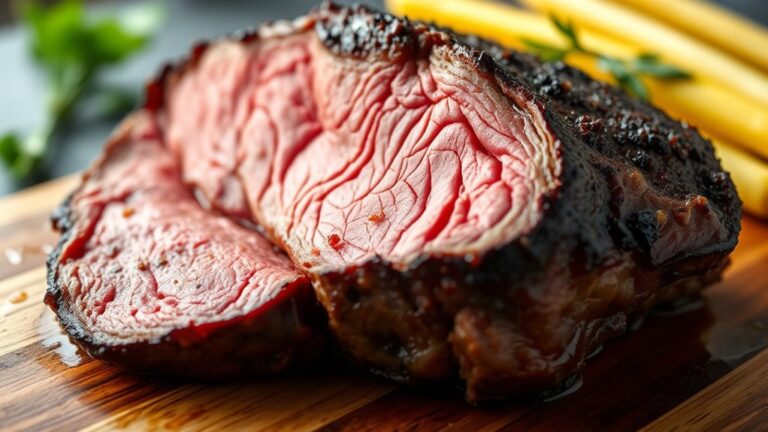
How can you tell when short ribs are truly done? You’ll want to check for tenderness and internal signs. The meat should be easily shredded with a fork, showing it’s cooked through.
Here are three ways to tell:
- Fork Test: Insert a fork into the meat. If it slides in easily and the meat falls apart, it’s ready.
- Internal Temperature: Use a meat thermometer. Short ribs are done at around 200°F (93°C) for that fall-off-the-bone tenderness.
- Visual Cues: The meat should look moist, pull away from the bone slightly, and have a rich, deep color.
Keep in mind, patience pays off. Short ribs need enough time to become tender and flavorful.
How Oven Temperature Affects the Flavor of Short Ribs
Your oven temperature plays an essential role in developing the flavor of short ribs. Cooking at higher temperatures can intensify browning and deepen taste.
But it may also risk drying out the meat. Finding the right balance between temperature, moisture, and cooking time guarantees juicy, flavorful ribs.
Flavor Development at Different Temperatures
The temperature at which you cook beef short ribs really shapes their flavor. At lower temps, you’ll get a rich, deep taste as the meat slowly breaks down, letting the connective tissues release their savory goodness.
As you raise the temperature, the flavors become more concentrated and caramelized, giving a smoky, roasted profile. Here’s how different temperatures impact what you taste:
- Low and slow (around 275°F) – Creates a tender, melt-in-your-mouth texture with stronger beefy and umami flavors.
- Moderate heat (around 325°F) – Balances tenderness with a slight crust, adding subtle roasted notes.
- High heat (above 375°F) – Promotes browning and caramelization, resulting in bold, smoky flavors and a crispy exterior.
Choosing the right temperature depends on your flavor preference and the texture you want.
Moisture Retention and Juiciness
Cooking beef short ribs at different oven temperatures directly affects how much moisture the meat keeps, which impacts juiciness and flavor. When you cook at lower temps, the meat stays moist longer because the gentle heat breaks down connective tissues without drying out the surface.
This slow process helps preserve the natural juices, making the ribs tender and succulent. On the other hand, higher oven temperatures can cause surface moisture to evaporate quickly, leading to drier meat if you’re not careful.
To keep your ribs juicy, it’s best to cook them at a moderate temperature. This allows collagen to break down gradually while keeping the inside moist. Proper temperature control ensures your ribs stay flavorful, tender, and juicy with every bite.
Cooking Time and Taste Balance
While oven temperature plays a crucial role in determining the flavor of short ribs, it also directly influences the overall taste balance by affecting cooking time. When you cook at a higher temperature, the ribs cook faster, which can lead to a more intense, caramelized flavor but risks drying out the meat.
Conversely, lower temperatures provide a slow, gentle cook that improves tenderness and deepens flavors over time. To optimize taste:
- High heat (around 400°F) yields crisp edges but can compromise juiciness.
- Moderate heat (around 325°F) balances tenderness and caramelization.
- Low heat (around 275°F) guarantees maximum tenderness and rich flavor development over longer periods.
Adjusting your oven temperature helps you control the flavor profile and achieve the perfect taste balance.
Can You Speed Up Cooking Without Losing Tenderness?
Although speeding up the cooking process can seem tempting, it often risks sacrificing tenderness in beef short ribs. To avoid this, consider using a higher oven temperature, around 325°F (163°C), and cooking for a shorter time, but don’t rush beyond 2.5 to 3 hours.
Using a pressure cooker or Instant Pot can cut cooking time significantly while maintaining tenderness, thanks to rapid pressure buildup. Adding moisture through braising or covering the ribs tightly helps retain juices and breaks down connective tissues more quickly.
Common Mistakes When Cooking Short Ribs at the Wrong Temperatures
Getting the temperature right is crucial when cooking short ribs because the wrong heat can ruin their tenderness and flavor. Cooking at too high a temperature can make the meat tough and dry, while too low might leave the ribs undercooked and unappetizing.
One common mistake is cooking at excessively high temperatures. This often results in tough, chewy meat instead of those tender, fall-off-the-bone ribs you’re after.
Cooking short ribs at too high a temperature makes the meat tough and chewy instead of tender and juicy.
On the flip side, using too low a temperature for too long can leave the meat undercooked and potentially unsafe to eat.
Another mistake to watch out for is ignoring the internal temperature. Relying only on cooking time without checking the meat’s internal temp can lead to inconsistent results.
Always aim for the recommended temperature to ensure your short ribs are perfectly cooked and full of flavor.
Best Ways to Reheat Short Ribs Without Drying Them Out
Are you wondering how to reheat short ribs without losing their juicy, tender quality? The best method is to gently reheat them in the oven. Preheat your oven to around 275°F (135°C).
Place the ribs in an oven-safe dish, add a splash of broth or water to keep them moist, and cover tightly with foil. Reheat for about 20-30 minutes, or until the meat is warmed through. Avoid high heat, which can dry out the meat.
You can also reheat short ribs on the stovetop by simmering them gently in a bit of broth in a covered pan. Microwaving is an option but can easily dry out the meat, so add moisture and heat in short bursts. This way, your short ribs stay tender and flavorful.
Frequently Asked Questions
Can I Cook Beef Short Ribs at Higher Temperatures Safely?
Yes, you can cook beef short ribs at higher temperatures safely, but it’s not the best choice if you want tender, fall-off-the-bone results.
Higher temperatures like 375°F or 400°F will cook them faster but might make the meat tougher.
If you decide to go this route, keep a close eye on them and consider braising or cooking at lower temperatures for better tenderness.
Always use a meat thermometer to make sure they’re cooked safely.
What Is the Ideal Internal Temperature for Perfectly Cooked Short Ribs?
The ideal internal temperature for perfectly cooked short ribs is around 190°F to 205°F. When you reach this range, the meat becomes irresistibly tender, almost melting in your mouth.
Don’t rush the process—patience is key. As you get close to this temperature, the connective tissues break down beautifully, giving you that melt-in-your-mouth experience.
Keep an eye on your thermometer and let the magic happen.
How Does Oven Rack Position Affect Short Rib Cooking?
You should position your oven rack in the middle for even heat distribution when cooking beef short ribs. This allows the heat to circulate around the meat, helping it cook evenly and stay tender.
If you’re roasting at a higher temperature or using a broiler, move the rack closer to the heat source. This helps the ribs cook faster and develop a nice crust.
Just avoid placing the ribs too close to the top or bottom of the oven. That can cause uneven cooking or even burning the meat.
Should I Cover Short Ribs During the Entire Cooking Process?
Yes, you should cover short ribs during most of the cooking process to keep moisture in, which helps make them tender. Covering traps steam, and that steam helps break down the connective tissues.
Remove the cover near the end if you want the ribs to brown and develop a crust. Just keep an eye on them so they don’t dry out, and baste occasionally if needed.
Covering and uncovering at the right times will give you the best results.
Can I Cook Beef Short Ribs Using Different Oven Types?
Yes, you can cook beef short ribs using different oven types. For example, if you have a convection oven, you might want to reduce the temperature by 25°F to prevent overcooking and ensure even heat distribution.
In a traditional oven, just follow the standard recipes. Keep an eye on the internal temperature and adjust your cooking time as needed.
Different ovens might need small tweaks, but with a little care, you’ll get tender, flavorful short ribs no matter what oven you use.
Conclusion
So, there you have it—mastering the art of oven-cooked short ribs is basically a culinary superpower. Just remember, cooking them at the wrong temperature isn’t just a mistake; it’s a betrayal of beefy goodness.
Whether you go low and slow or hot and fast, don’t forget to keep an eye on that oven thermometer. The ideal temperature for tender, juicy beef short ribs is around 275°F to 300°F.
With these tips, you’ll turn even the toughest ribs into tender, juicy legends—no magic wand required. Proper temperature is key to making the best oven-cooked beef short ribs.