Can You Put a Roasting Pan on the Stove?
Many home cooks find themselves wondering if they can put a roasting pan on the stove. You’re not alone—it’s a common question, especially when trying to save time or space in the kitchen.
You generally can’t put a roasting pan on the stove because they are designed for oven use, not direct heat. Most roasting pans are made from materials like aluminum or enameled cast iron, which may not withstand stovetop conditions safely.
Using the wrong pan can cause uneven cooking, warping, or damage.
To stay safe and get the best results, it’s essential to choose the right cookware. Keep exploring to uncover the best ways to cook with roasting pans on your stovetop.
Key Takeaways
- Roasting pans are generally designed for oven use, not stovetop. Using them on the stove can risk uneven heating or even damage the pan.
- The material of the pan matters. Stainless steel and cast iron are usually safe for stovetop use, but aluminum and enameled pans may vary.
- Always check the manufacturer’s instructions first. This helps ensure whether the pan is compatible and safe to use on the stove.
- If you’re unsure, do a gentle heat test. Start with low heat and see if the pan heats evenly without any issues.
- Use proper heat levels and avoid turning the burner to high right away. This helps prevent warping or damage to the pan’s coating.
Can You Put a Roasting Pan on the Stove?
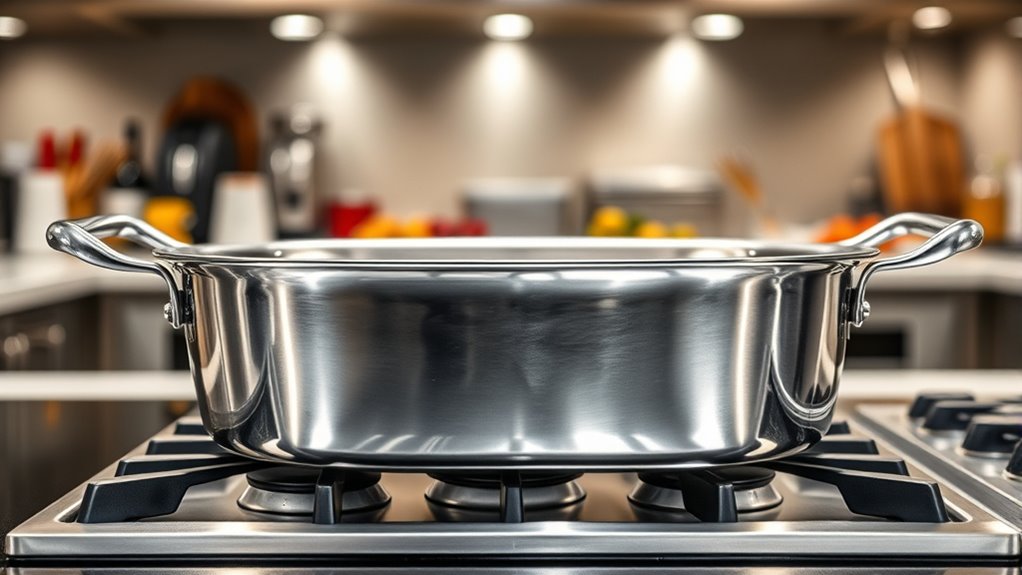
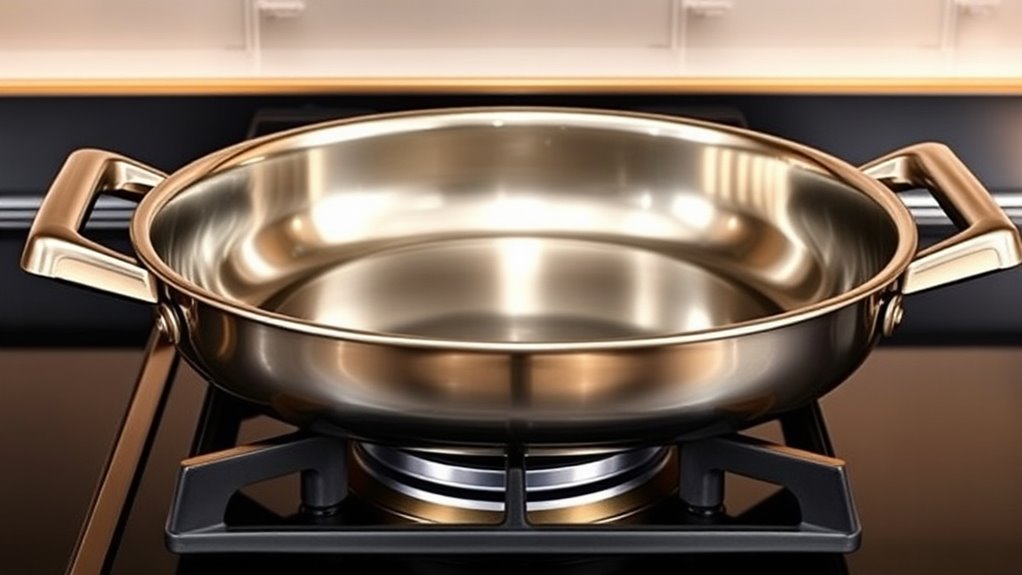
Can you put a roasting pan on the stove? Generally, it’s not recommended. Most roasting pans are made for oven use, with thick metal sides and a flat bottom that might not work well on a stove’s burner.
Putting a large, heavy pan directly on the stove can cause uneven heating or even damage your cooktop. If your pan has a metal bottom, it might work on the stove, but you should check if it’s compatible first.
Placing a heavy pan on the stove can cause uneven heat and damage—check compatibility first.
Many pans aren’t designed for stovetop use and could warp or crack if you try to use them that way. Always check the manufacturer’s instructions before attempting it.
In most cases, it’s safer to use the pan only in the oven or transfer ingredients to a skillet that’s made for stovetop cooking.
What Materials Are Used in Roasting Pans and Are They Stove-Safe?
Roasting pans are made from different materials like aluminum, stainless steel, cast iron, and non-stick coatings. Each of these has its own heat tolerance and safety considerations, especially when used on the stove.
Knowing these differences can help you pick the right pan for stove-top use without risking damage or safety issues. It’s important to choose the right material to ensure your cooking is both safe and effective.
Common Roasting Pan Materials
Many roasting pans are made from different materials, each with its own pros and cons for stovetop use. Common options include stainless steel, aluminum, cast iron, and enameled varieties.
Stainless steel pans are durable and usually safe on the stove, but they might heat unevenly. Aluminum pans heat quickly and evenly but can warp if exposed to high heat.
Cast iron pans are great at retaining heat and are stove-safe if cared for properly, though they tend to be heavy. Enameled pans combine the advantages of cast iron with easier cleaning.
Here’s a quick overview:
| Material | Heat Conductivity | Durability |
|---|---|---|
| Stainless Steel | Moderate | Very durable |
| Aluminum | Excellent | Less durable |
| Cast Iron | Excellent | Very durable |
| Enameled | Good | Durable |
| Copper | Excellent | Fragile |
Heat Tolerance and Safety
The materials used in roasting pans determine whether they can safely withstand stovetop temperatures. Metal pans like stainless steel, cast iron, and aluminum are generally stove-safe because they handle high heat well.
Stainless steel is durable and resists warping, making it suitable for stovetop use. Cast iron can tolerate extreme heat and distributes it evenly, but it’s heavy and requires proper care.
Aluminum heats quickly but can warp at very high temperatures, so check your pan’s specifications. Non-stick pans are often not designed for direct stovetop use, especially if they have a coating that can degrade.
Always verify the manufacturer’s guidelines to confirm your roasting pan is safe for stovetop cooking, preventing damage or safety hazards.
How to Tell If Your Roasting Pan Is Safe for Stove-Top Use
To find out if your roasting pan is safe for stove-top use, start by checking its material compatibility. Look for labels or info that say it can handle direct heat.
Next, take a look at the handles. Make sure they’re sturdy and heat-resistant so you won’t accidentally burn yourself.
Finally, check that the base is flat and stable. This will help prevent wobbling or tipping while you’re cooking.
Material Compatibility
Checking if your roasting pan is safe for stove-top use starts with understanding its material. Some materials like cast iron, stainless steel, and certain enameled pans are stove-safe because they handle direct heat well.
On the other hand, non-stick or aluminum pans might not be suitable unless they are explicitly labeled for stovetop use. Always check the manufacturer’s instructions or labels for guidance.
If you’re unsure about the material, do a quick spot test by heating the pan gently on the stove. If it warps, melts, or emits fumes, it’s not compatible.
Avoid using pans with plastic handles or parts that aren’t heat-resistant. Knowing your pan’s material helps prevent damage and ensures safe, effective stovetop cooking.
Handle Durability
Evaluating handle durability is key before placing a roasting pan on the stove. You want to guarantee it can withstand heat and handling without breaking or warping. First, check if the handles are securely attached. Loose or wobbly handles indicate poor durability.
Second, assess the material: metal handles usually endure higher temperatures better than plastic or rubber. Third, look for signs of wear like cracks, corrosion, or discoloration, which can weaken the handles.
Finally, consider the handle design. Wide, sturdy handles provide better grip and stability. If any of these points raise concern, it’s best to avoid using the pan on the stove.
Proper handle durability guarantees safety and helps prevent accidents during stovetop use.
Base Stability
The stability of your roasting pan’s base is key for safe stovetop use. Check if the bottom is flat and even, with no warping or dents. An uneven base can wobble or tip, leading to spills or accidents.
Look for sturdy materials like cast iron or heavy-duty aluminum. Avoid pans with flimsy or thin bases, which can deform easily under heat. Use the table below to evaluate your pan:
| Feature | What to Look For | Why It Matters |
|---|---|---|
| Flatness | Even, smooth surface | Prevents wobbling |
| Material Quality | Heavy, durable metals | Ensures stability and last longer |
| Warping or Dents | No visible deformities | Shows good structural integrity |
| Base Thickness | Thick, solid construction | Supports weight evenly |
A stable base keeps your cooking safe and efficient.
Why Some Roasting Pans Should Never Touch the Heat
Although it might seem tempting to place a roasting pan directly on the stove, many aren’t built to handle direct heat. Using the wrong pan can lead to warping, cracking, or even dangerous fires. Here are four reasons why some roasting pans should never touch the heat:
- Material Damage: Non-metal pans or those with non-stick coatings can melt or peel when exposed to direct flames or high heat.
- Structural Integrity: Thin or poorly made pans may warp or crack under direct heat, risking spills and damage.
- Chemical Safety: Pans with certain coatings can release harmful fumes if they overheat.
- Uneven Heating: Some pans don’t distribute heat evenly, which can cause hot spots and potential warping or damage.
Alternatives to Using a Roasting Pan on the Stove
When you need to cook a large roast or prepare a meal that requires high heat, using a roasting pan on the stove isn’t always practical or safe. Instead, consider alternatives like heavy-duty pots or Dutch ovens, which can handle high temperatures and distribute heat evenly.
You can also use a roasting rack inside a regular skillet or stockpot to raise the meat and prevent direct contact with the heat.
| Method | Description |
|---|---|
| Heavy-duty Dutch oven | Handles high heat, great for braising |
| Roasting rack + skillet | Raises food, prevents burning |
| Oven-to-stove transfer | Finish cooking in the oven after stove prep |
Tips for Using Stove-Safe Roasting Pans Properly
To guarantee safe and effective use of stove-safe roasting pans, always check the manufacturer’s guidelines before placing them on the stove. This helps you understand any specific limitations or recommendations.
Always check the manufacturer’s guidelines before using stove-safe roasting pans to ensure safety and proper use.
Here are four tips to help you use them properly:
- Use medium or low heat to prevent warping or damage.
- Always lift the pan when moving it, avoiding dragging to protect the base.
- Avoid sudden temperature changes, like adding cold liquids to a hot pan.
- Verify the pan’s base is flat and stable on the burner for even heat distribution.
Following these tips helps prolong the pan’s lifespan and keeps your cooking safe and efficient.
Risks of Using Oven-Only Roasting Pans on the Stove
Oven-only roasting pans are usually made with materials and designs that aren’t meant for stovetop use, which can cause problems. Using them on the stove might lead to warping, cracking, or even melting, especially if they have non-stick coatings not designed for direct heat.
These pans often don’t have sturdy handles or good heat distribution, increasing the chances of accidents or burns. Overheating can weaken the pan’s structure, causing it to break or release harmful chemicals.
Plus, uneven heat distribution can lead to uneven cooking or scorching. There’s also a higher risk of damaging your stove or starting a fire if the pan isn’t meant for direct heat.
In short, using oven-only roasting pans on the stove isn’t safe and can damage your cookware.
Final Tips for Safe and Effective Stove-Top Cooking With Roasting Pans
Using roasting pans on the stove can be safe if you pick the right type and follow proper techniques. To ensure safe and effective cooking, keep these tips in mind:
- Always check that your roasting pan is made of heat-safe materials like cast iron or stainless steel.
- Use low to medium heat to prevent warping or damaging the pan.
- Never leave the pan unattended to avoid spills or accidents.
- Use proper tools, such as oven mitts and sturdy utensils, to handle hot pans safely.
Frequently Asked Questions
Can All Roasting Pans Withstand Direct Stove Heat?
Not all roasting pans can withstand direct stove heat. Most traditional roasting pans are designed for oven use only and may warp, crack, or get damaged if placed directly on the stove.
If you want to use your pan on the stove, look for one made from heat-resistant materials like cast iron or heavy-duty stainless steel.
Always check the manufacturer’s instructions to avoid damaging your pan or risking safety.
What Is the Best Way to Clean Stove-Safe Roasting Pans?
To clean stove-safe roasting pans, start by letting them cool completely. Fill the pan with warm water and add a few drops of dish soap, then let it soak for 15-30 minutes.
Use a non-abrasive sponge or soft brush to gently scrub away any residues. For stubborn stains, make a paste with baking soda and water, apply it, and let it sit before scrubbing.
Rinse the pan thoroughly and dry it completely before storing. This simple routine keeps your roasting pan in great shape and ready for next time.
Are There Specific Stove Types Better Suited for Roasting Pans?
Some stove types handle roasting pans better, and you might find electric or induction cooktops more suitable. These stoves distribute heat evenly, making your roasting experience smoother than silk.
Gas stoves work too but can be more unpredictable with heavy pans. Just confirm your roasting pan has a sturdy, flat bottom for stability and to prevent accidents.
How Do I Prevent Warping When Using a Roasting Pan on the Stove?
To prevent warping when using a roasting pan on the stove, start by making sure the pan is made of thick, heavy-duty material like cast iron or stainless steel. These materials are less likely to bend or warp under heat.
Avoid sudden temperature changes. Gradually heat the pan to help it stay in shape and prevent stress that can cause warping. Don’t leave it empty on high heat—use low to medium settings instead.
Always lift the pan instead of dragging it across the stove. This helps prevent bending and warping over time. Following these tips will help keep your roasting pan in good shape for longer.
Can I Use a Roasting Pan on an Induction Cooktop?
Yes, you can use a roasting pan on an induction cooktop if it’s made of magnetic material like cast iron or certain stainless steel.
First, check if your pan is induction-compatible by seeing if a magnet sticks to the bottom.
Keep in mind, large or thick pans can heat unevenly or cause damage, so always keep an eye on your cooking.
Avoid dragging heavy pans across the surface to prevent scratches or damage.
Conclusion
Did you know that using the right roasting pan on your stove can cut cooking time by up to 20%? Just make sure it’s stove-safe and suited for the heat. Always check the material and manufacturer’s guidelines to avoid accidents or damage.
With the proper pan, you can enjoy perfectly cooked meals without the hassle. So, choose wisely, follow safety tips, and turn your stove into a versatile cooking station. Your taste buds will thank you, and yes, you can even put a roasting pan on the stove if it’s designed for that purpose.