How You Boil Water in an Aluminum Pan Step by Step
Many people struggle with boiling water safely and efficiently, especially if you’re new to cooking or just want a simple way to do it. You’re not alone—getting it just right can be tricky, and you want to avoid spills or damaging your cookware.
To boil water in an aluminum pan, start by inspecting and thoroughly cleaning your pan, ensuring it’s dry and free of damage. Fill it with cold water, leaving enough space to prevent spills.
Place the pan on the stove, turning the heat to medium, and monitor the water as it warms. Once it reaches a gentle boil, you can turn off the heat.
For detailed tips on safe boiling and cleaning, keep exploring the steps carefully.
Key Takeaways
- Inspect and clean the aluminum pan thoroughly. Make sure the surface and handles are secure and dry before you start.
- Fill the pan with cold or room temperature water. Cover the bottom by about an inch, leaving some space at the top so it doesn’t boil over.
- Place the pan on the stove over medium heat. Keep an eye on it so it doesn’t boil too rapidly or spill over.
- Once the water starts boiling, reduce the heat. Keep it at a gentle simmer to avoid scorching the bottom.
- When you’re done, turn off the heat. Carefully remove the pan from the stove.
- Clean the pan with warm, soapy water. Dry it immediately to prevent any spots or corrosion.
Preparing Your Aluminum Pan for Safe Boiling
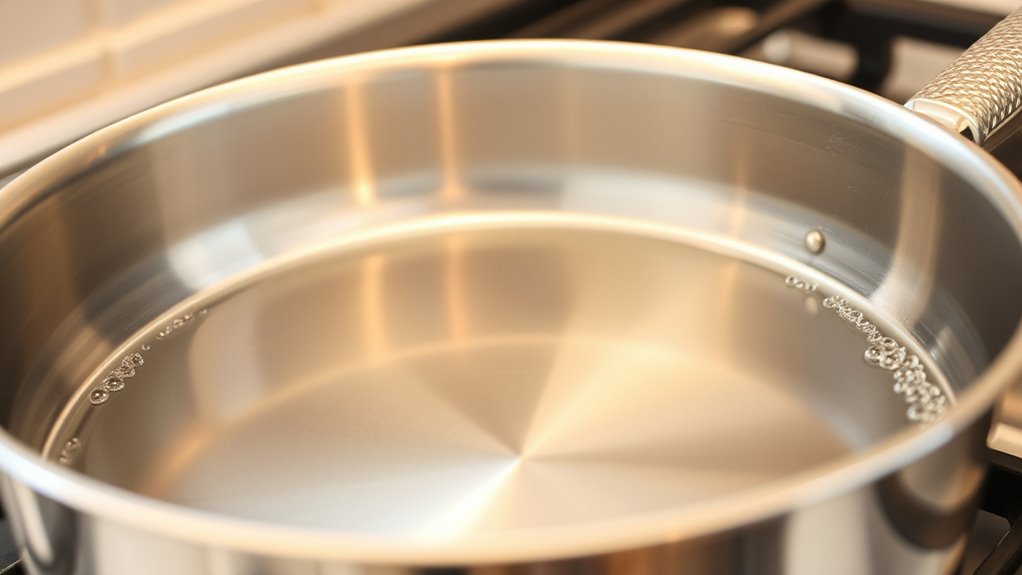
Before you start boiling water in your aluminum pan, it’s important to prepare the pan properly for safety and good performance.
Begin by inspecting the pan for dents, cracks, or corrosion. Make sure the bottom is clean and free of debris since dirt can affect how well the heat transfers.
Inspect for dents, cracks, and corrosion; ensure the bottom is clean for optimal heat transfer.
Wash the pan with warm, soapy water, then rinse thoroughly to remove any residues. If the pan has a coating or finish, check that it’s intact to prevent chemicals from leaching into the water.
Dry the pan completely to avoid rust or corrosion when storing it. Proper prep ensures even heating, prevents contamination, and helps your aluminum pan last longer, making it safe for boiling water.
How to Fill the Pan Correctly for Boiling Water
To fill your aluminum pan properly for boiling water, start by adding enough water to cover the bottom by about an inch or so. This way, there’s enough water to reach a proper boil without overflowing.
Use cold or room temperature water to prevent sudden temperature shocks that could warp the pan. Pour slowly to avoid splashing or spilling outside the pan.
Check the water level with your eyes, confirming it’s even across the surface. If you plan to cook other ingredients later, leave some extra space at the top—about an inch—to prevent boiling over.
Avoid overfilling, as boiling water creates bubbles that can spill over the sides. Properly filling your pan helps maintain safety and makes the boiling process more efficient.
How to Boil Water Safely in Aluminum
To boil water safely in an aluminum pan, choose the right size and type of pan for what you’re doing.
Make sure to use proper heating techniques, like starting with medium heat and adjusting as needed.
This helps prevent accidents and makes sure your water boils efficiently and safely.
Choosing the Right Pan
Choosing the right pan is essential for safely boiling water in aluminum. Look for a pan with a thick, sturdy base to ensure even heat distribution and prevent hot spots that could cause warping or damage.
Make sure the pan’s size matches your needs. A slightly larger pan gives you room to add water without the risk of overflowing. Check that the handles are securely attached and made from heat-resistant material for safe handling.
Avoid thin or lightweight pans because they heat unevenly and can deform easily. Also, opt for a pan with a non-reactive coating or be aware that aluminum is reactive; if you’re boiling water for drinking or cooking, consider an anodized or coated pan.
Properly selecting your pan helps guarantee safe and efficient boiling.
Proper Heating Techniques
Once you’ve chosen a sturdy, appropriately sized aluminum pan, the next step is to control the heating process carefully. Start by placing the pan on the stove and turn the heat to medium.
You want to heat the water gradually to prevent warping or damaging the pan. Keep an eye on the water as it warms; avoid rushing the process. If you notice the water starting to boil too aggressively, reduce the heat slightly.
Using medium heat helps ensure even heat distribution and prevents scorching. Avoid heating on high for extended periods because this can cause aluminum to discolor or warp.
Once the water reaches a steady boil, you can adjust the heat to maintain a gentle simmer. This approach ensures safe, efficient boiling without damaging your pan.
How to Tell When Water Is Boiling and Prevent Overflows
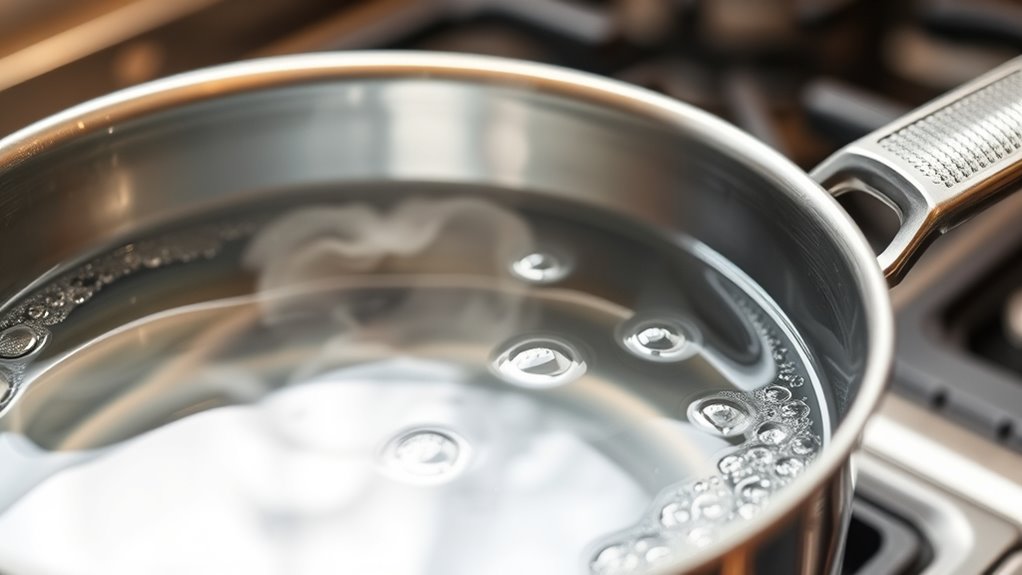
Understanding the signs of boiling is key to avoiding messy overflows. When water starts boiling, you’ll see big bubbles rising quickly to the surface and breaking. A gentle simmer has smaller bubbles, while a vigorous boil creates a rolling, turbulent surface with lots of bubbles.
To prevent spills, keep an eye on the water once bubbles form steadily. Turn down the heat a bit to keep it bubbling gently instead of vigorously. Watch closely as the water nears boiling point, because sudden rapid bubbling can quickly spill over.
Using a slightly larger pan gives more space for the bubbling. Stirring occasionally helps release trapped bubbles and keeps the water from spilling over. Staying alert makes sure you get safe, controlled boiling without any mess.
Common Mistakes When Boiling Water in Aluminum and How to Avoid Them
One common mistake when boiling water in aluminum is using high heat, which can make the water boil too vigorously and cause spills or uneven heating. This can damage the pan or lead to unsafe splashes. To avoid this, keep the heat at a medium level and watch the process closely.
Be mindful of these common errors:
- Overfilling the pan, which can cause water to spill over.
- Leaving the heat unattended, risking boiling over or scorching.
- Using damaged or warped aluminum pans that don’t heat evenly.
- Not adjusting the heat once boiling starts, leading to overflows or inconsistent temperature.
Ending the Boil and Cleaning Your Aluminum Pan Safely
When you finish boiling water in an aluminum pan, it’s important to turn off the heat quickly to avoid overcooking or damaging it. Carefully remove the pan from the burner and set it aside to cool down.
Once it’s cool enough to handle, clean the pan with warm, soapy water and a soft sponge. Steer clear of abrasive scrubbers, as they can scratch the aluminum surface.
For stubborn stains or mineral deposits, mix equal parts vinegar and water. Then, simmer this solution in the pan for a few minutes before rinsing it thoroughly.
Dry the pan immediately with a soft towel to prevent water spots and oxidation. Properly ending the boil and cleaning your aluminum pan helps keep it looking good and makes it last longer.
This way, you ensure safe and effective use every time you cook.
Frequently Asked Questions
Can Aluminum Pans Be Used on Induction Cooktops?
Aluminum pans generally can’t be used directly on induction cooktops because they’re not magnetic. Induction cooking relies on magnetic fields to generate heat, so unless the aluminum pan has a magnetic base or an induction-compatible layer, it won’t work.
You can test your pan with a magnet. If it sticks, it’s suitable. Otherwise, use a special induction adapter or choose cookware made specifically for induction stoves.
How Long Does It Typically Take to Boil Water in Aluminum?
It usually takes about 4 to 8 minutes to boil water in an aluminum pan, depending on how much water you’re boiling and your stove’s heat output.
If you turn the heat up high, it’ll boil faster, but just keep an eye on it to prevent overflows. Using a lid helps trap heat and speeds up the process.
Be patient, and you’ll have boiling water ready in no time.
Is It Safe to Boil Water With Aluminum Cookware Regularly?
An ounce of prevention is worth a pound of cure. Boiling water regularly in aluminum cookware is generally safe, but it’s good to be cautious. Aluminum can leach into food or water over time, especially if the pan is scratched or worn.
To minimize risks, avoid boiling acidic liquids in aluminum. Consider using stainless steel or other safer options for frequent cooking.
Can I Add Salt or Other Substances to Boiling Water in Aluminum?
Yes, you can add salt or other substances to boiling water in an aluminum pan. Just keep in mind that certain chemicals or acidic ingredients might react with aluminum, which could cause discoloration or corrosion over time.
To avoid this, it’s best to steer clear of highly acidic substances like vinegar or citrus juices directly in aluminum cookware. For the best results, add salt or seasonings once the water is boiling and you’re ready to cook.
How Do I Prevent Aluminum Pans From Discoloring During Boiling?
To prevent aluminum pans from discoloring during boiling, avoid using high heat since too much heat can cause discoloration. Instead, stick to medium or low heat for better results.
Don’t leave the water boiling for too long, as extended boiling can also lead to discoloration. Adding a splash of lemon juice or vinegar to the water helps keep the pan looking good by reducing oxidation.
Regular cleaning with gentle scrubbers is key. This helps maintain your aluminum’s shiny, new appearance over time.
Conclusion
Now that you’ve mastered the gentle art of boiling water in your aluminum pan, you’re all set for smooth, safe boiling experiences. Just remember to handle your pan with care, keep an eye on the bubbles, and give it a good clean afterward.
With these simple steps, you’ll keep your cookware happy and your water perfectly heated. Boiling water in an aluminum pan can be easy and satisfying, turning a basic task into a small achievement every time.