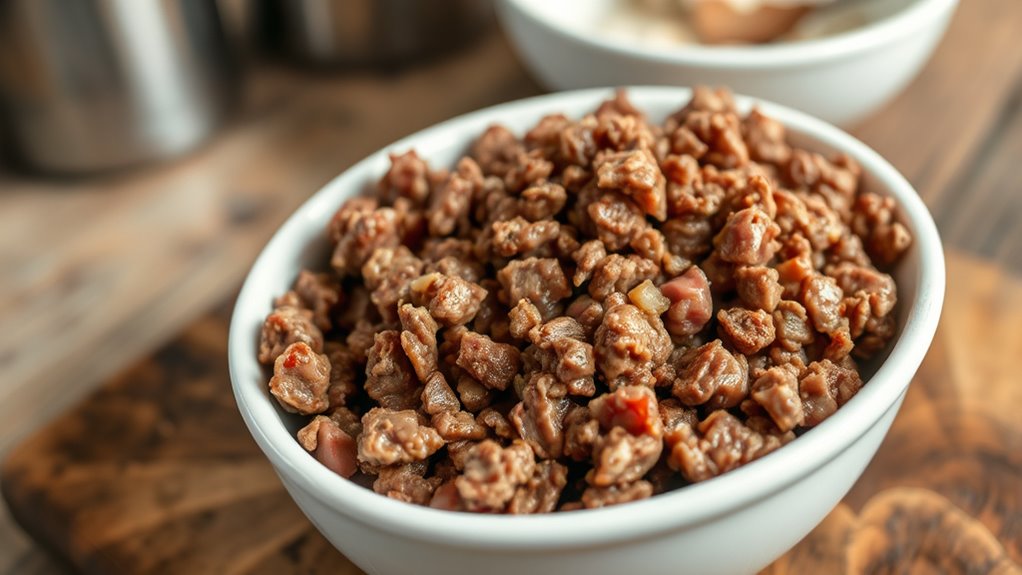
7 Key Facts About How Many Calories Are in a Cup of Cooked Ground Beef
Many people trying to stay healthy or manage their weight often feel overwhelmed by conflicting information about calories in their favorite foods. If you’re wondering how many calories are in a cup of cooked ground beef, you’re not alone. It’s a common question for those wanting to enjoy flavorful meals without going overboard.
A cup of cooked ground beef typically has around 250 calories, but this varies based on fat content and cooking methods. Leaner options, like 90% lean, contain fewer calories, while higher-fat types, such as 80% lean, have more.
Cooking techniques like grilling reduce calories by letting fat drip away, whereas frying adds calories.
Drain excess fat and choose low-calorie mix-ins to keep your meal healthier. If you’re curious about more tips, keep exploring.
Key Takeaways
- A cooked one-cup serving of ground beef typically contains about 250 calories.
- Lean ground beef, which is about 90% lean, has approximately 180 calories per cup. Higher-fat options can have over 300 calories.
- Cooking methods like grilling or broiling help reduce calorie content because they let fat drip away.
- If you add oils, sauces, or high-calorie mix-ins, the total calorie count can go way up.
- Draining excess fat after cooking is a simple way to lower the calorie content of your ground beef dishes.
How Many Calories Are in a Cup of Cooked Ground Beef?
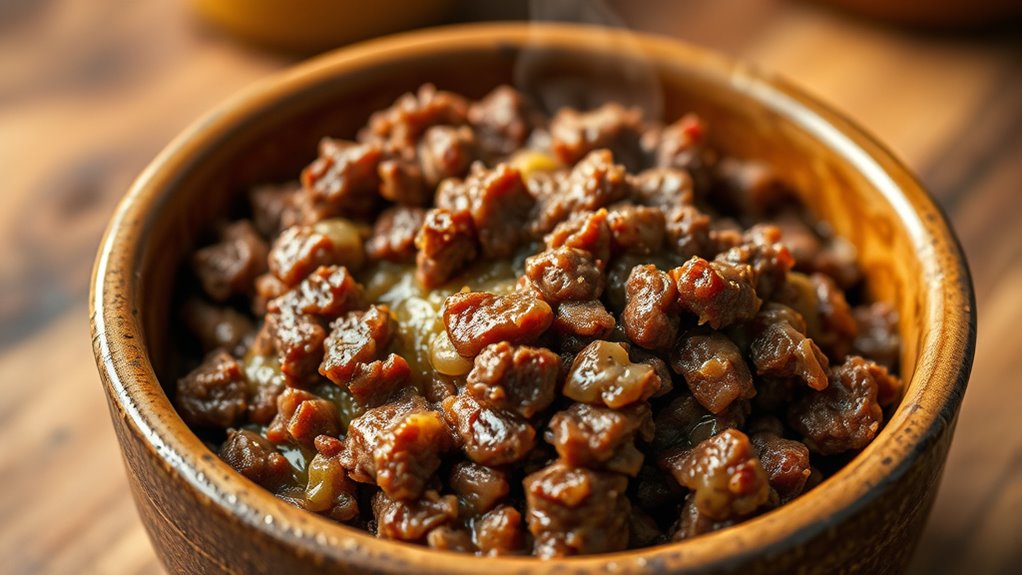
Wondering how many calories are in a cup of cooked ground beef? The number varies depending on fat content, but generally, a cooked one-cup serving has about 250 calories.
If you’re using lean ground beef, like 90% lean, you’ll get closer to 180 calories per cup. Higher-fat options, such as 80% lean, can push the calorie count over 300.
Cooking reduces water content, which makes the beef more calorie-dense per volume. Keep in mind that adding ingredients like oils or sauces can significantly increase the calorie count.
To track your intake accurately, measure your cooked ground beef carefully, considering its fat percentage. This way, you’ll get a clear picture of how many calories you’re consuming in each cup.
How Does Fat Content Change Ground Beef Calories?
The fat content in ground beef directly impacts its calorie count because fat is more calorie-dense than protein or carbs. The higher the fat percentage, the more calories you’ll consume per serving.
For example, a 70% lean ground beef has fewer calories than a 90% lean variety. When you choose ground beef with more fat, you’re adding extra calories that can quickly increase your meal’s overall energy.
On the flip side, leaner options help reduce calorie intake but might also affect flavor and juiciness. If you’re watching your calories, going for leaner ground beef helps you control intake without sacrificing too much taste.
How Do Cooking Methods Affect Ground Beef Calories?
Cooking methods significantly influence the calorie content of ground beef because they change its fat and water levels. For example, grilling or broiling lets fat drip away, which lowers the calories.
On the other hand, pan-frying in oil can boost the calorie count because the beef absorbs extra fat. Boiling or simmering helps preserve moisture, but if you don’t drain the water, it can slightly reduce the calorie density per serving.
Methods that involve added fats or oils, like sautéing or cooking with butter, also raise the calorie count. The way you cook and handle the beef afterward really matters.
Choosing leaner cuts and cooking in ways that minimize fat retention help keep the calories lower. Overall, your cooking method plays a big role in how many calories end up in your finished dish.
How to Drain Excess Fat to Lower Calories
To reduce the calorie content of cooked ground beef, you need to effectively drain excess fat after cooking. Start by letting the beef rest for a few minutes to allow the fat to settle.
Then, use a slotted spoon or a fine-mesh sieve to lift the meat out of the pan, leaving the fat behind. Alternatively, you can pour the cooked beef into a colander or sieve placed over the sink to drain off the grease.
For more efficient removal, transfer the beef to a paper towel-lined plate and blot away any remaining fat. These methods help you cut down on unnecessary calories, making your ground beef healthier without sacrificing flavor.
How Do Add-Ins and Mix-Ins Impact Calories?
Adding ingredients like cheese, sauces, or breadcrumbs can significantly increase the calorie count of your ground beef dish. These mix-ins can turn a simple meal into a more calorie-dense one.
Vegetables or grains are also mix-ins that can impact your meal’s energy content, sometimes adding more calories than you’d expect. Even flavor enhancers like marinades or seasonings can contribute extra calories.
Calorie Increase From Add-Ins
Including add-ins and mix-ins with ground beef can really boost the dish’s calorie count, especially if you pick ingredients high in fat, sugar, or calories. For example, adding cheese, creamy sauces, or sugary glazes can significantly increase calories per serving.
You can see the impact in this table:
| Ingredient | Calories per serving | Impact on total calories |
|---|---|---|
| Cheese (1 oz) | 100 | Adds about 100 calories |
| Bread crumbs (1/4 cup) | 70 | Slight increase |
| Sugar (1 tbsp) | 48 | Raises sweetness and calories |
| Cream-based sauce | 150+ | Large calorie boost |
Choosing high-calorie add-ins can turn a modest dish into a calorie-dense meal quickly.
Impact of Mix-Ins on Calories
Mix-ins and additional ingredients can significantly change the calorie content of cooked ground beef dishes. Adding cheese, bacon, or creamy sauces will boost the calories, especially if used generously.
For example, shredded cheese adds calories from both fat and protein, while bacon bits contribute extra fat and flavor. Vegetables like peppers or onions are lower in calories and can increase fiber without adding many calories.
High-calorie mix-ins like sour cream or heavy cream can quickly raise the total calorie count. Portion size is important—more mix-ins mean more calories overall.
To keep calories in check, choose your mix-ins wisely. Focus on low-calorie options and use them sparingly. Remember, each added ingredient can greatly change the overall calorie profile of your dish.
Flavor Enhancers and Calories
Flavor enhancers like spices, herbs, and condiments can really change the calorie content of cooked ground beef, especially when used generously.
Adding sauces like ketchup or BBQ can bump up the calories quickly, while herbs and spices boost flavor without adding any calories.
Be mindful of portion sizes and ingredients in condiments to avoid unintentionally increasing the calorie count.
Here’s a quick comparison:
| Flavor Enhancer | Calories per tablespoon |
|---|---|
| Ketchup | 15 |
| Soy Sauce | 10 |
| Fresh herbs | 0 |
| Mustard | 3 |
Using herbs and spices is a low-calorie way to add flavor, while rich sauces can add up fast. Choose wisely to keep your meal nutritious.
How to Measure Ground Beef Calories Accurately
To measure ground beef calories accurately, start by weighing the meat with a reliable kitchen scale. This ensures you know the exact amount you’re working with.
Next, check the raw weight before cooking, since cooking reduces moisture and weight but not calories. Use nutrition labels or trusted databases to find calories per ounce or gram.
Check raw weight before cooking; moisture loss reduces weight but not calories. Use labels or trusted sources for accurate info.
Always measure after cooking if you want the cooked calorie count, as water loss concentrates calories. Keep in mind:
- Consistency in measuring methods improves accuracy
- Use a digital scale for precise weight readings
- Record the weight to track portion sizes over time
- Adjust calorie counts based on cooking methods like draining fat
- Different ground beef fat contents affect calorie density
Accurate measurement helps you manage your intake and stay on track with your dietary goals.
Tips for Including Ground Beef in a Balanced, Low-Calorie Diet
Choosing lean ground beef helps cut calories without losing flavor.
Using smart cooking methods like grilling or simmering keeps your meals healthier.
Incorporating these tips makes it easier to enjoy ground beef as part of a balanced, low-calorie diet.
Lean Ground Beef Choices
Opting for lean ground beef is one of the easiest ways to include this versatile protein in a low-calorie, balanced diet. Choosing options labeled 90% lean or higher reduces fat and calorie content, helping you stay within your daily goals. Look for grass-fed or organic varieties for fewer additives and more nutrients.
Consider ground sirloin or round, which naturally contain less fat. When shopping, check labels carefully to find the leanest options. Incorporating lean ground beef allows you to enjoy hearty meals without excess calories, supporting weight management and overall health.
Prioritize labels like 90% lean or higher. Choose grass-fed or organic options for added benefits. Opt for ground sirloin or round cuts to keep fat content down. Read labels to avoid added fats and always balance your meal with plenty of vegetables for fullness.
Smart Cooking Techniques
Smart cooking techniques can make a big difference in keeping ground beef meals nutritious and low in calories. Start by draining excess fat after cooking to cut calories without losing flavor.
Choose leaner cuts and avoid frying in lots of oil. Instead, try grilling, baking, or simmering for healthier options.
Add vegetables to your dishes—they boost fiber and volume without many calories. Using herbs, spices, and low-calorie sauces can enhance flavor without extra fat or sugar.
Be mindful of portion sizes to avoid overeating. You can also mix ground beef with other lean proteins like turkey or plant-based options.
These tips help you enjoy ground beef in a balanced, low-calorie way while keeping the taste and nutrition high.
Frequently Asked Questions
How Does the Type of Beef (Grass-Fed vs. Grain-Fed) Affect Calorie Content?
The type of beef, whether grass-fed or grain-fed, can slightly influence calorie content. Grass-fed beef tends to be leaner and usually has fewer calories per serving because it has less fat.
On the other hand, grain-fed beef often has more marbling and fat, which increases its calorie count. If you’re watching your calorie intake, grass-fed beef might be a better choice, but the difference isn’t huge.
Are There Differences in Calories Between Lean and Extra-Lean Ground Beef?
Yes, there are differences in calories between lean and extra-lean ground beef. Extra-lean ground beef has fewer calories because it contains less fat, usually around 150 calories per cooked cup.
In comparison, lean ground beef typically has about 200 calories per cooked cup. Choosing extra-lean is a good idea if you’re trying to watch your calorie intake.
On the other hand, lean ground beef offers a slightly richer flavor because it has more fat.
Can Portion Size Influence Calorie Counts Significantly?
Yes, portion size can really influence calorie counts. When you eat larger servings, you end up consuming more calories, and that can add up quickly—especially with foods like ground beef.
Even small increases in portion sizes can lead to a noticeable rise in calorie intake. To keep your calories in check, it’s helpful to measure your portions and stick to recommended serving sizes.
Doing this can make a big difference in helping you stay on track with your dietary goals.
Do Store-Bought Pre-Cooked Ground Beef Products Have Different Calories?
Imagine opening a package of pre-cooked ground beef. Its savory aroma beckons you. Yes, store-bought pre-cooked ground beef can have slightly different calorie counts, mainly because of variations in fat content and processing methods.
Some brands might add preservatives or fillers, which can affect the calories. Always check the label for accurate calorie information so you can make informed choices. That way, you can enjoy your meals without surprises.
How Do Seasoning and Marinades Impact the Calorie Content of Cooked Ground Beef?
Seasonings and marinades can add calories to cooked ground beef, especially if they contain sugar, oil, or high-calorie ingredients. For example, sugary sauces or oil-based marinades increase the calorie count.
If you choose low-calorie herbs, spices, or vinegar-based marinades, the impact is minimal. Always check ingredients and portion sizes, as these can significantly influence the overall calorie content of your dish.
Conclusion
Balancing your meals with ground beef means understanding its calorie content and how it changes with fat, cooking methods, and add-ins. Think of it as a canvas—you can create a hearty, satisfying dish or a light, health-conscious meal.
With a few simple tricks, you control the calories, much like choosing between a rich, indulgent painting or a minimalist sketch. Your choices shape your plate—delicious, nutritious, and tailored to your goals.
Knowing how many calories are in a cup of cooked ground beef helps you make smarter decisions. Whether you’re aiming for a leaner option or a more indulgent meal, understanding these details makes all the difference.