Induction Vs Electric Range: 8 Key Differences
Many people struggle with choosing the right stove that balances performance, safety, and budget. If you’ve ever felt overwhelmed by the options, you’re not alone.
Finding the perfect range can be tricky, especially when weighing speed against safety and efficiency.
Induction ranges heat cookware instantly using electromagnetic fields, offering precise control and cooler surfaces. This makes them safer and more energy-efficient than electric ranges that rely on resistive heating.
Electric stoves take longer to heat up, stay hot longer after use, and are generally more budget-friendly but less efficient.
If you’re looking for speed, safety, and lower utility bills, induction is the better choice.
Explore further to see which suits your needs best.
Key Takeaways
- Induction ranges heat cookware directly using electromagnetic fields. This makes them faster and allows for more precise temperature control compared to electric ranges.
- One big plus is that induction surfaces stay cool to the touch. This reduces the risk of burns. Electric ranges, on the other hand, remain hot after use, which can be a safety concern.
- Induction is also more energy-efficient. It uses about 20-25% less energy, which can lead to lower utility bills over time.
- Keep in mind that induction requires a dedicated 240-volt outlet and professional installation. Electric ranges are generally easier to set up and don’t usually need special wiring.
- Although induction ranges tend to cost more upfront, they can save you money in the long run. Their energy efficiency and environmental benefits make them a smart investment.
What Are the Main Differences Between Induction and Electric Ranges?
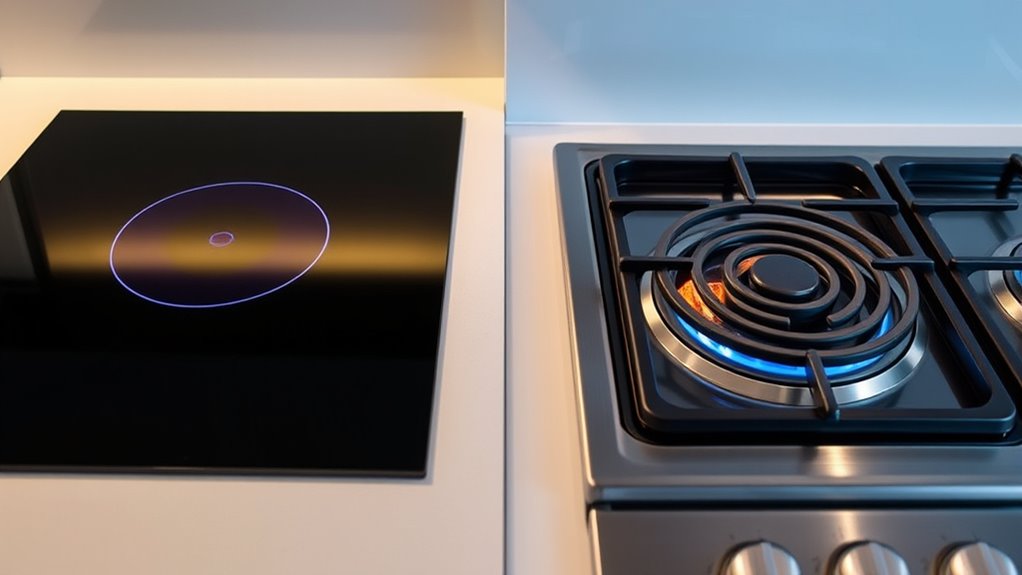
While both induction and electric ranges use electricity to generate heat, they work quite differently. Electric ranges have resistive heating elements that heat up when you turn a dial. The heat then transfers directly to your cookware through contact, and the surface stays hot even after you turn it off.
Induction ranges, on the other hand, use electromagnetic fields to excite the atoms in ferromagnetic cookware, producing heat instantly. This means the cooktop stays relatively cool, and the heat adjusts quickly based on your settings.
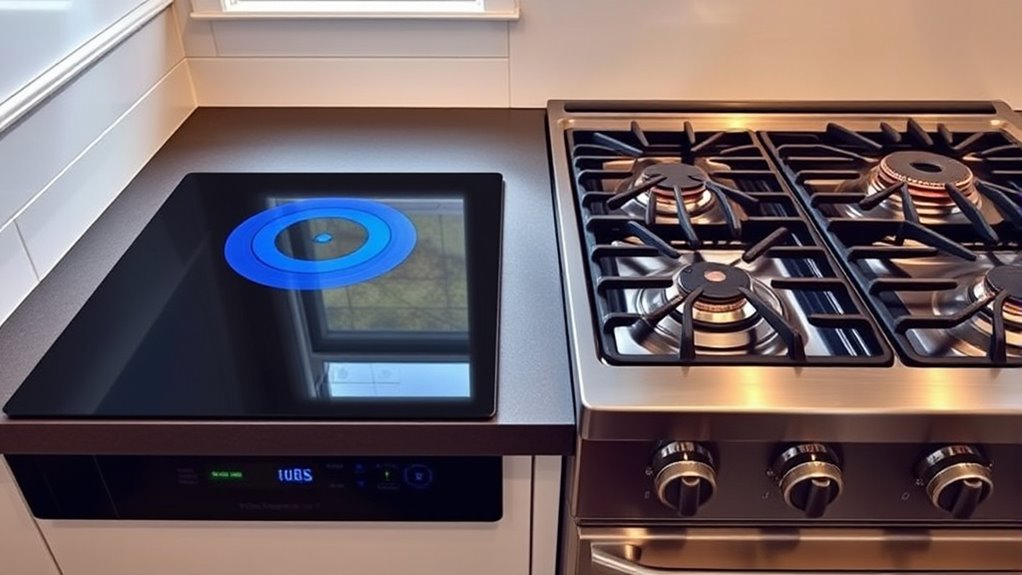
Electric ranges usually have visible coils or flat glass surfaces. In contrast, induction ranges feature smooth, glass-ceramic surfaces with built-in sensors. The main difference is how heat is generated and transferred to your cookware.
How Do Cooking Speed and Efficiency Compare?
When comparing cooking speed and efficiency, induction ranges usually beat electric ones because they respond quickly to heat changes. You’ll notice that induction heats up almost instantly when you turn it on, so you can start cooking faster.
This quick response also means you can adjust the temperature precisely, which helps reduce energy waste. Electric ranges, on the other hand, take longer to heat up and cool down, slowing down your cooking process.
Induction’s direct heat transfer to the cookware makes it more efficient. It uses less energy to get the same results, saving you both time and energy.
Induction transfers heat directly to cookware, using less energy and saving time.
If speed and efficiency matter most, induction clearly has the edge over traditional electric ranges.
Which Range Is Safer and More Convenient to Use?
Have you ever wondered which range is safer and more convenient to use?
Induction ranges are generally safer because the cooktop stays cool, which reduces burn risks. They heat only the cookware directly, so spills don’t cause fires or damage the surface.
Electric ranges, on the other hand, can stay hot for a while after use, increasing the chance of burns.
When it comes to convenience, induction offers precise temperature control and heats up quickly, making cooking easier.
You don’t have to worry about constantly adjusting knobs or waiting for the surface to cool down.
Electric ranges are simpler to operate but may not respond as instantly as induction.
What Are the Installation and Maintenance Requirements?
Installing an induction range usually needs a dedicated, properly grounded electrical outlet with a higher voltage, typically 240 volts, to handle its power needs. Make sure your electrical system can support this before you install it.
The installation process often involves professional wiring to meet safety standards and avoid overloads. It’s best to have a qualified electrician handle this part.
Maintenance is pretty simple. Regularly clean the glass surface with non-abrasive cleaners and check for any loose or damaged power cords.
Since induction cooktops have fewer moving parts than traditional electric ranges, they usually require less upkeep. Still, it’s a good idea to periodically check the electrical connections.
Also, make sure the ventilation isn’t blocked to prevent overheating. Proper installation and routine inspections will help your induction range run smoothly and safely.
How Do Cost and Value Compare for Induction and Electric Ranges?
When comparing induction and electric ranges, you’ll notice that induction models usually cost more upfront.
But they often save you money over time with lower energy bills and quicker cooking.
Understanding these initial costs and ongoing savings can help you decide which option offers the best value for your needs.
Purchase Price Differences
Induction ranges usually cost more upfront compared to electric ranges, making them a bigger initial investment. This price difference mainly comes from the advanced technology and high-quality materials used in induction cooktops.
Electric ranges tend to be more budget-friendly at first, often fitting into tighter budgets. But keep in mind, the price gap can change depending on the brand, size, and features.
While induction ranges may seem pricey initially, they often come with modern features that electric models lack. These can add value over time and improve your cooking experience.
Don’t forget, the initial cost isn’t the only thing to consider. Installation expenses and possible upgrades should also be part of your decision.
Ultimately, your choice depends on your budget, preferences, and how much you’re willing to invest upfront for long-term benefits.
Long-Term Savings
While induction ranges often come with a higher upfront cost, they can lead to savings over time through increased energy efficiency and faster heating. Induction stovetops use electromagnetic energy, which heats cookware directly, reducing energy waste.
This means you’ll spend less on electricity compared to traditional electric ranges. Plus, induction heats cookware quickly, so you spend less time cooking, which can lower utility bills.
The precise temperature control also helps prevent overcooking and food waste, saving money on ingredients. Over the long run, these efficiencies can offset the initial investment.
If you cook often or care about energy savings, an induction range offers better value. It can lower your overall kitchen expenses and provide ongoing financial benefits.
How Well Do These Ranges Match Different Kitchen Styles and Spaces?
Your choice of range can really affect your kitchen’s look and feel. Induction ranges tend to have a sleek, modern vibe that works well in contemporary spaces. Electric ranges can blend smoothly into both traditional and modern styles.
Think about how each option fits your kitchen’s layout and the space you have available. Picking the right range helps create a cohesive, stylish kitchen that matches your overall design.
Aesthetic Compatibility With Kitchens
Choosing between induction and electric ranges often comes down to how well they blend with your kitchen’s overall style. Induction ranges usually have a sleek, modern look with smooth glass surfaces that fit seamlessly into contemporary kitchens.
Electric ranges, on the other hand, can complement vintage or traditional styles with their more classic designs and visible coils. Consider this visual guide:
| Style | Induction Range | Electric Range |
|---|---|---|
| Modern | Sleek, glass top, minimalistic | Smooth, classic glass or coil |
| Traditional | Less common, more integrated | Vintage, decorative elements |
| Space Fit | Flush with countertops | Slightly protruding or standalone |
Your choice depends on your kitchen’s aesthetic and how well the range’s look matches your overall design.
Space Efficiency and Layout
Induction and electric ranges not only look different but also fit into kitchen layouts differently. Induction cooktops are sleek and compact, making them perfect for modern or smaller kitchens where space is tight.
They can be installed seamlessly into countertops, giving a clean, streamlined appearance. Electric ranges, especially traditional models, tend to be larger and may need more space for both the oven and cooktop.
However, electric ranges come in various sizes, so they can work well in both small and spacious kitchens. If you want a minimalist look or need to save counter space, induction ranges are a good choice.
On the other hand, electric ranges offer more size options and versatility, making them adaptable to different kitchen styles and layouts.
What Are the Energy Consumption and Environmental Impacts?
Have you ever wondered how induction and electric ranges compare when it comes to energy efficiency and environmental impact? Induction ranges are generally more energy-efficient because they heat cookware directly, which cuts down on wasted energy. Electric ranges, however, convert electrical energy into heat less efficiently, so they tend to use more energy overall.
Here are some key points to consider: induction ranges use about 20-25% less energy than electric ones. They also produce less heat loss, making them more eco-friendly. Electric ranges often rely on electricity generated from fossil fuels, which increases carbon emissions. In contrast, induction cooking minimizes heat waste, helping to lower greenhouse gas emissions.
Choosing an induction range can help you save on energy bills and reduce your carbon footprint. Overall, it’s a more sustainable choice that benefits both your wallet and the environment.
Which Range Is Best for Your Cooking Style and Lifestyle?
When choosing the best type of range for your home, think about how you cook and what features are most important to you.
If you like quick, precise temperature control, an induction range might be perfect, especially if you’re into energy efficiency and safety.
On the other hand, if you prefer traditional cooking methods or need a versatile surface that works with all your cookware, an electric range could be a better fit.
Consider how often you cook, your budget, and your space constraints. If you cook frequently and need fast heat adjustments, induction is a strong choice.
Choose an induction range for frequent cooking and quick heat adjustments to suit busy routines.
For those who want simplicity and compatibility with existing cookware, electric ranges may work better.
Ultimately, your decision should match your cooking habits and daily routines.
Frequently Asked Questions
Are Induction Ranges Compatible With All Types of Cookware?
No, induction ranges aren’t compatible with all types of cookware. They need ferromagnetic cookware, which means the cookware must have magnetic properties to work properly.
If a magnet sticks to the bottom of your pot or pan, it’s compatible. Materials like cast iron or magnetic stainless steel work well, but aluminum, glass, or copper won’t work unless they have a magnetic layer.
Always check your cookware before using an induction range to make sure it’s compatible.
Can Electric Ranges Be Used During Power Outages?
Yes, you can use electric ranges during power outages if you have a backup power source like a generator.
Ironically, while induction stoves shut down without power, electric ranges can still work—kind of. So, if you want to keep cooking when the lights go out, electric ranges are your reliable friends.
Just remember, without power, they’re as useless as a flashlight in daylight.
How Do Cleaning Requirements Differ Between the Two Ranges?
Cleaning an induction range is usually easier because the smooth glass surface wipes clean with a damp cloth, and spills don’t burn onto the surface.
Electric ranges, on the other hand, often have coil burners or smooth tops that may require more scrubbing, especially if spills burn onto the surface.
You’ll need to regularly remove and clean coil burners or clean glass surfaces to prevent buildup and maintain performance.
Are There Any Health Concerns Associated With Induction Cooking?
Like Icarus flying too close to the sun, you might wonder if induction cooking poses health risks. Rest assured, induction cooking is safe; it heats cookware directly using electromagnetic fields, with no harmful radiation or fumes.
The main concern is avoiding accidental burns from hot surfaces or magnetic fields affecting medical implants. Overall, induction is considered a healthy, efficient choice, provided you follow standard safety precautions.
Which Range Offers Better Resale Value for Your Home?
An induction range typically offers better resale value for your home because it’s seen as a modern, energy-efficient upgrade that appeals to tech-savvy buyers. Its sleek design and precise cooking control make it a desirable feature.
While electric ranges are common, induction appliances tend to stand out, increasing your home’s attractiveness on the market. Investing in an induction range can boost your home’s overall appeal and potentially lead to a higher resale price.
Conclusion
Ultimately, choosing between induction and electric ranges depends on your needs and preferences. Think about your cooking style, safety concerns, and how much space you have.
If you care about speed, safety, and style, an induction range might be your best choice. But if keeping costs down is more important than fancy features, an electric range could be perfect.
Focus on what works best for your lifestyle and kitchen setup. When you prioritize practicality over preferences, you’ll find the ideal fit.
Your choice between induction and electric ranges shapes your kitchen’s comfort, convenience, and culinary creativity.