8 Key Factors That Affect How Much New Kitchen Cabinets Cost
Thinking about updating your kitchen cabinets can feel overwhelming, especially when trying to stick to a budget. You’re not alone—many people struggle with understanding what influences the costs and how to get the best value.
Your kitchen cabinet costs are influenced by several factors.
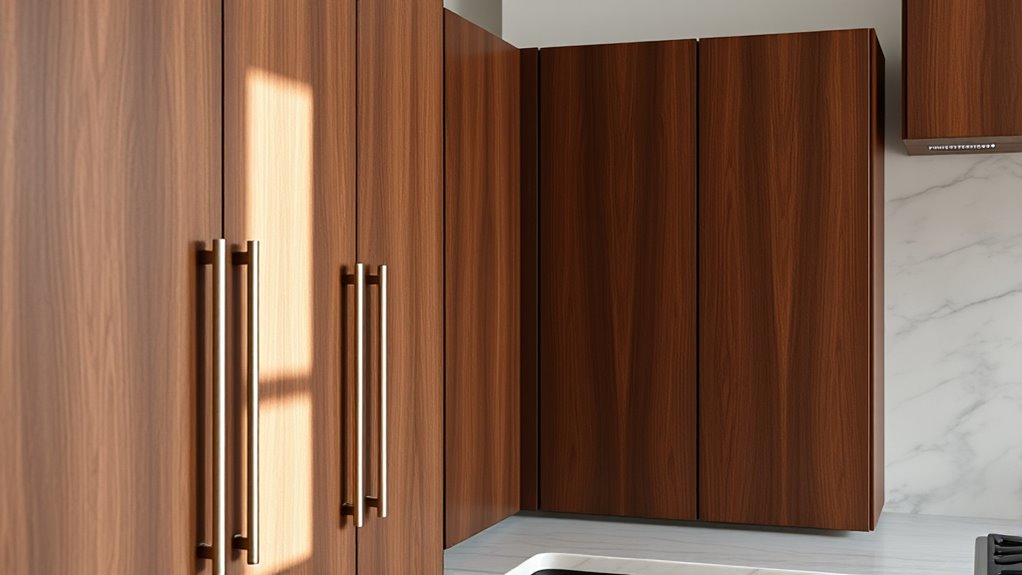
Material choices, like solid wood or plywood, affect price and longevity.
Style and design, from modern to ornate, also play a big role, as do custom features and intricate details.
Size and layout impact overall costs, and installation complexity can add to expenses.
Regional differences and brand quality further influence your budget.
To better understand how these elements come together, keep exploring the details behind each factor.
Key Takeaways
- Material choice, like solid wood or plywood, really impacts both the cost and how long the cabinets last.
- The style and design details, such as decorative elements or glass fronts, also play a big role. They affect the labor involved and the amount of materials needed.
- Custom features like soft-close hinges or pull-out shelves can bump up the price. They usually add to both the material costs and installation time.
- The size of your kitchen, how complicated the layout is, and how many cabinets you need all influence the total cost.
- Regional factors matter too. Things like local material availability and transportation costs can cause prices to vary from one place to another.
How Material Choices Affect Kitchen Cabinet Costs
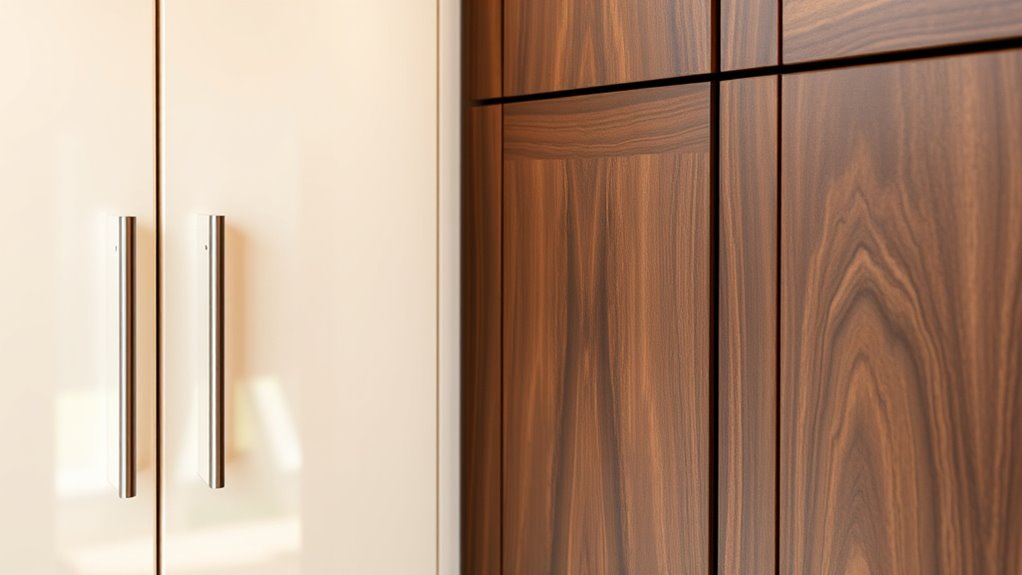
When choosing materials for your kitchen cabinets, the type you select can greatly impact the overall cost. For example, solid wood cabinets tend to be more expensive because of their quality and durability. Maple, cherry, and oak are popular options, but their prices vary.
If you go with plywood or MDF, you’ll save money. However, these materials might not last as long or look as high-end. Laminate finishes are even more affordable and easy to maintain, though they may not provide the same aesthetic appeal.
Keep in mind that higher-quality materials often come with increased installation costs. But they can add value and longevity to your kitchen. Your choice of material directly influences your budget and the long-term investment in your cabinets.
How Style and Design Influence Your Cabinet Budget
The style and design choices you pick for your kitchen cabinets can really impact your overall budget. Sleek, modern cabinets with minimal detailing usually cost less than ornate, traditional styles.
For example, flat-panel cabinets tend to be more affordable than raised-panel styles, which are more complex and can be pricier. The table below shows some design options and how they generally affect costs:
| Style | Complexity | Cost Impact |
|---|---|---|
| Flat-panel | Simple | Lower |
| Raised-panel | Detailed | Moderate to high |
| Glass-front | Decorative | Slightly higher |
Choosing more intricate designs or decorative details can increase labor and material costs. This raises your total expenses. Keep your style preferences aligned with your budget to get the look you want without overspending.
How Custom Features and Options Increase Expenses
Incorporating custom features and options into your kitchen cabinets can significantly increase costs because each personalized element needs extra materials and labor. For example, choosing intricate moldings, decorative glass, or specialty finishes will raise material expenses.
Custom hardware, like unique handles or knobs, also adds to the overall price. Installing features such as soft-close mechanisms, pull-out shelves, or built-in organizers requires specialized labor, which can boost installation costs.
While these upgrades can enhance both functionality and appearance, they often come with a higher price tag. It’s important to balance your desired features with your budget.
Keep in mind that every custom option, no matter how small, adds to the total investment. Carefully consider which features truly add value to your kitchen.
How Cabinet Size and Layout Impact Overall Costs
Cabinet size and layout greatly impact your overall costs because bigger or more complex setups need more materials and labor.
The number of cabinets, their sizes, and the overall design all influence the price. For example, a large kitchen with lots of cabinets will cost more than a smaller one.
Likewise, intricate layouts with custom shapes or extra features will increase expenses.
To help you understand, here are some key factors:
| Factor | Impact on Cost |
|---|---|
| Number of Cabinets | More cabinets mean higher costs |
| Cabinet Dimensions | Larger cabinets require more material |
| Layout Complexity | Custom or complex designs add to the price |
Knowing these details can help you plan a budget that matches your kitchen’s size and design.
How Brand Reputation and Quality Affect Pricing
Brand reputation and quality play a big role in setting cabinet prices because popular brands often put more into their materials and craftsmanship. When you pick a trusted brand, you’re paying for reliability, durability, and a proven track record of quality.
These brands usually use higher-grade woods, hardware, and finishes, which naturally bump up the costs. Plus, established companies often offer better warranties and customer support, adding to the overall value.
Less-known brands might save you money upfront but could compromise on durability or craftsmanship, which might lead to higher costs later. Your choice of brand affects not just the initial price but also how long your cabinets last and how much maintenance they need.
How Installation Complexity Changes Your Budget
Complex cabinet designs, like detailed moldings or unusual shapes, can take more time to install and cost more.
If your kitchen has uneven walls or outdated wiring, it might need extra work, which can raise your budget.
Skilled installers are crucial for tricky setups, and their expertise can impact the overall price.
Cabinet Design Intricacy
When the design of your kitchen cabinets gets more intricate, the installation naturally becomes more complex and takes longer. Details like carvings, moldings, or custom features need careful handling and precise fitting, which can drive up labor costs.
Unique shapes or unconventional layouts also require specialized skills and extra planning, often extending the installation time. This added complexity increases the chance of mistakes or damage, leading to delays or extra repairs.
Because of this, more elaborate designs usually come with higher labor charges and longer project timelines. If you’re going for ornate or custom cabinets, be prepared for increased costs due to the extra craftsmanship involved.
In the end, the more detailed your cabinet design, the more it can impact your overall budget.
Existing Kitchen Condition
The existing condition of your kitchen really affects how complicated the installation will be and, in turn, your overall costs. If your space has outdated wiring, plumbing, or uneven walls, you’ll likely need more time and money for modifications before installing new cabinets.
Structural issues like damaged drywall or uneven flooring can also add to your costs because repairs are necessary. Tight spaces or awkward layouts might slow down the process, requiring extra care or custom adjustments.
If appliances or fixtures are hard to reach, removing or repositioning them will increase the complexity. Overall, the more prep work your kitchen needs, the higher your project costs will be.
Taking care of these issues early can help you better estimate your budget and avoid surprises along the way.
Installation Skill Required
Installing new kitchen cabinets can vary a lot in difficulty depending on your home’s setup and how complex the job is. If you’re hiring a pro, the skill level needed can really affect your costs.
Here are some factors that influence how tricky the installation might be:
- Existing Cabinet Removal: Carefully taking out old cabinets without damaging walls or floors takes time and skill.
- Wall and Floor Condition: If surfaces are uneven or damaged, extra adjustments and expertise are needed.
- Custom Fittings: Installing cabinets that are custom-sized or oddly shaped requires precision and experience.
- Electrical and Plumbing Adjustments: Moving outlets, lights, or plumbing adds complexity and can increase costs.
The more specialized the work, the higher your labor costs will be, so plan accordingly.
How Your Location Affects Kitchen Cabinet Prices
Your location plays a big role in determining kitchen cabinet prices. Regional differences in labor costs, material availability, and demand can cause prices to vary quite a bit.
In areas with a high cost of living, expect to pay more for skilled labor, which raises overall costs. On the other hand, regions with plenty of materials and lower demand might have more affordable options.
Local building codes and regulations can also influence prices, sometimes adding extra expenses for permits or compliance. Transportation costs impact the price of imported or specialty materials, making cabinets more expensive in remote or rural areas.
Knowing these regional factors can help you better plan your budget and make smarter choices when selecting cabinets.
Balancing Cost and Quality When Choosing Cabinets
Finding the right balance between cost and quality when choosing cabinets requires careful consideration of your priorities and budget. You want cabinets that look great and last long without overspending. To do this, consider these factors:
- Material durability: Choose sturdy materials like solid wood or high-quality plywood for longevity.
- Finish quality: Pick finishes that resist scratches and stains, which can help reduce maintenance costs.
- Construction details: Look for features like dovetail joints or solid framing for better durability.
- Price versus longevity: Sometimes spending a bit more upfront can save you money on repairs or replacements later.
Frequently Asked Questions
How Do Energy-Efficient Features Affect Cabinet Costs?
Energy-efficient features can increase your cabinet costs because they often require special materials like eco-friendly finishes or insulation. They might also include built-in components such as LED lighting or smart technology.
These upgrades improve your kitchen’s efficiency but come with higher prices. However, they can save you money over time through lower energy bills, making the initial investment worth it.
In the long run, you’ll enjoy a greener, more cost-effective kitchen.
What Financing Options Are Available for Expensive Kitchen Cabinets?
You can explore several financing options for expensive kitchen cabinets. About 80% of homeowners choose plans like home equity loans, personal loans, or credit cards to spread out the costs.
You might also look into store financing or special promotions that offer low or zero-interest periods. These options help make high-quality cabinets more affordable without draining your savings.
They give you the flexibility to upgrade your kitchen now and pay over time, making the process smoother and more manageable.
How Do Resale Value Considerations Influence Cabinet Choices?
Resale value influences your cabinet choices because upgrading to timeless, high-quality materials can attract future buyers.
You might go for neutral colors and classic styles that appeal broadly, making sure your investment lasts and adds value.
Avoid overly trendy designs that could quickly become outdated.
When considering resale, you’ll want to focus on durability, style, and functionality.
These factors can make your home more appealing and might even boost its market value when it’s time to sell.
Are There Eco-Friendly Materials That Impact Budget Differently?
Yes, eco-friendly materials can impact your budget differently. Bamboo and reclaimed wood are often cheaper and sustainable choices. However, high-quality recycled materials or exotic sustainable woods can be more expensive.
You might find that some eco-friendly options save you money upfront, while others, because of their rarity or how they’re processed, end up costing more. Consider your environmental priorities and your budget to find the best sustainable material for your kitchen.
How Does the Timeline of Installation Impact Overall Costs?
The timeline of installation can really affect your overall costs. Rushing the process might mean higher expenses because of scheduling fees or needing faster shipping.
On the other hand, scheduling work during off-peak times can help save money. Delays can also lead to higher labor charges or extend your project, which adds to the budget.
Planning ahead and coordinating with your contractors can keep your kitchen renovation on track and within your budget.
Conclusion
Choosing the right kitchen cabinets doesn’t have to break the bank, but understanding these key factors helps you make smart decisions.
Did you know that high-quality cabinets can last up to 50% longer? That means saving money in the long run because you won’t need to replace them as soon.
By balancing cost, style, and durability, you’ll create a beautiful, functional kitchen that fits your budget. Remember, investing wisely today in your kitchen cabinets means you’ll enjoy your dream kitchen for years to come.