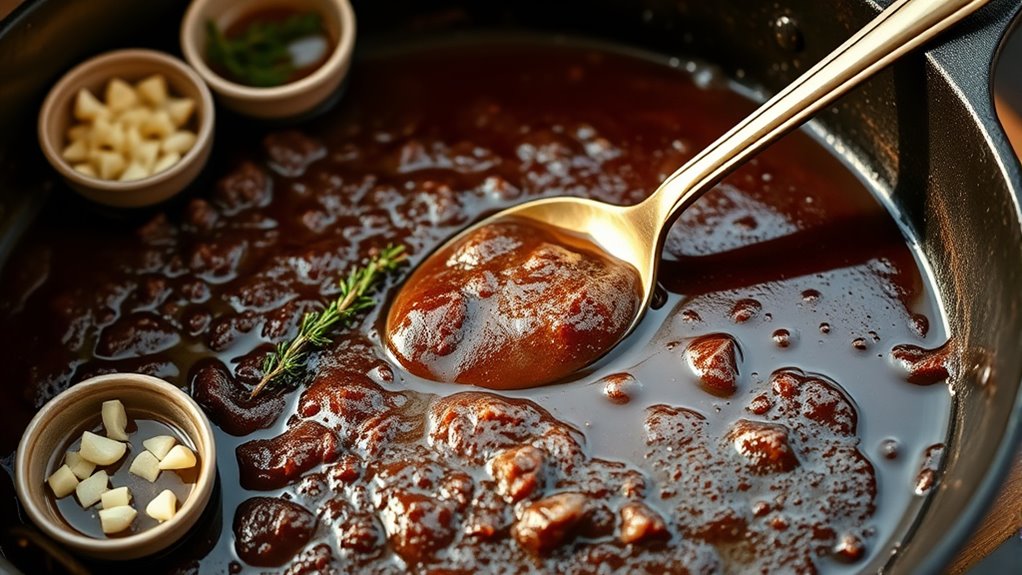
How to Make Beef Gravy From Beef Drippings in 8 Easy Steps
Many home cooks struggle with making perfect beef gravy from those rich drippings. It’s a common challenge to turn flavorful pan juices into a smooth, tasty gravy that complements your meal. You’re not alone—getting that perfect consistency and flavor can feel tricky at times.
To make beef gravy from drippings, start by collecting and straining the pan juices to remove solids, keeping the flavorful liquids.
Then, make a roux with fat and flour to thicken the gravy, adding beef broth or wine for depth. Season with salt, pepper, and optional herbs.
Cook until thickened, and adjust seasonings as needed. For smooth, rich gravy, follow these easy steps—keep going to uncover all the tips and tricks.
Key Takeaways
- Collect and strain the beef drippings to create a clean, flavorful base for your gravy.
- Next, prepare a roux by cooking equal parts fat and flour until it turns a nice golden brown. This will help thicken your gravy perfectly.
- Then, deglaze the pan with beef broth or wine. Scrape up those browned bits from the bottom—that’s where all the flavor is!
- Gradually whisk in the roux or a slurry to achieve your desired gravy consistency. Keep stirring until it’s smooth and thickened.
- Finally, season with salt, pepper, and any herbs you like. Serve it warm or store it properly for later enjoyment.
How to Collect and Strain Beef Drippings Correctly
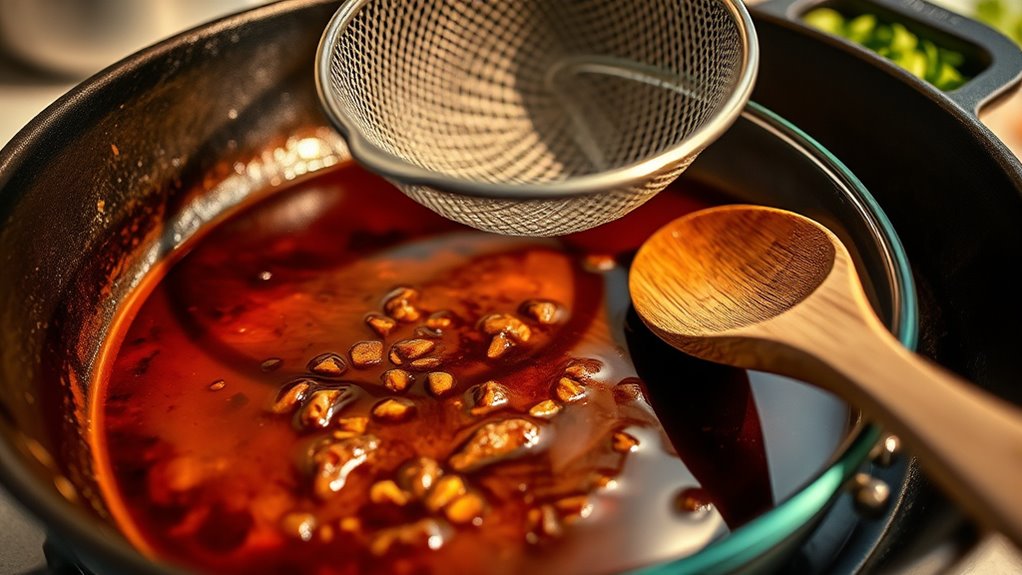
When collecting beef drippings, do it soon after taking the roast out of the oven or pan. Let the meat rest for a few minutes, then tilt the pan slightly to gather the fat and juices on one side.
Use a spoon or a fat separator to carefully skim off the fat from the surface, leaving behind the flavorful juices.
Skim off the fat with a spoon or fat separator to keep the flavorful juices intact.
For a cleaner collection, pour the pan contents through a fine mesh strainer or cheesecloth into a heatproof bowl or container.
This helps remove burnt bits or unwanted solids, making your gravy smooth and delicious.
Be careful with hot liquids to avoid burns. Properly collected and strained drippings make a rich base for your beef gravy, boosting its flavor and texture.
Essential Ingredients for Making Beef Gravy
To craft a flavorful beef gravy, gather a few key ingredients that serve as its foundation. You’ll need beef drippings, which provide rich, savory flavor. Add all-purpose flour to help thicken the gravy, creating a smooth, velvety texture.
Beef broth or stock is essential to improve the depth of flavor and achieve the right consistency. Salt and freshly ground black pepper bring out the savory notes, so keep these in mind.
For added richness, consider a splash of Worcestershire sauce or a touch of soy sauce, which deepen the umami. Optional ingredients like garlic powder, onion powder, or herbs such as thyme can uplift the flavor profile.
With these ingredients, you’ll have everything you need to create a delicious, hearty beef gravy.
How to Make a Rich Roux for Your Gravy
To make a rich roux, start by choosing the right fat—butter or oil—based on your flavor preference. Stir constantly over medium heat until it reaches a smooth, golden-brown color.
This will give you the perfect consistency. Achieving this balance guarantees your gravy will be flavorful and smooth every time.
Selecting the Right Fat
Choosing the right fat is essential for making a flavorful, smooth roux that forms the base of your gravy. You want a fat that adds richness without overpowering the other flavors.
Traditional options include butter, which offers a lovely depth of flavor, or beef fat, which elevates the savory taste. If you’re aiming for a lighter roux, vegetable oil or clarified fats work well, providing neutral backgrounds.
Avoid using oils with strong flavors or low smoke points that could burn easily. The key is to select a fat that complements your beef drippings and boosts the overall richness of your gravy.
Whichever you choose, melt it gently and combine it with an equal amount of flour to create a smooth, flavorful foundation.
Achieving Perfect Consistency
Once you’ve selected your fat and flour, the next step is to cook them together until they reach the right consistency. You want a smooth, bubbling mixture that’s golden or light brown, depending on your preference. Stir constantly to prevent burning and ensure even cooking.
The roux should thicken slightly and develop a rich aroma. If it’s too thick or starts to brown too quickly, add a small amount of stock or water to loosen it. If it’s too thin, keep cooking and stirring until it thickens.
The goal is a silky, paste-like texture that will thicken your gravy without lumps. Achieving this perfect consistency guarantees your gravy will be smooth, flavorful, and beautifully textured.
Flavoring Your Beef Gravy With Beverages and Seasonings
Adding the right beverages can deepen your gravy’s flavor, so consider using wine, beer, or even beef broth.
Enhancing your gravy with spices like thyme, garlic, or black pepper brings warmth and complexity.
To get the flavor just right, taste as you go and adjust the sweetness or saltiness accordingly.
Choosing Flavorful Beverages
To infuse your beef gravy with rich, complex flavors, start by choosing the right beverages. Red wine adds depth and a slightly tangy note that pairs well with beef’s richness.
Beef broth or stock can boost the savory taste without overpowering it. Dark beer offers a malty sweetness and subtle bitterness, giving your gravy a hearty dimension.
For a lighter touch, try tomato juice or Worcestershire sauce. They can introduce a savory tang and umami flavor. Just keep in mind that your beverage should complement the dish you’re serving.
Avoid overly sweet drinks or those with strong, distracting flavors. The goal is to enhance, not mask, the natural beef drippings.
Select beverages that deepen the gravy’s overall flavor profile and bring out the best in your dish.
Enhancing With Spices
Enhancing your beef gravy with spices can boost its flavor and add a warm, aromatic depth. Start by adding a pinch of thyme or rosemary for an earthy touch.
A dash of black pepper brings a subtle heat, while paprika offers smoky richness. For a hint of sweetness, consider cinnamon or allspice, but use these sparingly.
To deepen the flavor, add a splash of red wine, beer, or beef broth. These beverages infuse richness that complements the spices nicely.
Use the table below to visualize ideas for seasoning your gravy:
| Spice/Seasoning | Beverage | Flavor Profile |
|---|---|---|
| Thyme | Red wine | Earthy, herbal |
| Black pepper | Beer | Pungent, mildly spicy |
| Paprika | Beef broth | Smoky, sweet |
| Cinnamon | Red wine | Warm, sweet, spicy |
Balancing Sweet and Savory
Balancing sweet and savory flavors in your beef gravy means choosing the right beverages and seasonings that work well together. A splash of red wine or a bit of balsamic vinegar can add a touch of sweetness and depth, enhancing the savory taste.
You might also try adding a small amount of honey or molasses for natural sweetness, but be careful not to overdo it so the gravy doesn’t become too sweet. Seasonings like soy sauce or Worcestershire sauce add umami and a slight saltiness that helps balance out the sweetness.
Taste your gravy as you go and make adjustments to find the perfect mix. The goal is to create a rich, well-rounded gravy that boosts your beef’s flavor without overpowering it.
How to Achieve Perfect Consistency and Thickness
Achieving the right consistency and thickness in your beef gravy depends on careful control during the simmering process. Start by simmering slowly to let flavors meld and the liquid reduce naturally.
If your gravy is too thin, simmer it longer or add a slurry of cornstarch or flour mixed with water, stirring constantly. For a thicker gravy, use less liquid initially or incorporate a roux.
To get the perfect texture, look for these signs: a smooth, coat-the-spoon consistency. Use this table as a quick guide:
| Thickness Level | Technique | Indicator |
|---|---|---|
| Thin | Reduce with simmering | Slightly runny, pours easily |
| Perfect | Proper reduction | Coats the back of a spoon |
| Thick | Add slurry or roux | Holds shape when stirred |
Tips for Serving and Storing Homemade Beef Gravy
Once you’ve perfected your beef gravy’s consistency and thickness, the next step is to serve it at its best and store any leftovers properly. To serve, pour the gravy into a warm gravy boat or small bowl for easy pouring over meats, mashed potatoes, or vegetables.
Keep it warm by placing it in a double boiler or on low heat, stirring occasionally to prevent skin from forming. For storage, transfer leftovers to an airtight container and refrigerate within two hours of cooking.
Be sure to consume the gravy within 2-3 days for the best flavor and safety. If you want to keep it longer, freeze it in a sealed container for up to 3 months.
Reheat the gravy gently on the stove, stirring frequently to preserve its flavor and texture.
Common Mistakes to Avoid When Making Beef Gravy
One common mistake when making beef gravy is not properly deglazing the pan after searing the meat. Skipping this step means you miss out on flavorful browned bits stuck to the bottom, which are essential for rich gravy. Always add a small amount of liquid, like beef broth or wine, and scrape the pan to loosen these bits.
Another mistake is adding thickening agents too early or in excess, which can result in lumps or overly thick gravy. Be patient and add your slurry gradually, stirring constantly. Also, avoid high heat once you add the flour or cornstarch; too much heat can cause lumps or burnt flavors.
Finally, don’t forget to taste and adjust the seasoning before serving. Paying attention to these details and using the proper techniques will help you avoid common pitfalls and make delicious beef gravy.
Troubleshooting: Fixing Lumpy or Thin Gravy
If your beef gravy turns out lumpy or too thin, don’t worry—there are simple fixes you can try. To smooth out lumps, strain the gravy through a fine sieve or use an immersion blender to blend until smooth.
If the gravy is too thin, simmer it longer to reduce the liquid and thicken naturally. You can also stir in a slurry made of equal parts cornstarch and water, then cook until it thickens.
For a quick fix, add a bit of flour directly to the hot gravy, whisking constantly to prevent lumps. Always taste and adjust the seasoning afterward.
Frequently Asked Questions
Can I Make Beef Gravy Without Beef Drippings?
Yes, you can make beef gravy without beef drippings. Just use beef broth or stock as your base, then whisk in a roux made from butter and flour to thicken it.
Add seasonings like salt, pepper, garlic, or onion powder for flavor. Let it simmer until it reaches the consistency you want.
This method gives you flavorful gravy even without the drippings, making it perfect for enhancing your meal.
How Long Does Homemade Beef Gravy Last in the Fridge?
Homemade beef gravy in your fridge is like a guest that stays just a little too long—best enjoyed within 3 to 4 days. You should store it in an airtight container to keep it fresh.
Before serving again, reheat it thoroughly and check for any off smell or appearance. If it’s past the date or looks suspicious, it’s better to toss it out and avoid any risk.
Can I Freeze Beef Gravy for Later Use?
Yes, you can freeze beef gravy for later use. Let the gravy cool completely, then transfer it to an airtight container or freezer bag.
Label it with the date and store it in the freezer for up to 3 months. When you’re ready to use it, thaw the gravy in the fridge overnight.
Then, reheat on the stove, stirring well to restore its consistency.
What Are Alternative Thickeners if I Don’T Have Flour?
If you don’t have flour, you can thicken your gravy with cornstarch or arrowroot powder. Imagine a silky, glossy sheen spreading across your gravy as you whisk in a small mixture of one tablespoon of cornstarch or arrowroot mixed with cold water.
Keep stirring and watching it transform from thin to thick, almost like magic. These alternatives work quickly and create a smooth, flavorful gravy without needing flour.
How Do I Prevent My Gravy From Burning During Cooking?
To prevent your gravy from burning, keep the heat on low or medium-low, especially if you’re simmering it for a while.
Stir frequently to avoid sticking and burning at the bottom. Using a heavy-bottomed pan helps distribute heat evenly.
If it starts to thicken too much or stick, just add a bit of liquid to loosen it up.
Keep a close eye on your gravy and don’t rush the process. Patience is key to getting a smooth, flavorful result.
Conclusion
Making beef gravy from drippings is like crafting a masterpiece—every step matters. When I first tried, I learned that patience and attention to detail turn basic drippings into a rich, flavorful sauce that really elevates my meal.
With these easy steps, you’ll transform simple ingredients into a culinary triumph. Remember, even a small mistake can turn your gravy from perfect to lumpy—so stay attentive.
Soon, you’ll be serving a savory, homemade beef gravy everyone will love.