Can You Put Epsom Salt in a Baby Bath?
Many parents worry about how to soothe their baby’s skin or make bath time more relaxing. You’re not alone—finding safe and effective ways to pamper your little one can be challenging.
You can put a small amount of Epsom salt in your baby’s bath, but only if you follow safety guidelines. Use pure Epsom salt without additives, dissolved in warm water, and never let your baby ingest or get it in their eyes.
Keep water shallow and supervise closely. Avoid use if your baby has skin issues or open wounds.
To learn more about safe usage and precautions, keep exploring these important tips.
Key Takeaways
- Epsom salt can be used safely in small amounts if properly diluted and free of additives.
- Always check that the Epsom salt is pure before adding it to your baby’s bath.
- It’s a good idea to talk to your pediatrician before trying Epsom salt baths, especially if your baby has sensitive skin or health concerns.
- Avoid giving your baby an Epsom salt bath if they have open wounds, skin infections, or a contagious illness.
- When giving the bath, supervise your baby closely at all times.
- Make sure to rinse your baby thoroughly afterward to prevent any potential irritation.
Is Epsom Salt Safe for My Baby? What Parents Should Know
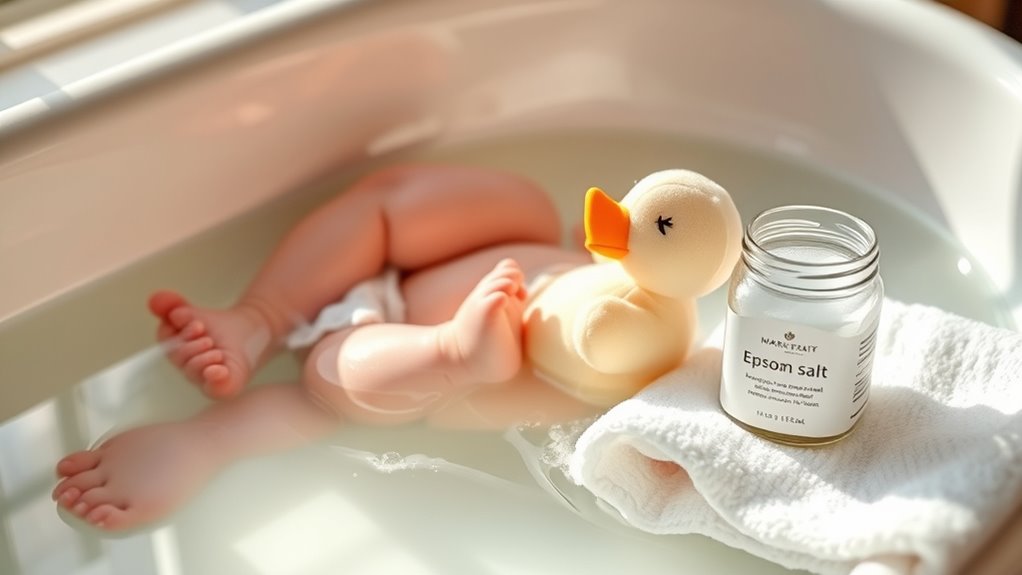
Many parents wonder if adding Epsom salt to their baby’s bath is safe. The truth is, Epsom salt can be safe if used correctly and in moderation. It’s known for its soothing properties and can help relax your baby’s muscles.
However, you should always verify the salt is pure and free of additives or fragrances that could irritate sensitive skin. Never use excessive amounts—just a small handful dissolved in warm water is enough.
Always ensure Epsom salt is pure and use only a small amount in your baby’s bath.
Keep a close eye on your baby during the bath to prevent accidental ingestion or contact with eyes. If your baby has skin sensitivities, consult your pediatrician before trying Epsom salt.
When used properly, Epsom salt can be a gentle addition to your baby’s bath routine.
When Should I Avoid Using Epsom Salt in Baby Baths?
You should avoid using Epsom salt in your baby’s bath if your child has any skin infections, open wounds, or severe skin conditions. The salt could cause irritation or delay healing. Epsom salt may also worsen inflammation or discomfort, especially if the skin barrier is compromised.
If your baby is prone to allergies or sensitivities, it’s best to check with your pediatrician before using Epsom salt. Avoid it if your baby has a fever, contagious illness, or unexplained skin rashes.
Never use Epsom salt in baths with open cuts or sores, as it can cause stinging and increase the risk of infection. When in doubt, always talk to your healthcare provider to make sure Epsom salt is safe for your baby’s specific health situation.
How Do I Properly Prepare an Epsom Salt Baby Bath?
How can you guarantee a safe and effective Epsom salt bath for your baby? First, check that the water temperature is warm but not hot, around 98-100°F (37-38°C), using a bath thermometer.
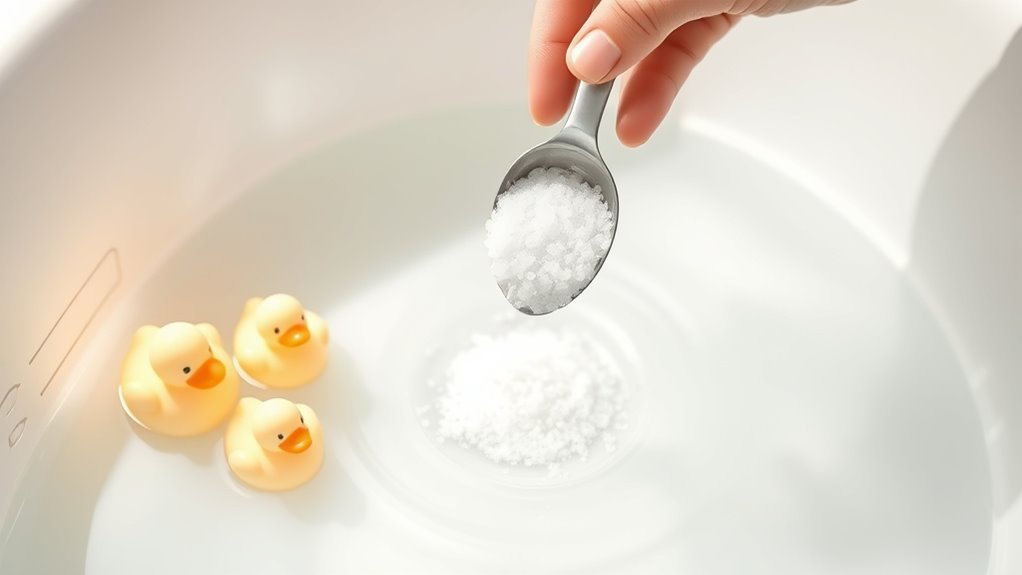
Dissolve the Epsom salt completely in warm water before gently submerging your baby. Use a small amount, typically about 1 to 2 tablespoons of Epsom salt per gallon of water, unless your healthcare provider advises otherwise.
Always supervise your baby closely during the bath and keep the water level shallow. Test the water temperature frequently to prevent burns.
After soaking for about 10 minutes, gently rinse your baby with clean, lukewarm water and pat dry. Proper preparation ensures a safe, soothing experience for your little one.
What Are the Benefits of Using Epsom Salt for Babies?
Using Epsom salt in a baby’s bath can offer several gentle benefits that promote comfort and well-being. It helps soothe irritated or itchy skin, which can provide relief for common issues like eczema or diaper rash.
The magnesium in Epsom salt can also promote relaxation, helping your baby feel calm and comfortable during bath time. Plus, Epsom salt may help soften rough skin and reduce inflammation, making your baby’s skin feel smoother.
Some parents find that Epsom salt baths support gentle detoxification, although scientific evidence is limited. Overall, when used properly and in moderation, Epsom salt can be a helpful addition to your baby’s bath routine, encouraging a calming experience while caring for sensitive skin.
Are There Safer Alternatives to Epsom Salt for Baby Baths?
Are there safer alternatives to Epsom salt for your baby’s bath? Yes, you can consider gentle options like colloidal oatmeal or plain, lukewarm water.
Colloidal oatmeal soothes irritated skin and is safe for infants when used appropriately. It creates a milky, soothing layer that can help with dryness or mild rashes.
Colloidal oatmeal comforts irritated skin and is safe for infants when used properly.
Another safe approach is simply using plain water, especially for cleansing or calming your baby. Mild, fragrance-free baby baths or cleansers formulated for sensitive skin are also good choices.
Always avoid adding substances that haven’t been recommended by your pediatrician. These alternatives are less likely to cause irritation or adverse reactions, making them safer options when bathing your baby.
How Can I Tell If My Baby Has a Skin Reaction After Bathing?
Noticing signs of a skin reaction after your baby’s bath is important to keep them comfortable and safe. Watch for these signs:
- Redness or inflammation on your baby’s skin.
- Itching or frequent scratching.
- Swelling or hives popping up suddenly.
- Dryness, peeling, or blistered skin.
If you notice any of these, rinse your baby with plain water to wash away any leftover bath products. Avoid harsh soaps or lotions until the skin heals. Keep an eye on your baby over the next few hours.
If symptoms get worse or don’t improve, reach out to your pediatrician right away. Spotting these reactions early helps prevent discomfort and keeps your baby safe.
Questions to Ask Your Pediatrician About Epsom Salt and Baby Baths
Before giving your baby an Epsom salt bath, it’s important to ask your pediatrician some key questions to ensure it’s safe. Start by checking if Epsom salt is suitable for your baby’s age and skin type.
Next, ask about the right amount of Epsom salt to use and how often baths should be given. It’s also good to clarify if any health conditions or medications your baby is taking could cause a negative reaction.
Be sure to ask about signs of adverse reactions to watch for during or after the bath. And don’t forget to discuss alternative remedies or treatments that might better suit your baby’s specific needs.
Myth Busting: Is Epsom Salt Safe for Babies?
Many parents wonder if Epsom salt is truly safe for their babies, especially since it’s often linked to adult health benefits. The truth is, Epsom salt isn’t recommended for baby baths without medical advice.
Here are some key points to consider:
Epsom salt can cause skin irritation or allergic reactions in sensitive infants. It may also lead to accidental ingestion if not properly supervised.
There’s limited research on its safety for delicate baby skin. Using Epsom salt improperly can disrupt your baby’s skin barrier and hydration.
Always check with your pediatrician before using Epsom salt in your baby’s bath. Safety should always come first, and professional guidance helps ensure you’re making the right choice for your little one.
Tips for a Safe and Comfortable Bath Time for Your Baby
Creating a safe and comfortable bath time for your baby involves careful preparation and attentive care. Always test the water temperature with your wrist or elbow to make sure it’s warm, not hot—around 98 to 100°F is ideal.
Gather everything you’ll need beforehand, like gentle baby soap, a soft towel, and a clean diaper, so you don’t have to leave your baby unattended. Keep the bath brief—about 5 to 10 minutes—to prevent chilling.
Prepare all essentials beforehand to keep your baby safe and ensure a quick, comfortable bath experience.
Stay within arm’s reach throughout the bath so you can respond quickly if needed. Use gentle motions and avoid scrubbing your baby’s sensitive skin.
After the bath, pat your baby dry gently and dress them promptly. These steps help your baby feel secure, comfortable, and loved during bath time.
Frequently Asked Questions
Can Epsom Salt Help With Baby Colic or Digestive Issues?
Epsom salt isn’t recommended for helping with your baby’s colic or digestive issues. While some adults find relief with Epsom salt baths, babies have sensitive skin and delicate systems that can be irritated or harmed by such treatments.
Always talk to your pediatrician before trying any remedies. Instead, focus on gentle tummy massages, proper burping, and soothing techniques, which are safer and more effective for easing your baby’s discomfort.
How Much Epsom Salt Is Safe to Use in a Baby Bath?
You shouldn’t put Epsom salt in a baby bath without talking to a pediatrician first. Usually, a tiny amount—about a teaspoon or less—is safe for adults, but babies have sensitive skin and different needs.
Always check with your doctor before using Epsom salt or any bath additives on your baby. It’s better to be cautious to avoid irritation or any adverse reactions.
Are There Specific Epsom Salt Brands Recommended for Babies?
You should look for gentle, pure Epsom salt brands specifically labeled for babies or sensitive skin.
Opt for options without added fragrances or chemicals, like Epsom Salt USP or brands that emphasize purity.
Always read labels carefully and choose products designed for delicate skin.
Before using any brand, consult your pediatrician to confirm it’s safe for your baby, especially if your baby has skin sensitivities or health concerns.
How Often Can I Give My Baby an Epsom Salt Bath?
You should give your baby an Epsom salt bath only occasionally, about once a week or as recommended by your pediatrician.
Frequent baths aren’t necessary and might dry out your baby’s delicate skin.
Always use a small amount of Epsom salt, and make sure the water is comfortably warm.
If your baby shows any irritation or discomfort, stop the baths and consult your healthcare provider.
What Are Signs of an Allergic Reaction to Epsom Salt in Babies?
If your baby shows redness, swelling, or hives after an Epsom salt bath, consider it a warning sign, like a storm cloud on a clear day.
You might also notice fussiness, difficulty breathing, or skin blisters. These signals suggest an allergic reaction.
If you see any of these signs, rinse your baby thoroughly, stop using Epsom salt, and seek medical help immediately.
Trust your instincts; they’re your best guide.
Conclusion
While Epsom salt baths are popular for adults, they aren’t recommended for babies without your pediatrician’s approval. Babies have delicate skin that can easily react to unfamiliar substances. About 10% of infants develop skin irritations from new products.
Always consult your doctor first and look into safer alternatives for soothing your little one. Prioritizing their safety helps ensure bath time stays a comforting, enjoyable experience for both of you.