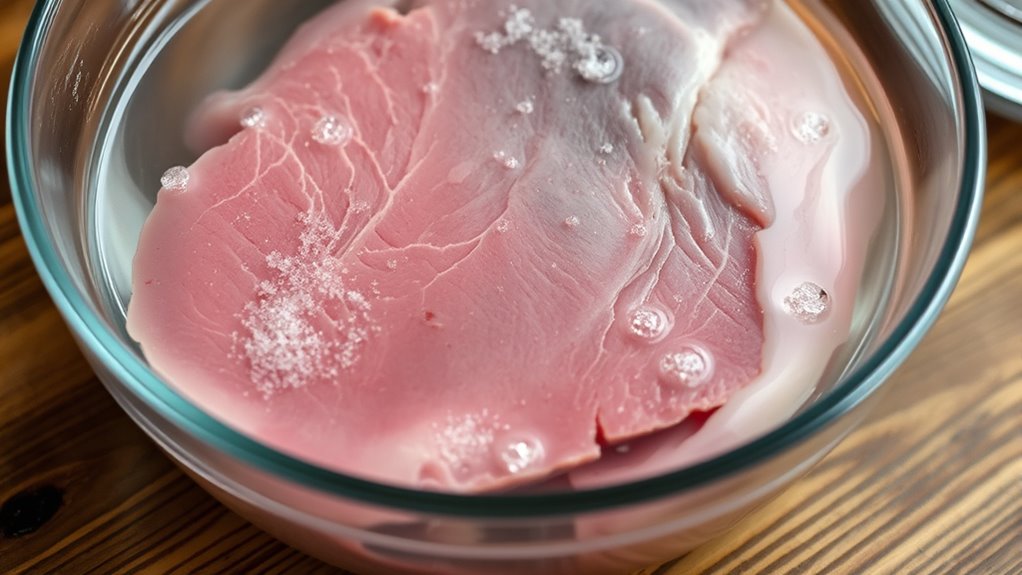
How Long to Soak Corned Beef to Remove Salt
Many people love cooking corned beef, but dealing with its saltiness can be frustrating. If you’ve ever found your dish too salty, you’re not alone. Luckily, there’s an easy fix to make your corned beef more enjoyable.
To reduce saltiness, soak your corned beef for 1 to 3 hours for a mild decrease, or overnight (8 to 12 hours) if you want more salt removed. Change the water once or twice to speed up the process, and use cold water to prevent cooking the meat.
Factors like meat thickness and initial saltiness affect the time needed.
Keep exploring for tips on perfecting your corned beef and balancing flavor.
Key Takeaways
- Soak your corned beef for about 1 to 3 hours if you want a mild salt reduction.
- If you’re aiming to remove more salt, soaking it overnight—around 8 to 12 hours—is a good idea.
- Be sure to change the water once or twice during the soaking process. This helps get rid of the salt more effectively.
- Use cold water for soaking. It prevents the meat from cooking and helps salt leach out better.
- Keep in mind, thinner cuts need less soaking time, while thicker ones might need a bit longer.
Why Soaking Corned Beef Reduces Saltiness
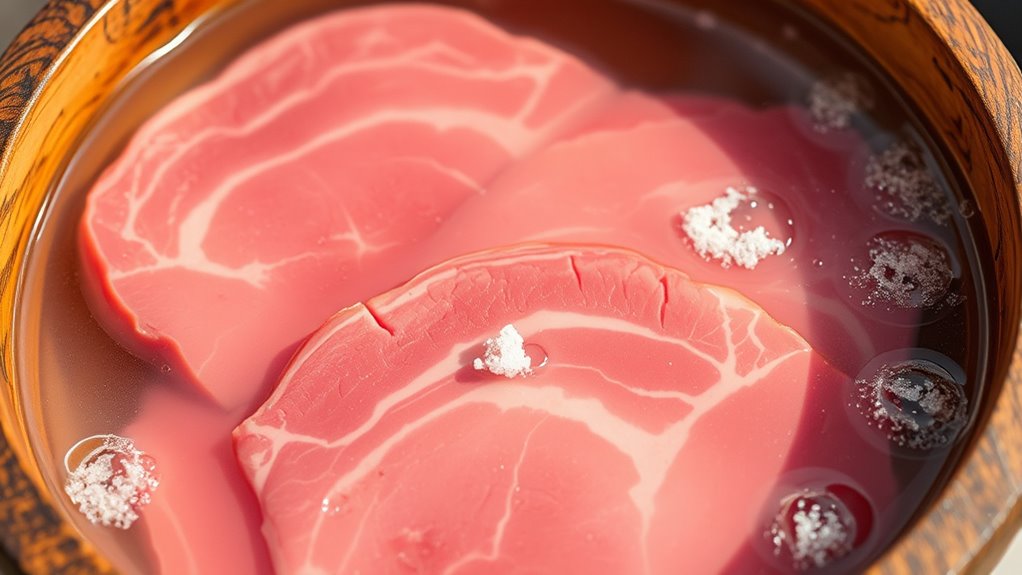
Soaking corned beef before cooking helps to greatly reduce its saltiness. This process allows the salt and preservatives used in curing to dissolve into the water, drawing out some of the salt content.
Soaking corned beef reduces saltiness and improves texture for a better, more balanced flavor.
When you submerge the meat, salt molecules naturally migrate from the beef into the surrounding water, lowering the overall salt concentration. This not only makes the meat more palatable but also prevents it from becoming overly salty once cooked.
The soaking also helps to eliminate excess brine, which can sometimes result in a tougher texture. By reducing salt levels, you’ll find the beef easier to flavor with your seasonings and enjoy a more balanced taste.
Soaking is a simple step that notably improves the overall quality of your corned beef.
How Long Should You Soak Corned Beef?
How long you should soak corned beef depends on how salty you want it. If you’re aiming for a mild reduction, soaking it for about 1 to 3 hours should do the trick.
For more significant salt removal, you might want to soak it overnight, around 8 to 12 hours, changing the water once or twice. Just remember, longer soaking can also dilute the beef’s flavor.
Use cold water for soaking because hot water can start cooking the meat. If you’re in a hurry, shorter soaks still help, but for the best results, plan ahead and soak it longer if you want a milder, less salty taste.
Factors That Affect Soaking Time
Several factors can influence how long you should soak corned beef to get the salt level just right. The thickness of the meat is a big deal—thicker cuts need more time for the salt to leach out.
The saltiness of the initial brisket also matters. If it’s heavily cured, you might need to soak it longer. Temperature is another factor; soaking in cold water slows down the salt removal but can enhance flavor and tenderness.
Heavily cured brisket needs longer soaking; cold water slows salt removal, boosting flavor and tenderness.
Your water change routine makes a difference too. Regularly replacing the water speeds up the salt extraction process. Plus, the age of the meat can affect how quickly the salt dissolves.
Keep these factors in mind so you can adjust your soaking time properly. That way, your corned beef will reach the perfect salt level for your taste.
How to Tell When Corned Beef Is Perfectly Soaked
You’ll know corned beef is perfectly soaked when the surface shows less salt residue and looks more tender.
Tasting a small piece is the best way to check if it’s reached your preferred saltiness level.
Once it’s just right, you’re all set to move on to cooking or serving.
Visual Salt Reduction Signs
As the soaking process goes on, you can often tell the corned beef has reached the right salt level by looking at it.
Look for a change in color; the meat may become a bit paler or less vibrant as excess salt dissolves. The surface might look less shiny or greasy, showing that salt is being drawn out.
You might also notice small bubbles forming on the surface, which means salt is leaching out into the water.
Plus, the meat may look more relaxed and less firm, indicating reduced salt content.
Keep in mind, these visual cues are helpful but not foolproof. Combining them with other signs like texture or taste will help you get that perfect soak.
Tasting for Saltiness
How can you tell when your corned beef has been soaked enough? The best way is to taste a small piece.
After soaking, rinse the beef briefly, then cut a thin slice. Take a bite and focus on the saltiness.
If it tastes too salty or briny, it needs more soaking. If it’s pleasantly seasoned without an overpowering salt flavor, it’s ready.
Keep in mind that the saltiness may diminish slightly after cooking, so aim for a slightly less salty taste during the tasting.
Remember, soaking times vary depending on how salty the beef was initially. Tasting is the most reliable method to know when your corned beef is perfectly soaked.
This way, you can control the final flavor and avoid over- or under-salting.
Tips for Keeping Flavor While Cutting Salt
Reducing salt in corned beef doesn’t mean sacrificing flavor; instead, it calls for strategic seasoning adjustments. To keep that rich taste, add herbs like bay leaves, thyme, or garlic during cooking to boost aroma and flavor.
Incorporate a splash of acidity, such as vinegar or lemon juice, to brighten the dish and enhance flavor perception. Natural flavor enhancers like onion powder or smoked paprika can add depth without extra salt.
Tasting as you go helps you find the right balance so you don’t overcompensate with salt. Finally, consider simmering the beef gently to keep it tender and maximize flavor absorption.
These tips help you enjoy a flavorful, less salty corned beef without sacrificing taste or enjoyment.
Common Mistakes When Soaking Corned Beef
One common mistake is soaking the beef for too long, which can cause it to lose too much flavor and become bland.
Using water that’s too hot or too cold can also hinder proper soaking, affecting how well the salt is removed.
Being mindful of both timing and temperature helps guarantee your corned beef turns out just right.
Over-Soaking Risks
Over-soaking corned beef can lead to some unintended results, like losing much of its flavor and becoming too salty. When you soak it too long, the saltiness goes down, but so does the beef’s natural taste, leaving it bland.
You might also wash away important seasonings and spices, making the dish less flavorful. Over-soaking can make the meat too soft or mushy, ruining its texture.
Plus, extended soaking increases the chance of bacteria growth if you don’t change the water regularly, which isn’t safe. To avoid these issues, stick to recommended soaking times and keep an eye on the beef.
Proper timing helps you remove enough salt without losing flavor or texture, giving you tender, well-seasoned meat.
Using Wrong Water Temperature
Using the wrong water temperature while soaking corned beef can really affect the final result. If the water is too hot, it causes the salt inside the meat to dissolve too quickly, which can lead to uneven salt removal and change its texture.
On the flip side, using cold water helps draw out excess salt gradually. This keeps the beef tender and flavorful. Hot water may also start cooking the beef a bit, which you definitely want to avoid.
Stick to a consistent, cool temperature—around room temperature or slightly chilled. This way, the salt gets removed evenly without messing with the meat’s quality. Proper temperature control is key to getting a well-soaked, delicious corned beef.
Preparing Corned Beef for Soaking
Start by rinsing the corned beef under cold running water to remove surface salts and any residual brine. This helps reduce excess salt and gets the meat ready for soaking.
Rinse corned beef under cold water to remove excess salt and residual brine.
Remove any packaging or seasoning packets that might be attached. Pat the beef dry with paper towels to eliminate excess moisture, which can dilute the soaking water.
If the beef has a thick fat cap, you can trim some of it to expose more surface area. Piercing the meat with a fork or knife can also help water penetrate more effectively.
Use a clean cutting board and knife to avoid contamination. Preparing the beef this way ensures it’s ready for soaking without compromising flavor or texture.
Frequently Asked Questions
Can Soaking Remove All the Salt From Corned Beef?
Soaking can really cut down on how salty corned beef tastes, but it might not get rid of all the salt completely.
For the best results, soak the meat in cold water, changing it every few hours. The longer you soak, the less salty it will be.
If you want to remove all the salt, you might need to cook it thoroughly or try a different preparation method.
Does Soaking Affect the Tenderness of the Meat?
Soaking corned beef can slightly affect its tenderness. If you soak your beef for several hours, the outer layers may become a bit softer, but the core stays the same.
If you soak it too long, you risk making the meat mushy or losing some flavor. To avoid this, keep an eye on the texture and try shorter soaks if you want to keep the beef’s natural tenderness while reducing salt.
What Are Alternative Methods to Reduce Salt in Corned Beef?
You can reduce salt in corned beef by rinsing it thoroughly under cold water, gently scrubbing to remove surface salt.
Another way is to boil the beef briefly, then discard the water. This helps leach out excess salt.
Cooking the meat in a low-sodium broth or using a salt-free spice mix can also boost flavor without adding more salt.
These methods help you enjoy a less salty, flavorful dish.
How Does the Thickness of the Meat Influence Soaking Time?
Think of the meat as a sponge soaking up water; thicker cuts act like dense clouds, needing more time to release their salt.
When soaking corned beef, the thicker the piece, the longer you’ll need to keep it submerged to evenly draw out excess salt.
Thin slices absorb water quickly, so they require less soaking time.
Adjust your timing based on thickness to get the right balance of flavor and saltiness.
Is It Safe to Reuse Soaking Water for Cooking?
It’s not safe to reuse soaking water for cooking because it contains excess salt and impurities from the corned beef. Reusing this water can make your dishes overly salty and could cause food safety issues.
Instead, discard the soaking water and rinse the meat thoroughly under cold water. Using fresh water helps you control the salt levels and ensures your dish is safe and tasty.
Always prioritize clean, fresh water when cooking. It’s the best way to keep your food safe and delicious.
Conclusion
So, next time you soak your corned beef, remember it’s all about patience—unless you enjoy overly bland meat. Ironically, the more you soak, the less salt you get, but you also risk losing that rich flavor everyone loves.
Find that sweet spot, keep tasting, and don’t rush the process. The right soaking time depends on how salty your beef is to start with and how much salt you want to remove.
Usually, soaking for about 3 to 4 hours, changing the water a couple of times, does the trick. For less salt, you might extend it overnight, but check often to keep that perfect flavor.
After all, the perfect corned beef isn’t just about removing salt—it’s about savoring every tender, flavorful bite. Happy soaking!