The Ultimate Guide to Clean Wood Kitchen Cabinets Effectively
Cleaning your wood kitchen cabinets can feel like a never-ending task, especially when you want them to look pristine. You’re not alone—many people struggle with keeping their cabinets looking fresh and well-maintained.
The good news is, with a few simple steps, you can restore their natural beauty easily.
To clean your wood kitchen cabinets effectively, start by removing all items and dusting surfaces to eliminate loose dirt.
Use a gentle cleaner like mild soap or a specialized wood cleaner with a soft cloth, following the wood grain.
Avoid harsh chemicals and abrasive scrubbers that can damage the finish.
Dry thoroughly and apply polish or wax for shine.
For detailed steps and tips, you’ll find out how to keep your cabinets looking their best.
Key Takeaways
- Use gentle cleaning solutions and soft cloths to prevent damage and keep the wood’s finish looking great.
- Before you start, remove all items from the cabinets, dust them off, and protect the surrounding areas to avoid messes.
- Pay special attention to handles, corners, and crevices. That’s where dirt, grease, and food splatters tend to hide.
- After cleaning, make sure to dry the cabinets completely. This helps prevent water spots and warping over time.
- Avoid harsh chemicals and abrasive scrubbers—they can damage the wood. If there are deep scratches or damage, it’s a good idea to call in a professional.
Why Cleaning Your Wood Kitchen Cabinets Matters
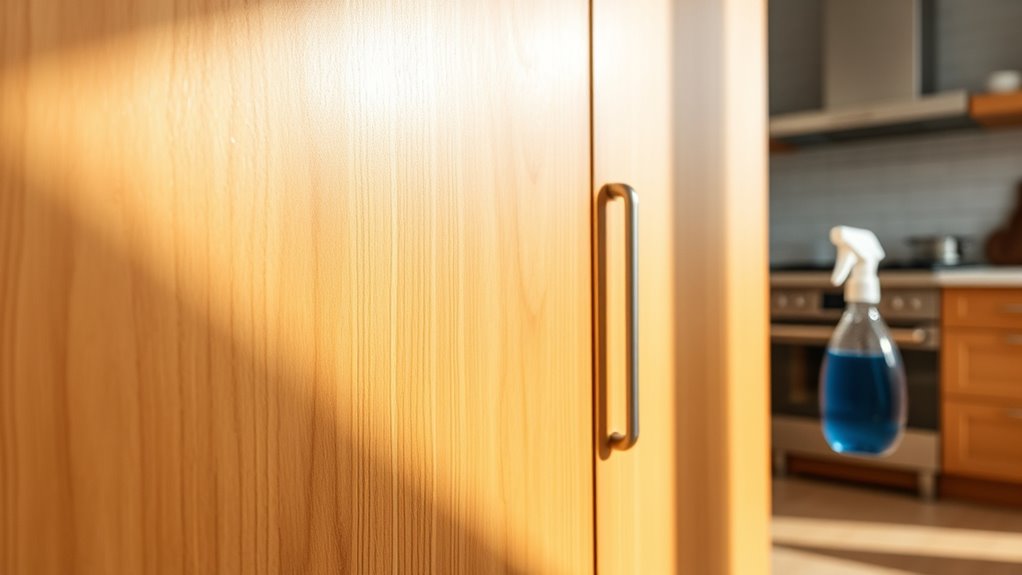
Cleaning your wood kitchen cabinets is essential because it helps maintain their appearance and prolongs their lifespan. Dirt, grease, and food splatters build up over time, causing stains and dullness that diminish their beauty. Regular cleaning prevents these residues from damaging the wood finish, keeping your cabinets looking fresh and vibrant.
When you neglect this task, grime can seep into the wood, leading to warping, discoloration, or even mold growth. Clean cabinets also improve your kitchen’s hygiene, reducing bacteria and allergens. Plus, maintaining a tidy environment makes cooking and cleaning more enjoyable.
What Tools and Supplies You Need for Safe Cleaning
To clean your wood kitchen cabinets safely, you’ll need the right supplies and tools.
Make sure you have gentle cleaning products, protective gear like gloves, and soft cloths or brushes.
These essentials help you clean effectively without damaging the wood or risking injury.
Essential Cleaning Supplies
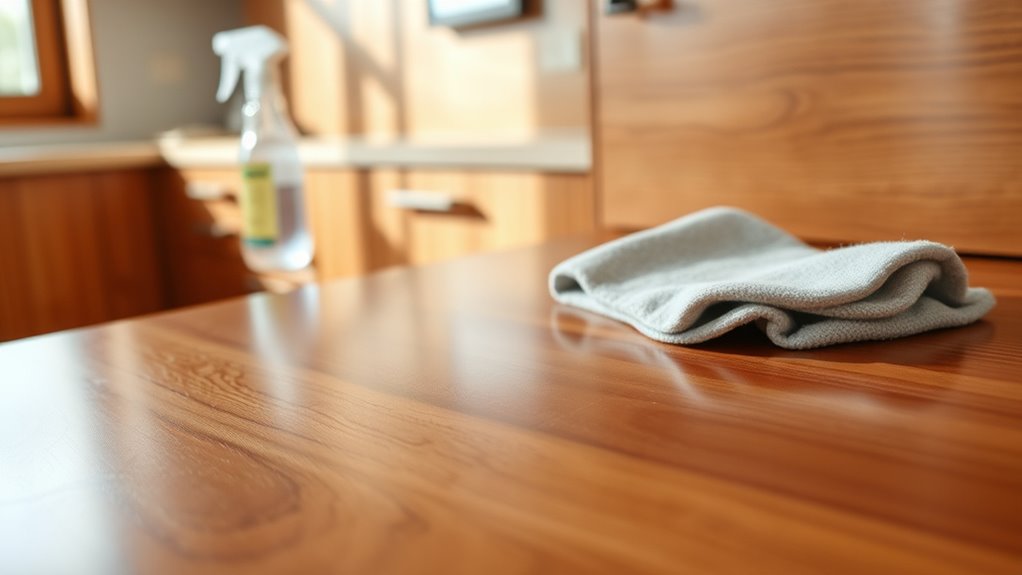
Having the right tools and supplies on hand is essential for safely maintaining your wood kitchen cabinets. You’ll need a soft microfiber cloth or gentle sponge to wipe surfaces without scratching the wood.
Mild dish soap or a gentle wood cleaner works best for removing grease and grime without damaging the finish. A bucket of warm water helps dilute cleaning solutions and rinse dirt away.
Keep a dry cloth nearby to buff and dry the cabinets thoroughly after cleaning. Avoid abrasive scrubbers or harsh chemicals, which can harm the finish.
For stubborn spots, a soft toothbrush can target crevices gently. Having these supplies ready guarantees you can clean effectively while preserving the beauty and integrity of your wood cabinets.
Protective Gear Needed
Before you start wiping down your cabinets, it’s important to gear up with the right protective equipment. This keeps you safe from harsh chemicals and potential splashes. Wear gloves to protect your skin from irritants, and goggles to shield your eyes from splashes. A mask is useful if you’re working with strong fumes or dust.
Make sure there’s good ventilation in the area to avoid inhaling fumes. Here’s a quick visual guide:
| Protective Gear | Purpose | Example |
|---|---|---|
| Gloves | Protect skin from chemicals | Rubber or latex gloves |
| Goggles | Shield eyes from splashes | Safety goggles |
| Mask | Prevent inhalation of fumes | Respirator or mask |
These items help you clean safely and effectively.
Suitable Cleaning Tools
Choosing the right cleaning tools is essential for effectively and safely maintaining your wood kitchen cabinets. Using proper tools prevents damage and guarantees a thorough clean.
First, you’ll want a soft microfiber cloth or sponge to wipe surfaces without scratching. Second, a gentle brush or toothbrush helps reach crevices and detailed areas.
A spray bottle is useful for applying cleaning solutions evenly. Finally, a bucket with warm water can be handy for rinsing cloths and removing residue.
These tools allow you to clean efficiently without harming the wood finish. Avoid abrasive scrubbers or harsh chemicals, which can damage your cabinets.
Investing in the right supplies makes your cleaning routine safer, quicker, and more effective.
How to Prepare Your Cabinets Before Cleaning
Before you start cleaning, clear out all items from your cabinets to prevent damage or mess. Next, dust and vacuum the surfaces to remove loose dirt and debris.
Finally, protect surrounding areas with drop cloths or towels to keep your space clean and safe.
Clear Out Kitchen Items
To get your cabinets ready for cleaning, start by removing all items from the shelves and drawers. Clearing out these spaces prevents dirt from settling on your belongings and makes cleaning easier. As you empty each area, think about what you no longer need or use. This is a great chance to declutter and organize.
Here are some essential items to remove:
- Kitchen utensils and gadgets
- Food containers and jars
- Spices and pantry items
- Dish towels and cleaning supplies
Taking everything out creates a clean workspace and helps you access all surfaces thoroughly. Plus, it gives you a chance to wipe down or organize your items before returning them. This step guarantees your cabinets are fully prepared for a deep clean.
Dust and Vacuum Surfaces
Start by gently dusting and vacuuming the surfaces of your cabinets to remove loose dirt, crumbs, and dust. Use a soft cloth or microfiber duster to reach into corners and crevices, making sure no debris is left behind.
A handheld vacuum with a brush attachment works well for quickly removing dust from flat surfaces and edges. This step helps prevent scratching the wood during deeper cleaning and makes your cleaning products work more effectively.
Be thorough but gentle, especially around decorative details or hardware. Removing surface dust and loose debris creates a clean foundation and makes the actual cleaning process easier and more effective.
Taking this time now will ensure your cabinets look their best after you finish cleaning.
Protect Surrounding Areas
Protecting the areas around your cabinets helps ensure a smooth cleaning process and prevents damage or messes. Before you begin, take a few simple steps to safeguard your space.
First, lay down a drop cloth or old towels on the floor to catch drips or debris. Second, move small appliances, utensils, and decor away from the cabinets to avoid accidental spills or splashes.
Next, cover nearby countertops with plastic or painter’s tape to shield surfaces from cleaning solutions. Finally, remove items from the top of the cabinets to prevent falling or getting dirty.
These precautions make your cleaning more efficient, mess-free, and safe for your surroundings. Proper preparation makes the whole process easier and helps keep your kitchen in good shape.
Choosing the Best Cleaning Products for Wood Cabinets
Choosing the right cleaning products for your wood cabinets is key to keeping them looking great without causing damage.
Go for gentle, pH-neutral cleaners that won’t strip the finish or leave residue behind. Avoid harsh chemicals like ammonia or bleach, which can discolor or weaken the wood over time.
Choose gentle, pH-neutral cleaners to protect your wood cabinets from damage and discoloration.
Instead, try mild dish soap diluted in water or specialized wood cabinet cleaners. Always test any new product on a small, hidden area first to see how your cabinets react.
Stay away from abrasive scrubbers or steel wool, as these can scratch the surface. Using the right products helps keep your cabinets beautiful and well-maintained without risking unnecessary damage.
Step-by-Step Guide to Cleaning Your Cabinets Effectively
To clean your cabinets effectively, start by preparing your workspace with all necessary supplies within reach.
Follow proper cleaning techniques and maintenance tips to keep your wood cabinets looking their best.
Staying organized and gentle during the process guarantees a thorough and safe cleaning.
Preparing Your Workspace
Before you start cleaning your cabinets, it’s important to prepare your workspace for an efficient and mess-free process. A well-organized area helps you work faster and keeps dirt and debris contained.
Start by clearing off countertops and removing all items from the cabinets. Then, lay down a clean, dry cloth or towel to catch drips and dust.
Gather your cleaning supplies, like soft cloths, gentle cleaners, and brushes, so everything is within reach. Finally, make sure your workspace has good lighting so you can see every corner and detail clearly.
Cleaning and Maintenance Tips
Start by mixing a gentle cleaner with warm water or using a specialized wood cabinet cleaner. Dip a soft cloth or sponge into the solution, then wring out excess moisture to prevent water damage.
Wipe down the cabinets gently, following the grain of the wood. Pay attention to handles, corners, and crevices, making sure you remove dirt and grease buildup.
For stubborn spots, apply a bit more cleaner directly and let it sit for a few minutes before wiping away. After cleaning, dry the surface thoroughly with a clean, dry cloth to avoid streaks and watermarks.
Regular maintenance includes dusting weekly and deep cleaning monthly. Avoid harsh chemicals or abrasive scrubbers, which can damage the wood’s finish and affect its look.
How to Remove Stains and Grease Without Damage
Removing stains and grease from your wood kitchen cabinets without causing damage takes a bit of care and the right techniques. First, figure out what kind of stain or grease you’re dealing with so you can pick the best method.
Use gentle cleaning solutions to avoid stripping the finish. For tougher stains, a mix of mild dish soap and warm water usually does the trick. Be sure to skip abrasive scrubbers that can scratch the surface.
Instead, try these simple approaches:
- Dip a soft cloth or sponge into your cleaning solution.
- Gently wipe the area in the direction of the wood grain.
- For stubborn grease, make a paste with baking soda and water and lightly scrub.
- Rinse with a clean, damp cloth and dry immediately to prevent moisture damage.
Follow these steps carefully to keep your cabinets looking great without harming the wood.
Tips to Restore Shine and Highlight Wood Grain
To restore shine and bring out the natural beauty of your wood grain, focus on proper cleaning and finishing techniques. Start by gently cleaning your cabinets with a soft cloth and a mixture of mild soap and water to remove dirt without stripping the finish.
Once dry, use a fine-grade steel wool or a soft cloth to lightly buff the surface, enhancing the wood’s natural luster. Applying a high-quality furniture polish or wax can add a protective layer and deepen the shine.
For highlighting the wood grain, try using a tinted or clear wood stain applied sparingly. Buff it in with a soft cloth to bring out the patterns. Regular maintenance and gentle treatments will keep your cabinets looking vibrant and showcase the beautiful wood.
Common Mistakes to Avoid When Cleaning Cabinets
When cleaning your wood kitchen cabinets, it’s easy to make mistakes that can damage the finish or dull the wood’s appearance. Avoid these common errors to keep your cabinets looking their best:
- Using harsh chemicals or abrasive scrubbers that scratch or strip the finish.
- Over-wetting the wood, which can cause warping or water spots.
- Skipping a test spot before applying cleaners, risking discoloration or damage.
- Forgetting to dry the surface thoroughly, leading to moisture damage or residue buildup.
Being careful with cleaning products and techniques helps preserve the natural beauty of your cabinets. Steer clear of these pitfalls to maintain their appearance and longevity.
Simple Maintenance Tips to Keep Cabinets Looking Great
Maintaining the beauty of your wood kitchen cabinets doesn’t have to be complicated. Just wipe them down regularly with a soft, damp cloth to clear away dust and fingerprints.
Avoid harsh chemicals—stick to a mild soap solution or a cleaner made for wood surfaces. Clean up spills right away to prevent stains or warping.
Use a microfiber cloth to polish and bring back the shine without scratching the surface. Keep cabinet hardware clean and tight to avoid wear and tear.
Make sure your kitchen has good airflow and humidity levels to keep the wood from swelling or cracking.
Place mats or pads under heavy objects to avoid scratches. With gentle, consistent care, your cabinets will stay looking fresh and beautiful for years.
When to Consider Professional Cabinet Restoration
Ever wonder if your cabinets need more than just regular cleaning? Sometimes, surface cleaning isn’t enough, and professional restoration becomes necessary. Consider professional help if:
- The finish is deeply scratched or peeling.
- Stains or discoloration won’t come out with cleaning.
- There’s warping or structural damage.
- You’re planning to update your kitchen’s look but want a like-new finish.
Professional cabinet restoration can bring back the wood’s beauty and extend the lifespan of your cabinets. If you notice significant damage or your cabinets no longer look fresh, it’s time to call in the experts.
They have the tools and skills to repair, refinish, or restore your cabinets thoroughly. This saves you time and ensures a high-quality result.
FAQs About Cleaning and Caring for Wood Cabinets
Are you unsure about the best way to keep your wood cabinets looking their best? Many wonder if harsh chemicals or frequent cleaning can damage the finish.
Generally, gentle cleaning with a soft cloth and mild soap works well. You should avoid abrasive scrubbers that can scratch the surface.
If your cabinets develop stubborn stains or grease buildup, a mixture of vinegar and water can help. Regular dusting prevents dirt from settling and keeps your cabinets shiny.
It’s also important to minimize moisture exposure, as excess water can warp the wood. To preserve the finish, avoid direct sunlight and harsh cleaners.
If you notice peeling or deep scratches, consider consulting a professional for repairs. Proper care guarantees your wood cabinets stay beautiful and durable for years.
Frequently Asked Questions
Can I Use Vinegar to Clean My Wood Cabinets Safely?
Yes, you can use vinegar to clean your wood cabinets safely. Mix equal parts of white vinegar and water, then dampen a soft cloth with the solution.
Gently wipe down the cabinets to remove grease and grime. Just be careful not to use too much vinegar or soak the wood, as that can damage the finish.
Always test a small, hidden area first to make sure your cabinets can handle the vinegar cleaning method.
How Often Should I Deep Clean My Wood Kitchen Cabinets?
You should deep clean your wood kitchen cabinets every 3 to 6 months. Many people think cleaning too often can damage the wood, but actually, regular deep cleaning helps prevent grime and grease from building up.
This keeps the finish looking great and helps your cabinets last longer. If you cook a lot or notice grease spots, you might want to clean more often.
Use gentle cleaners and steer clear of harsh chemicals. That way, you protect your wood’s natural beauty while keeping your cabinets spotless.
Are There Eco-Friendly Cleaning Options for Wood Cabinets?
Yes, there are eco-friendly cleaning options for your wood cabinets. You can mix equal parts of white vinegar and water as a natural cleaner that cuts grease and disinfects without chemicals.
Using a gentle, plant-based dish soap diluted in water also works well. Always test a small area first, and avoid harsh abrasives or excessive water to protect your cabinets’ finish.
These eco-friendly methods keep your kitchen safe and sparkling.
How Do I Prevent Future Water Damage to Cabinets?
To prevent future water damage, regularly check for leaks and fix any plumbing issues quickly. It’s also a good idea to wipe up spills right away and avoid placing wet items directly on your cabinets.
Think about applying a water-resistant finish or sealant to protect the wood. Using a mat or trivet under hot or wet items can also help keep moisture away from the cabinets.
Keep humidity levels low in your kitchen by ensuring proper ventilation. These simple steps will help keep your cabinets dry and free from damage.
What’s the Best Way to Clean Cabinet Hinges and Handles?
Want your hinges and handles to sparkle like new? Grab a soft cloth and a gentle cleaner—mix mild dish soap with warm water.
Carefully wipe down each handle and hinge, paying attention to crevices. For stubborn grime, use a soft toothbrush.
Dry thoroughly to prevent water spots. With a little effort, you’ll keep your hardware looking pristine and functioning smoothly, adding a fresh shine to your entire kitchen.
Conclusion
Keeping your wood kitchen cabinets clean, polished, and well-maintained isn’t just about looks. It’s about preserving their beauty, extending their lifespan, and creating a fresh, inviting space every day.
Choosing the right tools and avoiding common mistakes can make all the difference. Regular maintenance helps keep your cabinets looking their best and functioning properly.
Commit to consistent care, adopt simple routines, and know when to call in professionals. Your kitchen’s charm depends on your dedication to clean, care, and protect your wood kitchen cabinets.