What Is the Standard Depth of Upper Kitchen Cabinets?
Are you feeling overwhelmed trying to figure out the perfect cabinet sizes for your kitchen? You’re not alone—many people struggle with balancing storage needs and style.
Choosing the right depth for upper kitchen cabinets can make a huge difference in how your space looks and functions.
The standard depth for upper kitchen cabinets is typically 12 inches, which offers a good balance between storage space and accessibility. Depending on your needs, the depth can range from 12 to 15 inches—for larger items or appliances, you might prefer deeper cabinets.
Shallow cabinets can make your kitchen feel more spacious, while deeper ones provide extra storage.
Keep exploring to uncover tips on choosing the right depth for your kitchen’s style and function.
Key Takeaways
- The standard depth for upper kitchen cabinets is usually 12 inches.
- They can range from 12 to 15 inches depending on what you need to store.
- Shallow cabinets, around 12 inches deep, are perfect for plates and smaller items.
- If you need to store larger items or appliances, go for deeper cabinets—up to 15 inches.
- Choosing the right depth is important because it makes your kitchen more functional and looks better too.
What Is the Standard Depth of Upper Kitchen Cabinets?
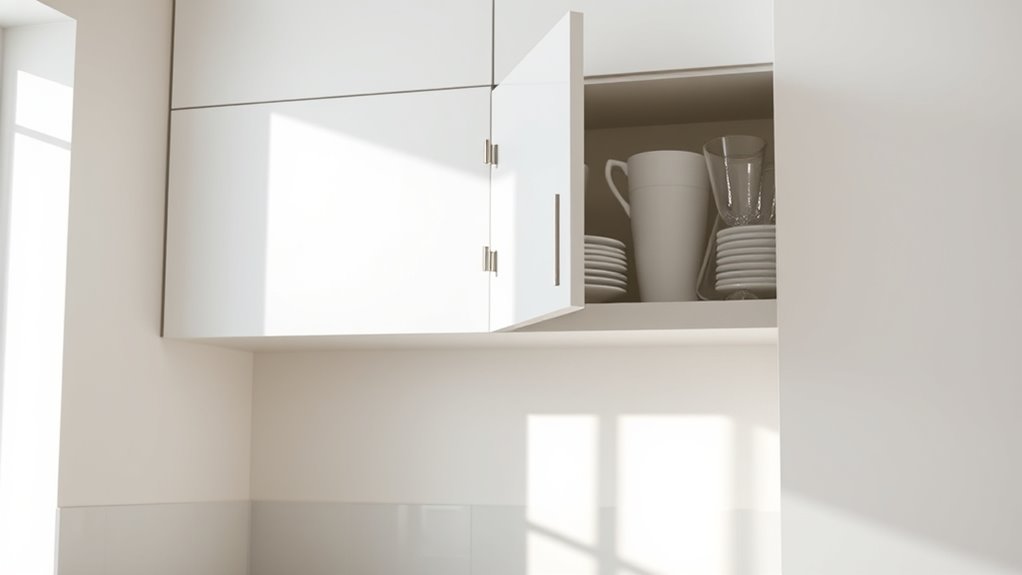
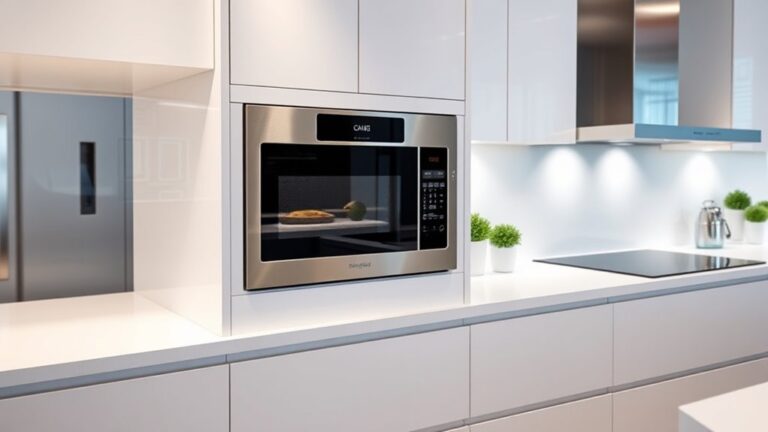
The standard depth of upper kitchen cabinets is usually 12 inches. This size offers a good balance between storage space and making your kitchen feel open.
The standard 12-inch depth balances storage and an open, accessible kitchen feel.
When you open the cabinet doors, they typically extend about a foot into the room. This depth is perfect for storing plates, glasses, and other essentials comfortably without feeling crowded.
If you’re designing your kitchen, you’ll find 12 inches to be a flexible choice that fits most layouts. It also makes it easier to reach and access items stored inside.
While some homeowners choose deeper or shallower options, 12 inches remains the most common and practical depth. It ensures your cabinets are functional without sacrificing visual appeal.
Why Cabinet Depth Matters in Your Kitchen Design
Choosing the right cabinet depth is essential because it directly impacts both the functionality and overall look of your kitchen. If cabinets are too shallow, you won’t have enough space for your dishes, cookware, or pantry items, making storage frustrating.
On the flip side, overly deep cabinets can make your kitchen feel cramped and limit movement. Proper depth guarantees you maximize storage without sacrificing accessibility or style.
It also influences how your kitchen appears, helping you balance a sleek, modern look with practicality. When you select the correct depth, you create a space that’s easy to work in, organized, and visually appealing.
Ultimately, understanding why cabinet depth matters helps you design a kitchen that’s both functional and beautiful, tailored to your needs.
Common Depths for Upper Cabinets and Their Storage Benefits
Different standard depths for upper cabinets, like 12, 15, and 18 inches, affect how much storage space you get and how easy it is to reach your items.
Choosing the right depth helps maximize storage without crowding your kitchen or making it hard to access things.
Understanding these options lets you pick a cabinet depth that fits your needs and space perfectly.
Standard Depth Variations
Standard depths for upper kitchen cabinets typically range from 12 to 15 inches, with each size offering distinct storage advantages. A 12-inch depth is great for storing plates, glasses, and smaller items, making everything easily accessible without protruding too far.
If you need more space for larger items like mixing bowls or small appliances, a 15-inch depth works better, providing extra room. Some custom cabinets can go beyond 15 inches, but these are less common and may require special adjustments to your kitchen layout.
Keep in mind that deeper cabinets can clutter the workspace and make cleaning more difficult. Your choice depends on your storage needs and available kitchen space, but understanding these standard variations helps you select the right depth for your kitchen.
Storage Space Optimization
Understanding the typical depths of upper kitchen cabinets helps you optimize your storage space effectively. When you choose a standard depth, you maximize your storage capacity without crowding your countertop or limiting access.
Deeper cabinets, around 12 inches, give you more room for bulky items like large dishes or small appliances, helping reduce clutter elsewhere. Shallower cabinets, usually 9 inches, are perfect for spices, glasses, or lighter items, making them easier to reach quickly.
By picking the right depth for each storage need, you create an organized kitchen that minimizes wasted space. Proper depth choices keep essentials within reach, improve workflow, and help maintain a clean, clutter-free environment.
Balancing depth and accessibility ensures your kitchen stays both functional and efficient.
Different Kitchen Styles and Their Cabinet Depths
Your choice of kitchen style influences the cabinet depths you should consider. Modern minimalist designs often feature shallower cabinets for a sleek look. Traditional classic kitchens typically have deeper, more ornate cabinets.
Understanding these differences helps you select cabinets that complement your overall aesthetic and functional needs. This way, your kitchen will look great and work perfectly for you.
Modern Minimalist Cabinets
Modern minimalist cabinets prioritize sleek, clean lines and simple forms. They often feature thinner profiles to create an uncluttered and airy feel in the kitchen. To achieve this look, cabinet depths are usually reduced compared to traditional styles.
Typically, upper cabinets in modern minimalist designs are around 12 inches deep. This emphasizes open space and easy access, making the kitchen feel more spacious. The shallow depth also minimizes visual bulk and complements the streamlined aesthetic.
Here’s a quick comparison:
| Style | Typical Depth | Key Feature |
|---|---|---|
| Modern Minimalist | 12 inches | Slim profiles, open feel |
| Traditional | 15-24 inches | Deeper, more storage options |
| Blended | 14-16 inches | Balance between modern and classic |
This approach helps keep your kitchen feeling spacious and uncluttered.
Traditional Classic Designs
Traditional classic kitchen designs often feature deeper upper cabinets that provide ample storage and a sense of permanence. These cabinets usually have a depth of about 12 inches, offering enough space for dishes, glassware, and decorative items. The deeper design improves the room’s elegance and creates a more substantial feel.
To visualize, consider these features:
- Elegant Crown Molding: Adds a decorative touch and emphasizes the cabinet’s depth.
- Rich Wood Finishes: Highlights craftsmanship and complements traditional decor.
- Glass-Front Doors: Showcase fine china and add visual interest.
These elements work together to create a timeless, sophisticated look, making your kitchen both functional and visually appealing. The deeper depth guarantees you have plenty of storage without sacrificing style.
Measuring and Customizing Your Upper Cabinets
Measuring and customizing your upper cabinets is key to creating a functional and cohesive kitchen look. Start by measuring the height from the countertop to the ceiling or where you want your upper cabinets to sit.
Use a tape measure for accuracy and jot down the dimensions. Check the depth of your current cabinets, which is usually around 12 inches, but it can vary depending on what you need.
Use a tape measure to note cabinet dimensions and ensure a perfect fit for your space.
When customizing, think about the width of the cabinets to ensure they fit well without crowding the space. If you want more storage, you can go for deeper or taller cabinets, but keep standard depth limits in mind.
Adjustments might be needed if there are appliances or fixtures nearby. Taking precise measurements helps your cabinets fit perfectly, make the most of your space, and match your kitchen’s style.
Avoid These Common Mistakes When Choosing Cabinet Depths
Choosing the right cabinet depth is essential for maximizing storage and maintaining a sleek look, but many overlook common pitfalls that can lead to problems later.
First, avoid selecting a depth that’s too deep, which can make your kitchen feel cramped and reduce walking space. Second, don’t underestimate the importance of considering your countertop thickness; an improper depth can interfere with appliance access or cause overhang issues.
Third, steer clear of ignoring standard measurements. Going too far outside these can lead to costly modifications or mismatched cabinet styles. Carefully measure your space, think about accessibility, and stick to proven dimensions.
Frequently Asked Questions
Can Cabinet Depth Affect Your Kitchen’s Overall Aesthetic?
Yes, cabinet depth definitely affects your kitchen’s overall look. Deeper cabinets can give your space a more substantial, luxurious vibe, making it feel more high-end.
But if they’re too deep, they can look bulky or block your view, which might make the kitchen feel cluttered. Shallow cabinets, on the other hand, create a sleek, minimalist feel.
They make your kitchen appear more open and modern. Picking the right depth is all about balancing functionality and style to boost your kitchen’s overall appeal.
Are There Standard Depths for Specialized or Custom Upper Cabinets?
Specialized or custom upper cabinets can have different depths depending on what they’re used for. For example, pantry cabinets can go up to 24 inches deep, offering plenty of storage space.
Corner units tend to be shallower, around 12-15 inches, to make the most of limited space. Interestingly, about 70% of homeowners choose custom solutions to fit their unique kitchen layouts.
These variations help you customize your storage, making your kitchen both more functional and stylish.
How Does Cabinet Depth Influence Countertop Clearance?
Cabinet depth directly affects your countertop clearance because deeper cabinets, usually 12 inches, cut into the available space for prep and work areas.
If you go with shallower cabinets, like 9 inches, you’ll get more countertop room. This makes your kitchen feel more open and easier to work in.
Think about what’s more important for you: extra storage or more workspace. Choosing the right cabinet depth helps you create a kitchen that’s both functional and comfortable to move around in.
What Are the Best Depths for Maximizing Small Kitchen Space?
To maximize small kitchen space, choose shallower upper cabinets around 12 inches deep instead of the usual 15-18 inches. This creates more room for countertops and makes moving around easier.
This setup helps your kitchen feel more open. You might lose some storage, but smart organization and using lower cabinets for bigger items can keep everything functional.
Balancing cabinet depth with accessibility ensures your small kitchen stays both efficient and inviting.
Do Different Cabinet Depths Impact Your Kitchen’s Resale Value?
Yes, different cabinet depths can impact your kitchen’s resale value. If you choose standard depths, your kitchen will likely appeal to more buyers because they expect familiar storage options.
Custom or unusual depths might seem creative, but they could turn off potential buyers or lead to costly modifications later on. Sticking with standard depths keeps your kitchen versatile and attractive for resale.
This can help boost your kitchen’s value and make it easier to sell down the line.
Conclusion
Knowing the standard depth of upper kitchen cabinets helps you design a functional, stylish space. Whether you’re going for a retro 1950s diner vibe or a sleek, modern kitchen, choosing the right depth is key.
It ensures you maximize storage without sacrificing aesthetics. Think of it like selecting the perfect spice for your recipe—you want just enough to enhance the flavor without overpowering it.
With this knowledge about the standard depth of upper kitchen cabinets, you’re ready to create a kitchen that’s both timeless and practical.