How Much Should You Budget to Renovate Your Kitchen?
Thinking about renovating your kitchen but feeling overwhelmed by the costs? You’re not alone. Many people struggle with figuring out how much they should budget for such a big project, especially with so many options and variables.
A typical kitchen renovation costs between $13,000 and $37,000, but your budget depends on how much work you want done, the materials you choose, and your location. Minor updates may cost around $5,000 to $15,000, while major overhauls can go over $50,000.
To stay on track, you should prioritize your goals and include a buffer for unexpected costs.
If you want to get a clearer idea, keep exploring how to plan your budget effectively.
Key Takeaways
- Average kitchen renovation costs typically range from $13,000 to $37,000. Most homeowners tend to spend somewhere between $20,000 and $30,000.
- Think about what kind of updates you want. Minor changes might only cost $5,000 to $15,000. But if you’re planning a major overhaul, costs can easily go over $50,000.
- The quality of materials and appliances you choose can make a big difference. You can go for budget-friendly options or splurge on high-end luxury finishes.
- Don’t forget to plan for extra costs like permits, inspections, and unexpected repairs. It’s a good idea to set aside a contingency fund of about 10-20% of your total budget.
- Take the time to research and compare estimates from different contractors. This will help you stay transparent and avoid overspending during your renovation.
How Much Does a Typical Kitchen Renovation Cost?
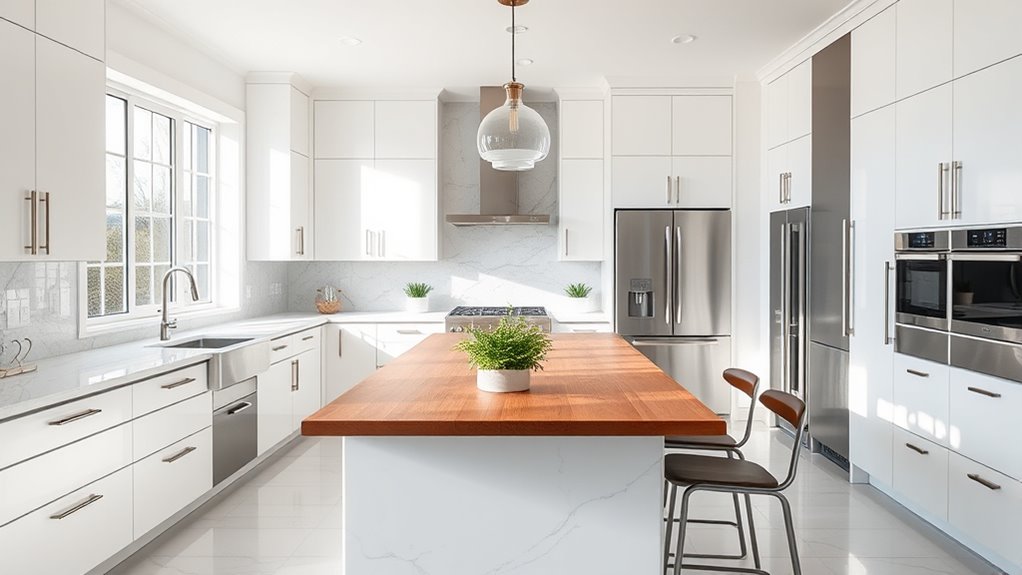
Ever wondered how much a typical kitchen renovation might cost? The price can vary a lot depending on what you want to do, but generally, you’re looking at anywhere from $13,000 to $37,000.
If you’re going for a minor update like new paint, updated fixtures, and some hardware, it might only be around $5,000 to $15,000. That’s a pretty manageable refresh.
On the other hand, a major overhaul with custom cabinets, high-end appliances, and luxury materials can easily push your budget over $50,000. It’s a bigger investment but can completely transform your space.
A major kitchen overhaul with luxury features can easily exceed $50,000, offering a complete transformation of your space.
Most homeowners tend to stay somewhere in the middle, spending around $20,000 to $30,000 for a balanced renovation that improves both function and looks.
Keep in mind, these estimates include labor, materials, and permits. But actual costs can change depending on where you live and how much work you want done.
What Factors Impact Your Kitchen Renovation Budget?
Your budget depends on the quality and type of materials you pick, as well as how much renovating you want to do.
The scope of work and specific features can really change the costs.
Your location and local market rates also matter.
Understanding these factors helps you set a realistic budget and decide what’s most important for your project.
Material Quality and Choices
The quality of materials you choose directly impacts your kitchen renovation budget, as higher-end options usually cost more. Premium countertops, cabinetry, and flooring often require a bigger investment but last longer and look better over time.
Cheaper materials might save you money upfront but could lead to higher maintenance or replacement costs later. When picking materials, think about their lifespan, how much upkeep they need, and how they look to find a good balance with your budget.
For example, solid wood cabinets cost more initially but tend to last longer than particleboard. Similarly, high-quality tiles can prevent cracking or staining, saving you money in the long run.
Your choices have a big effect on your overall expenses. Weigh the benefits of premium options against their cost to make smarter decisions for your kitchen.
Scope of Renovation
Multiple factors influence the total cost of a kitchen renovation, shaping how much you’ll need to spend. The scope of your project—whether you’re doing minor updates or a full overhaul—directly impacts your budget.
A simple refresh with new cabinet hardware costs less than relocating plumbing or expanding the space. Think about which elements you want to upgrade.
| Renovation Aspect | Impact on Budget |
|---|---|
| Extent of demolition | Higher if walls or floors are removed |
| New appliances | Adds significant costs if replacing or upgrading |
| Structural changes | Foundation or load-bearing adjustments increase costs |
| Finishes and fixtures | Premium finishes drive up expenses |
Understanding your scope helps you plan realistically and prioritize what matters most.
Location and Market Rates
Location plays an important role in your kitchen renovation costs because regional market rates for labor, materials, and permits can vary a lot. In some areas, skilled labor might be more expensive, which can raise your overall budget.
Material costs also change based on local supply and demand, especially for high-end finishes or custom cabinets. Plus, permit fees differ depending on your city or county’s rules, which can add unexpected expenses.
If you’re renovating in a high-cost urban area, expect prices to be higher compared to rural or less populated regions. It’s a good idea to research your local market to get accurate estimates.
Talking to local contractors can help you understand how your location impacts your overall budget. Adjusting for regional differences will help keep your renovation plan realistic and financially sound.
How to Prioritize Your Renovation Goals and Set a Realistic Budget
Before jumping into your kitchen renovation, it’s important to set your goals and create a realistic budget. Start by making a list of what matters most—whether it’s new cabinets, appliances, or more storage.
Next, rank these priorities by importance and what’s doable within your space and timeframe. Think about which updates will bring the most value and improve functionality.
Be honest about your financial limits and include some wiggle room for unexpected costs. Having a clear budget helps you avoid overspending and keeps your project on track.
Break your goals into must-haves and nice-to-haves so your spending matches your finances. By setting priorities early, you’ll have a focused plan that balances your dream kitchen with your budget.
Breaking Down Kitchen Renovation Costs: Cabinets, Appliances, Flooring, and Lighting
Understanding your kitchen renovation costs starts with knowing how much cabinets, appliances, flooring, and lighting typically expense. Cabinet material choices can greatly impact your budget, while selecting appliances varies based on features and brand.
Flooring and lighting prices depend on materials and fixtures you prefer. So, plan accordingly to stay within your budget.
Cabinet Material Costs
Cabinet materials can greatly impact your overall renovation budget, so it’s important to choose wisely. Solid wood cabinets tend to be the most expensive, offering durability and a timeless look, often costing $200 to $500 per linear foot.
Laminate options are more budget-friendly, typically ranging from $75 to $200 per linear foot, and come in a variety of styles. MDF and plywood are mid-range choices, balancing cost and quality, usually around $100 to $300 per linear foot.
If you want a custom or high-end finish, expect to pay extra. Remember, the material choice not only affects your initial costs but also determines how well your cabinets hold up over time.
Picking the right material requires balancing your style preferences, durability needs, and budget constraints.
Appliance Selection Expenses
Choosing the right appliances can greatly influence your overall renovation expenses, as they come in a wide range of styles, features, and price points. High-end appliances with advanced features tend to be more expensive, but they can also boost your kitchen’s functionality and aesthetic appeal.
Budget-friendly options may save you money upfront but could lack durability or the latest technology. Consider your cooking habits and needs when selecting appliances—prioritize essential items like the refrigerator, oven, and dishwasher.
Energy-efficient models might cost more initially but save you money on utility bills long-term. Don’t forget to factor in installation costs, which can vary depending on appliance size and complexity.
Balancing quality, features, and budget helps guarantee you get the best value for your kitchen renovation.
Flooring and Lighting Prices
Flooring and lighting are two key elements that can really impact your kitchen renovation budget. The costs vary depending on quality, style, and how complicated the installation is.
For flooring, expect to pay between $3 and $15 per square foot for materials like vinyl, laminate, or tile. Higher-end options like hardwood or stone tend to cost more.
Lighting costs depend on the fixture style and scope, ranging from about $50 for basic ceiling fixtures to over $1,000 for custom or designer pieces.
Keep in mind factors like material choice and durability, installation complexity, and any electrical upgrades or extra fixtures needed.
Balancing quality and budget is essential to create a functional, stylish kitchen without overspending.
Tips to Save Money Without Sacrificing Quality
Even when working with a tight budget, you can find ways to save money without sacrificing quality by focusing on smart choices and strategic planning. Start by prioritizing essential features and delaying non-urgent upgrades until later.
Prioritize essential upgrades and plan strategically to save money without compromising quality.
Shop around for materials and appliances, comparing prices and quality to find the best deals. Consider buying slightly less popular or discontinued styles that still meet your standards.
Reuse or repurpose existing fixtures when possible, reducing costs and maintaining quality. Work with reputable contractors who offer transparent pricing and reliable craftsmanship.
Furthermore, choose timeless designs over trendy styles, ensuring your kitchen remains stylish for years. Planning thoroughly and making informed decisions will help you achieve a high-quality renovation without breaking the bank.
When Should You Consider High-End Materials and Luxury Features?
You should consider high-end materials and luxury features when they offer long-term investment benefits and match your design and style goals.
If you plan to stay in your home for years, investing in quality can save you money on repairs and upgrades down the line.
Luxury elements can also boost your kitchen’s aesthetic, reflecting your personal taste and increasing your home’s value.
Long-Term Investment Benefits
Investing in high-end materials and luxury features makes sense if you plan to stay in your kitchen for the long term. These upgrades can significantly boost durability and visual appeal.
High-quality countertops, custom cabinetry, and premium appliances not only enhance functionality but also retain their value over time. They often lead to lower maintenance costs and fewer replacements, saving you money in the long run.
Think about these factors:
- Longer lifespan of durable materials like quartz or granite
- Better energy efficiency with top-tier appliances
- Higher resale value thanks to upscale finishes and features
Design and Style Goals
When planning your kitchen renovation, aligning your design and style goals with high-end materials and luxury features depends on your vision for the space. If you want a modern, sleek look or a timeless, elegant feel, investing in premium finishes can really elevate the design.
Think about high-quality countertops, custom cabinetry, or statement lighting if these elements match your style and improve functionality. Luxury features like smart appliances or built-in wine coolers are worth considering if they enhance your daily experience and fit your lifestyle.
Just keep your budget in mind and decide how much you’re willing to invest. High-end materials are great for creating a luxurious vibe, but they should support your goals without overspending. Balance your style dreams with practical budget considerations.
Hidden Costs in Kitchen Renovations and How to Budget for Them
Even the most carefully planned kitchen renovation can run into unexpected expenses that catch homeowners off guard. These hidden costs often come from overlooked details or surprises during the process. To stay prepared, it’s a good idea to include a buffer in your budget for surprises.
Common hidden costs include permit and inspection fees that might be needed for structural changes or electrical work. You might also find hidden damage, like mold or outdated wiring, during demolition. Upgrading old plumbing or electrical systems can also add to your costs if they need modernization.
How to Handle Unexpected Expenses During Your Remodel?
Unexpected expenses can pop up unexpectedly during your remodel, so it’s important to stay flexible and prepared. Keep a contingency fund of around 10-20% of your total budget to cover surprises.
When unexpected costs come up, don’t panic. Review your options and prioritize essential repairs or upgrades first. Talk openly with your contractor about any unforeseen issues and ask for detailed explanations and estimates before approving extra work.
Avoid making impulsive decisions that could cause your budget to go over. Instead, take a step back, reassess your priorities, and consider if any adjustments to your original plan are needed.
Staying organized and keeping a clear record of expenses can help you track costs. This way, you’ll see where you might cut back if necessary. Flexibility and proactive management are key to handling surprises without messing up your renovation.
Choosing the Right Contractors to Fit Your Budget
Choosing the right contractors is a crucial step in managing your kitchen renovation budget effectively. You want professionals who deliver quality work without inflating costs.
Start by researching local contractors with good reviews and proven experience in kitchen remodels. Get multiple estimates to compare pricing and scope of work.
When evaluating bids, consider transparency in pricing and detailed quotes. Make sure they can work within your budget constraints.
Check their past projects to see if they have experience similar to yours, showing reliability and skill. It’s also smart to check references and verify licensing to avoid surprises later.
A contractor who communicates clearly and aligns their services with your financial plan will help you stay on budget. Remember, the cheapest option may not always offer the best value or quality.
Sticking to Your Budget: Tips to Achieve Your Dream Kitchen
Once you’ve chosen a contractor that fits your budget and scope, the next step is to stay disciplined and focus on your financial plan. Create a detailed budget breakdown and stick to it, tracking every expense along the way.
Avoid impulse decisions or upgrades that aren’t essential, as they can quickly increase costs. Prioritize must-have features that match your vision and cut back on luxury options if needed.
Be clear with your contractor about your financial limits and don’t hesitate to negotiate or explore alternatives. Regularly review your spending to make sure you’re staying on track.
Staying committed to your budget helps you avoid surprises and ensures your dream kitchen becomes a reality without financial stress.
Frequently Asked Questions
How Long Does a Typical Kitchen Renovation Usually Take?
A typical kitchen renovation usually takes about 6 to 12 weeks, depending on the project’s complexity. You might face delays if there are supply chain issues or if permits are needed.
During this time, you’ll see demolition, planning, and installation phases unfold. Staying in close contact with your contractor helps keep things on track.
What Permits or Approvals Are Needed for a Kitchen Remodel?
You’ll likely need permits for major work like electrical, plumbing, or structural changes.
Check with your local building department to see what’s required in your area.
Typically, you’ll need a permit if you’re adding new wiring, relocating appliances, or altering load-bearing walls.
Failing to get the necessary approvals can lead to fines or issues with resale.
Always verify permit requirements before starting your kitchen remodel to avoid delays.
Can I Renovate My Kitchen on a Tight Timeline?
Yes, you can renovate your kitchen on a tight timeline, but it requires careful planning. Prioritize essential updates, choose materials that are readily available, and work with experienced contractors who can stick to schedules.
Make sure to communicate your deadlines clearly, and consider doing some tasks yourself to save time. Being flexible with minor delays and keeping a close eye on progress will help ensure everything stays on track.
How Do I Choose the Right Materials for Durability and Cost?
You should choose materials that balance durability and cost by researching options like quartz countertops, which are affordable and long-lasting. Natural stone costs more but offers greater durability.
Prioritize materials that suit your lifestyle and maintenance preferences. Visit showrooms, read reviews, and ask for samples.
Opt for reputable brands to guarantee quality. Remember, investing in durable materials saves money over time, making your kitchen both beautiful and functional.
What Are the Most Common Renovation Mistakes to Avoid?
To avoid common renovation mistakes, it’s important to plan thoroughly and stick to your budget. Don’t rush decisions or skip researching materials and contractors.
Make sure to consider the layout’s functionality and don’t underestimate the costs for appliances and fixtures. Be cautious about over-customizing and neglecting permits or inspections.
Keeping realistic expectations, setting priorities, and consulting professionals can help you avoid costly errors. This will ensure your kitchen renovation is successful and stress-free.
Conclusion
Sticking to your kitchen renovation budget is like steering a ship through choppy waters. You need a steady hand and a clear map to stay on course. Keep your goals in sight, plan for hidden costs, and choose your crew wisely.
With careful navigation, you’ll arrive at your dream kitchen without running aground on unexpected expenses. Remember, a well-charted course turns a budget into a smooth sailing adventure.
By managing your costs wisely, you can create a beautiful, functional space without breaking the bank. Knowing how much to budget for your kitchen renovation makes all the difference in turning your vision into reality.