7 Simple Steps to Clean Kitchen Cabinets of Grease
Cleaning grease from your kitchen cabinets can feel like a never-ending battle. Many people struggle with stubborn oily stains that just won’t go away, leaving their cabinets looking dull and greasy.
If you’re tired of fighting this mess, you’re not alone—getting your kitchen looking fresh again is totally doable.
To clean grease from your kitchen cabinets, start by inspecting surfaces for oily films or streaks. Gather supplies like dish soap, baking soda, a sponge, and a spray bottle.
Clear and prep your cabinets, then make a homemade degreaser with natural ingredients.
Apply it to greasy spots, scrub gently, rinse with water, and dry thoroughly. Regular maintenance, like wiping weekly, helps prevent buildup and keeps your cabinets looking fresh.
Continue on for expert tips to keep your kitchen spotless.
Key Takeaways
- First, inspect your cabinets for any grease buildup. Identify the areas that need the most attention before you start cleaning.
- Next, clear all the items off the shelves. Prepare some gentle cleaning supplies like dish soap, vinegar, or a baking soda solution.
- Apply your homemade degreaser to the greasy spots. Let it sit for about 5 to 10 minutes so it can work its magic.
- After that, use a soft sponge or cloth to scrub away the grease. Rinse the area with warm water and dry everything thoroughly.
- To keep your cabinets clean longer, wipe them regularly and consider using protective sprays. This helps prevent grease from building up again in the future.
How to Assess Grease Buildup on Kitchen Cabinets
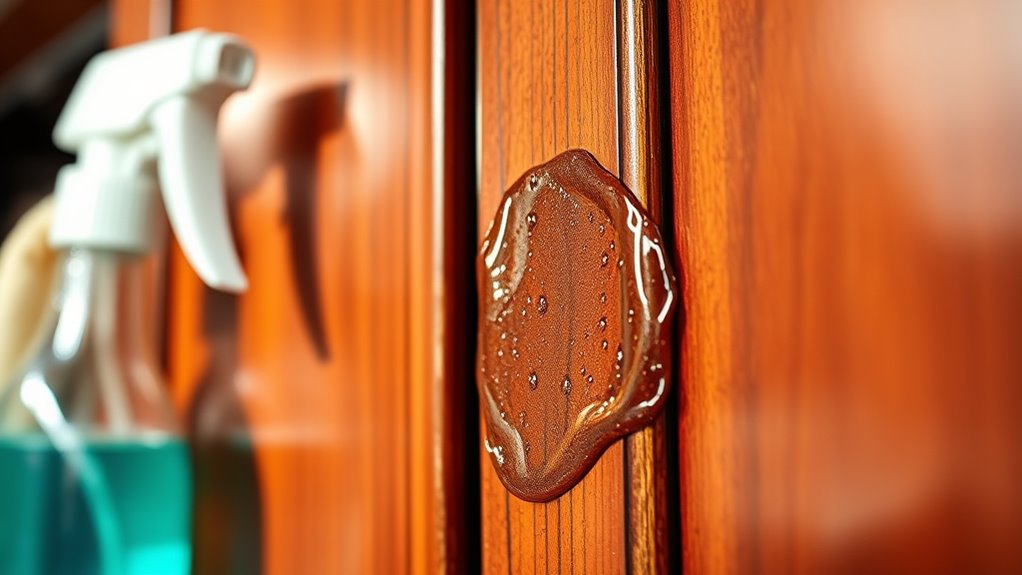
Have you ever wondered how to tell if your kitchen cabinets need a deep clean? The trick is to look for visible signs of grease and grime.
Start by inspecting the cabinet surfaces, especially near the stove and sink, where grease tends to build up. Look for a sticky or oily film that might not be obvious at first.
Feel the surfaces with your fingertips—if they feel greasy or slick, it’s probably time to clean. Also, watch for discoloration or streaks that won’t wipe away easily.
If your cabinets have a lingering smell of cooking fumes or look dull and coated with a film, those are clear signs of grease buildup. Regular checks help you catch the need for cleaning before the grease becomes stubborn and hard to remove.
What Supplies You Need to Clean Grease From Cabinets
To effectively clean grease from your kitchen cabinets, gather a few essential supplies beforehand. You’ll need a gentle dish soap or a degreasing cleaner to break down the grease. A soft sponge or microfiber cloth works best for scrubbing without damaging the finish.
For tougher spots, a soft-bristled brush can help. Keep a spray bottle filled with warm water for rinsing, and have a dry towel or microfiber cloth ready to dry and buff the surface afterward.
You might also want some white vinegar or baking soda as natural cleaning options. Wearing gloves can protect your skin from harsh chemicals. Having these supplies on hand guarantees you’ll be prepared to tackle grease buildup efficiently and safely.
How to Prepare Your Cabinets for Effective Cleaning
Before you start cleaning, clear off all items from your cabinets to prevent any obstacles or damage. This step makes sure you can access every surface and avoid knocking items over. Once they’re empty, check for loose hinges or damaged areas and fix them first.
Next, wipe down the interior with a damp cloth to remove dust and loose debris. Use the table below to find the best preparation methods for different cabinet surfaces:
| Surface Type | Preparation Tips |
|---|---|
| Painted | Avoid harsh chemicals, use gentle cleaners |
| Wood | Test for water sensitivity, lightly dust first |
| Laminate | Use mild soap and water, avoid abrasive scrubbers |
| Glass | Clean with glass cleaner, dry thoroughly |
Proper preparation ensures your cleaning is effective and helps protect your cabinets’ finish.
Make a Homemade Degreaser and Apply It
To make your own degreaser, gather simple ingredients like baking soda, dish soap, and vinegar.
Mix them in the right proportions to create a powerful cleaning solution. Then, apply it to your cabinets, let it sit for a few minutes, and wipe away the grease.
Ingredients for Degreaser
Creating a homemade degreaser is simple and cost-effective, using common household ingredients. To make it, you’ll need white vinegar, which cuts through grease and grime, and baking soda for extra scrubbing power.
Add a few drops of dish soap to help break down stubborn fats. For a fresh scent, include a few drops of lemon juice or essential oil, like tea tree or lavender.
Mix these ingredients in a spray bottle, making sure to combine them well. The vinegar and lemon provide natural degreasing properties, while the soap and baking soda help lift grease from surfaces.
These ingredients are safe, affordable, and effective for tackling kitchen cabinet grease without harsh chemicals.
Mixing the Solution
Once you’ve gathered your ingredients, it’s time to mix the solution. Start by pouring hot water into a spray bottle or bowl. Add a few drops of dish soap, which helps cut through grease.
Next, include equal parts white vinegar and water for a natural degreaser. If you want a stronger mix, add a tablespoon of baking soda. It creates a gentle foaming action that lifts grease.
Shake or stir the mixture thoroughly to combine everything. Make sure it’s well-mixed so it cleans evenly.
Before using it on your cabinets, test a small area first. This homemade degreaser is simple, effective, and free of harsh chemicals, making it great for regular cabinet cleaning.
Applying and Letting Sit
Spray or apply the homemade degreaser directly onto your cabinet surfaces, focusing on greasy spots and corners. Use a spray bottle for even coverage or a sponge to spread the solution where buildup is heavy.
Let the degreaser sit for 5-10 minutes, giving it time to break down grease and grime. Avoid scrubbing immediately; allowing it to soak makes cleaning easier.
During this time, you can prepare a soft cloth or sponge to wipe the cabinets later. If needed, reapply the degreaser to stubborn areas and let it sit a few more minutes.
Patience is key, as this step guarantees the grease loosens thoroughly. This makes the final cleaning much more effective and quicker.
Scrub and Remove Grease Stains Without Damaging Your Cabinets
To remove grease stains without harming your cabinets, use gentle cleaning solutions that break down grease effectively. A soft cloth or sponge works best for scrubbing, so you don’t scratch or damage the surface.
With the right approach, you can keep your cabinets spotless and looking like new. Just be sure to avoid harsh chemicals that could cause damage over time.
Gentle Cleaning Solutions
Cleaning grease stains from your kitchen cabinets calls for a gentle touch to avoid damaging the finish. Start with a mix of warm water and a mild dish soap, which effectively breaks down grease without harsh chemicals.
Use a soft microfiber cloth or sponge to gently apply the solution, being careful not to scrub too hard. For stubborn spots, add a small amount of baking soda to your mixture—it’s gentle but really good at lifting grease.
Always test a small, hidden area first to make sure the solution won’t harm your cabinets. Rinse your cloth often and wipe away any residue to keep everything clean.
Avoid using abrasive scrubbers or strong chemicals, as they can strip or dull the finish. With these gentle methods, you’ll clean effectively while keeping your cabinets looking fresh and new.
Effective Stain Removal
When dealing with stubborn grease stains on your kitchen cabinets, a targeted approach can make all the difference. First, identify how severe the stain is to choose the right method.
Next, try these effective techniques:
- Mix baking soda and water to make a paste, then gently scrub with a soft cloth or sponge. This lifts grease without damaging the surface.
- For tougher stains, use a degreasing cleaner or a mix of dish soap and warm water. Spray it on, let it sit for a few minutes, then wipe clean.
- If the stain is persistent, gently rub with a soft toothbrush dipped in vinegar or baking soda solution. Avoid abrasive scrubbers.
Always test any solution on a small area first to prevent damage.
Rinse and Dry Your Cabinets for a Fresh Finish
After thoroughly wiping down your cabinets, rinse them with a clean, damp cloth to remove any remaining soap residue or dirt. This step ensures no cleaning product is left behind that could attract more grease or cause streaks. Be gentle but thorough, paying attention to corners and edges where grime tends to collect.
Once rinsed, use a dry microfiber cloth to pat the surfaces dry. This helps prevent water spots and streaks, leaving your cabinets looking fresh and clean. Drying also avoids moisture buildup, which can damage the finish over time.
Take your time during this step to make sure all moisture is gone. This will give your cabinets a polished, renewed look. With a proper rinse and dry, your cabinets will appear brighter and feel refreshed.
Tips to Maintain Your Cabinets and Prevent Future Grease Buildup
To keep your cabinets looking their best and prevent grease from building up, it’s important to develop simple, consistent habits. Regular upkeep helps minimize buildup and keeps your kitchen fresh.
Consistent habits keep cabinets clean and grease-free, making your kitchen look fresh and well-maintained.
Here are three easy tips to stay ahead of grease:
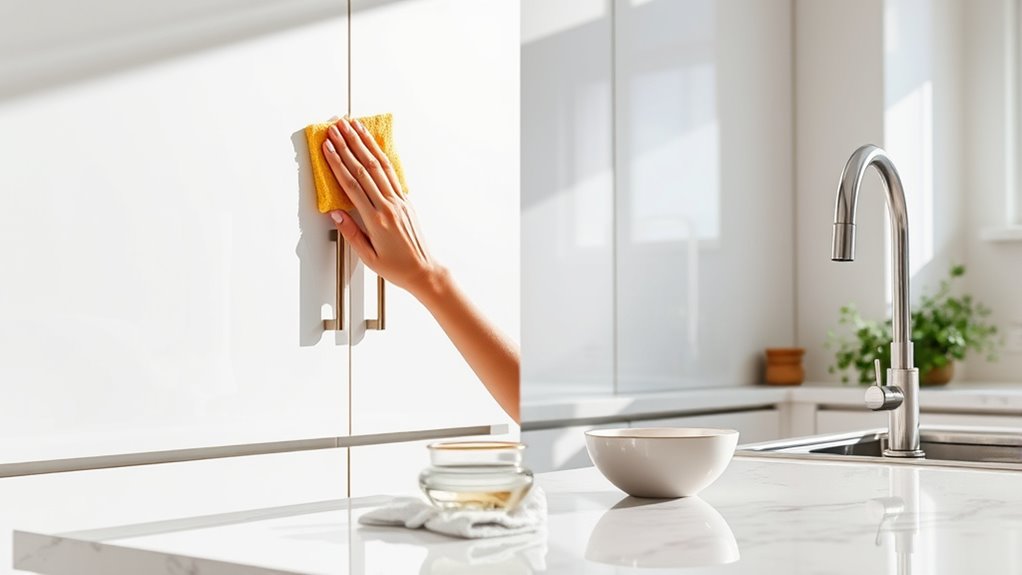
- Wipe down cabinets weekly with a damp cloth and mild soap to remove splatters before they set.
- Use a grease-resistant spray every now and then to create a protective barrier against future buildup.
- Avoid too much steam and humidity in the kitchen, since these can loosen grease and make it settle more easily.
Sticking to these routines will keep your cabinets clean longer, reducing the need for deep cleaning and helping them stay beautiful. Remember, consistency is key to a grease-free kitchen.
Frequently Asked Questions
How Often Should I Clean My Kitchen Cabinets to Prevent Grease Buildup?
You should clean your kitchen cabinets at least once a month to prevent grease buildup. Regular cleaning helps stop grease from becoming stubborn and easier to remove.
If you cook frequently or notice grease accumulating more quickly, consider cleaning every two weeks. Using a gentle cleanser and a soft cloth, wipe down your cabinets regularly to keep them looking good.
This also helps maintain a fresh smell in your kitchen and keeps everything looking neat.
Are There Specific Cleaning Products Safe for All Cabinet Finishes?
Are there cleaning products safe for all cabinet finishes? Absolutely. You should look for gentle, pH-neutral cleaners, which work well on most surfaces without damaging the finish.
Have you checked labels for ingredients like ammonia or bleach? These can harm wood or laminate. Always test a small, inconspicuous area first.
Using a soft cloth and mild soap mixed with water is a safe, effective way to keep your cabinets clean without risking damage.
Can I Use Natural Remedies Instead of Commercial Degreasers?
Yes, you can use natural remedies instead of commercial degreasers. Mix equal parts of white vinegar and water in a spray bottle, then spritz onto your cabinets.
Let it sit for a few minutes before wiping with a soft cloth. Baking soda can also help; make a paste with water and gently scrub greasy spots.
These natural options are effective and safe for most cabinet finishes.
What Are the Common Mistakes to Avoid When Cleaning Grease From Cabinets?
When cleaning grease from cabinets, avoid using abrasive scrubbers that can damage the finish.
Don’t forget to test any cleaning solution on a small, hidden area first.
Refrain from applying too much liquid, as it can seep into seams and cause warping or damage.
Skip harsh chemicals if you’re using natural remedies, and always dry the surface thoroughly afterward to prevent streaks and residue buildup.
How Do I Remove Stubborn Grease Stains Effectively Without Damaging the Surface?
Did you know that over 70% of homeowners struggle with stubborn grease stains?
To remove them effectively without damage, start by mixing equal parts of warm water and white vinegar.
Gently wipe the stain with a soft cloth dipped in this solution.
For tough spots, apply a small amount of baking soda paste, let it sit, then wipe clean.
Always test on a hidden area first to prevent surface damage.
Conclusion
Now that you’ve mastered these simple steps, your cabinets will shine brighter than a starry night. Like a skilled artist restoring a masterpiece, you’ve learned to banish grease and keep their beauty intact.
Keep up this routine, and your kitchen will stay a welcoming haven—timeless and gleaming. A little effort today helps prevent grease buildup tomorrow, making your kitchen a space you’re proud of.
Remember, regular cleaning with these techniques will keep your kitchen cabinets looking their best. When you focus on cleaning grease, your kitchen remains a beautiful, inviting place to be.