7 Essential Steps to Build Your Dream Outdoor Kitchen
Many people dream of having the perfect outdoor kitchen but feel overwhelmed by where to start or how to make it all happen. You’re not alone; creating a beautiful, functional space can seem tricky with so many choices and details.
Start by setting clear goals and a realistic budget based on how you want to use your outdoor kitchen. Choose a convenient location near utilities and plan a layout that promotes easy flow between prep, cooking, and dining.
Select durable, weatherproof materials and appliances, then organize smart storage and work zones. Add lighting for night use and personalize your space with style features.
Keep up with regular maintenance to enjoy your outdoor kitchen long-term—more tips await to help you create your perfect outdoor space.
Key Takeaways
– Define your outdoor kitchen goals, budget, and must-have features to help guide your planning.
Think about what you really want your outdoor space to include.
Decide how much you’re willing to spend so you can prioritize features.
This will make the entire process smoother and more focused.
– Select an ideal location close to utilities and design a functional layout for ease of use.
Find a spot that’s convenient, maybe near your indoor kitchen or outdoor dining area.
Make sure utilities like water and electricity are nearby.
A good layout makes cooking and entertaining much easier.
– Choose durable, weather-resistant materials and appliances suited for outdoor conditions.
Opt for materials that can handle rain, sun, and changing weather without fading or cracking.
Pick appliances built for outdoor use to ensure longevity and safety.
This way, your outdoor kitchen will stay beautiful and functional over time.
– Organize dedicated storage and create a logical work zone for efficient cooking and cleaning.
Design specific spaces for storing utensils, tools, and supplies.
Keep your cooking area clutter-free and easy to access.
A well-thought-out work zone makes everything run smoothly.
– Prioritize safety, proper ventilation, and maintenance to make sure your space is safe and long-lasting.
Install good ventilation to prevent smoke buildup.
Ensure safety features like fire extinguishers and proper lighting.
Regular maintenance will keep your outdoor kitchen looking great and working well for years to come.
Set Your Goals and Budget for Your Outdoor Kitchen

Before starting your outdoor kitchen project, it’s important to clearly define your goals and set a realistic budget. Think about how you’ll use the space—will it be for casual family meals or big gatherings?
Decide which features are must-haves, like a grill, sink, or storage. Consider which ones can wait so you don’t get overwhelmed early on. Setting a clear budget helps you prioritize and avoid overspending later.
Be honest about what you can afford and add some extra funds for surprises along the way. Keep your goals practical and aligned with your financial limits.
This planning step keeps you focused and helps you make smart decisions. In the end, you’ll create a functional, enjoyable outdoor kitchen that fits your needs without breaking the bank.
Pick the Best Location and Design Your Layout
Choosing the right location for your outdoor kitchen is key to making it functional, comfortable, and enjoyable. You want a spot that’s easy to reach from your home so cooking and serving don’t feel like a hassle.
Think about placing it near existing utilities like water, gas, and electrical hookups. That’ll make installation much simpler and quicker.
Consider sun exposure and shade, too. You’ll want a good balance that keeps you cool while you’re cooking without sacrificing sunlight or shade.
Make sure there’s enough space for movement and socializing. You want your setup to feel open yet practical, so everyone can gather comfortably.
When designing your layout, focus on a logical flow between prepping, cooking, and dining areas. Clear pathways and designated zones will help keep things organized.
A well-thought-out location and layout will turn your outdoor kitchen into a seamless extension of your home, making it more enjoyable for everyone.
Choose Durable Materials and Appliances for Outdoor Use
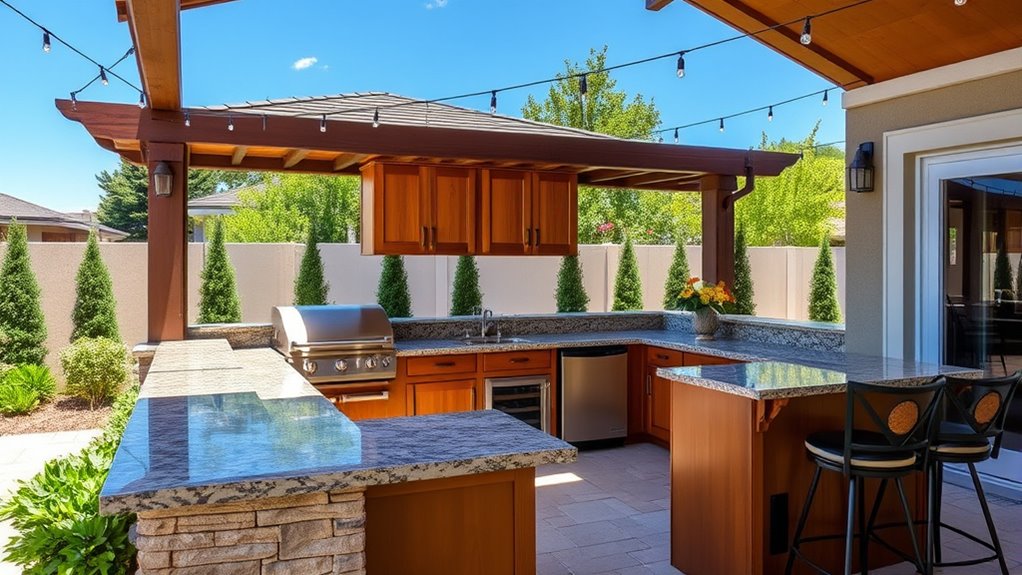
Since your outdoor kitchen will be exposed to the elements, choosing materials and appliances that can handle weather, moisture, and wear is really important. Opt for stainless steel appliances because they resist rust and corrosion, helping them last longer.
For countertops, natural stone like granite or quartzite is a great choice since they’re durable and weather-resistant. Stay away from materials that absorb water or crack easily, such as untreated wood or certain plastics.
When it comes to cabinetry, look for weatherproof options like aluminum or powder-coated metal. Make sure your outdoor-rated appliances are designed specifically for outdoor use, with sealed controls and corrosion-resistant parts.
Investing in high-quality, durable materials will save you maintenance time and keep your outdoor kitchen looking great for years to come.
Design Smart Storage and Work Zones
Designing smart storage and efficient work zones is key to creating a functional outdoor kitchen. You want everything within reach but neatly organized to avoid clutter.
Think about having dedicated spots for utensils, cookware, and ingredients so cooking feels smooth and enjoyable. Incorporate drawers and cabinets that maximize space and keep essentials protected from the elements.
Create designated storage for utensils, cookware, and ingredients to keep your outdoor kitchen organized and enjoyable.
Clear pathways between prep, cooking, and cleaning areas prevent frustration and make your outdoor space more inviting.
Feel confident knowing your tools are organized and easily accessible. Enjoy the ease of cooking without searching for misplaced items.
Experience the satisfaction of a clutter-free, serene environment. Feel inspired to entertain with everything at your fingertips.
Revel in the seamless flow that turns outdoor cooking into a real pleasure.
Add Lighting and Electrical Features for Night Cooking
Adding lighting and electrical features to your outdoor kitchen makes cooking after sunset much easier and lets you enjoy longer gatherings. Start with task lighting above your grill, prep station, and sink so you can see clearly while working.
You can also add ambient lighting like string lights or wall-mounted fixtures to create a cozy, welcoming vibe. Weatherproof outlets with covers are a must for safety and convenience, especially if you want to plug in appliances or charge devices outside.
Consider installing dimmers so you can adjust the brightness depending on the mood or task. Make sure all electrical parts are rated for outdoor use and installed by a professional to keep everything safe.
Good lighting not only helps you cook comfortably but also makes your outdoor space more inviting, perfect for evening get-togethers.
Personalize Your Outdoor Kitchen With Style and Comfort
Lighting and electrical features set the stage for a functional outdoor kitchen, but personal touches turn it into a reflection of your style and comfort preferences. To make your space truly yours, add elements that evoke warmth and personality.
Think cozy, plush seating that invites lingering conversations. Incorporate vibrant or patterned cushions to add color and life. Use decorative lighting fixtures, like string lights or lanterns, to create a welcoming ambiance.
Include personal touches such as artwork, potted plants, or a small fountain to bring tranquility and character. These details transform your outdoor kitchen from a simple cooking space into an inviting retreat where you love to gather and unwind.
Your style, comfort, and personality should shine through every element.
Maintain Your Outdoor Kitchen for Long-Term Enjoyment
To keep your outdoor kitchen looking and working its best, you need to stay on top of regular cleaning and maintenance.
Using protective covers when it’s not in use helps prevent damage, and routine equipment checks catch issues early.
Staying consistent with these practices guarantees your outdoor space remains a joy for years to come.
Regular Cleaning Practices
Regular cleaning is essential to keep your outdoor kitchen looking and working its best. By sticking to a routine, you protect your investment and ensure it’s always ready for your next get-together. Regular cleaning stops grease buildup, rust, and stains, keeping surfaces shiny and appliances functioning smoothly.
Imagine the satisfaction of a spotless grill after each use or the confidence of cooking on clean, sanitized countertops. Feel proud of a shiny, inviting space that draws family and friends in.
Enjoy the peace of mind knowing your food is prepared in a hygienic environment. Trust your reliable appliances every time you cook and revel in the fresh, clean scent of a well-maintained outdoor kitchen.
Take pride in the long-term beauty and durability of your outdoor cooking space, making every meal a pleasure to prepare.
Protective Cover Usage
Using protective covers is one of the best ways to keep your outdoor kitchen in good shape over time. When you cover your appliances and surfaces, you protect them from dirt, debris, and bad weather.
This helps prevent rust, corrosion, and fading, so everything looks new longer. Make sure your covers fit well and are made from tough, weather-resistant materials.
Before covering, wipe away any moisture underneath to stop mold and mildew from forming. Check your covers regularly for tears or damage, and replace them if needed.
Using covers properly means less cleaning and fewer repairs, saving you both time and money. Investing in quality covers and using them consistently will help your outdoor kitchen last for years to come.
Routine Equipment Checks
Performing routine equipment checks is a simple way to keep your outdoor kitchen functioning smoothly and looking its best over time. Regular inspections help catch problems early, preventing costly repairs and ensuring safety. Check your grill, burners, and igniters to make sure they ignite properly.
Examine hoses and connections for leaks or cracks, and clean grease traps to avoid fire hazards. Inspect countertops and storage areas for damage or wear, and test lighting to keep your space inviting after sunset. Staying proactive with these checks gives you peace of mind and extends the life of your outdoor kitchen.
Make sure gas lines and connections are free of leaks. Clean grease and food buildup from surfaces regularly. Confirm all electrical connections are secure. Inspect and replace any worn or damaged parts. Lastly, ensure ventilation is unobstructed for safe operation.
Frequently Asked Questions
How Do I Choose the Best Outdoor Kitchen Contractor?
To choose the best outdoor kitchen contractor, start by researching local professionals with strong reviews and a solid portfolio. Ask for references and verify their experience with outdoor kitchens.
Confirm they are licensed and insured, and get detailed quotes from multiple contractors.
Trust your instincts—select someone who communicates clearly, listens to your ideas, and shows enthusiasm for your project.
This helps guarantee a smooth build and a result you’ll love.
What Permits Are Required for Building an Outdoor Kitchen?
Think of building your outdoor kitchen as laying a strong foundation. Knowing the permits you need is essential.
You’ll typically require local building permits, electrical, and plumbing approvals. Check with your city or county’s building department, as requirements can vary.
Don’t forget to review zoning laws and homeowner association rules if they apply. Getting these permits ensures your project is legal, safe, and ready for grilling adventures.
How Can I Make My Outdoor Kitchen Eco-Friendly?
To make your outdoor kitchen eco-friendly, start by choosing sustainable materials like reclaimed wood or recycled metal.
Opt for energy-efficient appliances, such as LED lighting and solar-powered devices.
Incorporate composting and recycling bins to help reduce waste.
Use drought-tolerant plants around the space to conserve water.
Finally, install a solar water heater for cooking and cleaning, which can help lower your carbon footprint while enjoying your outdoor culinary space.
What Are the Most Common Outdoor Kitchen Design Trends?
Think of outdoor kitchen design trends as a flowing river, constantly evolving and shifting shape. You’ll see open-concept layouts, sleek modern finishes, and integrated appliances becoming more popular.
Natural materials like stone and wood add warmth to the space, making it feel inviting. Built-in lighting and smart tech help create the right ambiance and make everything more convenient.
Minimalist designs keep the area looking clean and functional. By adopting these trends, you can craft an outdoor kitchen that feels fresh, stylish, and perfectly suited to your lifestyle.
How Do I Prevent Outdoor Appliances From Weather Damage?
To prevent outdoor appliances from weather damage, invest in high-quality, weather-resistant units made for outdoor use. These are built to withstand the elements and last longer.
When you’re not using your appliances, cover them with durable, waterproof covers. You might also want to install a shelter or pergola to protect them from rain and sun.
Regularly inspect and clean your appliances to catch any issues early. Proper maintenance and protective measures will help keep them functional and looking good for years.
Conclusion
With careful planning, you can create an engaging, convenient, and cozy outdoor kitchen that complements your lifestyle.
By balancing budget, design, and durability, you’ll build a beautiful space that beckons family and friends.
Maintain your outdoor kitchen with consistent care and cleanliness to keep it a charming, cheerful hub for countless cookouts and conversations.
Seize the space, specify your style, and start savoring the sensational, summery outdoor sanctuary you’ve so skillfully built—your perfect outdoor kitchen awaits!