How Many Calories Are in 1/2 Cup of Ground Beef?
Many people are trying to watch their calorie intake but often find it confusing to figure out how many calories are in their favorite foods, like ground beef. You’re not alone—navigating nutrition labels and portion sizes can be tricky.
Understanding the calorie content of common ingredients can really help you make smarter choices.
A half-cup of cooked ground beef contains around 150 calories, but this depends on the fat content and cooking method. For example, 90% lean beef has about 120 calories, while higher fat options can exceed 200 calories.
Cooking techniques like draining fat or grilling can lower calorie counts.
To get an accurate estimate, it’s best to measure carefully and consider fat levels.
Keep exploring to uncover more ways to manage your calorie intake effectively.
Key Takeaways
- 1/2 cup of cooked ground beef weighs about 4 ounces and contains approximately 150 calories.
- The calorie content can vary depending on the fat percentage. For example, 90% lean ground beef has about 120 calories, while 80% lean has around 150 calories.
- The way you cook the beef also affects the calorie count. Draining the fat or grilling it can reduce the calories.
- Raw ground beef (4 oz) has roughly 120 calories, but cooking tends to concentrate nutrients and calories.
- To get an accurate estimate, you should consider the fat content, cooking method, and how you measure the beef.
How Many Calories Are in 1/2 Cup of Ground Beef?
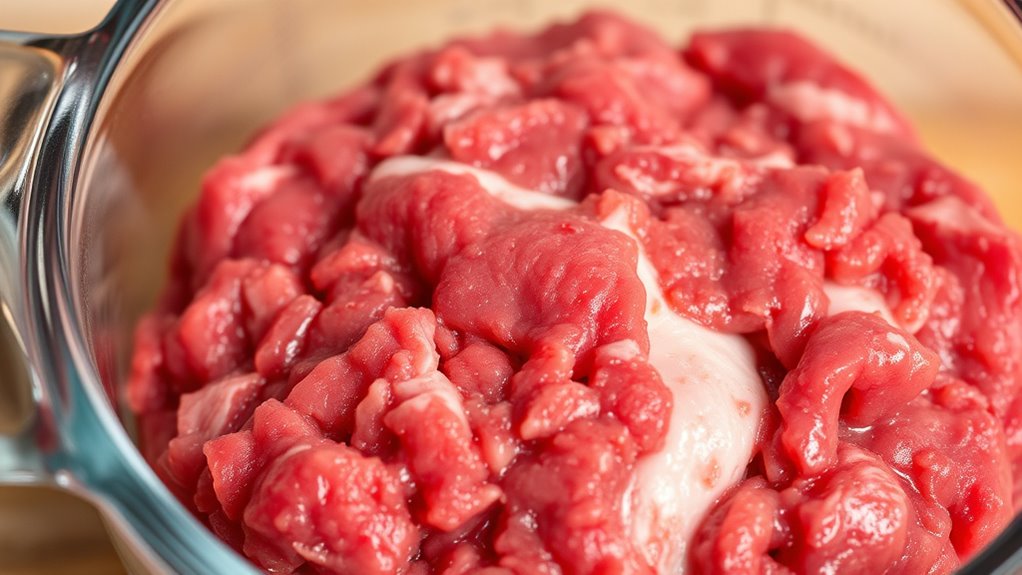
Wondering how many calories are in a 1/2 cup of ground beef? A typical 1/2 cup serving of cooked ground beef, which weighs about 70 grams, contains roughly 150 calories.
This amount can vary depending on the fat content; leaner beef, like 90% lean, has fewer calories, while fattier options, like 70% lean, have more.
Keep in mind that cooking methods also affect calorie count. Draining excess fat reduces calories, while adding oils or sauces increases them.
Cooking methods impact calories—drain excess fat to reduce, add oils or sauces to increase.
If you’re tracking your intake, pay attention to these factors to get an accurate estimate. Remember, portion sizes matter. Even a small difference in how you measure can change the calorie count considerably.
Understanding Ground Beef Serving Sizes
Understanding portion sizes of ground beef helps you better gauge your intake and make healthier choices. A standard serving size is usually about 3 ounces cooked, which is roughly the size of a deck of cards.
When raw, a 4-ounce portion shrinks slightly after cooking because of water loss. Using measuring cups, 1/2 cup of cooked ground beef typically weighs around 4 ounces.
It’s easy to underestimate portions, so investing in a kitchen scale can help you be more accurate. Keep in mind that ground beef is sold in various packages, often containing multiple servings.
Being aware of serving sizes helps you control calorie intake, especially if you’re watching fat or calories for specific diets. Proper portion control ensures you enjoy ground beef without overeating, supporting your health goals.
Calories in Ground Beef With Different Fat Contents
The calorie content of ground beef varies quite a bit depending on its fat level. Leaner options, like 90% or 95% lean, have fewer calories because they contain less fat.
For example, a 1/2 cup serving of 90% lean ground beef has about 120 calories, while the same amount of 80% lean beef has around 150 calories.
Ground beef with higher fat content, such as 70% or 80%, can have 200 or more calories per half-cup serving. The extra fat increases the calorie density and impacts flavor and juiciness.
If you’re watching your calorie intake, choosing leaner ground beef is usually the best move. Keep in mind, the fat content directly affects the calorie count, so always check labels or specify your preferred fat level when buying ground beef.
How Cooking Methods Change Ground Beef Calories
Cooking methods really change the calorie count of ground beef because they affect how much fat and moisture stay or escape during cooking.
When you fry or sauté ground beef in oil or butter, it soaks up extra fat, which boosts the calories.
On the other hand, draining off excess fat after cooking cuts calories because you’re discarding some of the fat.
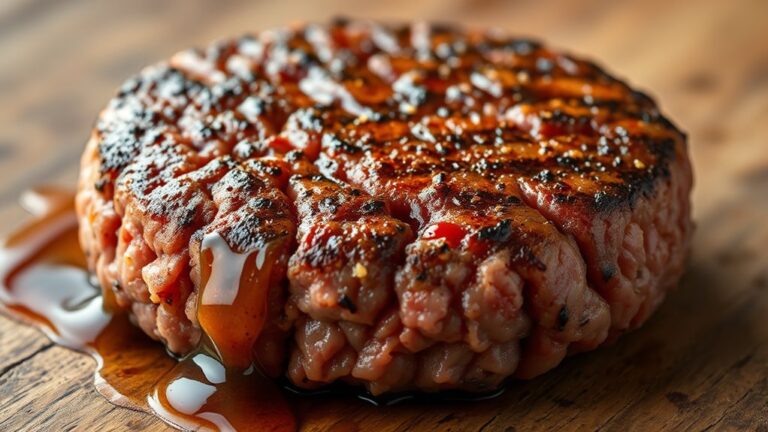
Grilling or broiling lets fat drip away, making the cooked beef lower in calories per serving.
Baking or roasting also helps some fat escape, but not as much as grilling.
Stir-frying with minimal oil keeps the calorie content pretty much the same.
Basically, it depends on how much fat stays in or leaves the meat during cooking, which directly affects its final calorie value.
Changing your cooking method can make ground beef healthier without losing flavor.
Raw vs. Cooked Ground Beef: What’s the Difference in Calories?
When you compare raw and cooked ground beef, you’ll notice their calorie counts are different. Cooking causes moisture and fat loss, which makes the remaining nutrients more concentrated.
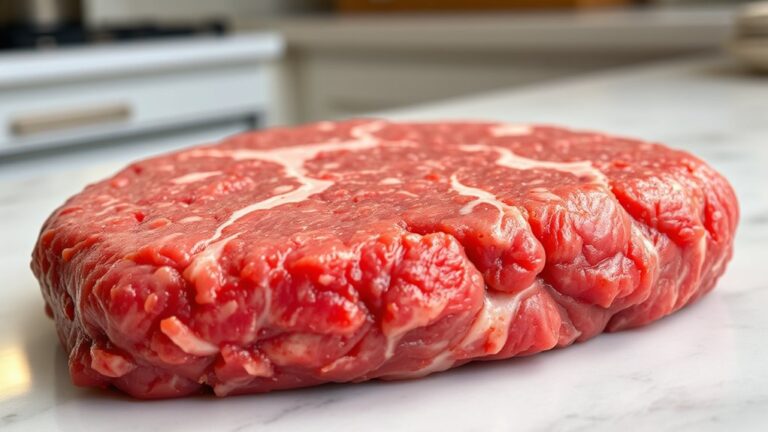
Cooking reduces the weight, so a cup of cooked beef has more calories per ounce than raw. For example, 1/2 cup of raw ground beef weighs less than cooked because of water loss.
Here’s a quick comparison:
| State | Weight (per 1/2 cup) | Calories | Notes |
|---|---|---|---|
| Raw | About 4 oz | 120 | Higher water content |
| Cooked | About 3 oz | 150 | More concentrated |
| Same weight | 4 oz raw / cooked | Same | Different calorie density |
| Calories | Varies by cooking | Varies | Due to moisture loss |
Cooking changes the weight and calorie density, so portion sizes matter.
How to Calculate Calories in Your Ground Beef Recipes
To accurately calculate calories in your ground beef recipes, start by measuring the meat precisely with a kitchen scale.
Next, check the nutrition label to find the calorie content per serving and adjust for the fat percentage if needed.
Knowing these details helps you estimate the total calorie count more accurately.
Measuring Ground Beef Accurately
Accurately measuring ground beef is key for tracking its calorie content. Use a standard measuring cup or a kitchen scale for better precision.
When using a measuring cup, pack the beef loosely without pressing it down, so you don’t overestimate the amount. For the most accuracy, weigh the beef with a digital kitchen scale.
A typical serving size is about 4 ounces or 113 grams. Remember to tare the scale before adding the beef. Consistent methods help ensure your calorie counts are reliable.
Keep in mind, cooked and raw beef can weigh differently because of water loss during cooking. If you cook the beef first, weigh or measure it after cooking for the most accurate calorie calculation.
Using Nutrition Labels Effectively
Are you making sure you’re reading nutrition labels correctly to find out the calorie content of your ground beef? Start by checking the serving size listed. Sometimes, the label shows calories per ounce, not per cup, so you’ll need to convert it to match your recipe.
Look for the total calories per serving and note the fat content, as it impacts the calorie count. Pay attention to how many servings are in the package so you can calculate the total calories accurately.
If your ground beef is labeled with a percentage of fat, like 80% lean, remember that leaner beef usually has fewer calories. Use these details to do quick math—multiply calories per serving by the number of servings in your recipe. This way, you’re ensuring your calorie tracking is spot on.
Adjusting for Fat Content
Since ground beef comes in various fat percentages, it’s important to adjust your calorie calculations accordingly. Knowing the fat content helps you estimate the calories more accurately.
Higher fat means more calories, so picking the right number is key. For example, 80% lean beef has fewer calories than 70% lean. Use this quick table as a guide:
| Fat Percentage | Calories per 3 oz | Notes |
|---|---|---|
| 80% lean | 180 calories | Less fat, fewer calories |
| 90% lean | 150 calories | Leaner, fewer calories |
| 70% lean | 210 calories | Higher fat, more calories |
Adjust your calculations based on the fat level of your ground beef. This way, your calorie count will better reflect what you’re actually eating.
Tips for Choosing Leaner, Lower-Calorie Ground Beef
Choosing leaner, lower-calorie ground beef starts with reading labels carefully. Look for options labeled “90% lean” or higher, which means less fat and fewer calories.
Check the nutrition facts for the percentage of fat and calorie information per serving. This helps you compare products easily.
Avoid ground beef labeled as “regular” or “standard,” as these usually contain more fat. Instead, consider ground sirloin or ground round, which are naturally leaner cuts.
When shopping, pick fresh, lean options rather than pre-seasoned or processed products. These can add extra calories you might not want.
Finally, buy from reputable sources to ensure quality and freshness. Making smart choices at the store helps you control calorie intake while still enjoying ground beef in your meals.
Why Fat Content and Cooking Method Matter for Calories
The fat content in ground beef directly impacts the calorie count, with higher fat levels adding more calories per serving.
Cooking methods like frying or grilling can also change the calorie content, depending on whether you add extra fats or drain away drippings.
Understanding these factors helps you make smarter choices to control your calorie intake.
Fat Level Impact
The fat level in ground beef directly influences its calorie content, so it’s important to pay attention to how much fat is in it. Higher-fat ground beef has more calories because fat contains more than twice the calories per gram compared to protein.
For example, 80% lean ground beef has about 230 calories per half-cup, while 90% lean has around 180 calories. Choosing leaner options helps reduce calorie intake without losing much flavor or nutrition.
Keep in mind that fat adds to the richness and juiciness of the beef, so lowering the fat might change its texture. Knowing the fat content helps you manage calories and make healthier choices that fit your dietary goals.
Cooking Method Effects
Cooking methods really impact the calorie content of ground beef because they determine how much fat stays in the final dish. For example, draining excess fat after cooking helps cut calories, while frying can keep more fat in.
Grilling, broiling, or baking let excess fat drip away, which lowers the calorie count. On the other hand, pan-frying in oil or butter adds calories and more fat to your meal.
Here’s a quick comparison:
| Cooking Method | Calorie Impact |
|---|---|
| Grilling | Reduces fat, lowers calories |
| Pan-frying | Adds fat, increases calories |
| Broiling | Removes fat, cuts calories |
| Baking | Varies based on fat retention |
Choosing the right method is a simple way to control your calorie intake and make your ground beef healthier.
Smart Ways to Include Ground Beef in a Low-Calorie Diet
To successfully include ground beef in a low-calorie diet, focus on choosing leaner cuts and smart preparation methods. Opt for 90% lean or higher, which reduces fat and calorie content. When cooking, drain excess fat and avoid adding high-calorie ingredients like cheese or creamy sauces.
Instead, season with herbs, spices, or low-calorie marinades to boost flavor without extra calories. Incorporate ground beef into vegetable-packed stir-fries, salads, or lettuce wraps to increase volume and satiety with fewer calories.
Using lean ground beef in recipes that emphasize vegetables and whole grains helps you enjoy the protein’s benefits while keeping calorie intake in check. By making these simple swaps, you can enjoy ground beef as part of a balanced, low-calorie diet.
Common Mistakes When Estimating Ground Beef Calories and How to Avoid Them
Estimating the calories in ground beef can be tricky if you’re not paying close attention to common pitfalls. One mistake is assuming all ground beef has the same fat content. Leaner options have fewer calories, so check labels or ask about fat percentages.
Assuming uniform fat content in ground beef can lead to inaccurate calorie estimates; always check labels or ask.
Another error is ignoring cooking methods. Draining excess fat reduces calories, but not doing so can lead to overestimating. Also, using raw weight instead of cooked weight skews estimates since cooking decreases water content.
Finally, relying on generic calorie counts without considering variations in fat and preparation can lead to inaccuracies. To avoid these mistakes, always verify fat content, measure cooked portions, and account for cooking methods.
Accurate estimation requires attention to detail and understanding the factors that influence calorie counts.
Frequently Asked Questions
How Does Ground Beef Calorie Content Vary by Brand?
The calorie content of ground beef varies by brand because of differences in fat content and processing.
Leaner brands like 90% lean usually have fewer calories per serving, while higher-fat options like 80% lean tend to have more.
Always check the nutrition label since calorie counts can vary a lot between brands.
Choosing a brand that fits your dietary needs makes it easier to manage your calorie intake.
Are Plant-Based Ground Beef Alternatives Lower in Calories?
Plant-based ground beef alternatives often have fewer calories than traditional beef, making them a lighter option for your plate. Think of them as a calorie-saving shortcut on your culinary journey.
They typically contain less fat and fewer calories per serving, helping you cut back without sacrificing flavor. So, if you’re watching your calorie intake, these plant-based options can be a smart choice to enjoy hearty meals with fewer calories.
How Does Adding Sauces or Toppings Affect Calorie Count?
Adding sauces or toppings increases your dish’s calorie count because many sauces, like creamy dressings or sugary glazes, are calorie-dense. Toppings such as cheese, avocado, or fried onions also contribute extra calories.
To keep it healthier, choose low-calorie sauces like salsa or mustard, and use toppings sparingly. Being mindful of portion sizes and opting for lighter options can help you enjoy your meal without greatly boosting its calorie content.
What Is the Calorie Difference Between Fresh and Frozen Ground Beef?
Fresh ground beef usually has slightly fewer calories than frozen because freezing can cause some moisture loss, which concentrates the calories.
The calorie difference is small—about 10-20 calories per serving—depending on the fat content and processing.
When you cook and drain excess fat, the difference between fresh and frozen becomes even less noticeable.
Can Portion Size Affect the Perceived Calorie Content?
Portion size is like a magnifying glass, making the calorie content seem bigger or smaller. When you change the serving amount, it affects how many calories you think are in it.
A half-cup might seem small, but if you double it, the calories double too. So, your perception shifts depending on how much you serve, even if the calorie density of the ground beef stays the same.
Conclusion
Remember, like the alchemist’s quest to turn lead into gold, finding the perfect balance in your ground beef choices transforms a simple meal into a nutritious masterpiece.
By understanding portion sizes, fat content, and cooking methods, you hold the power to craft dishes that nourish without excess.
Adopt these tips, and you’ll master your dietary journey—turning everyday ingredients into wholesome treasures, much like turning humble beginnings into golden outcomes.
When it comes to ground beef, knowing how many calories are in 1/2 cup helps you make smarter choices and stay on track with your health goals.