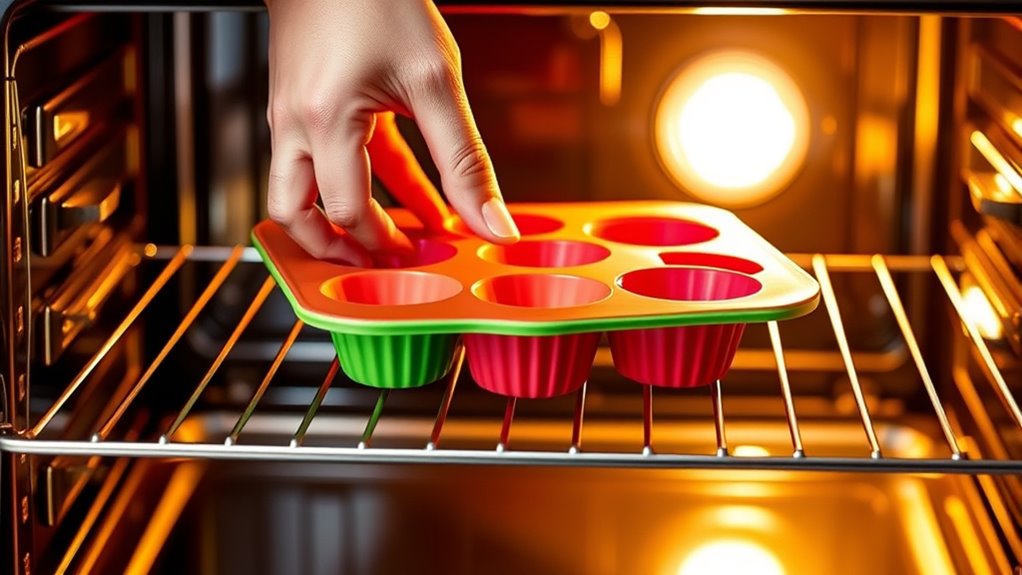
How to Go Directly With Silicone Muffin Pans on the Oven Rack Safely
Baking with silicone muffin pans can be a game-changer, but many people struggle with using them safely directly on the oven rack. If you’re worried about how to do this without risking spills or damage, you’re not alone.
To safely use silicone muffin pans directly on your oven rack, guarantee they are heat-resistant up to 450°F and sturdy enough to prevent bending.
Wash and lightly grease the pans to prevent sticking, and place them on a flat, stable rack, guaranteeing there’s enough space for air circulation.
Fill each cavity halfway to avoid spills, and always use oven mitts when handling hot pans.
For more helpful tips on perfect baking results, keep exploring further.
Key Takeaways
- Make sure your silicone muffin pans are oven-safe and can handle heat up to 450°F before placing them directly on the oven rack.
- Place the pans on a flat, stable part of the oven rack, ideally on the middle or upper rack for more even heat.
Use oven mitts when handling hot pans, and let them cool down before removing. This helps prevent burns and accidents.
Avoid overfilling the pans to prevent spills. It’s also a good idea to place a baking sheet underneath to catch any drips.
Before using, clean and dry your silicone pans thoroughly. Steer clear of abrasive scrubbers to keep their non-stick surface in good shape.
Is It Safe to Bake Silicone Muffin Pans Directly on the Oven Rack?
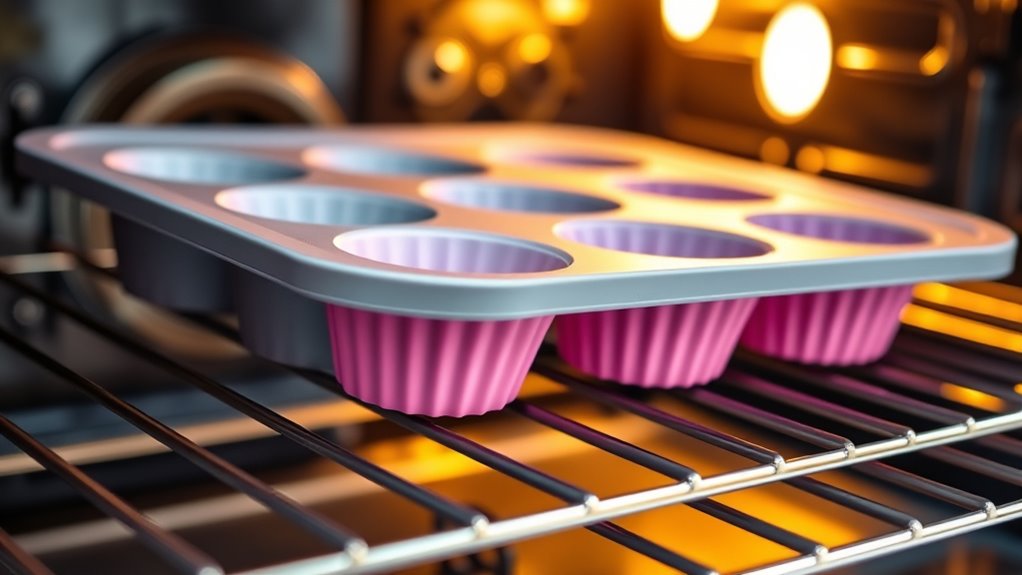
Many people wonder whether it’s safe to place silicone muffin pans directly on the oven rack. The good news is, yes, you can bake with silicone pans directly on the rack. Silicone is heat-resistant, typically up to 450°F (232°C), so it can handle oven temperatures used for baking.
Placing the pan directly on the rack allows heat to circulate evenly around your muffins, helping them bake uniformly. However, make sure your silicone mold is sturdy enough to sit flat without bending or spilling batter.
Also, use caution when removing the hot pan. Silicone is flexible, so handle it carefully. Overall, silicone muffin pans are designed for direct oven contact, making them safe and convenient for baking without a tray or additional support.
How to Prepare Your Silicone Muffin Pan for Oven Rack Baking
Before baking, wash your silicone muffin pan with warm, soapy water and dry it thoroughly.
Next, spray a light layer of non-stick spray to help your baked goods release easily.
Proper prep like this helps prevent sticking and keeps your pan in good shape for future use.
Cleaning and Drying
Start by rinsing your silicone muffin pan with warm water to remove any loose debris or residue. This step ensures a clean surface before you do any deeper cleaning.
Next, wash it with a gentle dish soap and a soft sponge, avoiding abrasive scrubbers that could damage the silicone. Rinse thoroughly to remove all soap residue, which could affect the taste of baked goods or cause sticking.
After washing, dry the pan completely with a clean towel or let it air dry on a rack. Making sure it’s dry prevents water spots and mold growth.
- Use a soft sponge or cloth for cleaning
- Avoid abrasive scrubbers or harsh detergents
- Verify the pan is completely dry before storing or baking
Applying Non-Stick Spray
Once your silicone muffin pan is thoroughly cleaned and dried, giving it a light coating of non-stick spray makes removing baked goods easier and keeps the pan in good shape. Use a spray or a pastry brush to evenly coat each cavity, especially if you’re baking sticky or delicate items.
This step helps ensure muffins or cupcakes come out intact and whole. Be careful not to over-spray, as excess buildup can be a problem. Here’s a quick guide:
| Spray Type | Best for |
|---|---|
| Commercial Non-Stick Spray | Quick, even coating, convenient |
| Vegetable Oil or Spray | Natural option, cost-effective |
| Baking Spray with Flour | Extra release, good for sticky batters |
| Silicone Brush | Precise application, no waste |
Choose your method based on your baking needs for the best results.
Step-By-Step: Baking Muffins on the Oven Rack With Silicone Pans
To bake muffins on the oven rack using silicone pans, start by preparing your pans properly to prevent sticking. Make sure to lightly grease or use non-stick spray if needed.
Next, place the silicone pans carefully on the rack, leaving enough space between them so hot air can circulate evenly. This helps the muffins bake uniformly.
Finally, when removing the pans from the oven, handle them safely to avoid burns or damage. Use oven mitts and lift the pans carefully.
Prepare Silicone Muffin Pans
Before placing your silicone muffin pans in the oven, make sure they are clean and dry. This helps prevent residue or moisture from affecting your baked goods.
Check for any manufacturing tags or labels, and remove them if possible, to avoid burning or melting. Lightly grease the pans if your recipe calls for it, especially if your muffins tend to stick.
Using a non-stick spray or a small amount of oil makes it easier to remove the muffins and keeps the silicone flexible.
Remove any packaging or labels that could melt or burn. Lightly grease or spray the pans if needed.
Finally, verify the pans are completely dry to prevent steam or sticking during baking.
Proper Placement in Oven
Position your silicone muffin pans on the middle or upper rack of the oven to ensure even heat distribution. Placing them too low can cause uneven baking or over-browning. The middle or upper rack helps guarantee consistent heat flow.
Make sure the pans are centered and stable so they don’t tip or shift during baking. Leave enough space around each pan for air circulation, which helps the muffins bake evenly. Avoid overcrowding the oven, as it can interfere with proper heat circulation.
If you’re using multiple pans, rotate them halfway through baking for better results. Also, check that the oven rack is clean and level before placing the pans. Proper placement promotes even baking and reduces the risk of spills or accidents during the process.
Safe Removal and Handling
Once your muffins are baked to perfection, carefully remove the silicone pans from the oven using oven mitts or heat-resistant gloves. Place the pans on a heat-safe surface and let them cool for a few minutes.
To prevent spills or burns, hold the sides firmly and lift gently, avoiding sudden movements. When handling hot silicone, remember it’s flexible—don’t apply too much force or you might deform the pans.
Tips to Prevent Spills and Keep Your Oven Clean
To prevent spills and keep your oven clean, it’s important to pick the right silicone muffin pan and use it carefully. Look for pans with tall, sturdy sides to help hold the batter and stop it from overflowing.
Before filling the pan, set it on a baking sheet to catch any drips. Fill each cavity only halfway to avoid spills during baking. Use a ladle or measuring cup to pour the batter slowly and carefully.
Clean up any spills right away with a damp cloth or sponge so they don’t harden and become harder to clean later. When taking out baked goods, let the pan cool a bit first to prevent dripping.
Regularly check your silicone pans for cracks or damage to prevent leaks and ensure safe, mess-free baking.
How to Choose the Best Silicone Muffin Pan for Oven Rack Use
Choosing the right silicone muffin pan for oven rack use starts with considering its stability and fit. You want a pan that stays securely in place without wobbling or slipping. Look for a pan with a sturdy, non-slip base that grips the oven rack well.
Compatibility with your oven size and rack dimensions is also key. Make sure it fits comfortably without overhanging, so it doesn’t interfere with airflow or safety.
Think about the material quality and heat resistance. You want a pan that won’t warp or melt when exposed to high temperatures.
The thickness of the silicone is important too. Thicker silicone tends to be more durable and provides even heat distribution, helping your muffins bake evenly.
Thicker silicone offers greater durability and ensures even heat distribution for perfectly baked muffins.
Finally, check the sidewall height. Higher walls keep the batter contained and prevent spills, making your baking process cleaner and easier.
Troubleshooting Common Issues When Baking Silicone Pans on the Rack
Even with the best silicone muffin pan, you might run into some common issues when baking on the rack. One of these is sticking, which can happen if you don’t properly grease or coat the pan with non-stick spray. To fix this, lightly oil the pan before pouring in your batter.
Another problem is uneven baking, where some muffins come out undercooked or overcooked. This often happens if the pan is too close to the heating element or if the oven temperature isn’t accurate. Use an oven thermometer to keep the heat in check and place the rack in the middle of the oven.
Finally, muffin spillage can be a hassle if the batter overflows or if the pan isn’t stable on the rack. To prevent this, fill the molds only halfway and make sure the pan is secure before baking.
Cleaning and Maintaining Silicone Muffin Pans After Oven Rack Baking
After baking on the oven rack, your silicone muffin pans need proper cleaning to stay in prime condition. Start by rinsing them with warm water to remove loose crumbs and residue. Then, wash with a soft sponge or cloth using mild dish soap.
For stubborn stains or baked-on residue, soak the pans in warm, soapy water for 15-20 minutes before scrubbing gently. Avoid abrasive scrubbers that can damage the silicone surface.
To keep your pans in top shape, regularly check for tears or warping. Store them flat or stacked to prevent deformation. Proper maintenance helps your silicone muffin pans last longer and stay non-stick, making future baking effortless.
Use gentle cleaning tools to prevent damage. Avoid harsh chemicals and abrasive scrubbers. Regularly inspect for wear and tear.
Safety Tips for Baking Silicone Pans Directly on the Oven Rack
Baking silicone pans directly on the oven rack can be convenient, but it’s important to follow safety tips to prevent accidents. Always place your silicone pan on a flat, stable rack to avoid spills or tipping.
Use oven mitts when handling the hot pan, as silicone can become very hot and cause burns. Never overload the pan or the oven rack, which could cause warping or tipping.
Check that your silicone is oven-safe and heat-resistant before baking. Keep an eye on the baking process to prevent overfilling or overflowing.
Moreover, avoid using sharp utensils inside silicone pans to prevent damage. Following these tips helps guarantee safe baking and keeps your kitchen accident-free.
Frequently Asked Questions
Can Silicone Muffin Pans Withstand High Oven Temperatures Safely?
Yes, silicone muffin pans can safely handle high oven temperatures. Most silicone bakeware is rated for up to 450°F (232°C), so you can bake your muffins without any worries.
Just make sure you’re using high-quality, food-grade silicone from reputable brands. Always follow the manufacturer’s instructions, avoid direct contact with open flames, and place the pans on an oven rack for even heat distribution and safe baking.
Are There Specific Brands Recommended for Oven Rack Baking?
Think of choosing a brand like selecting a trusted guide for a mountain climb. Some top brands like USA Pan, Wilton, and Siliconezone stand out for their durability and safety features.
You’ll want pans that are well-reviewed, heat-resistant, and made from high-quality silicone. These brands are like reliable sherpas, making sure your baking journey is smooth, safe, and successful every time you load your silicone muffin pans directly onto the oven rack.
How Do I Prevent Silicone Pans From Slipping During Baking?
To prevent silicone pans from slipping during baking, try placing a damp dish towel or silicone baking mat underneath them for extra grip. It’s an easy way to keep things steady.
You can also put the pans on a sturdy, flat baking sheet to help keep them stable. That way, they won’t slide around as you work or bake.
Make sure the pans are dry and sit properly on the rack before baking. These simple steps can really help keep your silicone pans from moving and make your baking safer and more even.
Is It Necessary to Preheat the Oven Before Placing Silicone Pans?
Oh, of course, you must preheat your oven before placing silicone pans—because who wouldn’t want their muffins to be cold and sad from the start?
In reality, silicone pans don’t need preheating; they heat evenly at any temperature. Just make sure your oven’s at the right temp, and you’re good to go.
No need for fuss—your silicone pans prefer a warm welcome, not a preheated fuss fest.
Can I Use Silicone Muffin Pans for Other Baking Purposes?
Yes, you can use silicone muffin pans for many baking purposes like muffins, cupcakes, mini quiches, and even frozen treats such as popsicles. Silicone’s flexibility and heat resistance make it really versatile.
Just make sure your recipes are suitable for silicone molds. Also, avoid using sharp utensils that could tear the material. Always check the manufacturer’s instructions for temperature limits to ensure safe and successful baking.
Conclusion
Baking with silicone muffin pans directly on your oven rack is like walking a tightrope—balancing ease with safety. When you follow these tips, you’ll glide through your baking with confidence.
Make sure your silicone pans are sturdy and designed for oven use. Place them on a flat, stable surface to prevent any slipping or tipping.
Position the pans carefully on the oven rack, ensuring they’re centered and stable. Avoid overloading or stacking them, which could cause spills or accidents.
Preheat your oven properly and keep an eye on the baking time. Silicone pans are flexible, but they still need the right temperature to bake evenly.
Always use oven mitts when handling the pans, especially when removing them from the oven. Silicone can get hot, and safety comes first.
Baking with silicone muffin pans directly on your oven rack can be safe when you follow these guidelines. With practice and care, your silicone pans will become reliable partners in your baking adventures.
Enjoy your baking, and remember that silicone muffin pans are a versatile, safe choice when used properly on the oven rack.