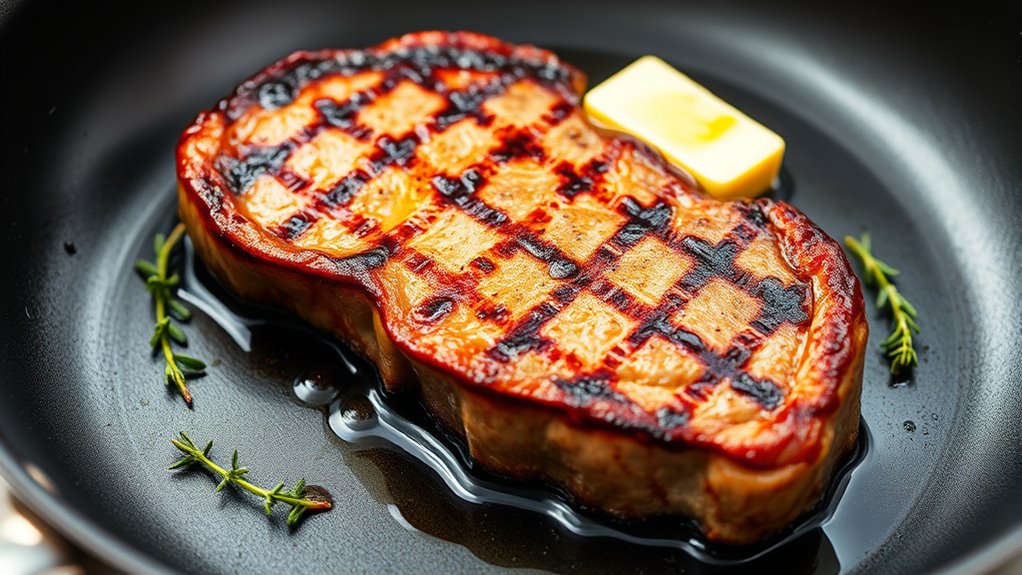
How Do You Cook Steak on a Non-Stick Pan?
Cooking the perfect steak on a non-stick pan can feel tricky, especially if you’re aiming for that ideal crust and juicy interior. Many people struggle with sticking, uneven cooking, or ending up with a less-than-tender result. You’re not alone—getting it just right takes a bit of know-how.
To cook steak on a non-stick pan, start by letting the steak reach room temperature, then pat it dry and season well.
Preheat the pan over medium-high heat with a little oil and wait until it’s hot. Place the steak gently, allow it to develop a crust, then flip every 2-3 minutes for even cooking.
For best flavor, baste with butter and herbs. Keep watching to uncover tips that help perfect your steak every time.
Key Takeaways
- Let the steak come to room temperature and pat it dry. This helps it cook evenly and get a nice, brown crust.
- Preheat your non-stick pan over medium-high heat until it’s hot. Then, add the steak.
- Lightly oil the steak or the pan with a high smoke point oil. This will help with searing and prevent sticking.
- Cook the steak, flipping every 2-3 minutes. Use a thermometer to check for your desired doneness.
- Once done, let the steak rest for 5-10 minutes. This allows the juices to redistribute and keeps it tender and flavorful.
How to Cook a Juicy, Perfect Steak on a Non-Stick Pan
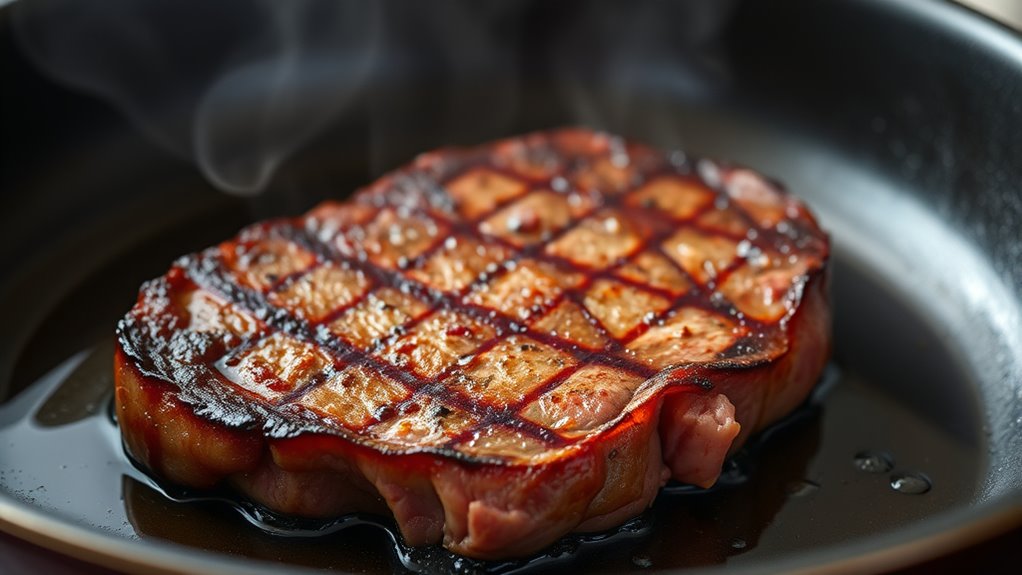
Cooking a juicy, perfect steak on a non-stick pan is simple when you follow a few key steps. First, let your steak come to room temperature. This helps it cook evenly.
Pat it dry with paper towels to remove excess moisture, then season generously with salt and pepper.
Preheat your non-stick pan over medium-high heat until it’s hot but not smoking. Add a small amount of oil with a high smoke point, like canola or grapeseed oil.
Place the steak in the pan and avoid moving it around. Let it sear for about 3-4 minutes per side for medium-rare, adjusting for your preferred doneness.
Use tongs to flip the steak, and don’t forget to let it rest for a few minutes before slicing.
Choosing the Best Steak Cut for Pan-Searing
When choosing a steak for pan-searing, look for cuts with good marbling and a thickness of at least 1 inch, like ribeye or sirloin. These cuts cook evenly and develop a flavorful crust, making them great for your pan.
Avoid very lean or thin cuts, such as round or flank, which can dry out quickly and won’t sear as well. Stick to the thicker, well-marbled options for the best results.
Ideal Steak Types for Pan-Searing
The best steak cuts for pan-searing are those with a good balance of marbling and tenderness because they develop rich flavor and a juicy interior when cooked quickly on high heat. Cuts like ribeye, New York strip, and sirloin are ideal because they have enough fat to enhance flavor and stay tender.
Avoid very lean cuts like tenderloin, which can become dry and lack flavor when cooked rapidly. These steaks are thick enough to sear properly and develop a crust without overcooking the center.
Choose steaks around 1 to 1.5 inches thick for the best results. Picking the right cut guarantees you’ll get a flavorful, tender steak with a satisfying sear, making your pan-searing experience delicious and straightforward.
Marbling and Thickness Factors
Choosing the right steak for pan-searing depends on understanding how marbling and thickness affect the final result. Marbling, the fat streaks within the meat, adds flavor and keeps the steak juicy. Look for cuts with moderate marbling—too little can make the steak dry, while too much might cause flare-ups.
Thickness is important because a thicker steak heats more evenly, helping you get a perfect sear without overcooking the inside. Aim for steaks around 1 to 1.5 inches thick for the best results. Thinner cuts cook too quickly and risk overcooking, while thicker ones need longer searing times.
Cuts to Avoid
Avoid steaks with very thin or uneven cuts, as they tend to cook unevenly and can easily become overdone or tough. Steaks like flap or skirt are more fibrous and can turn chewy if you’re not careful.
Stay away from overly lean cuts such as sirloin tip or eye of round. They lack marbling and can dry out quickly on the pan. Also, avoid tenderized or mechanically processed steaks, which often have inconsistent textures.
Thick, uniform cuts like ribeye, strip, or filet mignon are better choices for pan-searing. They cook evenly and develop a nice crust. Choosing the right cut ensures you get a tender, flavorful steak perfect for your non-stick pan.
How to Prepare Your Non-Stick Pan for Cooking Steak
Before you start cooking, make sure your non-stick pan is clean and dry. Any leftover residue or moisture can mess with the searing process and cause sticking.
Ensure your non-stick pan is spotless and dry for optimal searing and to prevent sticking.
If needed, wash the pan with warm water and a gentle sponge, then dry it thoroughly with a towel. Once it’s dry, preheat your pan over medium heat for a couple of minutes.
This helps create an even cooking surface and reduces the chances of sticking. You don’t need to add oil before cooking because non-stick pans require less fat.
However, a light coating of oil or spray can help with browning if you want a nice crust. Make sure the pan is hot before adding your steak; a properly preheated pan is key to getting a good sear and locking in flavors.
Seasoning and Resting Your Steak for Better Flavor
To improve the flavor of your steak, start by seasoning it generously with salt and pepper. Let the salt penetrate and tenderize the meat.
Allow it to sit at room temperature for about 10-15 minutes so the flavors can develop. This resting period also helps the steak cook more evenly.
After cooking, remove the steak from the pan and let it rest for 5-10 minutes before slicing. Resting helps the juices redistribute throughout the meat.
This ensures every bite is juicy and flavorful. Don’t cut into it immediately, as that releases valuable juices.
A well-seasoned and rested steak is more tender and flavorful, making your cooking on a non-stick pan even more successful.
What Temperature Should You Cook Steak in a Non-Stick Pan?
You should aim to cook your steak at a medium-high heat, around 400°F, for the best sear without sticking. This temperature helps get that nice crust on the outside.
To achieve medium rare, keep the internal temperature around 130-135°F. Managing your heat is essential to prevent overcooking.
Adjust your stove’s heat level as needed to control the cooking process and ensure your steak turns out just right.
Ideal Cooking Temperature
The ideal cooking temperature for steak in a non-stick pan is usually between medium-high and high heat, around 375°F to 450°F. This range ensures the pan is hot enough to sear the steak properly, creating a flavorful crust and preventing sticking.
You want the pan to be hot enough so the steak sizzles immediately when it touches the surface, but not so hot that it burns quickly or causes smoke. Keeping the temperature steady helps you get a nicely browned exterior and the level of doneness you want inside.
Using a thermometer can help, but most of the time, a hot pan and quick cooking are enough. Adjust the heat as needed to maintain the right temperature throughout cooking.
Temperature for Medium Rare
For a perfect medium-rare steak, aim for an internal temperature of about 130°F to 135°F. Use a reliable meat thermometer to check this as you near the end of cooking.
Because non-stick pans heat quickly and evenly, you can monitor the temperature closely without much hassle. Once your steak reaches this range, it will be warm and juicy inside with a nice pink center.
Be sure to remove the steak from the pan slightly before it hits the target temperature, as residual heat will continue to cook it. Rest the steak for a few minutes to allow juices to redistribute, ensuring a tender bite.
Keeping track of the internal temperature helps you achieve that perfect medium-rare every time.
Managing Heat Levels
Managing heat levels is key to cooking a perfect steak on a non-stick pan. It affects how evenly the meat sears and keeps its juiciness.
Start with a medium-high heat to get a good sear without burning the surface. Once the pan heats up, add a bit of oil and wait until it shimmers.
For thicker steaks, you might want to lower the heat a bit so the outside doesn’t overcook while the inside warms evenly.
If you’re aiming for a specific doneness, use a thermometer to check the internal temperature.
Keep in mind that too high a heat can cause sticking or burning, while too low might lead to uneven cooking.
Adjust the heat as needed to stay in control and get the steak to your preferred texture.
How to Achieve a Perfect Sear on a Non-Stick Pan
Achieving a perfect sear on a non-stick pan starts with making sure the surface is hot enough. Before adding your steak, turn up the heat and let the pan warm for a few minutes. You want the surface to be hot enough that a few drops of water sizzle and evaporate immediately.
Pat your steak dry with paper towels to remove excess moisture, which can prevent proper browning. Lightly oil the steak or the pan with a high smoke point oil, like canola or avocado oil. Place the steak gently into the pan, avoiding overcrowding.
You should hear a consistent sizzle—that’s a sign the surface is hot enough for a good sear. Don’t move the steak too early; let it develop a rich, brown crust before flipping.
How to Flip Your Steak to Reach Your Desired Doneness
Use tongs to flip your steak gently so you don’t pierce the meat and lose those tasty juices.
Flip your steak at regular intervals to make sure it cooks evenly and doesn’t burn. Keep an eye on the color and texture to see when it’s just right for your preferred doneness.
Use Tongs for Flipping
When flipping your steak, using tongs gives you better control and helps prevent puncturing the meat. Punctures can let juices escape, which affects the flavor and moisture.
Unlike a fork or spatula, tongs let you grip the steak firmly without piercing it. This helps keep the steak juicy and flavorful as it cooks.
With tongs, you can gently lift and turn the steak smoothly. This ensures an even cook on both sides, especially with thicker cuts or delicate crusts.
Just make sure you grip the steak securely but gently. You don’t want to tear the surface or lose too much juice.
Using tongs with care lets you flip with precision. It keeps the steak intact and helps you reach your preferred doneness more easily.
Flip at Proper Intervals
To cook your steak to the perfect level of doneness, it’s important to flip it at the right intervals. Usually, flipping every 2-3 minutes works well for even cooking.
This helps prevent one side from overcooking and helps develop a consistent crust. Keep an eye on the steak’s color and texture; if it starts browning evenly, it’s a good sign to flip.
You don’t need to flip constantly—just enough to make sure the heat is evenly distributed. Use tongs to gently turn the steak, avoiding piercing the meat and losing juices.
Recognize Visual Doneness Signs
How can you tell if your steak has reached the desired level of doneness just by looking? Look for visual cues like color and texture.
A rare steak will be deep red or purple in the center, with a shiny, slightly translucent appearance. Medium rare shows a warm red center, with a firmer texture.
When cooking to medium, the center turns pinkish and the edges become less glossy. Well-done steaks are uniformly brown or gray inside, with little to no pink.
You can also observe the surface: a nicely seared crust indicates good contact and flavor. Keep in mind, the color isn’t perfect, so combine visual clues with gentle pressure tests or a meat thermometer for best results.
Adding Flavor With Butter, Garlic, and Herbs
Adding flavor with butter, garlic, and herbs takes your steak to restaurant-quality. As the steak cooks, melt a generous knob of butter in the pan and let it bubble and foam.
Add crushed garlic cloves early on so their aroma can infuse the butter and meat. Toss in fresh herbs like thyme or rosemary to release their fragrant oils into the pan.
Use a spoon to baste the steak continuously, spooning the melted butter, garlic, and herbs over the meat’s surface. This keeps the steak moist and tender while boosting its flavor.
Baste the steak with melted butter, garlic, and herbs to keep it juicy and enhance its flavor.
Just make sure to keep the heat moderate so the garlic and herbs don’t burn. With this simple step, your steak gets rich, savory layers of flavor that really elevate its taste.
The Best Way to Rest Your Steak for Maximum Juiciness
Allowing your steak to rest after cooking is key to locking in juices and getting that tender, flavorful bite. When you let it sit, the juices spread out evenly throughout the meat, so they don’t all spill out when you cut into it.
To rest your steak properly, place it on a plate or cutting board and loosely tent it with foil. Rest for about 5-10 minutes, depending on how thick your steak is. During this time, the meat keeps relaxing, which boosts both flavor and juiciness.
| Rest Time | Result |
|---|---|
| 5 minutes | Slightly juicy, tender |
| 8-10 min | Maximum juice retention |
| 15 minutes | Over-rested, losing moisture |
Resting your steak this way helps you enjoy a perfectly juicy, tender piece every single time.
Troubleshooting Common Issues: Sticking and Overcooking
Even with proper resting, issues like sticking to the pan or overcooking can still happen if you’re not careful. To prevent sticking, make sure your pan is properly preheated and lightly coated with oil or non-stick spray.
Avoid overcrowding the pan, which can cause uneven cooking and sticking. Keep an eye on the heat; too high can burn the outside while leaving the inside undercooked.
Use a thermometer to check the internal temperature and take the steak off once it reaches your desired doneness. If the steak sticks, gently loosen it with a spatula instead of forcefully scraping.
Overcooking happens when you ignore the timing. Set a timer or use a meat thermometer to help. Adjust your heat and cooking time to get perfect results without sticking or overcooking.
How to Clean and Maintain Your Non-Stick Pan After Cooking Steak
After cooking steak on your non-stick pan, cleaning it properly helps keep it in good shape for next time. First, let the pan cool a bit to prevent warping.
Use warm water and a soft sponge or cloth with gentle dish soap to wash away food residue. Avoid abrasive scrubbers or steel wool, as they can scratch the coating.
For stubborn spots, soak the pan in warm, soapy water for a few minutes before cleaning. Rinse thoroughly and dry with a soft towel to prevent water spots.
Store the pan carefully, avoiding stacking with heavy objects that could damage the surface. Regular gentle cleaning and proper storage will extend your pan’s lifespan, keeping it non-stick and ready for your next steak.
Creative Flavor Variations for Steak on a Non-Stick Pan
Transforming a simple steak into a flavor-packed masterpiece is easier than you might think, especially when you get creative with your seasonings and sauces.
Start by experimenting with different marinades—try soy sauce, garlic, and honey for an Asian twist, or balsamic vinegar, rosemary, and olive oil for an Italian vibe.
Spices like smoked paprika, cumin, or chili powder add depth and a smoky kick. For a quick flavor boost, brush your steak with herb-infused butter or a squeeze of lemon after cooking.
You might also drizzle a homemade chimichurri or a tangy barbecue sauce for added zest. These variations let you customize your steak, making each meal exciting and unique without needing complex ingredients.
Frequently Asked Questions
Can You Cook Frozen Steak in a Non-Stick Pan?
Yes, you can cook frozen steak in a non-stick pan. Start by preheating the pan over medium heat.
Place the frozen steak directly into the pan without thawing. Cook for about 4-5 minutes per side, turning occasionally.
You might need to lower the heat slightly to prevent burning. Use a meat thermometer to check if it’s cooked to your desired doneness.
Let the steak rest a few minutes before serving. This helps keep it juicy and flavorful.
How Thick Should the Steak Be for Pan-Searing?
The thicker the steak, the better it sears without overcooking because size truly matters. Ideally, aim for a steak about 1 to 1.5 inches thick for pan-searing.
This thickness allows you to develop a flavorful crust on the outside while keeping the inside juicy and tender.
If your steak is thinner, cut down the cooking time so you don’t end up with overdone edges.
Is It Necessary to Marinate Steak Before Cooking?
Marinating steak isn’t necessary, but it can boost flavor and tenderness if you want.
If you decide to marinate, keep it simple with ingredients like soy sauce, garlic, or herbs. Don’t marinate too long—usually 30 minutes to a few hours is enough.
If you’re short on time, seasoning with salt and pepper right before cooking works just as well to enhance the steak’s natural flavors.
What Oil Is Best for Cooking Steak on a Non-Stick Pan?
Think of oil as the silent conductor of your culinary symphony. For a non-stick pan, choose oils with high smoke points like avocado, grapeseed, or canola.
These oils can handle the intense heat needed to sear your steak without burning. Drizzle a small amount, ensuring the surface glistens like dawn’s first light.
This creates a sizzling, flavorful crust and keeps your steak tender and juicy.
How Do You Prevent Smoke When Cooking Steak?
To prevent smoke when cooking steak, start by patting the steak dry to reduce moisture. Use a high smoke point oil, like avocado or refined coconut oil, and add just enough to coat the pan.
Cook over medium-high heat and avoid overcrowding the pan, which causes excess moisture. Vent your kitchen well, and don’t move the steak around too much.
These steps help keep smoke levels down and make cooking your steak a lot easier.
Conclusion
Cooking steak on a non-stick pan can yield delicious results, but many think only cast iron can get that perfect sear. Actually, with the right technique—high heat, minimal oil, and patience—you can get a flavorful crust without sticking or overcooking.
Don’t underestimate your non-stick pan’s potential. It’s all about knowing the right methods and being patient with the process. Trust it, and you’ll be surprised how well it works.
So, if you want a juicy, perfectly cooked steak on a non-stick pan, give these tips a try. With the right approach, you can enjoy a great steak every time.