How Long Will Beef Tallow Last in the Fridge?
Many people love cooking with beef tallow because it adds rich flavor and great texture to dishes.
But figuring out how long it stays fresh in your fridge can be tricky, and no one wants to waste good fat.
If you’re wondering how to keep your beef tallow fresh longer, you’re not alone—proper storage makes all the difference.
You can expect beef tallow to stay fresh in the fridge for about 3 to 4 months if stored properly in an airtight container at or below 40°F.
An unopened jar may last up to 2 months, while once opened, it’s best to use it within a month.
Keep an eye out for signs of spoilage like a bad smell or discoloration.
To find out more tips on extending its shelf life and proper storage, keep exploring.
Key Takeaways
- Unopened beef tallow usually lasts up to 2 months in the fridge.
- Once opened, it’s best to use it within 1 month to keep it fresh.
- Store it in airtight, opaque containers to help extend its shelf life.
- Keep an eye out for signs of spoilage like a bad smell, discoloration, mold, or an off taste.
- Make sure your fridge stays below 40°F (4°C) to help maintain its freshness.
How Long Does Beef Tallow Stay Fresh in the Fridge?
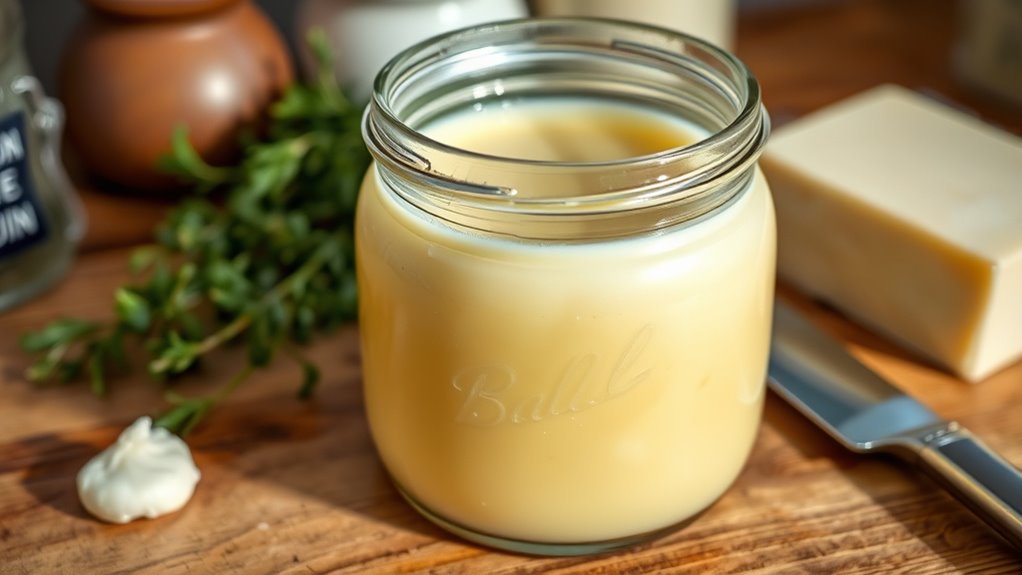
Have you ever wondered how long beef tallow stays fresh in your fridge? Typically, if stored properly in an airtight container, beef tallow can last about 3 to 4 months.
Its high fat content helps preserve it longer than other fats, but exposure to air or moisture can shorten its freshness. Make sure to keep it refrigerated at or below 40°F (4°C).
You’ll notice signs of spoilage, like a rancid smell or discoloration, before it becomes unsafe to use. Always use clean utensils to scoop out what you need, preventing contamination.
If you store it correctly, you can enjoy its flavor and benefits for several months, making it a versatile staple in your kitchen.
What Factors Affect the Shelf Life of Beef Tallow?
Several factors influence how long beef tallow stays fresh in your fridge. First, the purity of the tallow matters—more refined versions last longer.
Second, storage conditions play a role: cooler, airtight environments slow spoilage.
Third, contamination during handling can speed up rancidity.
To help clarify, here’s a quick overview:
| Factor | Impact | Tips |
|---|---|---|
| Purity | Higher purity lasts longer | Use well-filtered tallow |
| Temperature | Cooler temperatures extend shelf life | Keep fridge at 40°F or below |
| Exposure to air | Increases oxidation and spoilage | Store in airtight containers |
| Contamination | Causes faster spoilage | Always use clean utensils |
| Light | Accelerates rancidity | Keep in opaque containers |
These factors determine how long your beef tallow stays good.
How to Store Beef Tallow to Keep It Fresh
To keep beef tallow fresh for as long as possible, proper storage methods are key. Start by letting the tallow cool completely before transferring it to an airtight container.
Use glass jars or metal containers with tight-fitting lids to prevent air from getting in, which can cause spoilage. Store the container in the coldest part of your fridge, away from the door, where temperature fluctuations are minimal.
Keep the surface clean and avoid inserting utensils that could introduce bacteria. If you plan to use it often, consider dividing it into smaller portions so you only expose what you need.
Properly stored, beef tallow can stay fresh longer and maintain its flavor and quality. Regularly check for signs of spoilage, like off odors or discoloration.
Can Freezing Beef Tallow Extend Its Shelf Life?
Freezing beef tallow can help keep it fresh longer by slowing down spoilage. To get the most out of its shelf life, store it properly in airtight containers or freezer bags.
This way, you preserve its quality and reduce the risk of freezer burn. Proper storage is key to keeping your tallow tasty and safe to use.
Freezing Preserves Freshness
When you freeze beef tallow, you slow down the natural process of spoilage, helping it stay fresh longer. Freezing stops bacterial growth and oxidation, keeping its quality intact over time.
To get the best results, use airtight containers or freezer bags, and remove excess air before sealing. Label each package with the date so you can easily keep track of how long it’s been stored.
Proper freezing prevents freezer burn and helps preserve both flavor and texture. Smaller portions are easier to thaw and use, which also reduces waste.
Freezing allows you to store beef tallow for months without losing its culinary qualities. By following these steps, you ensure your tallow stays fresh, flavorful, and ready whenever you need it.
Good freezing techniques really do extend the shelf life of beef tallow effectively.
Proper Storage Techniques
Proper storage techniques are key to keeping beef tallow fresh longer. Store it in an airtight container to keep out air and moisture, which can cause spoilage.
Keep the tallow in a cool, dark place, ideally in the fridge, to slow down bacterial growth. For longer storage, freezing is the best option—just use airtight, freezer-safe containers or silicone molds to prevent freezer burn.
Don’t forget to label your containers with dates so you can keep track of freshness.
How Do You Know When Beef Tallow Has Gone Bad?
Ever wonder how to tell if your beef tallow has spoiled? The first sign is a rancid smell. If it smells sour, off, or just strange, it’s time to toss it.
You might also notice a change in appearance. Look for cloudiness, stickiness, or discoloration like a dull or dark hue. These are signs the tallow may be going bad.
Taste can also reveal spoilage. If it tastes bitter or off, don’t risk using it. Keep an eye out for these signs:
- Rancid or sour odor
- Unusual cloudiness or discoloration
- Bitter or off taste
If any of these symptoms appear, discard the tallow to avoid potential health risks. When in doubt, it’s safer to replace it rather than risk consuming spoiled fat.
Does Using an Airtight Container Help Preserve Beef Tallow?
Using an airtight container greatly extends the shelf life of beef tallow by preventing exposure to air. Oxygen is a major factor in spoilage, so limiting it helps keep the tallow fresh longer. When oxygen touches the fat, it speeds up rancidity, causing the tallow to spoil faster.
An airtight container keeps out moisture and odors from other foods, helping maintain the tallow’s quality. To get the best results, choose containers with tight seals and store them in a cool, dark place.
Here’s a quick comparison:
| Benefit | Description |
|---|---|
| Prevents Rancidity | Limits oxygen exposure |
| Maintains Freshness | Keeps out moisture and odors |
| Extends Shelf Life | Preserves quality longer |
Using the right container is a simple step that really makes a difference.
What Are Common Mistakes That Shorten Beef Tallow’s Freshness?
Choosing the wrong storage methods can seriously cut down the shelf life of your beef tallow. One common mistake is leaving it in a warm environment, which speeds up spoilage.
Another mistake is not using an airtight container, exposing the tallow to air and moisture that can cause it to go rancid.
Reusing the tallow multiple times or exposing it to temperature fluctuations can also degrade its quality over time.
To keep your beef tallow fresh longer, store it in a cool, dark place, ideally in a sealed container.
Avoid leaving it out in the open or near heat sources. Proper storage reduces oxygen exposure and prevents contamination.
This helps it stay fresh and safe to use for a longer period.
Stay aware of these common mistakes to maximize your beef tallow’s shelf life.
How Often Should You Check Your Beef Tallow for Spoilage?
Regularly checking your beef tallow is essential to catch signs of spoilage early and guarantee safety. You should inspect it at least once a week, especially if it’s stored for longer periods.
Look for changes in color, texture, or smell—any sour or rancid odor indicates spoilage. Examine the surface for mold or an unusual film, which also signals it’s time to discard it.
Keep an eye on the container’s lid for any leaks or bloating, which can be signs of bacterial activity. If you notice any of these signs, don’t take chances—dispose of the tallow immediately.
Regular checks help you stay aware of its condition, preventing you from consuming spoiled fat and keeping you safe and healthy.
Expert Tips for Keeping Your Beef Tallow Safe to Use
To keep your beef tallow safe and fresh, it’s key to store it properly and handle it with care. Always use an airtight container to prevent exposure to air and contaminants.
Store it in the coldest part of your fridge, ideally at or below 40°F (4°C). Avoid cross-contamination by using clean utensils each time you scoop out tallow.
Here are some expert tips: Keep the container sealed tightly after each use. Use a clean spoon or spatula to avoid introducing bacteria. Label the container with the date you rendered or opened it so you know when to use or discard it.
Following these tips helps maintain your beef tallow’s safety and keeps its quality intact.
FAQs: Your Questions About Beef Tallow Shelf Life Answered
Got questions about how long beef tallow lasts or the best ways to store it? You’re not alone—many people wonder about shelf life and proper storage tips.
Keep reading to get clear answers and keep your tallow fresh longer.
Shelf Life Duration
Understanding how long beef tallow lasts in the fridge is key to making sure it’s fresh and safe to use. Usually, it stays good for about 1 to 2 months if stored properly in an airtight container.
Temperature swings and exposure to air can cut down its shelf life. To keep it fresh longer, make sure it’s tightly covered and stored at a consistent fridge temperature.
Here are some quick facts about shelf life:
- Unopened beef tallow can last up to 2 months in the fridge.
- Once opened, it’s best to use it within 1 month.
- Signs it’s gone bad include a bad smell, discoloration, or mold.
Always trust your senses to see if it’s still safe to use.
Storage Tips
Proper storage is key to keeping beef tallow fresh and safe for as long as possible. Keep it in an airtight container to prevent exposure to air, which can cause spoilage.
Store the tallow in a cool, dark place inside your fridge, ideally at a consistent temperature around 40°F (4°C). Avoid leaving it out at room temperature for extended periods, as heat speeds up spoilage.
Use clean utensils each time you scoop out tallow to prevent contamination. If you plan to store it long-term, consider freezing it in smaller portions for easy use.
Be sure to label the container with the date so you can track its freshness. Following these tips helps preserve the quality, flavor, and safety of your beef tallow.
Frequently Asked Questions
Can Beef Tallow Be Stored at Room Temperature Safely?
You shouldn’t store beef tallow at room temperature, as it can spoil quickly. Keep it in an airtight container in the fridge to extend its shelf life, which is usually up to a year.
If you leave it out, it’s exposed to heat, light, and bacteria, all of which can cause it to go rancid and pose food safety issues. Proper storage is key to maintaining its quality and safety for future use.
How Does the Quality of Beef Affect Tallow Shelf Life?
The quality of beef really affects how long tallow lasts. Fresh, high-quality beef produces cleaner, purer tallow that can be stored longer if kept properly.
If the beef comes from grass-fed or organic sources, it usually has fewer additives and preservatives. This helps keep the tallow fresh for a longer time.
On the other hand, lower-quality beef might contain impurities or additives. These can cause the tallow to spoil faster, shortening its shelf life.
Is It Safe to Reuse Beef Tallow After It Has Spoiled?
Reusing spoiled beef tallow isn’t safe. Spoiled tallow can harbor bacteria and toxins that cause food poisoning.
Studies show that bacteria can multiply quickly once tallow goes bad, making reusing it risky even after re-heating.
You should discard any tallow that smells off, has a slimy texture, or shows mold. Always prioritize safety.
When in doubt, it’s best to toss it out to avoid health issues.
What Are the Signs of Rancid Beef Tallow?
You’ll know beef tallow is rancid if it smells sour, bitter, or off, rather than its usual savory aroma.
It might develop a sticky or slimy texture, and its color could darken or turn dull.
Taste a tiny bit—if it tastes off or bitter, discard it.
Always trust your senses; if anything seems unusual, it’s safest to throw it out to avoid health risks.
How Does Storage Container Material Impact Beef Tallow Preservation?
You might think any container works, but the material really impacts beef tallow’s preservation. Glass or stainless steel containers are ideal because they don’t react with the fat, helping it stay fresh longer.
Avoid plastic containers because they can absorb odors or leach chemicals that spoil the tallow. Always go for airtight containers to keep air out, which speeds up rancidity.
Proper storage is key to keeping your beef tallow fresh and flavorful for months.
Conclusion
Now that you know how to store and recognize the signs of spoilage, you’re almost ready to keep your beef tallow fresh.
But what if there’s more to reveal—secrets that could extend its life even further? Small tips and proper storage methods can make a big difference.
Don’t miss out on expert advice that could change the way you preserve your tallow forever. Staying informed will help you maximize its shelf life.
Stay tuned—your next culinary revelation might depend on what you learn next. Are you prepared to unleash the full potential of your beef tallow?