
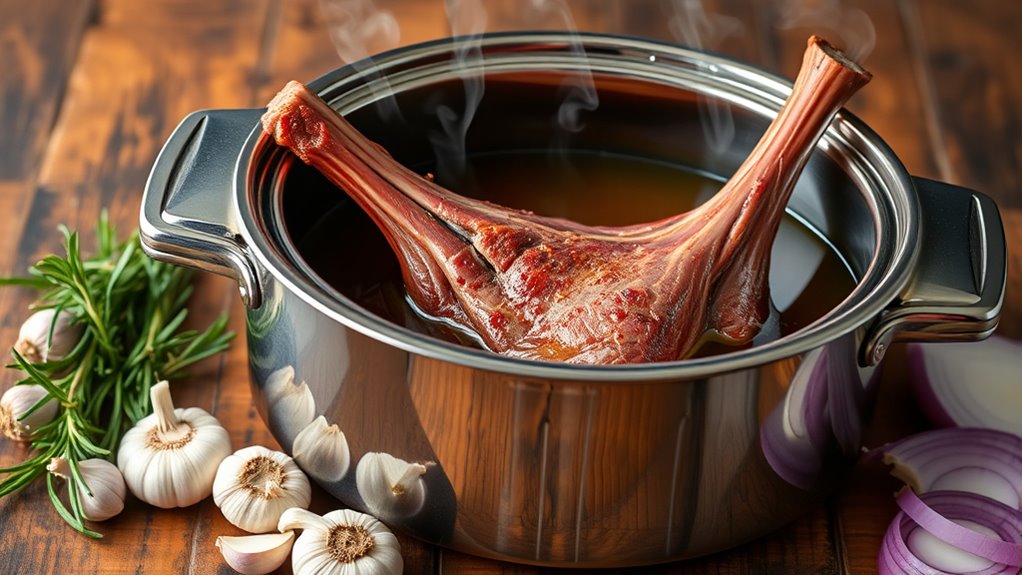
How to Cook Beef Tongue in a Crock Pot in 7 Easy Steps
Many people find cooking beef tongue intimidating, but it’s actually easier than you think. If you’re looking for a tender, flavorful dish that’s worth the effort, you’re not alone.
Perfectly preparing beef tongue can be tricky, but with a slow cooker, it becomes much simpler.
Start by choosing a fresh, firm beef tongue with even coloring and no dark spots. Rinse it thoroughly, then peel off the tough outer skin using a sharp knife.
Season the tongue with spices like garlic, cumin, and black pepper, adding aromatics like onions and bay leaves.
Place it in your crock pot with water or broth, set on low, and cook for 6 to 8 hours.
Check tenderness, peel the skin, and slice thinly for serving.
Keep going to uncover tips for perfect results.
Key Takeaways
- Rinse the beef tongue thoroughly and place it in the crock pot. Cover it with water or broth.
- Add seasonings like garlic, onions, bay leaves, and salt for flavor.
- Cook on low for 6 to 8 hours until tender and easily pierced.
- Check tenderness by inserting a fork. It should feel soft and juicy.
- Cool slightly, peel off the skin, then slice against the grain for serving.
Choosing the Best Beef Tongue for Your Recipe
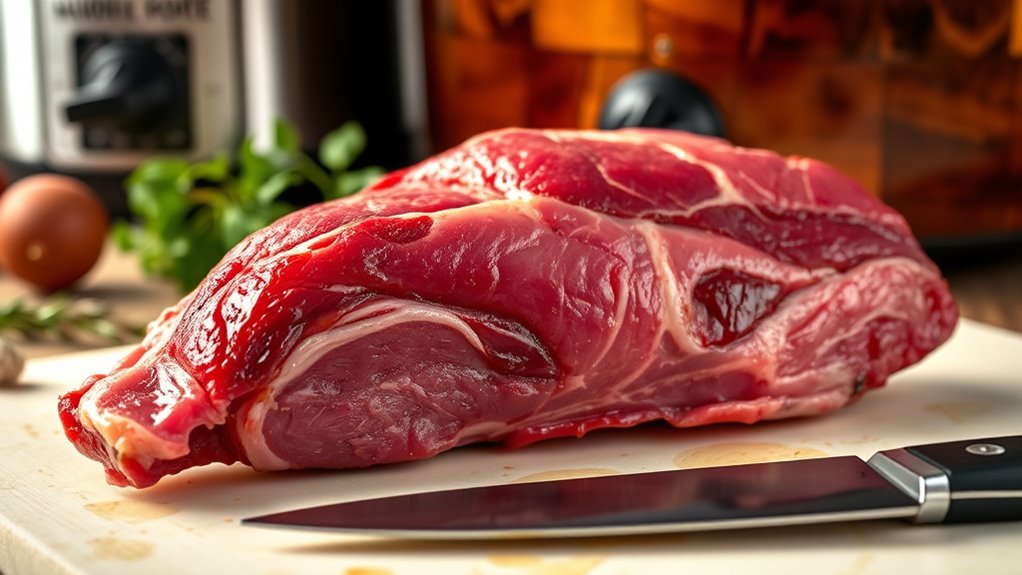
When choosing beef tongue for your recipe, look for fresh, firm meat with an even color. The tongue should have a deep, consistent hue without dark spots or discoloration, which shows it’s fresh.
Avoid meat that feels slimy or has a strong smell, as these are signs of spoilage. You want a tongue that feels heavy for its size—this indicates good marbling and moisture.
Check for a smooth surface with minimal blemishes or scars. If you buy from a butcher, ask for a tongue that’s been properly cleaned and prepared. Frozen tongues should be free of ice crystals and frost, meaning they haven’t been stored too long.
Picking a high-quality, fresh beef tongue is key to making a tender, flavorful dish.
How to Prepare and Clean Beef Tongue for Cooking
Before cooking, you need to properly prepare and clean the beef tongue to make sure it’s tender and flavorful. Start by rinsing the tongue under cold water to remove any surface dirt or blood.
Next, use a sharp knife to peel away the tough outer skin, which is usually thick and leathery. Make a shallow incision at the tip to help loosen the skin, then peel it off carefully.
To ensure it’s really clean, you can also blanch the tongue in boiling water for about 5 minutes. This helps remove impurities and makes peeling easier.
| Step | Purpose |
|---|---|
| Rinse thoroughly | Remove surface dirt and blood |
| Peel the outer skin | Improve texture and flavor |
| Blanch in boiling water | Sanitize and loosen the skin for peeling |
How to Season and Flavor Beef Tongue for the Slow Cooker
To bring out the best flavor in your beef tongue, start by selecting the right spices like cumin, black pepper, and garlic. These will add depth and warmth to the meat.
Adding aromatics such as onions, carrots, and celery can boost the taste and create a richer broth. They help develop a well-rounded flavor profile.
Feel free to experiment with these ingredients to find the perfect combination that suits your flavor preferences. Don’t be afraid to try different herbs and spices too!
Choosing the Right Spices
Choosing the right spices is key to boosting the rich, beefy flavor of tongue and making it truly tasty. You want spices that enhance, not overpower, the meat’s natural taste. Classic options include black peppercorns, garlic powder, and onion powder, which add warmth and depth.
Adding a bay leaf or two can bring subtle earthy notes. For a smoky touch, consider smoked paprika or cumin. A pinch of chili powder can give a gentle heat, while coriander adds brightness.
Use salt generously to bring out the flavors, but remember to adjust later as the tongue cooks. Keep your spice blend balanced—too much can hide the meat’s richness. With the right mix, your beef tongue will develop a savory, well-rounded flavor that’s truly satisfying.
Enhancing Flavor With Aromatics
Building on your spice selection, adding aromatics can enhance the beef tongue’s flavor even more. Aromatics like garlic, onions, and fresh herbs infuse the meat with rich, layered flavors as it slow cooks.
Toss whole garlic cloves, sliced onions, and sprigs of thyme or bay leaves into the crock pot alongside your beef tongue. These ingredients release their essential oils and aromas during cooking, creating a savory broth that boosts the dish.
You can also add celery stalks or carrots for a touch of subtle sweetness and depth. Just keep in mind, the goal is to build a complex flavor without overpowering the natural taste of the beef tongue.
Adjust the amount of aromatics to your liking, making sure each bite is bursting with well-rounded, flavorful goodness.
How to Cook Beef Tongue in a Crock Pot
Cooking beef tongue in a crock pot is super easy and results in tender, flavorful meat with hardly any effort. Start by rinsing the tongue thoroughly under cold water.
Place it in the crock pot and cover it with enough water or broth to fully submerge it. Add your favorite seasonings like garlic, onion, bay leaves, and salt for extra flavor.
Set the crock pot to low and cook for 6 to 8 hours. The slow cooking helps break down the connective tissues, making the meat nice and tender.
Try not to lift the lid during cooking because it can lengthen the time needed. Once it’s done, the beef tongue will be tender and ready to peel and slice for serving.
How to Check If Your Beef Tongue Is Tender and Done
Wondering how to tell when your beef tongue is perfectly tender? The best way is to insert a fork or knife into the thickest part of the tongue. If it slides in easily without resistance, your beef tongue is tender and ready.
You can also gently wiggle the meat; if it feels soft and yields easily, it’s done. Keep in mind, the texture should be moist and juicy, not dry or tough. If you’re unsure, take a piece out and taste it—if it’s flavorful and melts in your mouth, it’s perfect.
How to Peel and Serve Your Cooked Beef Tongue
Once your beef tongue has reached the perfect tenderness, it’s time to peel off the thick outer skin. Let it cool slightly so you don’t burn your fingers, then use a sharp knife or your fingers to gently lift the membrane from one end. Carefully slide your fingers or a spoon underneath to loosen the skin, making sure not to take any of the tender meat with it.
For an elegant presentation, consider these finishing touches:
- Slice the tongue thinly against the grain for easy eating
- Arrange slices neatly on a serving platter
- Garnish with fresh herbs or a squeeze of lemon to enhance the flavor
Peeling correctly guarantees a smooth, flavorful experience, making your beef tongue ready for serving or further preparation.
Creative Ways to Use Leftover Beef Tongue in Recipes
Transform your leftover beef tongue into tasty new dishes by slicing it thin and adding it to salads, tacos, or sandwiches.
For a quick lunch, layer thin slices on crusty bread with pickles and mustard for a savory sandwich. Toss diced beef tongue into warm tortillas with salsa, onions, and cilantro for delicious tacos.
You can also add shredded beef tongue to salads, mixing it with greens, tomatoes, and a tangy vinaigrette for a hearty, protein-packed meal.
Another idea is to make a beef tongue hash by combining chopped meat with roasted potatoes, onions, and peppers.
These creative ideas help you make the most of your leftovers and add variety to your meals, ensuring none of that flavorful beef goes to waste.
Frequently Asked Questions
Can I Use Frozen Beef Tongue Directly in the Crock Pot?
Yes, you can use frozen beef tongue directly in the crock pot. Just add the frozen tongue along with your seasonings and enough liquid, like broth or water, to cover it.
Keep in mind that cooking time might be slightly longer—about 8 to 10 hours on low—so plan accordingly. Avoid defrosting it first, and make sure the meat reaches a safe internal temperature before serving.
How Long Should I Cook Beef Tongue for Optimal Tenderness?
You should cook beef tongue for about 6 to 8 hours on low heat in your crock pot for ideal tenderness.
If you’re pressed for time, you can cook it on high for 3 to 4 hours, but low and slow yields the best results.
Check for doneness by piercing the tongue; it should be tender and easily sliced.
Remember to peel the skin before serving.
What Are the Best Vegetables to Add for Flavor During Cooking?
You should add vegetables like carrots to improve flavor during cooking. Imagine cooking beef tongue with carrots, onions, and garlic. This combo creates a rich, savory broth that infuses the meat with sweetness and depth.
The carrots break down slightly, releasing natural sugars, while onions and garlic add aromatic complexity. These vegetables not only boost taste but also contribute to a well-rounded, flavorful dish.
Is It Necessary to Remove the Skin Before Cooking?
You don’t need to remove the skin before cooking, as it becomes tender and easy to peel afterward. Leaving the skin on helps keep the meat moist and adds flavor during cooking.
Once it’s cooked, you can easily peel off the skin with a knife or your fingers. Removing the skin before cooking isn’t necessary, but some people prefer doing it beforehand for easier eating and presentation.
How Do I Store Cooked Beef Tongue Safely?
Think of your cooked beef tongue as a delicate treasure. To store it safely, wrap it tightly in plastic wrap or foil.
Then, place it in an airtight container or a resealable bag. Keep it in the refrigerator for up to 3-4 days.
If you want to store it longer, freeze it. Just be sure to label it with the date so you know when to enjoy your culinary gem before it loses its shine.
Conclusion
Now that you know how to cook beef tongue in a crock pot, you’re all set to impress with tender, flavorful meat. Imagine trying this for a dinner party, and your guests rave about the unique dish you prepared effortlessly.
For example, Lisa tried this method and turned leftover tongue into delicious tacos the next day, impressing her family. With this simple guide, you’re ready to create flavorful meals and explore new culinary adventures with beef tongue!