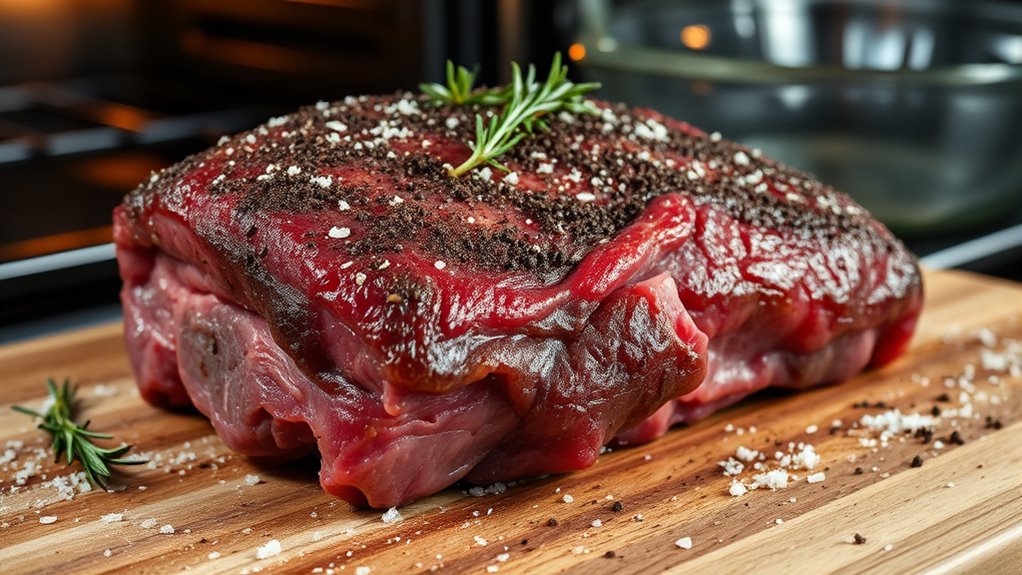
How to Cook Beef Rump Roast in the Oven in 7 Simple Steps
Many home cooks find themselves wanting to serve a tender, flavorful beef rump roast but feel overwhelmed by the cooking process. You’re not alone—getting that perfect balance of juicy and tender can be tricky.
To cook a beef rump roast in the oven, start by choosing a well-marbled and bright red piece. Pat it dry, trim excess fat, and season generously with salt, pepper, and herbs.
Sear the roast at high heat for 15 minutes, then lower the temperature to about 325°F for slow, even cooking.
Use a meat thermometer to reach your desired doneness, and let it rest before carving. For more detailed tips, keep exploring the best techniques.
Key Takeaways
- Choose a well-marbled, bright red beef rump and ask your butcher for a high-quality roast.
- Pat the meat dry and season it generously. Let it sit at room temperature for about 30 minutes before cooking.
- Preheat your oven to 325°F to 375°F. Then, sear the roast at high heat for 15 minutes to create a nice crust.
- Roast until the internal temperature reaches 135°F for medium rare. Use a meat thermometer to check for perfect doneness.
- Once done, let the roast rest for 10 minutes before slicing. Always cut against the grain for maximum juiciness.
Picking the Best Beef Rump for Roasting
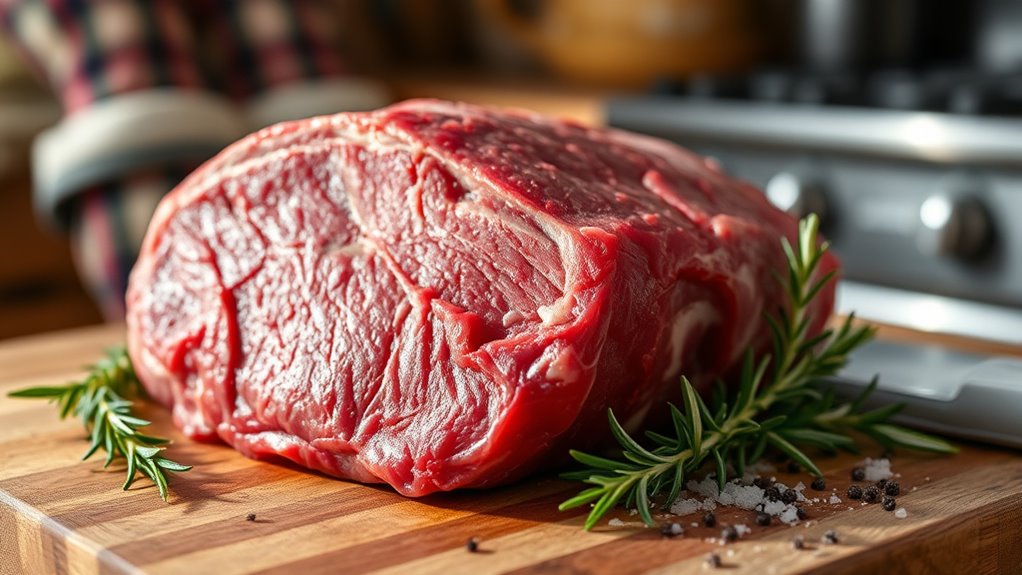
Choosing the right beef rump is essential for a tender, flavorful roast. Look for a cut with good marbling—thin streaks of fat throughout the meat. This fat melts during cooking, keeping the beef moist and adding richness.
Choose a beef rump with good marbling for a tender, flavorful roast.
Check for a bright red color, indicating freshness, and avoid any brown or dull-looking meat. A well-trimmed rump with minimal external fat is ideal, but a bit of fat cap can improve flavor.
Feel the meat; it should be firm but not hard. If possible, ask your butcher for a fresh, high-quality piece specifically labeled for roasting.
The right rump will have a consistent texture and appearance, ensuring your roast turns out juicy and tender every time.
How to Prepare and Season Your Beef Rump
Once you’ve picked a good quality beef rump, the next step is to prepare it for roasting. Start by patting the meat dry with paper towels to get rid of excess moisture, which helps it sear nicely.
Trim any extra fat or silver skin, but keep some fat on for flavor and moisture. Then, season the meat generously with salt and pepper all over; these basics enhance the natural beef flavor.
You can also add garlic powder, onion powder, or herbs like thyme and rosemary for extra taste. Rub the seasonings into the meat so they’re evenly coated.
Let the beef sit at room temperature for about 30 minutes. This helps the flavors penetrate and ensures even cooking later.
How to Set Oven Temperature and Cook Time
To get a perfectly cooked beef rump roast, set your oven between 325°F and 375°F depending on how you want it done and how fast you want it cooked.
For medium rare, aim for 325°F since it allows for slow, even cooking. If you like it more well-done, push the temperature closer to 375°F.
The cook time depends on the weight of your roast. A good rule of thumb is about 20 minutes per pound at 350°F.
Use a meat thermometer to check the internal temperature—about 135°F for medium rare, 145°F for medium, and 160°F for well done.
Adjust the cooking time as needed, and don’t forget to let the roast rest before carving for the juiciest results.
Tips for Achieving Juicy, Tender Roast Beef
For juicy, tender roast beef, start by generously seasoning your meat with salt and your favorite herbs at least 30 minutes before cooking. This helps the salt penetrate and keeps the meat moist while roasting.
Use a meat thermometer to check the internal temperature. Aim for about 135°F for medium-rare or 145°F for medium. Don’t overcook, or the meat will dry out.
Take the roast out a little before it hits your target temperature because it will keep cooking during resting. Searing at high heat for the first 15 minutes creates a flavorful crust that seals in juices.
Finally, keep the oven steady and avoid opening the door too often. This way, the meat cooks evenly and stays nice and moist throughout.
Resting and Carving Your Roast for Perfect Presentation
After removing the roast from the oven, let it rest on a cutting board covered loosely with foil for at least 15 minutes. Resting helps the juices settle, so your slices stay moist and tender.
Let the roast rest for at least 15 minutes to keep it juicy and tender.
When you’re ready to carve, use a sharp knife and slice against the grain. This makes the meat easier to chew and more tender.
For a great presentation, arrange the slices on a platter. This creates an attractive and inviting look.
Serve immediately to enjoy warm, juicy bites. Following these steps will make your roast look and taste fantastic.
Finally, take a moment to relish the flavorful roast. Perfectly cooked beef is always worth the effort!
Common Troubleshooting Tips for Roast Beef
If your roast turns out overcooked or tough, don’t worry—you can often fix these issues with simple adjustments. To avoid overcooking, use a reliable meat thermometer and take the beef out at the right temperature.
For tough textures, try slicing the meat thinly or letting it rest longer. This can help improve tenderness and make the meat easier to chew.
Preventing Overcooking Issues
Overcooking is a common concern when preparing beef rump roast, but you can prevent this by paying close attention to cooking times and internal temperatures.
To avoid dry, tough meat, monitor your roast carefully. Use a reliable meat thermometer to check for the perfect doneness.
Aim for an internal temperature of about 135°F for medium-rare or 145°F for medium. Remember, the roast continues to cook slightly after removing it from the oven.
Here’s a quick guide to help you stay on track:
| Temperature Goal | Approximate Time | Result |
|---|---|---|
| 135°F (medium-rare) | 20-25 mins/lb | Juicy, tender |
| 145°F (medium) | 25-30 mins/lb | Slightly firmer |
| Over 155°F | Over 30 mins/lb | Dry, tough |
| Rest 10 min | – | Juices redistribute |
| Keep an eye | Always check | Perfect roast |
Fixing Tough Texture
To soften a tough beef rump roast, start by slicing it thinly against the grain. This helps break up the muscle fibers and makes each bite more tender.
If the roast still feels chewy, try putting it back in the oven with a splash of beef broth or water. Cover it tightly and cook on low heat for about 30 minutes to help break down the connective tissues.
You can also shred the meat for sandwiches or stews, which makes it easier to eat and more flavorful.
Use a rapid oven or stovetop braise to tenderize tougher cuts. Let the meat rest for 10 minutes before slicing to keep it juicy.
Serving with a sauce or gravy adds moisture and flavor, making the meat even more enjoyable.
FAQs: How to Know When Your Beef Rump Is Ready
Wondering how to tell when your beef rump is perfectly cooked? The best way is to use a meat thermometer and look for visual cues.
For medium rare, aim for an internal temperature of 135°F (57°C). For medium, go for 145°F (63°C). And for well done, 160°F (71°C). Use the thermometer’s probe to avoid guessing.
Check the juices too—clear juices mean it’s done, while pink or bloody juices suggest it needs more time. Rest the meat for 10-15 minutes before slicing to let the juices settle.
Here’s a quick guide:
| Temperature | Doneness Level |
|---|---|
| 135°F | Medium Rare |
| 145°F | Medium |
| 160°F | Well Done |
| Juices | Clear = Ready |
Following these tips ensures your beef rump is cooked perfectly every time.
Frequently Asked Questions
Can I Cook Beef Rump Roast in a Slow Cooker Instead?
Yes, you can cook beef rump roast in a slow cooker instead. Just season your roast and put it in the slow cooker along with some broth or vegetables for extra flavor.
Cover and cook on low for 6-8 hours until the meat is tender and easily pulls apart. This method keeps your beef juicy and flavorful with very little effort.
It’s perfect for a hands-off, delicious meal that’s simple to prepare.
What Are Some Alternative Seasonings for Beef Rump Roast?
You can try alternative seasonings like garlic powder, onion powder, paprika, thyme, rosemary, or cumin to add flavor to your beef rump roast. A simple blend of salt, pepper, and Worcestershire sauce also works well.
For a smoky touch, sprinkle some smoked paprika or chili powder. Experimenting with different herbs and spices helps you create a personalized taste that enhances the natural richness of the beef.
How Do I Store Leftover Roast Beef Safely?
A stitch in time saves nine, so store your leftover roast beef promptly. Wrap it tightly in aluminum foil or put it in an airtight container to prevent bacteria growth.
Keep the leftovers in the fridge at 40°F (4°C) or below, and try to eat them within 3-4 days. If you want to store it longer, freezing is the way to go.
Don’t forget to label the package with the date so you know when to use it before it goes bad. That way, you’ll enjoy your leftovers safely and tastily.
Is It Better to Cook Beef Rump Covered or Uncovered?
It’s better to cook beef rump covered, especially if you want it tender and juicy. Covering traps moisture and helps prevent the meat from drying out during cooking. Use foil or a lid to seal in heat and moisture, which helps break down connective tissues.
If you’re aiming for a crispy exterior, uncover it towards the end of cooking. Covering guarantees even heat distribution and results in a flavorful, moist roast.
Can I Cook Beef Rump Roast From Frozen?
Cooking beef rump roast from frozen isn’t ideal, but it’s possible. Think of it like trying to start a fire with damp wood—you’ll need patience and extra care.
You should cook it at a lower temperature, around 325°F, and allow for extra cooking time—about 50% longer.
Use a meat thermometer to guarantee it reaches 135°F for medium-rare. Patience and proper technique will help you achieve a tasty, tender roast.
Conclusion
Think of your beef rump roast as a story waiting to be told. With patience and care, you craft a masterpiece of flavor and tenderness. Each step, from seasoning to roasting to resting, is like turning a page, revealing a rich, satisfying chapter.
When you serve it, you’re sharing more than just a meal. You’re offering a moment of warmth and tradition that brings people together. In your hands, a simple cut becomes a symbol of nourishment and connection.
Making a perfect beef rump roast in the oven is about more than following steps. It’s about creating an experience—one that makes every bite truly meaningful.