
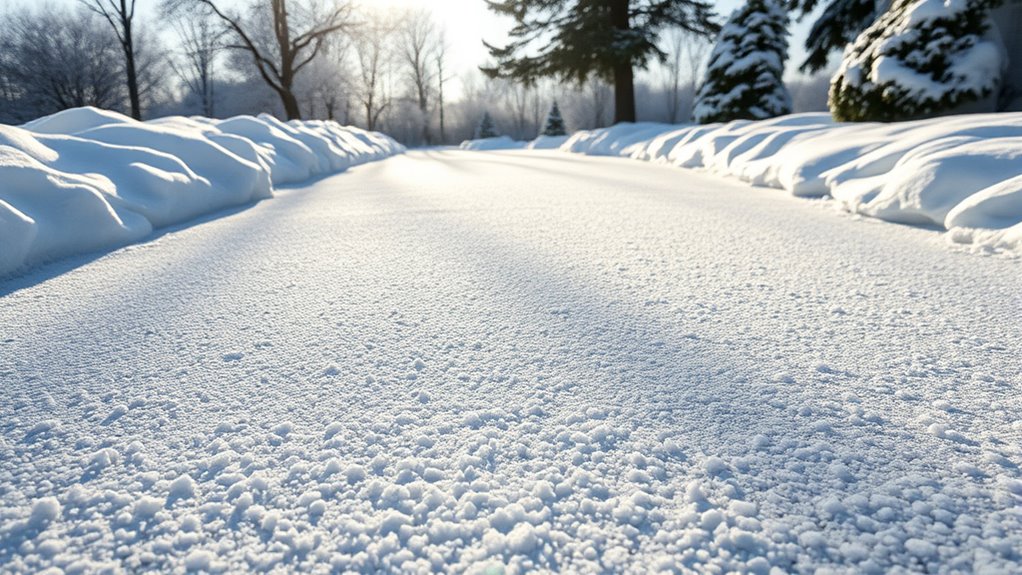
7 Tips for the Best Time to Salt Your Driveway
Many homeowners struggle with keeping their driveways safe during winter. The challenge is knowing exactly when to salt to prevent ice from bonding and creating hazards. If you’re not sure about the best timing, you’re not alone—properly salting can make all the difference.
To salt your driveway effectively, apply it before temperatures drop below freezing to prevent ice bonding. Watch for signs of ice formation, like frost or shiny pavement, and use a thermometer to check surface temperatures.
Salt works best above 20°F, so reapply during snowfall and after it stops. Use weather forecasts to plan ahead, and avoid waiting too long or over-salting.
Keep an eye on conditions to stay safe. If you want to learn more about timing your salt application, keep going.
Key Takeaways
– Apply salt proactively before temperatures drop below freezing. This helps prevent ice from bonding to the pavement and makes it easier to melt later.
It’s a good idea to do this before a freeze to stay ahead of the weather.
Monitor weather forecasts and real-time conditions so you can time your salting just before snow or ice starts to form.
Checking pavement surface temperatures is important too. Salt works best above 20°F and is less effective below 0°F.
Reapply salt during ongoing snowfalls and after the snow stops. This keeps the driveway safe and provides better traction.
Don’t wait until the ice gets thick; applying salt early reduces your effort later and keeps things safer.
When Is the Best Time to Salt Your Driveway?
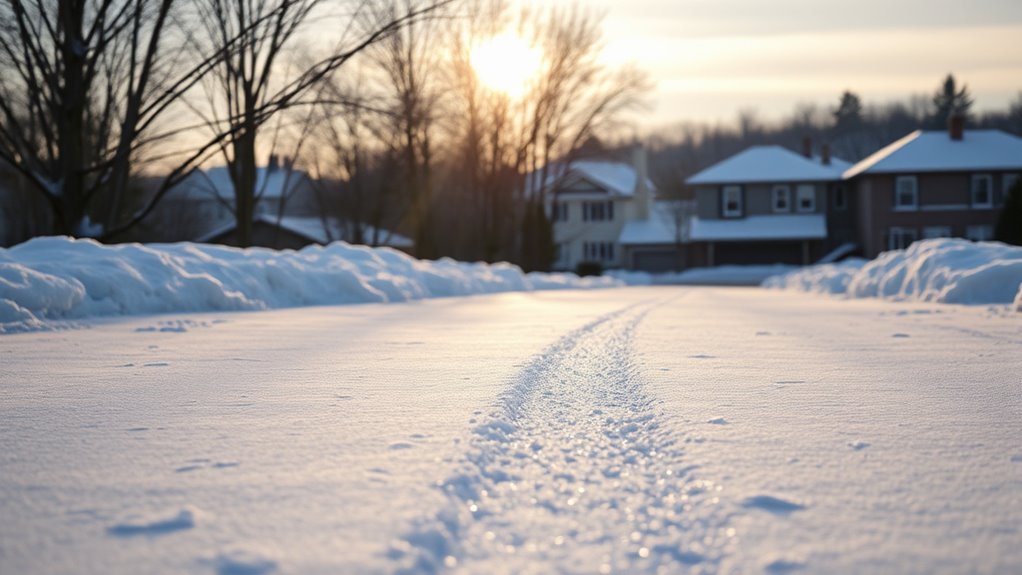
When is the best time to salt your driveway? The ideal moment is before the temperature drops below freezing, usually when the forecast predicts overnight lows of 32°F or lower. Applying salt proactively helps prevent ice from bonding to the pavement, making it easier to melt later.
If you wait until ice already forms, salt becomes less effective because it struggles to penetrate the ice. You should also consider salting just before a snowstorm or icy conditions are expected so the salt can work continuously as the weather changes.
Keep in mind, early application can save you effort later, but don’t salt too early if the temperature remains above freezing. Timing your salting correctly guarantees safer, less slippery driveways during winter.
How to Recognize Early Signs of Ice Formation
You can spot early ice formation by paying attention to drops in surface temperature or the appearance of faint frost.
Keep an eye on sudden weather changes, like a quick freeze after a warm day.
Recognizing these signs helps you act before ice becomes hazardous.
Changes in Surface Temperature
Changes in surface temperature are a key early sign that ice might be forming on your driveway. You can often feel these changes with a quick touch or by checking a thermometer. Here’s what to watch for:
- The surface feels noticeably colder than the air temperature.
- You notice a sudden drop in temperature after sunset or during clear nights.
- The pavement cools rapidly without a change in weather.
- You see frost starting to form, even if it’s not yet visible on the surface.
Pay attention to small temperature shifts, especially during cold spells. Recognizing these signs early helps you salt at the right time, preventing ice from bonding strongly to the pavement.
Visible Frost Formation
Frost formation is one of the clearest early signs that ice is starting to develop on your driveway. When you see a thin, white coating on the surface, it means temperatures are dropping close to or below freezing.
This frost often appears overnight or early in the morning when humidity condenses on the cold pavement. Keep an eye out for a slight shimmer or a powdery look, as these are signs that frost is settling in.
Recognizing this early allows you to take action before ice fully forms. This helps you decide the best time to salt your driveway. Acting promptly to address frost prevents dangerous ice buildup and makes your salting more effective.
Don’t wait until you see ice—act as soon as you spot frost.
Sudden Weather Drops
Sudden drops in temperature can be a clear warning that ice is starting to form on your driveway, even if the ground still looks dry. When the thermometer dips unexpectedly, it’s time to pay attention. Here’s what to watch for:
- The air feels noticeably colder, especially at night or early morning.
- Your car’s windshield defrosts faster than usual.
- Frost forms on rooftops or grass, even if the driveway looks clear.
- You notice a thin, shiny film on the pavement’s surface.
If these signs appear, it’s best to salt your driveway proactively. Acting early helps prevent ice from bonding strongly to the surface, making removal easier and safer. Recognizing these signs keeps your driveway safer and reduces ice buildup risks.
How Temperature Affects Salt Effectiveness
Temperature plays an important role in how well salt can melt ice on your driveway. When temperatures are above 20°F (-6°C), salt works pretty well because it lowers the freezing point of water, causing ice to melt.
But as it gets colder, salt’s effectiveness drops a lot. Around 0°F (-18°C), regular rock salt almost becomes useless, so you need more salt or other de-icing options.
Cold temperatures slow down the chemical reaction that helps salt break the ice bonds. That means it’s less effective when it’s really cold, and applying salt might not do much at all.
In such extreme cold, think about using special ice-melting products made for lower temperatures, or try combining salt with other methods for better results.
Best Practices for Salting Before, During, and After Snowfall
To keep your driveway safe, apply salt before the snow starts to prevent ice from bonding. This proactive step helps reduce the risk of slips and makes snow removal easier.
During snowfall, reapply salt as needed to maintain traction, especially during heavier storms. Keep an eye on the weather and stay ahead of the accumulation.
After the snow stops, remove excess salt and snow to ensure your driveway stays clear and safe for use. Clearing it thoroughly helps prevent ice from forming later.
Pre-Snow Salt Application
Applying salt before a snowfall can be really effective if you do it right. It forms a barrier that stops ice from bonding strongly to your driveway.
To do this well, check the weather forecast and plan to apply salt just before the snow starts. Clear away any loose snow and debris so the salt can stick properly.
Use enough salt—about 1 pound per 100 square feet—to cover the surface evenly. Apply it early enough so it can start working before the snow piles up.
This proactive step helps reduce ice formation and makes cleanup easier later. Keep in mind, pre-salting works best when temperatures are above 15°F, so adjust your timing accordingly.
Proper pre-treatment keeps your driveway safer and less icy during the storm.
During Snowfall Strategies
When snow is actively falling, it’s important to adjust your salting strategy to keep surfaces safe and ice-free. Apply salt proactively, especially before a heavy accumulation begins.
If snow starts falling, sprinkle salt evenly across your driveway to prevent ice from bonding strongly. Keep an eye on the weather and reapply as needed, especially during steady snowfall.
| Snowfall Rate | Salt Application Tip | Timing Recommendation |
|---|---|---|
| Light | Apply lightly, focus on problem areas | Start early, before accumulation builds |
| Moderate | Increase application frequency | Reapply every hour or as needed |
| Heavy | Add more salt but avoid over-salting | Reapply during snowfall to prevent ice |
| Steady | Maintain consistent salting | Reapply as snowfall continues |
Post-Snow Maintenance
After a snowfall has ended, it’s important to check your driveway for icy or slippery spots right away. Take a walk around once the snow stops falling and look for trouble spots.
Then, follow these simple steps: first, clear any remaining snow with a shovel or snow blower so you can see icy patches. Next, spread salt or ice melt evenly over those areas to stop them from refreezing.
Wait about 15 to 30 minutes for the salt to work on melting the ice. If patches are still icy or if it rains and washes away the salt, reapply to keep things safe.
This routine helps keep your driveway from becoming dangerously slick. Checking and treating it regularly after snow helps maintain traction and makes it easier to clear later on.
Using Weather Forecasts to Decide When to Salt
Monitoring weather forecasts is essential for timing your driveway salt application effectively. Before you plan to salt, check the upcoming weather conditions. Look for forecasts predicting freezing temperatures, especially overnight lows below 32°F (0°C).
If a cold snap is expected, it’s best to apply salt just before the temperature drops or during the initial freeze. Keep an eye on precipitation reports too. If snow or sleet is forecasted, salting beforehand can prevent ice from bonding strongly to the pavement.
Some weather apps provide real-time updates and alerts, helping you decide the ideal time to act. By staying informed, you can prevent ice buildup more efficiently, saving you time, effort, and salt. Proper timing based on weather forecasts guarantees safer, more effective driveway maintenance.
Common Mistakes That Delay Your Salting Routine
One common mistake that delays your salting routine is waiting too long to apply salt after ice has already formed. When you wait, the ice bonds tightly to the pavement, making it harder to melt.
To avoid this, consider these mistakes:
- Applying salt only after the ice is thick and icy.
- Using too little salt, thinking it’s enough for the current conditions.
- Relying solely on forecasts without checking real-time conditions.
- Waiting for the snow to stop falling before salting, which can lead to ice buildup underneath.
Adjusting Your Salting Schedule as Winter Conditions Change
As winter conditions change, it’s important to adjust your salting schedule to keep ice under control. When temperatures stay below freezing, increase how often you salt to stop ice from bonding strongly.
If there’s a warm spell and daytime temperatures go above freezing, delay salting or use less salt, since melting will happen naturally. Keep an eye on weather forecasts and real-time temperatures to plan your salting times better.
Heavy snowfall or freezing rain might mean you need to salt more often or use more salt. During milder weather, cut back on salt to avoid waste and reduce environmental impact.
Regularly check your driveway’s condition and tweak your schedule as needed. This way, you can stay safe and keep ice at bay throughout the winter.
Frequently Asked Questions
Can Salt Damage My Driveway Surface?
Yes, salt can damage your driveway surface over time. When you use too much or apply it during warm temperatures, the salt can seep into cracks, causing concrete or asphalt to deteriorate faster.
It can also lead to surface pitting and erosion. To minimize damage, use salt sparingly and only apply it in freezing conditions.
Consider alternatives like sand or calcium magnesium acetate for better protection.
What Type of Salt Is Best for Driveways?
You should use calcium chloride or magnesium chloride for your driveway; these work better at lower temperatures. Calcium chloride can melt ice down to -25°F, which makes it a popular choice in cold climates.
Unlike traditional rock salt, which only melts ice above 15°F, these options activate sooner and work faster. They also cause less damage to your driveway surface, helping you avoid costly repairs.
How Much Salt Should I Use per Application?
You should use about 1 to 2 pounds of salt per 100 square feet of your driveway. Spread it evenly across the surface, especially before a forecasted storm or when temperatures drop below 20°F.
Avoid over-salting, as it can damage your driveway and harm the environment. Adjust the amount based on how severe the ice or snow is, but stick to this guideline for effective melting without overdoing it.
Is It Safe to Salt During Freezing Rain?
Salting during freezing rain is like trying to put out a fire with gasoline — it’s risky. The salt won’t work effectively because the rain keeps washing it away.
It can even cause hazardous ice patches if it refreezes. Instead, wait until the rain stops and temperatures drop below freezing.
That’s when salt can truly do its job, melting the ice and making your driveway safer.
How Do Environmental Conditions Influence Salt Effectiveness?
Environmental conditions greatly influence how well salt works on your driveway. If temperatures are too cold, salt becomes less effective because it needs at least 15°F to melt ice efficiently.
Wind can blow the salt away, reducing its contact with ice, while moisture from snow or rain helps activate the salt. To get the best results, apply salt when temperatures are just above freezing.
Try to avoid windy or excessively wet conditions, as these can hinder salt’s effectiveness.
Conclusion
Remember, timing your salt application is like catching a wave—you want to ride it before it fully crashes. A friend once waited too long, only to find her driveway a slick, icy mess, much like a ship caught in a storm.
By staying vigilant and using weather info, you’ll keep your driveway safe and clear. Turning winter’s icy grip into a manageable challenge is all about knowing the best time to salt your driveway.
Stay proactive, and you’ll stay safe. Knowing the right time to salt your driveway can make all the difference in avoiding slips and falls during winter.