8 Key Differences Between Kosher Salt and Canning Salt
Many home cooks and food enthusiasts often struggle to choose the right salt for their recipes, unsure of which type will give the best flavor and results. If you’ve ever been confused by the differences between salts like kosher salt and canning salt, you’re not alone.
Understanding these differences can make a big difference in your cooking and preserving efforts.
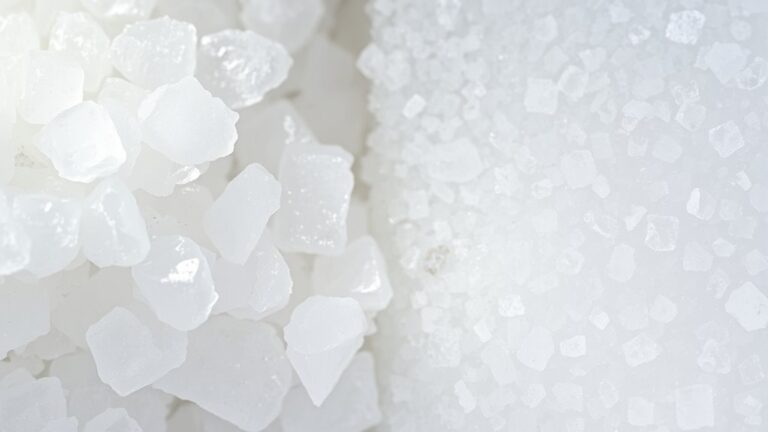
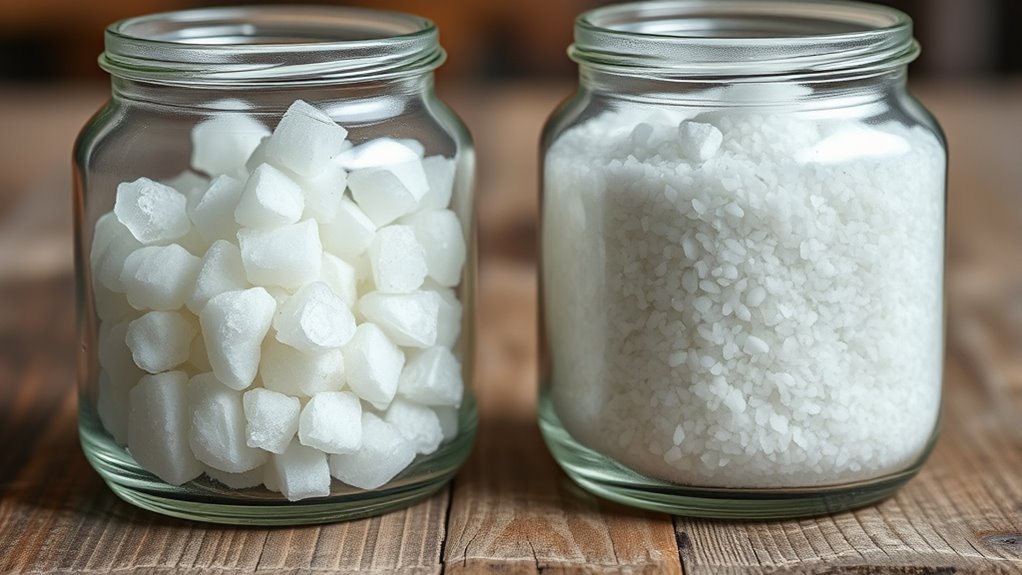
Kosher salt has larger, flaky grains that are easy to pinch and sprinkle, making it ideal for seasoning and dry brining. In contrast, canning salt has fine, uniform grains perfect for preserving food in brines and syrups.
Kosher salt contains trace minerals which give it a mild, clean flavor, whereas canning salt is highly refined with no additives, providing a more concentrated saltiness.
If you keep exploring, you’ll uncover tips for using each salt accurately and effectively.
Key Takeaways
- Kosher salt has large, flaky grains, while canning salt features fine, uniform particles for quick dissolution.
- Canning salt is pure sodium chloride with no additives, unlike kosher salt which contains trace minerals.
- Kosher salt is mainly used for seasoning and dry brining. Canning salt is designed for food preservation and pickling.
- Because of their different grain sizes, kosher salt is less dense. You’ll often need to measure it by weight for accurate substitutions.
- Canning salt produces a clear brine and may contain anti-caking agents. These can affect the flavor and texture of preserved foods.
What Are the Key Differences Between Kosher Salt and Canning Salt?
Have you ever wondered what sets kosher salt and canning salt apart? The main difference lies in their purpose and composition.
Kosher salt is crafted for culinary use, especially for koshering meat, and has larger, flaky crystals that make it easy to pinch and sprinkle.
Canning salt, on the other hand, is specifically designed for preserving food. It’s fine and pure, with no additives or anti-caking agents, which helps guarantee consistent results in pickling and preserving.
While both salts are primarily sodium chloride, their processing and intended use influence their texture and appearance. Kosher salt’s coarse grains make it versatile for seasoning, whereas canning salt’s fine grains facilitate dissolving during food preservation.
These differences impact how each salt performs in cooking and preserving.
How Do Their Textures and Grain Sizes Compare?
The textures and grain sizes of kosher salt and canning salt are quite different, which affects how you use them in the kitchen. Kosher salt usually has large, coarse grains that feel flaky and crunchy, making it easy to pinch, sprinkle, and spread evenly over food.
Its bigger grains give you better control when seasoning and are less likely to dissolve too quickly. Canning salt, on the other hand, has much finer, more uniform grains. Its smooth, powdery texture dissolves quickly, making it great for preserving and pickling.
Because of these differences, kosher salt is preferred for seasoning, while canning salt is better for precise measurements in recipes that need quick dissolution. Their grain size really influences how you use each salt in cooking.
Why Do Their Sodium Content and Purity Levels Differ?
You might notice that kosher salt and canning salt differ in sodium content and purity, partly because of their mineral compositions and processing standards.
Variations in mineral content affect their purity levels, while different measurement methods can lead to discrepancies in sodium comparisons.
Understanding these factors helps explain why their sodium levels and purity don’t always match up.
Mineral Content Variations
Mineral content variations between kosher salt and canning salt mainly come from how they’re made and where their materials come from.
Kosher salt is usually harvested from evaporated seawater or salt deposits and often has trace minerals like magnesium, calcium, and potassium. These minerals give it a slightly different flavor and texture.
Canning salt, however, is highly refined, with most mineral impurities removed during processing. This makes it a purer sodium chloride product with very few other minerals.
Because of these differences, kosher salt can have subtle mineral traces that affect taste and texture. Canning salt offers a more neutral profile.
These mineral differences don’t significantly change the sodium content but do influence flavor nuances and how you might use them in cooking.
Purity Standards Differences
Because of different manufacturing processes, kosher salt and canning salt have distinct purity standards that influence their sodium content and overall quality.
Kosher salt is usually less refined, so it keeps trace minerals and impurities, which can slightly affect its purity level.
Canning salt, meanwhile, is highly purified and processed to remove nearly all impurities, ensuring it’s just pure sodium chloride.
This high level of purity makes canning salt perfect for uses that need precise chemical makeup, like food preservation.
The manufacturing differences also mean kosher salt might have small mineral residues, while canning salt is almost all sodium chloride.
These purity standards directly impact their sodium content, with canning salt providing a more predictable, uniform level.
Sodium Measurement Methods
The way sodium content is measured in salt depends on the analytical methods used, which directly impacts the reported purity levels. Some tests analyze sodium ions directly using techniques like atomic absorption spectroscopy or ion-selective electrodes, giving precise sodium concentrations.
Others estimate sodium content based on the total chloride or salt weight, which can lead to discrepancies. Sample preparation, moisture content, and impurities also influence the results.
For example, kosher salt, which is often less processed, might show slightly different sodium readings compared to highly purified canning salt. Variations in measurement methods and standards mean two tests could report different sodium levels for the same salt.
Understanding these differences helps explain why sodium content and purity levels aren’t always consistent across different types of salt.
What Are the Best Uses for Kosher Salt vs. Canning Salt in Cooking and Preservation?
Have you ever wondered which salt is best suited for specific cooking or preservation tasks? Kosher salt is great for seasoning meats and vegetables because of its coarse texture, which makes it easy to handle and distribute evenly. Its large grains dissolve slowly, so it’s perfect for dry brining or coating foods before cooking.
Canning salt, on the other hand, is designed for preserving fruits and vegetables through canning. It dissolves quickly and doesn’t have additives that could cloud jars or affect the flavor. Use it in recipes where clear brine or syrup is needed, like pickles or jams.
While both salts can sometimes be used interchangeably, choosing the right one makes a difference. It improves the texture, clarity, and overall quality of your preserved foods or dishes.
How Do Their Flavors and Tastes Vary?
You’ll notice that kosher salt has a milder, cleaner flavor compared to canning salt’s more pronounced saltiness.
The mineral content in canning salt can also add subtle tastes that influence your dishes.
Understanding these differences helps you choose the right salt for your culinary needs.
Flavor Intensity Differences
While both kosher salt and canning salt are mainly used for seasoning, they differ a lot in flavor intensity. Kosher salt has a clean, mild saltiness that enhances dishes without taking over.
Canning salt, on the other hand, tends to taste more concentrated and sharper because of its finer grains and lack of additives. This can make it seem more intense when you’re using it in recipes.
To get a better idea of their differences, keep this in mind:
- Kosher salt offers a subtle, delicate salt flavor that’s great for seasoning and finishing dishes.
- Canning salt provides a stronger, more direct salty taste, which can be overwhelming if you use too much.
- The fine grains of canning salt also make its flavor feel more intense because it dissolves quickly.
Mineral Content Impact
The mineral content in kosher salt and canning salt really affects their flavors and how they taste in dishes. Kosher salt often has trace minerals that give it a clean, slightly briny flavor, which can enhance your food.
Canning salt, on the other hand, is highly refined and usually lacks minerals. This makes it taste more pure and straightforward, with less complexity.
Because of this, canning salt can taste more neutral and less layered. If your recipe depends on subtle flavor nuances, kosher salt’s minerals can add some extra depth.
But if you’re aiming for precise preservation or canning, canning salt’s clean profile is ideal. Its purity prevents any extra flavors from interfering.
In the end, the mineral differences subtly impact taste. So, choosing the right salt depends on whether you want flavor complexity or just purity.
How Can You Identify Kosher Salt and Canning Salt by Appearance?
Kosher salt and canning salt are easy to tell apart just by looking at them. Their appearance can help you quickly identify which is which.
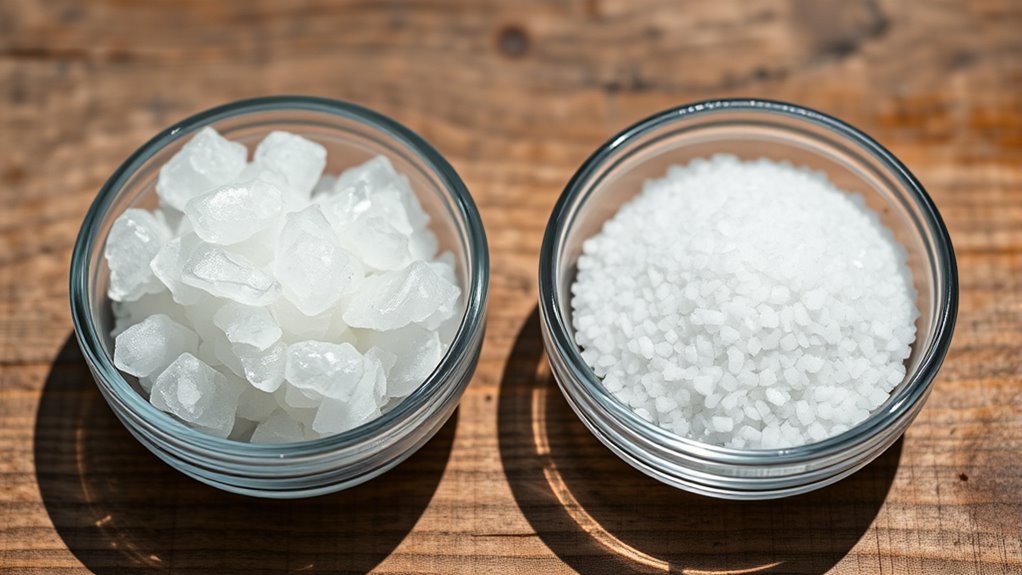
Kosher salt usually has larger, flaky crystals that are irregular in shape. It’s easy to pinch and sprinkle because of its chunky texture. Canning salt, on the other hand, is more refined with very fine, uniform grains.
Kosher salt has large, flaky, irregular crystals; canning salt features fine, uniform grains.
To tell them apart, look at size and texture. Kosher salt crystals are chunky and flaky, while canning salt grains are tiny and smooth. Both are usually white, but kosher salt may look slightly more opaque or matte.
In terms of shape, kosher salt crystals are irregular and flaky. Canning salt grains are consistently fine and round. These differences make it easier to identify each type by appearance.
When Should You Use Kosher Salt Instead of Canning Salt?
You should use kosher salt instead of canning salt when you want a seasoning with a flaky texture that’s easy to pinch and sprinkle onto dishes. Its coarse grains make it perfect for seasoning meats, vegetables, and salads because you can control the amount more precisely.
Kosher salt dissolves quickly and offers a clean, pure flavor without any added additives. It’s also great for rubbing onto meats before cooking or for finishing dishes at the table.
If you’re seasoning by hand or want a salt that gives a satisfying crunch, kosher salt is your best choice. Canning salt, with its fine, uniform grains and anti-caking agents, isn’t suitable for these uses and can change the texture and taste of your dishes.
What Common Mistakes Should You Avoid When Substituting These Salts?
When substituting kosher salt for canning salt, a common mistake is using the same measurement without adjusting for their different saltiness levels and grain sizes. Kosher salt has larger grains and is less dense, so it’s usually less salty by volume. If you don’t account for this, your dish could end up under- or oversalted.
To avoid this, always measure by weight if possible, rather than by volume. Be aware that kosher salt is fluffier and less compact than canning salt. Taste as you go to ensure proper seasoning, especially if you’re adjusting recipes.
Frequently Asked Questions
Is Kosher Salt Suitable for Canning Purposes?
Yes, kosher salt is suitable for canning purposes because it’s pure and doesn’t contain additives or anti-caking agents found in some table salts. Its coarse grains make it easy to measure and control, which is important for proper preservation.
Just make sure you’re using the right amount specified in your recipe. Keep in mind that its larger grains may require adjustments in measurement compared to finer salts.
Can I Substitute Canning Salt for Kosher Salt in Recipes?
Yes, you can substitute canning salt for kosher salt in recipes, but keep in mind that canning salt is finer and more concentrated. You’ll want to use a smaller amount—about 1 teaspoon of canning salt for every 1.5 teaspoons of kosher salt—to keep the seasoning balanced.
Always taste as you go since the texture and saltiness might be a little different. Adjust the quantities as needed to get the flavor just right.
Does the Mineral Content Differ Significantly Between the Two Salts?
You’ll find that the mineral content between kosher salt and canning salt isn’t markedly different, with both mainly composed of sodium chloride.
However, canning salt often contains added anti-caking agents, which aren’t present in kosher salt.
Curiously, kosher salt has a coarser grain size, making it easier to control seasoning.
Despite minor differences, both salts serve their purposes well, but be mindful of additives when substituting in recipes.
Are There Health Concerns Associated With Using Either Salt?
There are minimal health concerns when using either kosher salt or canning salt in moderation. Both contain similar sodium levels, which can impact blood pressure if eaten excessively.
Kosher salt often has fewer additives, making it slightly healthier for some people. Canning salt has anti-caking agents, but these don’t pose significant health risks.
How Does Packaging Affect the Shelf Life of Kosher and Canning Salts?
Packaging greatly impacts the shelf life of both kosher and canning salts. Airtight containers or resealable bags help keep moisture and humidity out, so the salts stay dry and free-flowing.
Proper packaging also protects the salts from contaminants and air exposure, which can cause clumping or spoilage over time. Choosing sealed, moisture-proof containers ensures your salts stay fresh.
This helps maintain their quality and extends their usability for years to come.
Conclusion
Think of kosher and canning salts as two travelers on your cooking journey, each with its own path and purpose. Choosing the right salt guides you through flavorful landscapes and preservation terrains.
When you understand their differences, you avoid getting lost in confusion. Like picking the right map for your adventure, selecting the proper salt makes sure your culinary voyage is smooth, delicious, and perfectly seasoned every time.
If you’re using kosher salt for seasoning or canning salt for preservation, knowing their key differences helps you make better choices in the kitchen.