7 Main Differences Between Rock Salt and Ice Melt
Dealing with icy sidewalks and driveways is a common winter headache, and you’re not alone in feeling overwhelmed by the options. Choosing the right de-icer can be tricky, especially when safety, effectiveness, and environmental impact all matter.
Many people struggle with finding a solution that works well in freezing temperatures without causing harm.
You’ll find that rock salt mainly contains sodium chloride, works slowly, and is less effective at very low temperatures, while ice melt contains chemicals like calcium chloride that activate quickly, even in colder conditions.
Rock salt can harm surfaces, pets, and the environment, whereas ice melt often lasts longer but may also pose risks.
Both have cost and application differences. For a safer, more eco-friendly choice suited for extreme cold, investigate the details below.
Key Takeaways
- Ice melt activates quickly at low temperatures, melting ice faster than rock salt, which needs warmer conditions to work effectively.
- Rock salt is cheaper at first, but it can cause more damage to surfaces and might need to be reapplied often during very cold weather.
- Generally, ice melt has a smaller environmental impact. Still, it can affect aquatic life if runoff gets into water sources.
- Rock salt can corrode surfaces and be harmful to pets. Ice melt, on the other hand, might stain surfaces and also pose safety risks for pets.
- To get the best results, spread the material evenly using a shovel or spreader. It’s best to apply before or during a snowfall to prevent ice from forming.
What Are Rock Salt and Ice Melt Made Of?
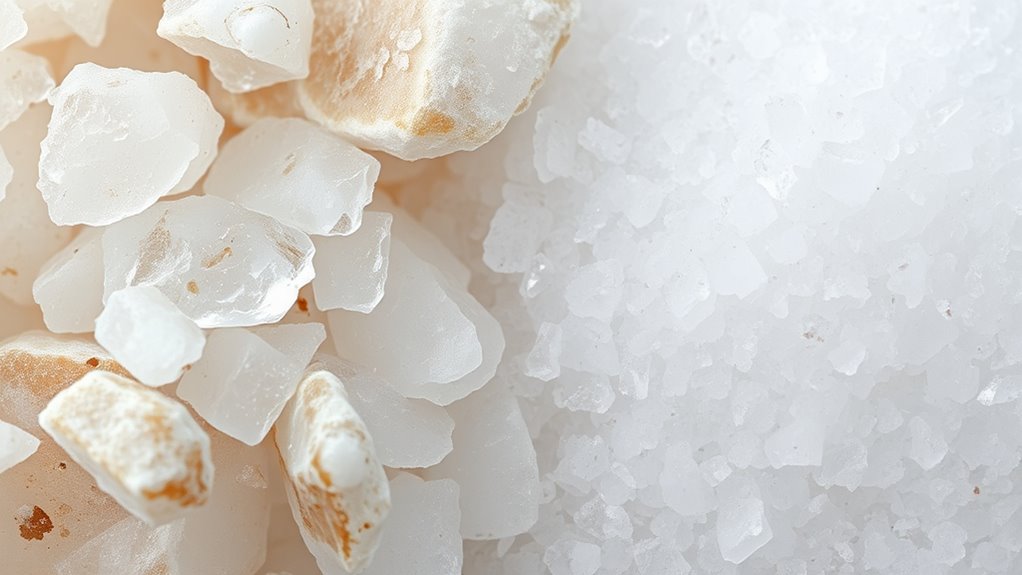
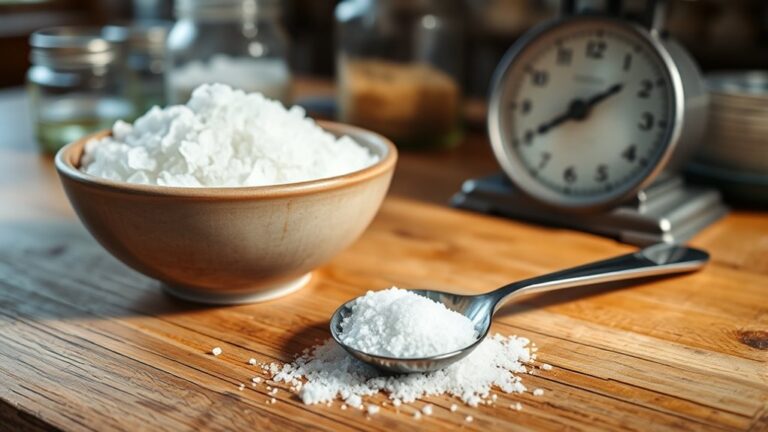
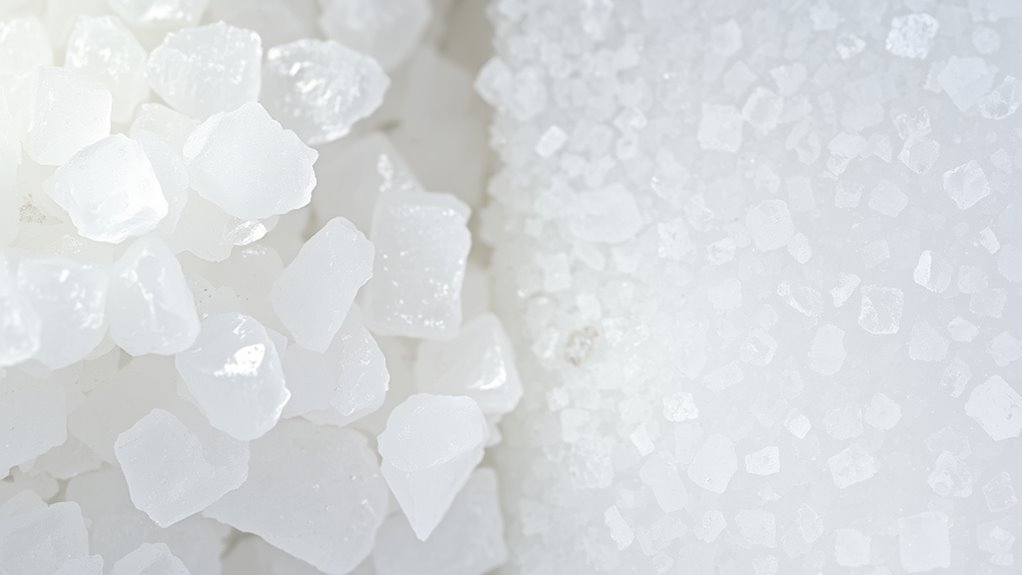
Rock salt and ice melt are made from different chemical compounds that help melt ice and snow. Rock salt, also known as halite, is mainly made of sodium chloride (NaCl). It’s a natural mineral that dissolves in water and lowers the freezing point of ice.
Ice melt usually contains chemicals like calcium chloride (CaCl₂), magnesium chloride, or potassium chloride. These ingredients work better at lower temperatures and act faster than rock salt. Some ice melts also have additives like abrasives or anti-caking agents to make them more effective and easier to spread.
Knowing what these products are made of can help you pick the right one for different winter conditions. This way, you can remove ice more safely and efficiently.
How Quickly Do Rock Salt and Ice Melt Melt Ice?
With regard to melting ice quickly, ice melt products generally outperform rock salt because they work faster at lower temperatures. Ice melts contain chemicals like calcium chloride or magnesium chloride, which activate rapidly upon contact with ice, even in very cold weather. This means they can start melting ice almost immediately after you apply them.
Rock salt, or sodium chloride, takes a bit longer to work because it needs higher temperatures—around 20°F or above—to be effective. Once you put it down, it gradually dissolves and lowers the freezing point of water. But this process is slower compared to chemical-based ice melts.
Are Rock Salt and Ice Melt Safe for Your Surfaces and Pets?
You need to evaluate whether rock salt and ice melt could harm your surfaces or pets. Both can cause surface damage or pose safety risks if ingested or tracked indoors.
Understanding their chemical exposure levels helps you choose the safest option for your home.
Surface Damage Risks
While rock salt and ice melt are good at clearing snow and ice, they can also pose risks to your surfaces if you’re not careful. Rock salt is corrosive and can cause concrete, brick, or asphalt to break down over time. Ice melt products, especially those with chemicals, can stain or erode surfaces.
Check out the table below for a quick guide:
| Effect on Surfaces | Material Susceptibility |
|---|---|
| Corrosion | Metal, concrete, asphalt |
| Staining | Pavers, painted surfaces |
| Surface Erosion | Stone, brick, concrete |
Using these products the wrong way or in large amounts can speed up damage. Always follow the manufacturer’s instructions and think about using alternative de-icers for delicate surfaces.
Pet Safety Concerns
Although rock salt and ice melt can effectively clear pathways, their safety extends beyond surface damage to include the well-being of pets. Both products can pose health risks if ingested, leading to stomach upset, vomiting, or even more severe issues like dehydration.
Pets are naturally curious and may lick or walk on treated surfaces, increasing their exposure. Skin contact with these substances can also cause irritation or burns, especially in sensitive paws.
Furthermore, some ice melts contain chemicals like chlorides or other additives that are toxic to animals. To protect your pets, consider using pet-safe alternatives, apply products in moderation, and rinse your pet’s paws after walks.
Keeping your pets away from treated areas is essential for their safety during winter months.
Chemical Exposure Levels
Chemical exposure levels from rock salt and ice melt depend on the product’s ingredients and how you use them. Rock salt mainly contains sodium chloride, which can irritate your skin and eyes if you’re exposed directly or over a long time.
Ice melts often have other chemicals like calcium chloride or magnesium chloride, which can add to the risks. Using too much or applying high concentrations can lead to skin irritation, breathing problems, or environmental damage.
Pets are especially vulnerable because they might lick or ingest treated surfaces. To keep everyone safe, follow the label instructions carefully, use these products in moderation, and clean up any residue afterward.
Proper use helps reduce chemical exposure and protects both your surfaces and your health.
Which Is More Environmentally Friendly: Rock Salt or Ice Melt?
You might wonder which de-icer is more eco-friendly: rock salt or ice melt.
Rock salt can harm plants and soil, while some ice melts contain chemicals that also affect vegetation.
Thinking about their environmental impacts can help you pick the option that’s gentler on nature.
Environmental Impact Comparison
When comparing the environmental impacts of rock salt and ice melt, it’s important to look at how each affects nearby ecosystems. Rock salt can harm soil health by increasing salinity, which damages plants and pollutes groundwater.
It also speeds up corrosion in vehicles and infrastructure, leading to more pollution. Ice melt products, usually made of calcium or magnesium chloride, tend to be less harmful to soil but can still affect aquatic life if runoff enters water bodies.
They may also cause skin and respiratory irritation in humans. Overall, ice melts generally have a smaller environmental footprint compared to rock salt, especially if used responsibly.
But both options can pose environmental threats if overused or applied improperly. Choosing eco-friendly de-icing methods means understanding these impacts and following best practices.
Effects on Vegetation
While both rock salt and ice melt can affect vegetation, ice melt products usually cause less damage to plants and soil. Rock salt’s high sodium content can harm roots, block nutrient absorption, and change soil chemistry.
Ice melt formulas often include environmentally friendly agents that reduce plant injury. Think about how different products might impact your landscape and plants.
| Product Type | Impact on Vegetation | Soil Compatibility |
|---|---|---|
| Rock Salt | High damage risk | Disrupts nutrients |
| Calcium Chloride | Moderate impact | Less soil harm |
| Magnesium Chloride | Lower impact | Better for soil |
| Eco-friendly Ice Melt | Minimal damage | Soil-safe options |
| Sand or Grit | No chemical impact | No effect |
Choosing the right product helps protect your plants and soil while keeping your icy surfaces safe to walk on.
How Cost-Effective Are Rock Salt and Ice Melt?
Evaluating the cost-effectiveness of rock salt versus ice melt depends on several factors, including their initial prices, coverage areas, and long-term impacts. Generally, rock salt is cheaper upfront and covers larger areas quickly, making it appealing for budget-conscious situations.
Ice melt products tend to be more expensive at first but work more efficiently at lower temperatures and cause less damage to surfaces. Here are some key points to consider:
- Rock salt needs more frequent reapplication in severe cold
- Ice melt often lasts longer and provides faster results
- Salt can damage concrete and vegetation over time
- Ice melt is safer for pets and plants
- The overall cost depends on how harsh the winter is and your specific needs
Choosing the right option means balancing initial costs and long-term effects.
Do Rock Salt and Ice Melt Work in Different Temperatures?
Rock salt and ice melt products have different effectiveness levels depending on the temperature. Rock salt starts working around 15°F (-9°C), making it good for mild winter conditions.
Below this temperature, it becomes less effective because it can’t lower the ice’s melting point enough. Ice melt products are designed to work at much colder temperatures, often down to -20°F (-29°C) or lower.
They contain chemicals like calcium chloride that generate heat when they dissolve, helping to melt ice faster in very cold conditions. If temperatures drop well below freezing, ice melt will outperform rock salt.
Knowing these temperature ranges helps you pick the right product for your winter needs to keep walkways safe and ice-free.
How to Apply Rock Salt and Ice Melt for Best Results
Apply rock salt and ice melt evenly across the icy surface, making sure you cover the entire area for the best results. Spread the material in a thin, consistent layer to avoid waste and prevent damage to your pavement.
Timing is important—try to apply before or during snowfall for quicker melting. If you’re covering a large area, use a push spreader to get even distribution. Remember, piling on too much won’t speed up melting and can waste product or harm your surfaces.
Apply early for faster results and avoid piling excess material. Use the right amount for your area, and reapply as needed to keep the ice melting. After the snow has melted, clear away any remaining slush to stay safe.
Frequently Asked Questions
Can Rock Salt or Ice Melt Cause Corrosion on Vehicles?
Yes, both rock salt and ice melt can cause corrosion on your vehicle. When these substances contact your car’s metal parts, they can speed up rust formation.
This is especially true if you don’t wash them off quickly. Salt and chemicals from ice melts can seep into joints and small crevices, damaging the metal over time.
To protect your vehicle, be sure to rinse it thoroughly after driving on salted roads. You might also consider applying protective coatings for extra defense.
Are There Health Risks Associated With Handling Ice Melt Products?
Handling ice melt products can pose health risks if you’re exposed to them improperly. You might experience skin irritation, eye discomfort, or respiratory issues from inhaling dust or fumes.
Always wear gloves, goggles, and a mask when applying these products. Wash your hands thoroughly afterward, and keep children and pets away from treated areas.
If you experience symptoms, seek medical attention promptly to prevent further health complications.
How Do Weather Conditions Affect the Effectiveness of Each Product?
Weather conditions really influence how well each product works. When temperatures drop far below freezing, rock salt almost becomes useless because it needs warmer weather to melt ice effectively.
Ice melt products, especially those with chemicals like calcium chloride, work better in extreme cold but can sometimes damage surfaces or harm the environment. So, your choice depends on the forecast and what matters most to you.
Can Ice Melt Damage Concrete or Asphalt Surfaces?
Ice melt can damage concrete and asphalt surfaces if used excessively or at high temperatures. The chemicals can cause the materials to expand and contract, which may lead to cracks and surface deterioration over time.
You should avoid applying too much, especially during warmer weather. Consider using environmentally friendly or less corrosive options instead.
Proper application and moderation help protect your surfaces while keeping them safe and ice-free.
What Are the Long-Term Environmental Impacts of Using Ice Melt?
Using ice melt can harm the environment over time. It contaminates soil and water, affecting plants, animals, and even groundwater.
While it makes winter safer, long-term use can lead to soil imbalance and damage delicate ecosystems. Don’t think it’s harmless—consider eco-friendly alternatives or limit usage to reduce environmental impacts.
Staying aware helps you balance safety and sustainability during winter months.
Conclusion
In the battle of rock salt versus ice melt, choosing the right one depends on your needs and environment. Think of it like picking the right tool for a job—each has its strengths and quirks.
By understanding their differences, you can keep your walkways safe without turning your yard into a chemical battleground. With a little knowledge, you’ll be ready to conquer winter’s icy grip.
Knowing when to use rock salt or ice melt can make all the difference in maintaining a slip-free home. So, choose wisely and enjoy a safer, more comfortable winter season.