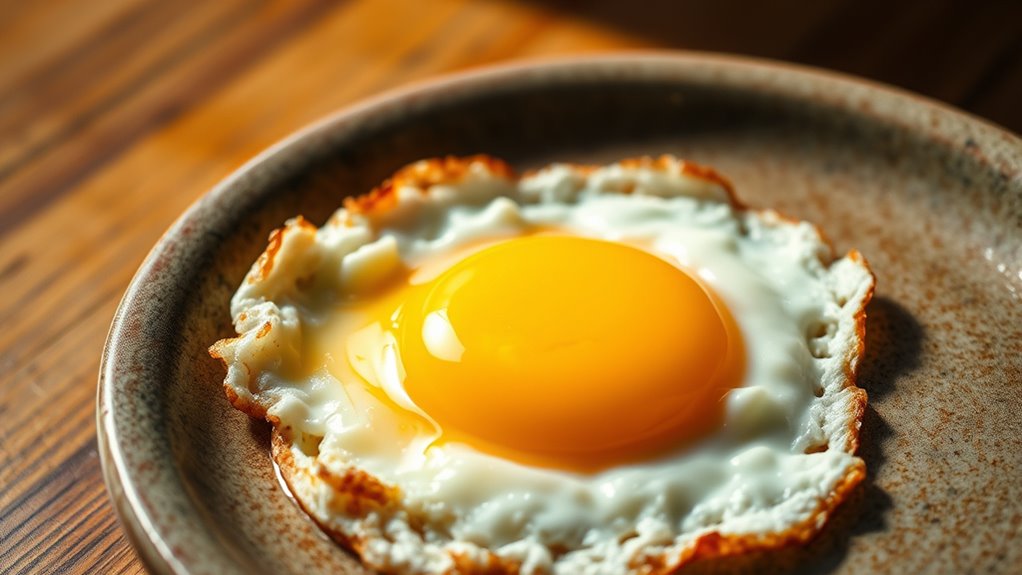
10 Facts About How Many Calories Are in a Fried Egg
Are you trying to enjoy a tasty fried egg without worrying about the calorie count? You’re not alone—many people struggle with balancing flavor and nutrition, especially when it comes to breakfast favorites.
A fried egg typically has around 90 calories, but this varies with cooking methods, added fats, and egg size. Using oil or butter adds 40-50 calories per teaspoon or tablespoon, raising the total.
Larger eggs contain more calories—up to 90 for jumbo sizes.
To keep your fried eggs lower in calories, opt for non-stick pans, minimal fats, or egg whites.
Keep exploring to uncover tips on managing your fried egg intake effectively.
Key Takeaways
- A standard fried egg has about 90 calories. Most of these come from the yolk’s fats and proteins.
- If you cook your egg with oil or butter, that adds roughly 40-50 calories for each teaspoon used.
- Using non-stick spray or just a little bit of fat can keep the calorie count closer to the egg’s natural amount.
- Egg size also makes a difference. Large eggs have around 70 calories, while jumbo eggs can be up to 90.
- Opting for egg whites or baking eggs instead of frying is a great way to cut down on calories.
How Many Calories Are in a Fried Egg?
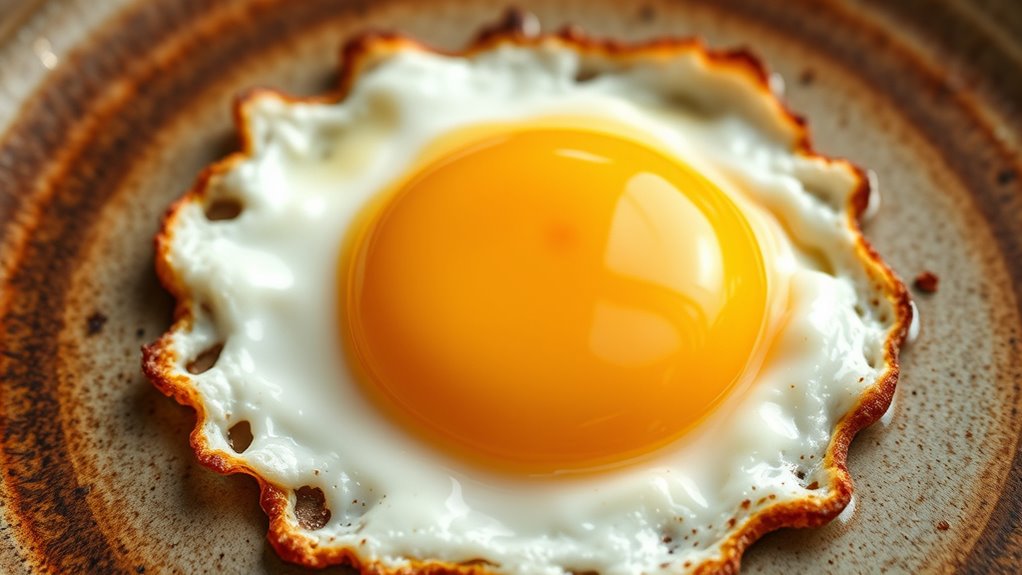
Have you ever wondered exactly how many calories are in a fried egg? On average, a large fried egg has about 90 calories. This can vary a bit depending on the size of the egg and how you cook it.
When you fry an egg with just a small amount of oil or butter, you add extra calories—about 40-50 calories per teaspoon of oil. Using non-stick spray or cooking it without added fat keeps the calorie count closer to the basic amount.
The yolk is where most of the calories come from since it’s packed with fats and proteins. So, if you’re counting calories, remember that how you cook your fried egg can make a big difference in its total calorie content.
How Do Cooking Methods Affect Fried Egg Calories?
The way you cook your fried egg can really change its calorie count. Using more oil or cooking at a high temperature can add extra calories to your egg.
The type of pan you pick also matters because some pans need more oil to prevent sticking. Paying attention to these details helps you keep your fried egg as healthy as possible.
Oil Type and Quantity
Choosing the right type and amount of oil when frying eggs can really change their calorie content. Using too much oil or high-calorie options bumps up the calories.
To keep it healthier and lower in calories, try these tips: Use a non-stick pan to need less oil. Choose healthier oils like olive or avocado, which have better fat profiles. Measure your oil—just a teaspoon or less is enough.
You can also consider cooking spray for even less oil and fewer calories.
Cooking Temperature Effects
Cooking temperature plays a big role in the calorie content of a fried egg because higher heat can cause more moisture to evaporate and may lead to more fat being absorbed from added oils or fats. When you cook at higher temperatures, the egg’s water content disappears faster, making the remaining nutrients more concentrated. It also makes the egg look more cooked and sometimes a bit denser.
If you use a lot of oil or butter at high heat, the egg can soak up more fat, which raises its calorie count. On the flip side, cooking at lower temperatures helps keep more moisture in the egg and reduces fat absorption, resulting in a slightly lower calorie egg. So, controlling your cooking temperature affects both the texture and the calorie content of your fried egg.
Pan Type Influence
Different types of pans can really change the calorie count of your fried egg because their materials and surfaces affect how much oil or butter the egg absorbs during cooking. Non-stick pans need less fat, so they help keep calories lower, while cast iron pans often require more oil to prevent sticking.
Here’s how your choice of pan impacts calories:
- Non-stick pans: Use minimal oil, keeping the calorie count down.
- Cast iron pans: Need more oil, which adds to the calories.
- Stainless steel pans: Absorb less oil if preheated properly, but still need some fat.
- Ceramic pans: Usually require less oil than traditional pans, helping lower calorie intake.
Choosing the right pan helps you control added fats, making your fried eggs healthier and more calorie-conscious.
Do Butter and Oil Significantly Raise Fried Egg Calories?
Adding butter or oil to fry an egg does increase its calorie content, but how much depends on how much you use. A teaspoon of butter adds about 34 calories, while a tablespoon of oil provides around 120 calories.
Using a small amount, like a teaspoon, will raise the egg’s calories only slightly—about 35 calories. If you use more oil or butter, the calorie boost becomes more noticeable.
For example, frying an egg in a tablespoon of oil can add over 120 calories, which nearly doubles the egg’s original calories. The type of fat also makes a difference; butter has slightly more calories than most oils.
Ultimately, your choice of fat and how much you use determine how much the calories increase when frying an egg.
How Does Egg Size Impact Calorie Content?
The size of your egg directly influences its calorie content, with larger eggs containing more calories than smaller ones.
If you’re watching your intake, choosing smaller eggs can help reduce the total calories you consume.
Understanding this difference helps you make more informed choices in your diet.
Larger Eggs Contain More Calories
Larger eggs generally contain more calories because they have more yolk and white, which are the main energy sources. When you pick bigger eggs, you’re getting a little extra fuel since each part adds to the calorie count.
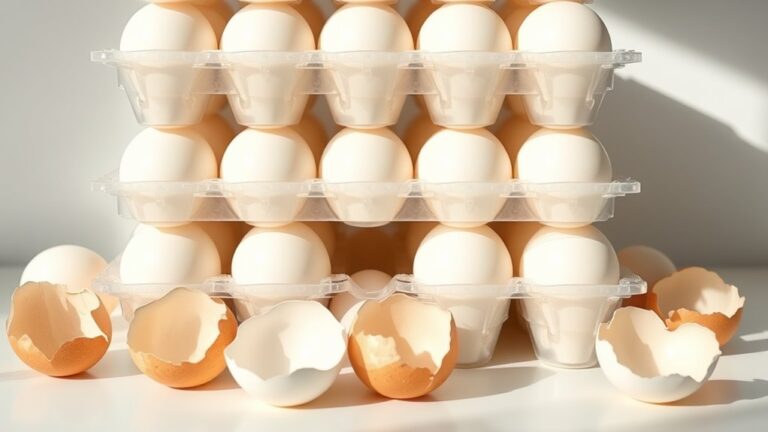
Here’s what you can expect: a large egg (about 50 grams) has roughly 70 calories. An extra-large egg (about 56 grams) has around 80 calories. Jumbo eggs (about 63 grams) pack about 90 calories.
The main difference comes from the increased volume of yolk and white in larger eggs.
Small Eggs Have Fewer Calories
Small eggs contain fewer calories because they have less yolk and white, which are the main sources of energy. When you pick small eggs, you’re getting fewer calories per serving, making them a good choice if you’re watching your intake.
A small egg, around 38 grams, has about 55 calories, while a large egg has roughly 70 calories. The size difference means less protein, fat, and cholesterol, all of which add to the calorie count.
If you’re trying to cut calories but still want eggs, choosing smaller ones is a smart move. Just remember, how you cook them also affects the calorie content.
What Factors Influence the Calories in Your Fried Egg?
Several factors determine the calories in your fried egg, and understanding them can help you make healthier choices. First, the size of the egg matters: larger eggs naturally have more calories.
Egg size influences calorie count; larger eggs contain more calories.
Second, the type of fat used for frying influences calorie content. Oil or butter adds extra calories compared to non-stick spray.
Third, how much fat you use impacts the total calories. Using more fat will increase the calorie count.
Fourth, cooking time can affect moisture and density, slightly altering calorie density.
Keep in mind that adding ingredients like cheese or bacon will also boost calories.
Tips to Make Fried Eggs Lower in Calories
To make fried eggs lower in calories, start by choosing cooking methods that use minimal fat, like non-stick cooking spray or a small amount of broth. This helps cut down on added fats and keeps the calorie count lower.
You can also use egg whites instead of whole eggs for fewer calories. Using a non-stick pan means you don’t need much oil, which further reduces the calorie content.
| Method | Fat Content | Calories Saved | Tips |
|---|---|---|---|
| Non-stick spray | Minimal | Up to 50% less | Use sparingly |
| Cooking in broth | Very low | Notably | Adds flavor without fat |
| Using egg whites | None | Cuts calories by 50% | Discard yolk |
| Teflon pans | Low | Reduce fat use | Keep heat moderate |
| Baking instead of frying | None | Zero added fat | Opt for alternative cooking |
How Do Toppings and Serving Styles Change the Calories?
Toppings and serving styles can really change the calorie content of your fried egg meal. Adding high-calorie toppings or cooking eggs with extra fats can quickly boost your intake.
For example, using butter or oil for frying adds about 40-50 calories per teaspoon. Cheese toppings can add 50-100 calories depending on the type and amount.
Fried eggs served on buttered toast or with bacon increase calories a lot. Sauces like hollandaise or creamy dressings can add another 50-100 calories per serving.
Choosing lighter options like vegetables or herbs helps keep the calories lower. How you serve your eggs—over toast, with cheese, or plain—directly affects their overall calorie count.
How Do Fried Eggs Fit Into Your Daily Calorie Goals?
Ever wonder how a fried egg can fit into your daily calorie goals? It’s simple: just think about its calorie content and how it fits into your overall diet.
A single fried egg usually has around 90 calories. If you’re aiming for 1,500 calories a day, it can easily be part of a balanced breakfast or meal.
You can balance your daily intake by pairing it with lower-calorie foods like vegetables or whole grains. Keep in mind that cooking methods and added fats can increase calories.
Using minimal oil or butter helps keep it within your goals. Planning your meals around your calorie target lets you enjoy fried eggs without overdoing it.
Moderation and mindful choices keep fried eggs a delicious, manageable part of your daily diet.
Common Myths About Fried Egg Calories Debunked
Many people believe that a fried egg has zero calories, but that’s just a myth.
The cooking method also plays a role—using butter or oil adds extra calories.
Knowing these facts helps you make better choices for your diet.
Myth of Zero Calories
A common misconception is that fried eggs contain zero calories, but that’s not true. Many people believe that cooking removes calories, but that’s not the case. The calories in a fried egg come from the egg itself and any added ingredients like oil or butter.
To clarify, the egg’s natural calories stay the same no matter how you cook it. Frying adds calories because of the fat used during cooking. Using a non-stick pan can help reduce the amount of added fats and lower your calorie intake.
Even if you skip added fats, the egg still has calories from its natural nutrients. Understanding this myth helps you better gauge your intake. No matter how you cook it, a fried egg isn’t calorie-free—so enjoy it, but keep track of the added fats.
Impact of Cooking Method
While cooking method doesn’t change the egg’s inherent calories, it greatly influences the total calorie count of your fried egg. Using butter or oil adds extra calories, especially if you use more than necessary.
For example, frying in butter can add around 50 calories per tablespoon, which significantly increases the total. Non-stick pans with minimal oil keep calories lower, making your fried egg more diet-friendly.
Cooking at high heat with greasy fats may cause you to use more oil, further boosting calories. The type of fat you choose also impacts health and calorie content.
To keep your fried egg lighter, opt for minimal oil or try cooking with a spray or non-stick pan. Your cooking method directly affects calorie intake, so choose wisely.
How to Track and Manage Calories When Eating Fried Eggs
Tracking and managing calories when eating fried eggs is key to staying on track with your diet. To do this well, try these simple steps:
- Pick healthier cooking methods like using non-stick pans or adding very little oil to cut down on calories.
- Watch your portions: Stick to one fried egg or measure the oil you use so you don’t go overboard.
- Use calorie-tracking apps: Log your fried eggs and ingredients so you stay aware of what you’re eating.
- Balance your plate: Pair fried eggs with vegetables or whole grains to fill up and get nutrients without extra calories.
Frequently Asked Questions
Are There Healthier Alternatives to Frying Eggs With Fewer Calories?
Yes, you can choose healthier options like poaching, boiling, or scrambling eggs without adding much fat. These methods help keep the calories lower.
Using non-stick pans makes it easy to cook eggs with little or no oil, which cuts down on extra calories. If you do need some oil, go for cooking sprays or just a tiny bit of butter.
These techniques keep the nutrients intact while reducing unhealthy fats and calories. That way, you can enjoy eggs in a healthier way without losing flavor or texture.
How Does the Temperature at Which I Fry Eggs Affect Calorie Content?
A watched pot never boils, but when frying eggs, the temperature doesn’t change the calorie count; it’s all about the ingredients. Higher temperatures can cause more oil absorption, which increases calories. Lower temps help minimize that.
Do Different Types of Eggs (Organic, Free-Range) Have Varying Calorie Counts?
Different types of eggs, like organic or free-range, generally have similar calorie counts—around 70 calories per large egg.
But slight variations can happen because of differences in hen diets and living conditions, which might change the egg’s fat and nutrient content.
Can Seasoning or Spices Add Significant Calories to Fried Eggs?
Sure, seasoning and spices can sneak in calories like mischievous ninjas, but usually, they’re pretty minimal. A dash of salt or pepper adds zero calories, while a sprinkle of sugar or honey can add a few.
A dash of oil or butter for flavor might bump it up slightly. So, unless you’re pouring on the syrup or drowning eggs in cheese, spices won’t turn your healthy breakfast into a calorie catastrophe.
How Do Frying Pans’ Materials Influence the Calorie Content of a Fried Egg?
Frying pan materials don’t directly influence the calorie content of a fried egg. Instead, the calories come from the egg itself and any added fats like butter or oil.
Non-stick pans require less oil, so they can help reduce calories. On the other hand, cast iron or stainless steel pans might need more oil to prevent sticking.
Conclusion
Now that you know how cooking methods, toppings, and egg sizes influence your fried egg’s calorie count, you can make smarter choices, control your intake, and enjoy your breakfast without guilt.
Whether you’re watching your calories, managing your diet, or just curious, understanding these factors empowers you to eat mindfully.
So, measure, compare, and savor every bite because knowing what’s on your plate makes all the difference in reaching your health goals, especially when considering how many calories are in a fried egg.