How to Smoke Beef Brisket in an Electric Smoker in 10 Easy Steps
Many barbecue enthusiasts dream of perfectly smoked beef brisket but feel overwhelmed by the process. You’re not alone—smoking brisket can seem tricky, especially if you’re aiming for tender, flavorful results every time.
To smoke beef brisket in an electric smoker, start by choosing a well-marbled cut and trimming excess fat. Season it generously and set your smoker to 225-250°F, adding your favorite wood chips.
Place the brisket inside and monitor the internal temperature, aiming for 195-203°F. Rest the meat for at least 30 minutes before slicing against the grain.
For more tips on perfecting your brisket, continue exploring the key steps to achieve tender, flavorful results.
Key Takeaways
- Select a well-marbled, high-quality brisket and trim any excess fat. This helps with even seasoning and allows the smoke to absorb better.
- Preheat your electric smoker to between 225°F and 250°F. Add your wood chips to the smoker for that smoky flavor, and set up the water pan to keep everything moist.
- Generously season the brisket with your favorite dry rub. Place it in the smoker and let it smoke until the internal temperature reaches between 195°F and 203°F.
- Once done, take the brisket out and cover it with foil. Let it rest for at least 30 minutes so the juices can redistribute, making it more tender.
- After resting, slice the brisket against the grain into thin pieces. This ensures each bite is tender and flavorful. Make sure the bark is nicely formed and keep an eye on the temperature for the best results.
What You Need to Know Before Smoking Beef Brisket in an Electric Smoker
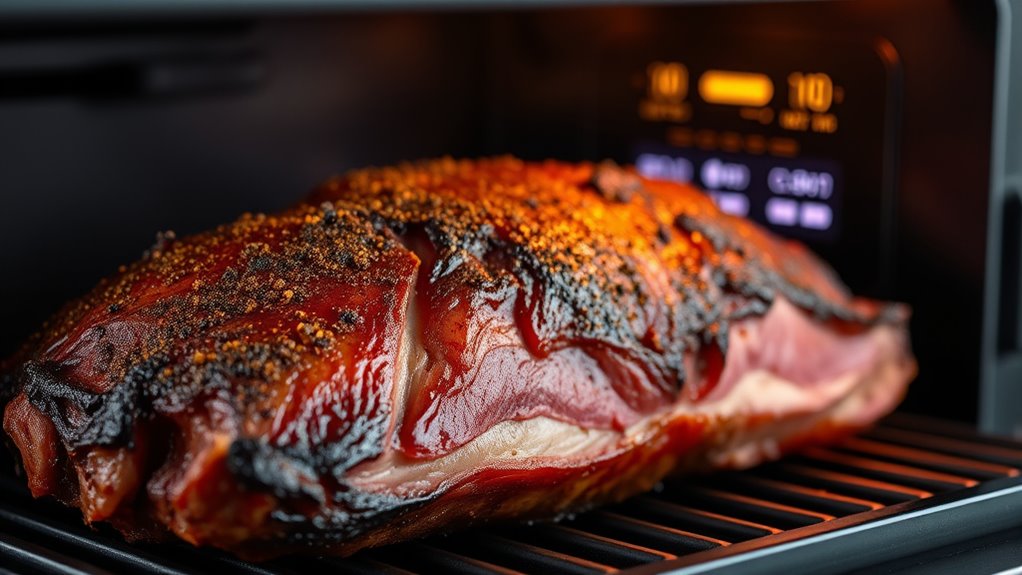
Before you start smoking beef brisket in an electric smoker, there are a few essential things you should know. First, understand that patience is key; this isn’t a quick process. It takes several hours to smoke a brisket properly, often around 1 to 1.5 hours per pound, depending on size and temperature.
You’ll also want to be clear about your desired doneness—aim for a tender, juicy result. Keep in mind that electric smokers maintain consistent heat and smoke levels, making them easier to control than traditional smokers.
Finally, preparing your workspace with all necessary tools, like a meat thermometer, aluminum foil, and tongs, guarantees you can manage the process smoothly. Knowing these basics sets a solid foundation for successful smoked brisket.
Choosing the Best Cut of Beef Brisket for Smoking
Selecting the right cut of beef brisket is key to getting tender, flavorful smoked meat. Look for a well-marbled brisket with streaks of fat running through the meat; this fat keeps it moist and adds flavor during smoking. The most common choice is the whole packer brisket, which includes both the flat and point muscles.
The flat is leaner and easier to slice, making it perfect for beginners. The point is fattier and more flavorful, adding richness to your smoked brisket. Avoid small, thin cuts or briskets with uneven fat distribution, as they can dry out or cook unevenly.
Always choose fresh, high-quality meat from a reputable butcher or supplier. Picking the right cut sets a solid foundation for a juicy, tender smoked brisket.
How to Prepare Your Brisket: Trimming, Seasoning, and Marinating Tips
Proper preparation starts with trimming excess fat and silverskin from your brisket, which helps ensure even seasoning and better smoke penetration. Use a sharp knife to remove thick fat layers, leaving about 1/4 inch to keep the meat moist.
Next, season your brisket generously with a dry rub made from salt, pepper, garlic, and other spices. For extra flavor, marinate it overnight in a mixture of apple cider vinegar, Worcestershire sauce, and herbs.
To keep things interesting, try this:
| Tip | Benefit |
|---|---|
| Trim excess fat | Ensures even seasoning and smoke absorption |
| Marinate overnight | Enhances flavor and tenderizes the meat |
| Apply a spice rub | Creates a flavorful crust during smoking |
This preparation helps you achieve a delicious, well-flavored brisket.
How to Set Up Your Electric Smoker for Optimal Brisket Cooking
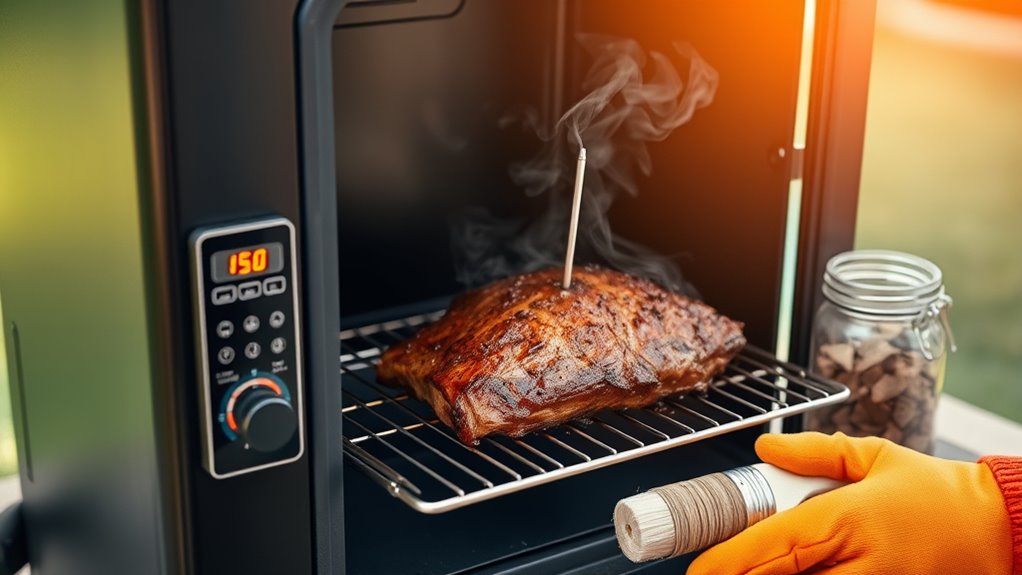
Setting up your electric smoker correctly is key to getting tender, flavorful brisket. First, make sure the smoker is on a flat, stable surface away from wind or direct sunlight. Preheat it to your target temperature, usually around 225°F to 250°F.
Load the wood chips or pellets according to the manufacturer’s instructions. This will give you that smoky flavor you want. Check that the water pan is filled if your smoker uses one, as it helps keep the meat moist during cooking.
Preheat to the right temperature before adding the brisket. Position the wood chips or pellets properly. Fill the water pan for moisture. Place the smoker on a stable, flat surface.
Controlling Temperature and Smoke During Smoking
To get great results, you need to keep the temperature steady and the smoke at the right level. Adjust your smoker’s controls as needed to prevent overheating or undercooking.
Add wood chips gradually to maintain consistent smoke. Staying attentive to these details guarantees your brisket will be tender and flavorful.
Maintaining Consistent Temperature
Maintaining a consistent temperature in your electric smoker is key for tender, flavorful brisket. Fluctuations can lead to uneven cooking and dryness, so keeping it steady is important.
To do that, use a reliable thermometer to keep track of both the internal meat temp and the smoker’s temp. Avoid opening the smoker door too often, as that lets heat escape.
Make sure to preheat your smoker fully before adding the brisket. If you notice the temperature drifting, adjust the smoker’s settings as needed based on your readings.
Managing Smoke Intensity
Controlling both temperature and smoke during your brisket smoke session guarantees the meat develops rich flavor without becoming overdone or dry. To manage smoke intensity, start by adding wood chips gradually.
Too much smoke can make the meat bitter, so keep the supply steady but limited. Adjust the smoker’s vents to regulate airflow; more airflow reduces smoke buildup, while less increases it.
Keep the temperature steady around 225°F to 250°F to ensure consistent smoke absorption. If smoke becomes too thick or bitter, open the vents slightly to clear it out.
Conversely, if there’s too little smoke, add more wood chips carefully. Monitoring these elements consistently helps you achieve a perfectly smoked brisket with balanced flavor and moisture.
How to Manage Smoke and Humidity for Juicy, Flavorful Brisket
Managing smoke and humidity levels is key to getting a juicy, flavorful brisket in your electric smoker. Too much smoke can give a bitter taste, while too little might leave the meat bland.
Maintaining the right humidity helps prevent the brisket from drying out during those long cook times. To control smoke, open the vent slightly to manage airflow and add wood chips gradually.
For humidity, place a water pan inside the smoker to keep moisture levels steady. Keep an eye on the internal temperature and moisture to ensure you get the best results.
- Use a water pan to maintain humidity
- Adjust smoker vents for smoke control
- Add wood chips gradually
- Monitor internal temperature regularly
Best Wood Chips and Smoking Times for Beef Brisket
Choosing the right wood chips and knowing the ideal smoking times are key for that rich, smoky flavor in your brisket. For beef, hardwoods like oak, hickory, or mesquite work best, giving you deep, robust flavors.
Use about 1/2 to 1 cup of wood chips, and soak them for 30 minutes before adding to your smoker. This helps ensure they smolder slowly and produce steady smoke.
Smoking times usually range from 1.5 to 2 hours per pound, but aim for a total of 6 to 12 hours depending on your brisket’s size and how tender you want it.
Keep the heat steady and add more wood chips as needed to maintain continuous smoke. Patience and good wood choices are essential for a flavorful, perfectly smoked brisket.
How to Monitor Internal Temperature and When Your Brisket Is Done
Monitoring the internal temperature of your brisket is the best way to guarantee it reaches perfect tenderness without overcooking. Use a reliable meat thermometer inserted into the thickest part of the meat to track progress.
Aim for an internal temp of around 195-203°F, which indicates the brisket is done and tender. Keep a close eye as it approaches this range to prevent overcooking.
Remember, resting the brisket after smoking helps retain juices, but don’t open the smoker too often during cooking. Use a digital thermometer for accurate readings.
Check the temperature regularly, especially near the target range. Look for a probe insertion that slides in with little resistance.
Wait until the internal temp stabilizes before removing it from the smoker.
Rest and Slice Your Brisket for Maximum Juiciness
After removing your brisket from the smoker, let it rest for at least 30 minutes to keep all those juicy flavors locked in.
Use proper resting techniques, like tenting with foil, to keep it warm without steaming.
When slicing, be sure to follow the grain carefully so each piece stays tender and flavorful.
Proper Rest Techniques
Once your brisket has finished smoking, resting is key to locking in its juices and making sure it’s tender. Proper resting helps the meat’s juices redistribute so they don’t spill out when you slice.
For the best results, wrap the brisket loosely in foil or place it on a cooling rack, then let it rest for at least 30 minutes. During this time, the internal temperature stabilizes, leading to even slices and fuller flavor.
Avoid slicing too early, as that can make the meat dry. To keep it juicy and tender, try these techniques:
- Wrap it in foil or butcher paper
- Rest it on a warm surface or in a cooler area
- Keep it covered with a towel to hold in the heat
- Rest for at least 30 minutes, or up to an hour
Precise Slicing Methods
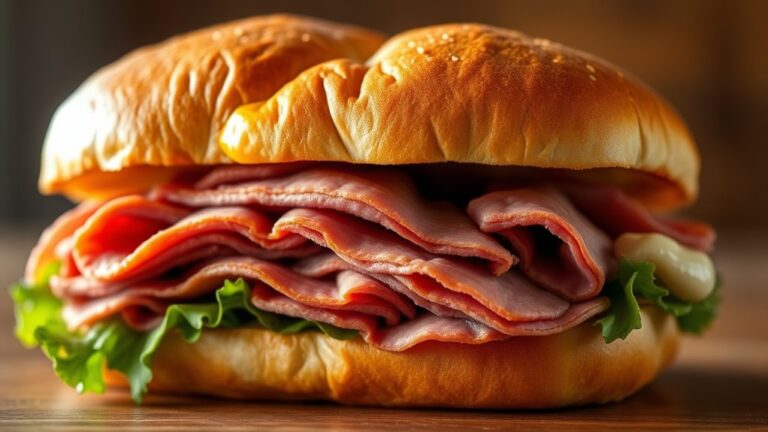
To guarantee your brisket stays juicy and tender, it’s essential to slice it with care. Use a sharp, long knife and cut against the grain to make sure each slice is tender and easy to chew. Resting your brisket allows the juices to settle, preventing them from running out when you cut.
When slicing, aim for even, thin slices—about 1/4 inch thick—for the best texture. Pay attention to the direction of the muscle fibers; slicing against the grain shortens the fibers, making the meat more enjoyable.
Take your time and don’t rush the process. Proper slicing preserves moisture and enhances flavor, making every bite succulent. Remember, patience and precision are key to serving a perfectly juicy, tender brisket.
Troubleshooting Common Issues When Smoking Brisket in an Electric Smoker
When smoking brisket in an electric smoker, issues can pop up that affect the final result, but many common problems have simple fixes. If your brisket isn’t tender enough, try cooking it longer or bumping up the temperature a bit.
If it’s turning out too dry, wrapping it sooner or spritzing with liquid during smoking can help keep it moist. Over-smoke can overpower the flavor, so reduce the smoke output if it gets too strong.
If the bark isn’t forming properly, check your rub application and airflow to improve it. Lastly, temperature fluctuations can mess with your cook, so use a reliable thermometer and avoid opening the smoker too often.
Frequently Asked Questions
Can I Use a Meat Thermometer to Check Brisket Doneness?
Yes, you can definitely use a meat thermometer to check brisket doneness. Just insert it into the thickest part of the meat, making sure to avoid fat and bone.
When the internal temperature reaches around 195-205°F, your brisket is tender and ready to serve. This method helps prevent overcooking or undercooking, so you get perfect results.
Just be patient and check the temperature regularly. Monitoring it ensures you end up with a delicious smoked brisket every time.
How Long Can I Leave Smoked Brisket at Safe Serving Temperatures?
You can leave smoked brisket at safe serving temperatures, usually around 140°F, for up to 2 hours. After that, bacteria can start to grow, so it’s best to keep it hot in a warming drawer or covered with foil.
If you’re not serving it right away, you can also hold it at a warmer temperature, like in a slow cooker set to low, for a few extra hours without affecting safety or quality.
Is It Necessary to Wrap the Brisket During Smoking?
Wrapping your brisket during smoking isn’t necessary, but it can be helpful. If you want to speed up the process or keep the meat moist, wrapping in butcher paper or foil, called the Texas crutch, can prevent the meat from drying out and help it tenderize faster.
However, leaving it unwrapped allows the bark to form better and gives the meat a smoky flavor. It’s all about what texture and taste you prefer.
What Are Common Mistakes to Avoid When Smoking Brisket?
Did you know that nearly 70% of pitmasters report inconsistent brisket results? To avoid common mistakes, don’t rush the process; keep your smoker temperature steady around 225°F.
Avoid cutting into the meat too soon—patience really pays off. Also, remember to trim any excess fat, which helps the brisket cook evenly.
Resist the urge to open the smoker all the time, as this can cause temperature swings. Proper prep and patience are key to getting a tender, flavorful brisket every time.
How Do I Reheat Smoked Brisket Without Drying It Out?
To reheat smoked brisket without drying it out, wrap the meat tightly in foil and add a splash of beef broth or water.
Put it in a preheated oven at 250°F and heat until it’s warmed through, about 20-30 minutes.
You can also reheat slices in a skillet with a bit of moisture or microwave with a damp paper towel over it to keep it tender and juicy.
Conclusion
Think of smoking beef brisket in your electric smoker as creating a flavorful symphony—you’re the conductor guiding each note to perfection. With patience, attention to detail, and these simple steps, you’ll craft a tender, smoky masterpiece that’s totally worth it.
So, fire up your smoker, embrace the process, and enjoy the delicious harmony of your homemade brisket. Your taste buds will thank you for the smoky goodness you’ve brought to life with your electric smoker.