How to Cook Beef Brisket on a Charcoal Grill in 8 Easy Steps
Cooking beef brisket on a charcoal grill might seem daunting, especially if you’re new to grilling or aiming for that perfect smoky flavor. You’re not alone—many people struggle with getting the brisket just right, balancing tenderness and flavor.
But don’t worry, with a few simple steps, you can master this delicious cut.
To cook beef brisket on a charcoal grill, start by trimming excess fat and seasoning it generously with your favorite rub.
Set up your grill with a two-zone fire—direct and indirect heat—and choose charcoal based on your flavor preference.
Control the temperature by adjusting vents and adding coals as needed, aiming for around 225°F.
Cook low and slow, wrap halfway if desired, then let it rest before slicing against the grain.
More tips await to perfect your technique.
Key Takeaways
- Prepare and season the brisket, then let it sit at room temperature before grilling.
- Set up a two-zone fire with indirect heat and a water pan to help control the temperature.
- Keep the heat steady and low, around 225°F, and manage the charcoal to maintain consistent cooking.
- Wrap the brisket halfway through cooking. This helps to lock in moisture and makes the meat tender.
- Once done, let the brisket rest before slicing. Always cut against the grain for juicy, tender slices with even thickness.
How to Prepare Your Brisket for Grilling
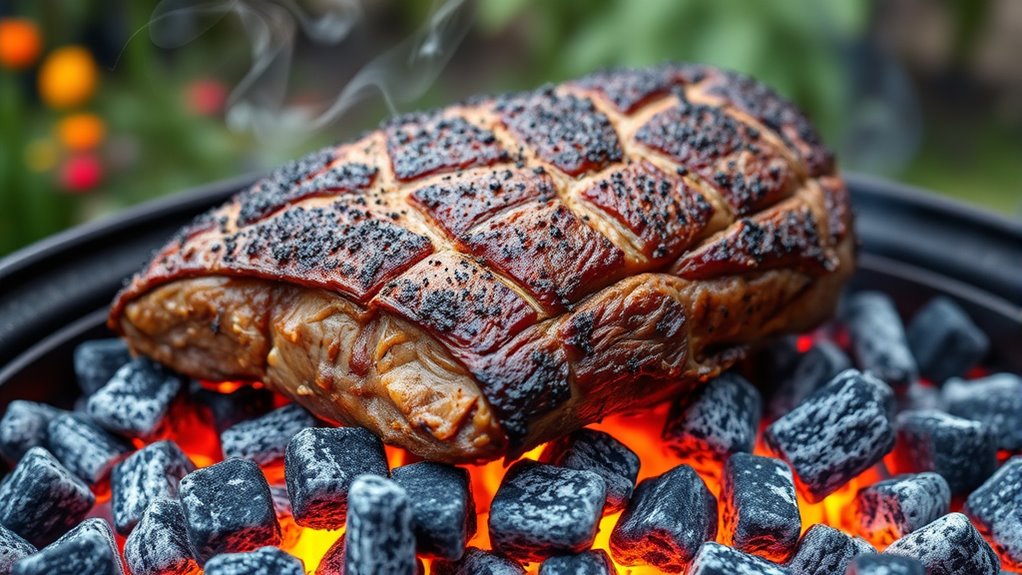
Before you start grilling, it’s essential to prepare your brisket properly. First, trim excess fat, leaving about a quarter-inch layer to keep the meat moist and flavorful. Remove any silver skin or tough connective tissue that can hinder tenderness.
Next, season your brisket generously with a dry rub or marinade, making certain all sides are coated evenly. Let it sit at room temperature for about 30 minutes to an hour; this helps it cook more evenly.
If you prefer, you can also apply a mustard or vinegar-based binder to help the rub adhere better. Proper preparation guarantees your brisket will stay juicy and develop a flavorful crust during grilling.
Taking these steps now sets the foundation for tender, delicious results later.
Choosing the Best Charcoal and Setting Up Your Grill
Choosing the right charcoal can really impact the flavor and how well you can control the temperature.
You want to set up your grill so the heat spreads evenly, with some coals arranged for indirect cooking.
Keep an eye on the fuel amount to keep a steady temperature throughout your brisket cook.
Charcoal Type Selection
Selecting the right type of charcoal is key to getting that perfect smoky flavor and consistent heat during your cookout.
Lump charcoal burns hotter and faster, giving a natural, smoky taste that really enhances the beef brisket. It’s great if you want quick ignition and a more open, smoky profile.
Briquettes, on the other hand, burn longer and more evenly, making them perfect for low-and-slow cooking. They also produce less ash and keep steady heat for hours.
You can mix both types to get a balance of quick heat and lasting burn. Avoid using lighter fluid, as it can taint the flavor. Instead, go for natural starters or chimney starters to keep your charcoal clean and chemical-free.
Proper Grill Setup
The key to a successful brisket cook starts with setting up your grill properly. Begin by arranging your charcoal to create a two-zone fire: pile most of the coals on one side for direct heat, leaving the other side empty for indirect cooking. Use quality charcoal, like lump or briquettes, for consistent heat.
Light the coals and let them burn until they’re covered with a light gray ash, which means they’re ready. Place an aluminum drip pan filled with a bit of water beneath the grate on the indirect side to help regulate temperature and catch drippings.
Make sure the grill’s vents are open to control airflow, which influences temperature stability throughout your cooking process.
Fuel Amount Control
To guarantee consistent heat and ideal results, you need to control the amount of charcoal you use and how you set it up. Using the right amount ensures your grill stays at a steady temperature throughout the cook. Start by choosing high-quality lump charcoal or briquettes for better combustion.
Here’s how to manage it:
Use about half a chimney of charcoal for indirect heat, adding more if needed. Arrange the coals in a two-zone setup—one side for direct heat, one for indirect. Light the charcoal evenly and let it ash over before placing it on the grill.
Adjust the vents to regulate airflow, controlling the temperature precisely. Proper fuel control keeps your brisket tender and smoky.
Making a Flavorful Rub and Seasoning for Your Brisket
To create a flavorful rub, you’ll want to combine essential spices like paprika, garlic powder, and black pepper.
Balancing sweet and savory elements, such as brown sugar and salt, helps bring out the meat’s natural flavor.
Feel free to adjust these ingredients to match your taste for a perfect, well-rounded seasoning.
Essential Spice Combinations
Creating a flavorful rub for your brisket starts with a balanced blend of spices that enrich its natural richness. Focus on combining ingredients that pack flavor without overpowering the meat’s profile.
Here are essential spice combinations to try:
- Paprika, garlic powder, onion powder, and black pepper – this classic mix is versatile and adds smoky, savory notes.
- Cumin, chili powder, cayenne, and brown sugar – for a bold, spicy, and slightly sweet kick.
- Mustard powder, coriander, smoked paprika, and salt – offers a tangy and smoky depth.
- Dried thyme, rosemary, black pepper, and sea salt – provides an herbaceous, robust flavor.
Mix these spices in equal parts or customize to your taste. Apply generously for a flavorful crust.
Balancing Sweet and Savory
Achieving a perfect balance of sweet and savory flavors is key for a flavorful brisket rub. You want to enhance the meat without overwhelming it.
Combine ingredients like brown sugar or honey for sweetness with salt, garlic, and smoked paprika for depth. Adjust the proportions to suit your taste—more sugar for a caramelized crust, more salt for richness.
Here’s a simple guide:
| Sweet Ingredient | Savory Ingredient | Flavor Impact |
|---|---|---|
| Brown Sugar | Garlic Powder | Adds warmth and sweetness |
| Honey | Smoked Paprika | Creates smoky sweetness |
| Maple Syrup | Onion Powder | Deepens flavor |
| Molasses | Black Pepper | Adds boldness |
| Cinnamon | Cumin | Brings complexity |
Controlling Charcoal for Indirect and Direct Heat
Controlling the charcoal setup is key to managing both indirect and direct heat during your brisket cook. Proper placement lets you sear and slow-cook with ease. Here’s how to do it:
Create a two-zone fire by piling coals on one side for direct heat, leaving the other side empty for indirect heat. This setup gives you flexibility during the cook.
Adjust the vent settings by opening them for higher heat or closing slightly to lower the temperature. Small changes can make a big difference.
Use a water pan on the indirect side to help keep the temperature steady and add moisture. It’s a simple trick to prevent your brisket from drying out.
Manage the amount of charcoal by adding or removing coals as needed. Keeping the heat steady is especially important during long cooks.
Mastering these controls ensures your brisket cooks evenly and stays tender from start to finish.
Maintaining the Perfect Temperature Throughout Cooking
Maintaining a consistent temperature is key to cooking your brisket perfectly. Regularly check your grill’s temperature with a reliable thermometer. Keep the coals spread evenly and add charcoal as needed to stay around 225-250°F.
Use vent adjustments to control airflow—more oxygen raises the temperature, while closing vents lowers it. Try not to open the lid too often because that causes temperature swings. If the heat drops, add a few lit coals and tweak the vents right away.
If it gets too hot, close the vents a bit or remove some coals. Keeping the heat steady ensures even cooking and prevents your brisket from drying out or undercooking. Stay attentive and make small adjustments to maintain the perfect temperature throughout.
Tips for Achieving Tender, Juicy Brisket
Once you’ve kept the temperature steady, the next step is to focus on methods that make your brisket tender and juicy. To do this, consider these tips:
- Use a marinade or rub: Apply a flavorful marinade or rub overnight. This helps the meat soak up flavor and retain moisture.
- Maintain moisture during cooking: Keep a water pan nearby or spritz the brisket with water occasionally. This prevents it from drying out.
- Cook low and slow: Keep the temperature around 225°F and cook for several hours. This breaks down connective tissues and keeps the meat juicy.
- Wrap the brisket: Wrap it in foil or butcher paper halfway through cooking. This locks in moisture and helps it become tender faster.
Following these tips will help you end up with a moist, tender, and flavorful brisket.
Resting and Slicing Your Grilled Brisket for Maximum Flavor
After removing the brisket from the grill, it’s important to let it rest for at least 30 minutes before slicing. Resting helps the juices redistribute throughout the meat, making each slice moist and flavorful.
Place the brisket on a cutting board and loosely tent it with foil to keep it warm. During this time, avoid slicing; just let the meat relax.
When you’re ready to serve, cut against the grain to maximize tenderness. Use a sharp knife for clean, even slices.
Proper resting and slicing keep the meat juicy and enhance the smoky flavor. This ensures every bite is tender and full of taste.
Following these steps guarantees you enjoy every mouthful with maximum tenderness and flavor.
Troubleshooting Common Brisket Grilling Issues
Are you struggling with your brisket not turning out as expected? Here are some common issues and how to fix them:
- Dry or Tough Meat: Make sure you’re cooking low and slow. Keep the temperature steady to break down connective tissues without drying out the meat.
- Uneven Cooking: Use a reliable thermometer and rotate the brisket during cooking. This helps promote even heat distribution.
- Too Much Smoke or Bitter Flavor: Keep your charcoal and wood chunks fresh. Avoid over-smoking, as it can create bitter tastes.
- Poor Bark Formation: Apply a thin layer of oil or binder before seasoning. Try not to open the lid too often so the crust can develop properly.
Fix these issues, and you’ll end up with a perfectly smoked, tender brisket.
Frequently Asked Questions
How Long Does It Typically Take to Cook a Beef Brisket on a Charcoal Grill?
It usually takes about 1.5 to 2 hours per pound to cook a beef brisket on a charcoal grill at a steady temperature of around 225°F.
Plan for a total cooking time of roughly 6 to 12 hours, depending on the size of your brisket and how well your grill keeps heat.
Make sure to use a meat thermometer to check that the internal temperature reaches 190 to 205°F for the best tenderness.
Can I Use Wood Chips With Charcoal for Added Flavor?
Yes, you can definitely use wood chips with charcoal for added flavor. Soak the chips in water for about 30 minutes, then scatter them over the hot coals.
This creates a smoky aroma that elevates your brisket’s taste. Keep the lid closed to trap the smoke and replenish the chips as needed.
Using wood chips is an easy way to infuse your brisket with a rich, smoky flavor.
What Are Some Common Mistakes to Avoid When Grilling Brisket?
You should avoid rushing the process, as brisket needs time to become tender. Don’t forget to keep a consistent temperature because fluctuations can lead to uneven cooking.
Cutting into the meat too early can let the juices escape, so try to resist that urge. Also, steer clear of using too much heat or adding lots of wood chips at once, which can cause burning and bitter flavors.
Patience and steady heat are essential for a perfect brisket.
How Do I Store Leftover Brisket Safely?
Think of leftover brisket as treasure you want to protect. Wrap it tightly in aluminum foil or put it in an airtight container, then refrigerate within two hours of cooking.
For longer storage, freeze it. This keeps the meat moist and safe from spoilage, kind of like safeguarding precious gems.
Reheat thoroughly before enjoying again, and you’ll preserve its flavor and texture. Each bite will stay delightful.
Is It Necessary to Wrap the Brisket During Grilling?
Wrapping your brisket during grilling isn’t necessary, but it can help you get a tender, juicy result.
If you want more moisture and a softer bark, wrap it in foil or butcher paper halfway through cooking.
This technique, called the Texas crutch, traps moisture and speeds up the cooking process.
However, if you prefer a crispier exterior, leave it unwrapped and keep an eye on your grill’s temperature.
Conclusion
As you carve through your perfectly grilled beef brisket, remember each slice is a tribute to patience and care. It’s like a story unfolding with every cut.
The smoky aroma and tender bite symbolize your dedication, transforming simple ingredients into a memorable feast.
With every bite, you’re not just tasting dinner; you’re savoring the journey of fire, flavor, and time.
Welcome this moment and let your grilled beef brisket be a symbol of your grilling prowess and passion.