
How to Tell if a Chicken Egg Is Fertile With a Step-By-Step Guide
Many chicken owners want to know if their eggs are fertilized, especially when aiming to hatch chicks. It can be confusing and frustrating to figure out if an egg has potential without cracking it open or risking the hatch. You’re not alone—many people struggle with identifying fertile eggs and improving hatch success.
To tell if a chicken egg is fertile, start by inspecting it for cleanliness and intactness, feeling its weight for heftiness.
Crack it into a bowl to spot a defined yolk or germinal disc, though these signs aren’t always sure.
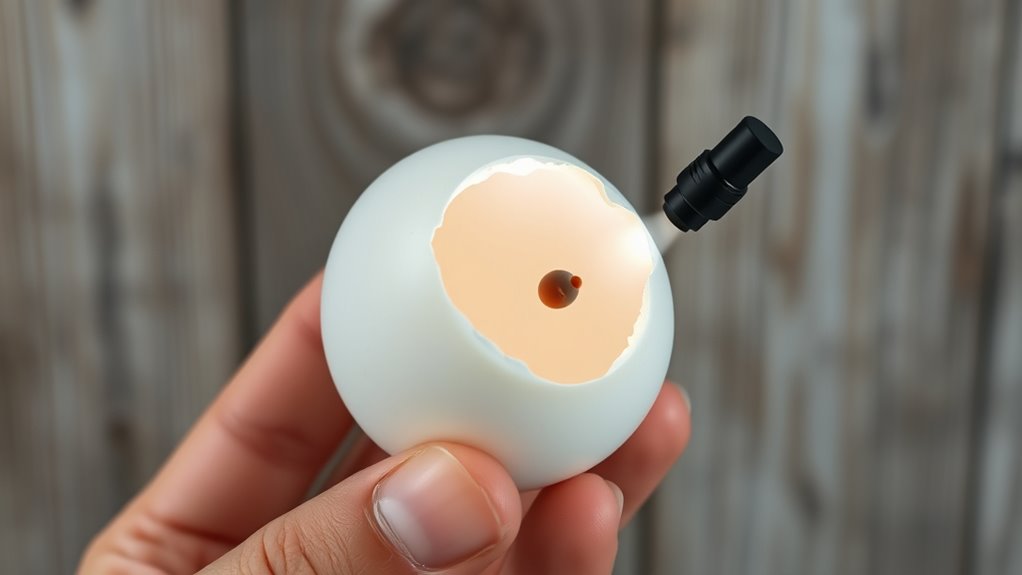
Candle the egg in a dark room by shining a bright light from the larger end to observe blood vessels or dark spots indicating embryo development.
For more detailed steps, continue exploring how to improve your chances of hatching success.
Key Takeaways
- Check the eggshells for any cracks or dirt. You want the shell to be clean and intact before testing.
- Next, candle the egg in a dark room. Look inside for tiny blood vessels or a dark spot—that’s a good sign of fertility.
- You can also do the float test. Gently place the egg in a bowl of water. If it sinks or lies flat on its side, it’s probably fertile.
- Feel the weight of the egg. Heavier eggs tend to be more likely fertile, but it’s not a guarantee.
- Keep handling to a minimum and make sure the incubation conditions are just right. This helps any developing embryo grow strong.
How to Recognize a Fertile Egg Before Incubation
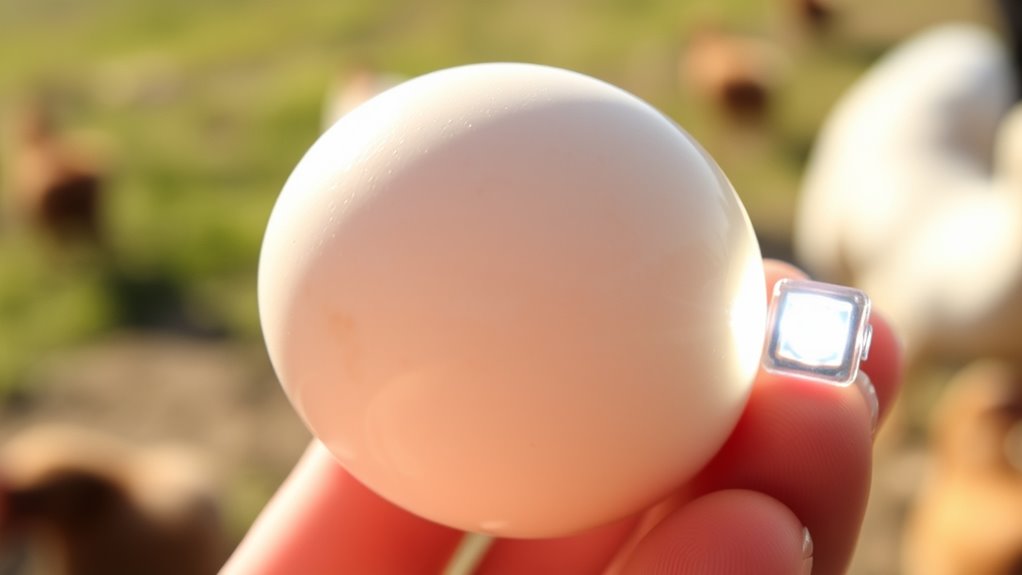
Before you start incubation, it’s good to check if your eggs are fertile. One way is to look at the eggshell for signs of freshness, like a clean, uncracked surface.
Check eggs for fertility by inspecting for cleanliness and intact shells before incubation.
You can also do a candling process after about a week of incubation. But before that, try gently holding the egg to feel its weight; a fertile egg tends to feel heavier because of the developing embryo inside.
Another method is cracking the egg into a clean bowl to look at the yolk and white. A fertile egg usually has a more defined yolk and might show a small white spot called the germinal disc.
Keep in mind, these signs aren’t foolproof, but they can help you make an educated guess about whether your eggs are fertile.
Understanding How Chickens Fertilize Eggs
Chickens fertilize eggs through a natural process that happens during mating, when the rooster transfers sperm to the hen’s reproductive tract. The sperm then travels to the hen’s oviduct, where it can fertilize an egg before the shell begins to form.
Once fertilized, the egg develops embryo-like structures inside, but it won’t hatch unless incubation occurs. Here’s a quick overview:
| Stage | Description |
|---|---|
| Mating | Rooster mates with hen, transferring sperm |
| Fertilization | Sperm meets egg in the oviduct |
| Egg Formation | Egg gets coated with shell after fertilization |
Understanding this process helps you recognize how fertilization happens naturally in your flock.
How to Candle an Egg and Check for Fertility
Candle an egg by shining a bright flashlight or candling light through its shell in a dark room. Hold the egg carefully, with the larger end facing the light.
Look for signs of fertility inside. A fertile egg will show a network of blood vessels and a dark spot called the embryo, especially around days 4 to 7 of incubation.
If the egg is infertile, it will appear clear or uniform without any blood vessels or dark spots. You might see a small, whitish ring called the germinal disc, which indicates fertility.
Make sure to handle the egg gently to avoid damage. Candle regularly over the incubation period to monitor development progress.
Discard eggs that show no signs of fertility after a few candling attempts.
Performing the Float Test to Confirm Fertility
The float test is an easy way to check if an egg might be fertile, but understanding how it works is important. You’ll want to follow a proper testing procedure to get accurate results.
Once you perform the test, you’ll learn how to interpret what the different float positions mean for fertility. It’s a simple tool that can give you some useful insights.
Understanding the Float Test
Performing the float test is a simple way to see if an egg is fertile. It works by looking at how the egg’s inside interacts with water. When you put an egg in a bowl, its position gives you some clues.
A fresh, fertile egg usually sinks and lies flat on its side because the air pocket inside hasn’t grown much. If the egg floats or stands upright, it means the air pocket has expanded, which usually means the egg is old or not fertile.
This test isn’t perfect but gives a quick visual hint about the egg’s condition. Keep in mind, it’s best to use this with other methods to get a clearer picture of egg freshness and fertility.
Proper Testing Procedure
To accurately perform the float test, start by gently placing the egg in a bowl of room-temperature water, making sure it’s fully submerged. Watch closely as the egg reacts to get clues about its fertility.
- Observe its position: If it sinks and lies flat on its side, that’s a good sign—this egg is likely fertile.
- Notice if it stands upright: An egg that stands up indicates it’s older but could still be fertile.
- See if it floats: If it rises to the surface, it’s probably infertile or spoiled. That’s disappointing but useful to know.
Performing this test carefully helps you quickly identify fertile eggs, giving you confidence in your breeding process. Stay attentive, and you’ll be able to tell which eggs have the potential to hatch.
Interpreting Test Results
After you’ve finished the float test, it’s time to understand what the results mean for your eggs.
If the egg sinks and lies flat on its side, it’s probably fertile. The yolk and albumen settle at the bottom, which is a good sign.
If it stands upright or tilts, it might be less fertile or infertile. Keep in mind, freshness can also influence this.
When the egg floats to the top, it’s likely infertile or spoiled because the air cell inside has grown larger over time.
Remember, float tests aren’t foolproof. Use them as a helpful guide, but consider candling or cracking the egg for more certainty if needed.
Getting the interpretation right helps you make better decisions about incubation and handling your eggs.
Common Mistakes When Checking Egg Fertility
One common mistake when checking egg fertility is rushing the process or not giving the eggs enough time to develop properly. If you hurry, you might misinterpret the results or miss signs of fertility altogether.
Here are three mistakes to avoid:
- Peeking too early – checking too soon can show an undeveloped embryo or no signs at all, leading to false negatives.
- Handling eggs excessively – overhandling can damage the delicate contents, affecting development and accuracy.
- Ignoring temperature and lighting – improper conditions can obscure clear results and cause confusion.
Patience and proper technique are key. Taking your time guarantees you accurately assess fertility and avoid unnecessary frustration or mistakes.
Tips to Maximize Your Hatch Success
Guaranteeing your eggs hatch successfully requires careful attention to several key factors. First, keep the temperature steady at around 99.5°F (37.5°C) and humidity between 50-55% during incubation.
Proper turning of eggs, at least three times daily, helps prevent the embryo from sticking to the shell. Use a reliable incubator to maintain stable conditions and check the settings regularly.
Choose fertilized eggs from healthy, well-nourished hens and roosters to improve your hatch rates. Store eggs at proper temperatures before incubation, avoiding extreme cold or heat.
Keep eggs clean and handle them gently to prevent damage. Make sure the incubator is well-ventilated so fresh oxygen is always available.
Following these tips can really boost your chances of a successful hatch.
Troubleshooting Fertility Issues in Your Flock
Even when you follow all the proper incubation steps, fertility issues can still come up in your flock. Recognizing the signs early can save you time and boost your chances of success. Here are some key issues to watch for:
- Low hatch rates. If most eggs don’t develop or hatch, your hens might be infertile or your rooster’s mating habits aren’t working well.
- Uneven or no shell formation. Poor shell quality could mean nutritional deficiencies or health problems that are affecting fertility.
- Lack of mating behavior. If hens aren’t showing signs of courtship or mating, it might be due to age, health issues, or social imbalance.
Address these problems quickly to keep your flock healthy and improve fertility rates.
Frequently Asked Questions
How Long Does It Take for a Fertilized Egg to Develop?
A fertilized egg takes about 21 days to develop fully into a chick. During this time, the embryo grows quickly, and you can see changes inside the egg if you candle it.
You can check the progress around day 7 or 10 by candling, which shows blood vessels and a developing embryo. Patience is important, and keeping the right temperature and humidity helps ensure healthy development throughout incubation.
Can a Hen Lay Fertile Eggs Without a Rooster?
You might think hens can lay fertile eggs without roosters, but that’s a myth. Without a rooster, eggs won’t be fertilized, so they’re just for eating.
Roosters are necessary for fertilization because they mate with hens to produce fertile eggs. If you want chicks, you’ll need both a hen and a rooster.
Without him, your eggs are infertile and won’t develop into chicks.
What Are Signs of a Non-Fertile Egg During Incubation?
You’ll notice a non-fertile egg during incubation if it stays the same in appearance and shows no signs of embryo development.
When candled, a non-fertile egg looks clear or might have a blood spot but no veins or growing embryo.
Sometimes, the shell can seem dull or rough compared to fertile eggs.
If you see no movement or growth after several days, it’s probably non-fertile.
How Does Diet Affect Egg Fertility?
Your diet directly impacts egg fertility by providing essential nutrients needed for healthy reproduction. If you feed your chickens a balanced mix of proteins, grains, and calcium, their reproductive systems work effectively, increasing the chances of fertile eggs.
Avoiding deficiencies like calcium or vitamin E can prevent fertility issues. Make sure they get fresh, clean water and high-quality feed, which support overall health and help improve egg fertility.
Can You Reuse Eggs From a Non-Fertile Batch?
You can reuse eggs from a non-fertile batch, but it’s like trying to plant seeds that never sprouted—they won’t develop into chicks. The eggs are safe to eat, but they won’t hatch.
Keep in mind, reusing eggs doesn’t improve their fertility chances. Instead, focus on maintaining healthy hens and proper incubation if hatching is your goal.
Reusing eggs is fine for eating, but it won’t turn non-fertile eggs into fertile ones.
Conclusion
Now that you’re armed with the secrets of egg fertility, you can confidently navigate the journey from shell to chick. Think of yourself as a detective uncovering hidden treasures within each egg or a gardener nurturing tiny miracles waiting to blossom.
With patience and keen eyes, you’ll turn plain eggs into a symphony of life. So go ahead—crack open new possibilities and watch your flock’s future hatch and flourish before your very eyes. Understanding how to tell if a chicken egg is fertile makes all the difference in raising healthy, vibrant chicks.