10 Essential Tips to Pack Your Kitchen for Moving
Moving your kitchen can feel overwhelming—there’s so much to pack, organize, and protect. You’re not alone; many people struggle with making the process smooth and stress-free.
Luckily, with a little planning, you can make packing your kitchen easier and more efficient.
To pack your kitchen efficiently, start by decluttering and organizing your items by type and usage. Gather sturdy boxes, bubble wrap, and tape, labeling everything clearly.
Wrap fragile items individually and secure appliances with original packaging or blankets. Pack heavy items at the bottom and lighter ones on top, maximizing space and protecting your belongings.
Prioritize unpacking essentials first to settle in quickly. For all these tips and how to avoid common mistakes, keep exploring further.
Key Takeaways
- Declutter and organize your kitchen items first. This makes packing easier and helps reduce clutter during the move.
- Use good quality packing supplies. Clearly label each box and wrap fragile items individually to keep them safe.
- When packing appliances, make sure to unplug and clean them beforehand. Secure moving parts with tape or zip ties so they don’t get damaged.
- Prioritize unpacking essentials like utensils, dishes, and cleaning supplies. These are the items you’ll need right away once you arrive.
- Before you finish, do a final walkthrough. Double-check that all items are packed and labeled properly.
- Maximize your box space by packing efficiently. This will make the move smoother and help everything fit better.
Declutter and Organize Your Kitchen Before Moving
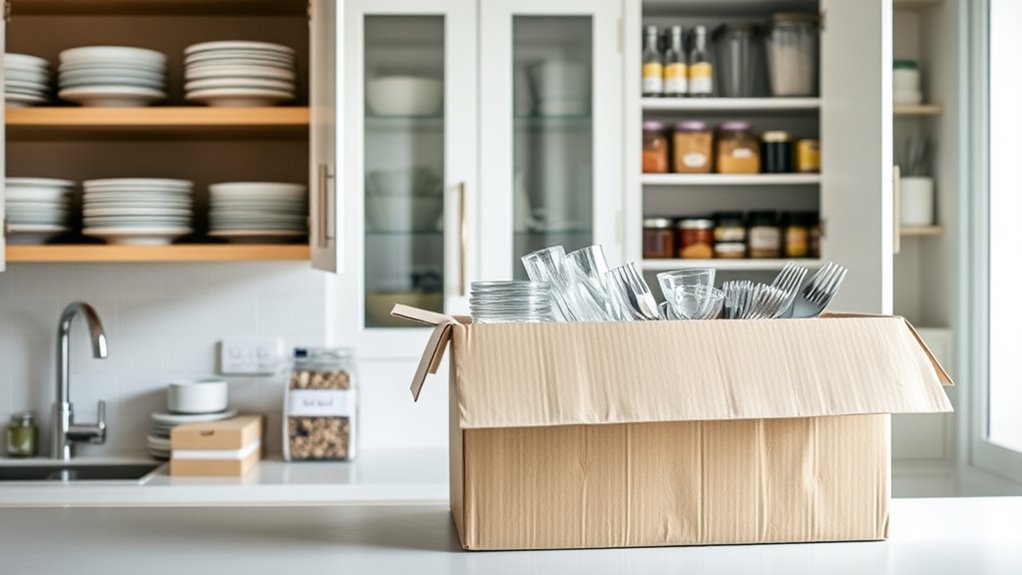
Before you start packing, take some time to declutter and organize your kitchen. Go through your cabinets, drawers, and countertops, and set aside items you no longer need or use.
This step helps reduce what you have to pack and makes unpacking easier later. Sort your belongings into keep, donate, or discard piles.
Clear out expired food, broken utensils, and duplicate gadgets. Organize your remaining items by type and how often you use them.
Use storage bins or baskets to group similar items together. This process streamlines packing, saves space, and ensures you only take what’s necessary.
A tidy, organized kitchen now makes packing faster and less stressful.
Prepare Your Packing Supplies for Kitchen Items
Before you start packing, gather high-quality boxes, bubble wrap, packing paper, and tape.
Organize these supplies in an accessible way to make your packing easier.
Having the right materials ready makes protecting your kitchen items much simpler.
Gather Quality Packing Materials
To guarantee your kitchen items stay safe and intact during the move, gathering high-quality packing materials is essential. Invest in sturdy boxes that can withstand the weight of heavier items like small appliances and canned goods.
Use bubble wrap or packing paper to protect fragile items such as glassware and china. Reinforce boxes with packing tape to prevent them from opening or collapsing.
Consider specialty containers, like dish pack boxes, for added security. Don’t forget to get labels and markers to clearly identify contents and handle with care.
Using quality packing materials not only safeguards your belongings but also makes unpacking easier. Skimping on these supplies might lead to damages or breakage, which can be costly and frustrating during your move.
Organize Supplies Efficiently
Getting your packing supplies organized early sets the tone for a smooth kitchen move. Gather all your boxes, tape, markers, and padding in one spot.
Group similar items together—plates, glasses, utensils—so you can pack systematically. Label boxes clearly to avoid confusion later.
Keep frequently used items accessible so you can unpack them first. To help you prioritize, consider this grid:
| Essential Supplies | Non-Essential Supplies |
|---|---|
| Heavy-duty boxes | Extra packing paper |
| Markers for labels | Bubble wrap |
| Tape dispensers | Spare boxes |
| Padding materials | Decorative dishes |
Staying organized means you won’t waste time searching for supplies or repacking. Proper prep reduces stress and keeps your move on track.
How to Pack Fragile Items Safely to Prevent Breakage
Handling fragile items with care is essential to prevent breakage during your move. Wrap each item individually with bubble wrap, packing paper, or soft cloths. Secure the wrapping with tape, but avoid sticking tape directly on delicate surfaces.
Use sturdy boxes that fit snugly, filling gaps with packing peanuts or crumpled paper to prevent shifting. Label these boxes clearly as “Fragile” on all sides. When stacking, place heavier items at the bottom and lighter ones on top.
Handle boxes gently, and avoid overpacking to reduce pressure. Take your time during packing to guarantee each item is well-protected. Properly packed fragile items minimize the risk of damage, making your move smoother and less stressful.
The Best Way to Pack Utensils, Gadgets, and Small Items
To pack your utensils, gadgets, and small items efficiently, start by choosing the right packing materials like sturdy boxes and padding. Keep similar items together by category to make unpacking easier.
Be sure to label each box clearly. This helps ensure everything stays protected and organized during the move. A little organization goes a long way in making your move smoother.
Use Appropriate Packing Materials
Choosing the right packing materials is essential to protect your utensils, gadgets, and small items during your move. Start with sturdy, corrugated boxes that can handle stacking and rough handling.
Use bubble wrap or packing paper to cushion fragile items, preventing cracks and breaks. For small gadgets and delicate tools, consider dividing them into smaller containers or padded zip-lock bags to stay organized and secure.
Specialty items like knives or electronics may need foam padding or custom inserts. Avoid overpacking boxes, which can cause damage or make them too heavy to lift safely.
Label each box clearly with its contents and handling instructions. Using the proper packing materials guarantees your belongings arrive intact and ready to unpack.
Organize by Category
Organizing your small items by category is the most efficient way to pack and unpack your kitchen. Group similar items together, like utensils, gadgets, or small tools, to make things easier. Use sturdy containers or boxes for each category to keep everything organized and protected.
This method speeds up unpacking and helps you find what you need quickly. It’s a simple way to stay organized and save time when packing or unpacking your kitchen.
Label Clearly
Labelting your boxes clearly is essential for a smooth move, especially when packing small items like utensils and gadgets. Use bold, legible labels on all sides of each box so you can easily identify their contents without opening them.
Be specific—write “Utensils,” “Kitchen Gadgets,” or “Small Items” to avoid confusion. For added organization, consider color-coded labels or stickers for different categories or rooms.
This helps you quickly locate essential items during unpacking. Also, label boxes with handling instructions if they contain fragile or delicate items.
Clear labeling saves time, reduces stress, and prevents unnecessary unpacking. It makes the entire moving process more efficient, ensuring your small kitchen items are easy to find and settle into their new home.
How to Pack Large Appliances and Heavy Kitchen Items
Packing large appliances and heavy kitchen items requires careful planning to prevent damage and injury. Start by unplugging appliances and cleaning them thoroughly to avoid spills during transport. Secure all moving parts, like knobs and doors, with tape or zip ties to prevent breakage.
Use the original packaging if available. If not, wrap appliances with thick moving blankets or bubble wrap for extra protection. Heavy items like pots, pans, and canned goods should be packed in sturdy boxes with ample padding to prevent shifting.
Always lift with your legs, not your back, and ask for help when moving bulky items. Label boxes clearly to identify fragile or heavy items, making unpacking safer and more organized.
Label and Categorize Your Kitchen Boxes for Easy Unpacking
To make unpacking easier, it’s really helpful to label and categorize your kitchen boxes clearly as you pack. Use a permanent marker to write the contents and the room on each box.
Color-coding can help you see at a glance what’s inside. Assign different colors for dishes, utensils, pantry items, and small appliances to make sorting faster.
Create a packing list or inventory for quick reference, especially for fragile or valuable items. Group similar items together so you can find what you need first when unpacking.
Don’t forget to mark boxes with fragile items as “FRAGILE” to remind handlers to be careful. Proper labeling saves you time, reduces stress, and makes unpacking more efficient without rummaging through boxes.
Tips to Maximize Space and Protect Your Kitchen Items
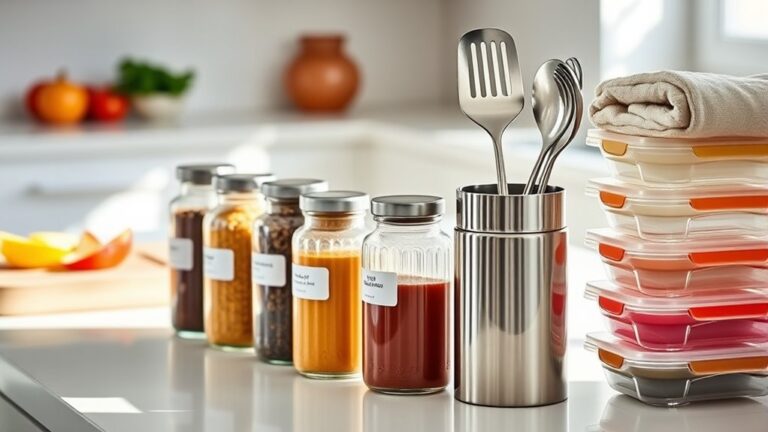
Maximize your space by carefully arranging your kitchen items to fit efficiently into each box. Use smaller containers or zip-top bags for loose items like spices, utensils, or small gadgets to prevent shifting during transport.
Wrap fragile items individually with bubble wrap or packing paper. Pad the insides of boxes with crumpled paper or towels to prevent damage. Place heavier items at the bottom of the box and lighter ones on top to maintain stability.
Utilize every inch by stacking items tightly without forcing them, which minimizes movement and saves space. Keep similar items grouped together to make unpacking easier.
What to Unpack First When Setting Up Your Kitchen
When you start unpacking your kitchen, focus on the essentials you’ll need immediately. Begin with items like your coffee maker, kettle, and basic utensils—these help you start your day without hassle.
Unpack a few plates, bowls, and mugs so you can eat and hydrate comfortably. Keep your most-used pots and pans accessible for quick meal prep.
Unpack essential dishes and cookware for easy eating and quick meal preparation.
Don’t forget to set aside dish soap, sponges, and paper towels for cleaning up. Organize these items in a designated area to streamline your first few days.
Avoid unpacking everything at once; prioritize what you’ll need for cooking, eating, and cleaning. This approach minimizes clutter and helps you settle in faster, making the adjustment smoother.
Common Kitchen Packing Mistakes to Avoid
Many people make the mistake of packing fragile kitchen items without proper protection, which often leads to breakage during transit. Avoid rushing through packing these delicate items; instead, wrap each with bubble wrap or packing paper. Using insufficient cushioning increases the risk of damage.
Another common mistake is overpacking boxes, making them too heavy to carry safely. Be sure to distribute weight evenly and use smaller boxes for heavy items. This will make moving easier and safer.
Furthermore, neglecting to label boxes clearly can cause confusion and misplaced items once you arrive. Don’t forget to pack essential items separately for easy access upon arrival, rather than stuffing everything into one box.
Finally, skipping inventory or not organizing your boxes can lead to frustration during unpacking. Carefully plan and execute your packing to prevent these avoidable errors.
Final Checklist: Getting Your Kitchen Ready for the Move
Preparing your kitchen for the move requires a final checklist to make sure everything is packed, organized, and ready to go. First, double-check that all dishes, cookware, and utensils are securely packed in sturdy boxes, with each one clearly labeled.
Empty and clean the refrigerator and pantry, discarding expired items and any non-essentials. Wrap fragile items with bubble wrap or packing paper to prevent breakage during transport.
Disconnect and clean appliances like the microwave or coffee maker, and pack their cords separately so nothing gets lost. Gather essential items you’ll need right away at your new home, such as a few dishes, utensils, and basic spices, and pack them separately.
Finally, do a walkthrough to make sure no items are left behind and everything is properly labeled for easy unpacking.
Frequently Asked Questions
How Can I Prevent Pests From Invading My Kitchen Boxes During Transit?
To prevent pests from invading your kitchen boxes during transit, start by thoroughly cleaning and drying all items before packing. This helps remove any food residues or odors that might attract pests.
Use airtight containers for food and seal all boxes tightly. Consider adding pest-repellent sachets or mothballs inside boxes, but make sure they’re safe for food items to avoid contamination.
Keep boxes off the floor and away from walls. Also, avoid storing open or unsealed packages, as these can attract pests and make your boxes more vulnerable during transit.
What Is the Best Way to Handle Expired or Unused Kitchen Items?
When handling expired or unused kitchen items, think of your cabinet as a garden that needs extra care. You should regularly prune and remove dead or unnecessary plants.
Likewise, dispose of expired foods responsibly and donate usable items to charity. My friend once found a jar of pickles from five years ago. She tossed it immediately, realizing keeping outdated items can clutter your space and pose health risks.
How Do I Protect Delicate Electronic Kitchen Gadgets From Damage?
To protect delicate electronic kitchen gadgets, start by unplugging and thoroughly cleaning them.
Wrap each device with bubble wrap or foam padding, making sure to cover all sides.
Place the gadgets in sturdy boxes filled with plenty of packing material to prevent movement.
Label the boxes clearly so you know to handle them with extra care.
Make sure the boxes are sealed tightly and kept upright during transit to avoid damage.
Are There Eco-Friendly Packing Options for Kitchen Items?
Imagine wrapping your fragile dishes in soft, recycled paper, then securing them with biodegradable tape. Eco-friendly packing options like these protect your kitchen items and the planet.
You can also use old towels or cloth napkins as padding. This reduces waste and helps you avoid plastic materials altogether.
Choose bamboo or recycled cardboard boxes for transporting your items. These sustainable choices make your move greener while keeping your belongings safe and sound.
How Can I Efficiently Pack and Store Food Items Temporarily?
You should start by sorting and discarding expired or unneeded food. Use sturdy, reusable containers or sealable bags to pack non-perishable items, labeling them clearly.
For perishables, prioritize refrigeration or freezing and pack them in insulated coolers with ice packs. Keep food organized by categories, and pack heavier items on the bottom.
This approach guarantees efficiency, safety, and easy access during your move.
Conclusion
Think of your kitchen as a treasured garden, each item a delicate bloom waiting for new soil. With careful planning and gentle handling, you’ll nurture this space through the move.
Make sure every utensil, gadget, and appliance blooms anew in your new home. Trust your preparation, stay organized, and handle everything with love.
Let your kitchen’s journey be a story of growth and renewal. A well-packed, love-filled move turns this chapter into an exciting new beginning.
Main keyword: packing your kitchen for moving