8 Simple Steps to Kill Ants in Your Kitchen
Dealing with ants in your kitchen can be frustrating, and you’re not alone in this struggle. Many people find it challenging to keep these tiny invaders at bay, especially when they seem to appear out of nowhere.
To kill ants in your kitchen, start by identifying their trails and entry points, like cracks or gaps.
Remove food sources by storing food properly, cleaning crumbs, and emptying trash regularly.
Use natural repellents such as vinegar, lemon, or peppermint, and seal entry points with caulk.
Consider placing bait traps or applying safe chemical treatments if needed.
Keep up with these steps consistently, and you’ll find even more effective methods to keep your kitchen pest-free.
Key Takeaways
- Identify and follow ant trails to find where they’re coming in and where their nests are. This way, you can target your treatment more effectively.
- Remove all food sources and give your surfaces a good clean. This helps get rid of anything that might be attracting the ants in the first place.
- Use natural deterrents like vinegar, lemon juice, or peppermint oil. These can disrupt their trails and make your kitchen less inviting.
- Seal up cracks, gaps, and entry points with caulk. Doing this will help keep ants out in the future.
- If needed, apply chemical treatments directly to the trails and entry points. Just make sure to follow the safety instructions on the label.
How to Identify Ant Trails and Entry Points in Your Kitchen
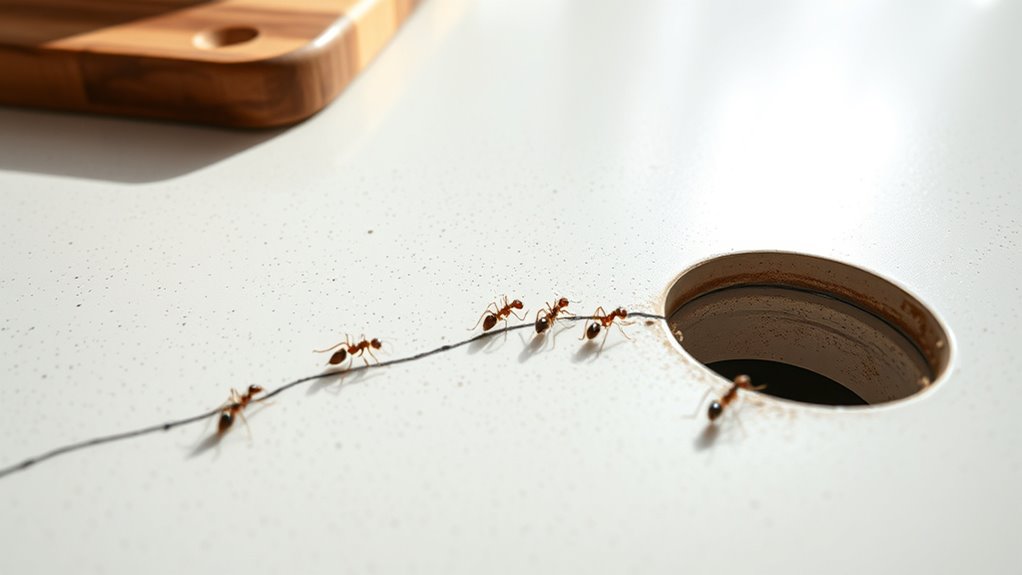
Have you ever wondered how ants find their way into your kitchen? You can spot their trails by looking for fine, zigzagging lines of tiny dirt or food particles. These trails often appear on countertops, walls, or along baseboards.
Follow them to find where ants are entering—look for small cracks, gaps around pipes, or tiny holes in walls and floors. Ants tend to gather near their entry points, so paying close attention helps you locate their nests and pathways.
Sometimes, you’ll see the ants carrying food or following the same route repeatedly. Recognizing these trails and entry spots is key, as it helps you understand how they get inside and where to focus your efforts to block their entry.
How to Remove Food Sources That Attract Ants
Once you’ve found where ants are getting into your kitchen, the next step is to eliminate the food sources that attract them. Store all food in airtight containers, especially sweet or greasy items like sugar, honey, and snacks.
Make sure to clean up crumbs, spills, and sticky residues right away because ants are drawn to these leftovers. Wipe down counters, tables, and floors regularly with soapy water or disinfectant to get rid of scent trails.
Clean up crumbs and spills immediately to prevent ants and eliminate scent trails.
Don’t leave pet food out for long—keep it sealed tightly. Take out the trash often and clean the bin to remove lingering food smells. Check hidden spots like corners, under appliances, and inside cabinets for any leftover food debris.
Getting rid of accessible food sources helps prevent ants from coming back and keeps your kitchen pest-free.
Natural Ways to Control Ants in Your Kitchen
Natural remedies can be an effective and safe way to control ants in your kitchen without using harsh chemicals. You can use common household items like vinegar, lemon juice, or peppermint oil to repel ants.
Spray a mixture of equal parts vinegar and water along ant trails and entry points to disrupt their scent trails. Lemon juice also masks these trails and deters ants when applied around sinks, doorways, and windows.
Peppermint oil, when diluted and placed on cotton balls or sprayed in problem areas, acts as a natural repellent. Diatomaceous earth, a food-grade powder, damages ants’ exoskeletons and dehydrates them on contact.
These natural solutions are safe for your family and pets, making them a great choice for controlling ants effectively.
How to Prevent Ant Infestations With Barriers and Deterrents
Building on natural remedies, setting up physical barriers and deterrents can really help prevent ants from entering your kitchen in the first place. You can make your space less inviting by sealing entry points and creating obstacles. Here are three simple steps:
- Seal cracks and gaps – Use caulk to close gaps around windows, doors, and pipes.
- Install door sweeps – Place door sweeps to block gaps beneath exterior doors.
- Use natural deterrents – Put cinnamon, peppermint oil, or cayenne pepper near entry points to repel ants.
These barriers make it harder for ants to find their way inside and discourage them from crossing your defenses. This way, you can keep your kitchen ant-free without relying only on chemical repellents.
Using Baits and Traps to Eliminate Ant Colonies
Using baits and traps is a great way to target and eliminate whole ant colonies, not just chase away individual ants. When ants find bait, they carry it back to their colony, spreading poison that kills the queen and workers.
This method gives you a sense of control and hope, reducing your frustration. Place baits near ant trails, but keep them hidden from rain and pets to make them more effective.
The right placement can turn your kitchen from a battleground into a safe space. Here’s how it feels when you succeed:
| Ants on the trail | Bait is placed | Colony begins to die |
|---|---|---|
| Frustration grows | Hope builds | Relief replaces fear |
When and How to Use Chemical Ant Treatments Safely
When using chemical ant treatments, it’s important to follow proper application techniques to avoid accidents and ensure they work effectively.
Always read and follow the safety instructions on the label before applying any products.
Taking these steps helps keep your family, pets, and home safe while effectively getting rid of ants.
Proper Application Techniques
Applying chemical ant treatments correctly is essential for safety and effectiveness. To do this, follow these steps:
- Always read and follow the manufacturer’s instructions carefully to guarantee proper use and avoid over-application.
- Apply treatments directly to ant trails and entry points, not randomly in the kitchen, to target the nest efficiently.
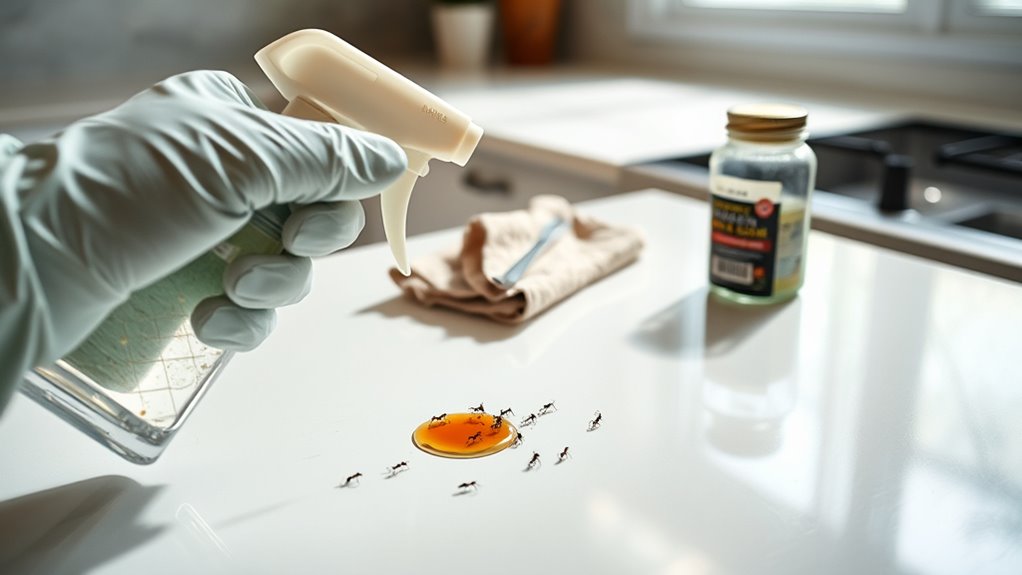
- Use gloves and an applicator tool to control the amount of chemical used and prevent skin contact or spills.
Make sure to apply treatments when food and dishes are not in use, and avoid spraying near food prep areas. Keep the area well-ventilated during and after application. Proper technique helps eliminate ants faster and keeps your home safe.
Safety Precautions to Follow
Proper application techniques help guarantee that chemical ant treatments work effectively, but safety precautions are just as important to prevent accidents or health risks. Always read the label carefully before using any chemical product, and follow the manufacturer’s instructions exactly.
Wear protective gear like gloves and a mask to avoid contact with harmful chemicals. Keep children and pets away from treated areas until the product dries completely.
Never apply treatments near food, dishes, or utensils, and avoid spraying in enclosed or poorly ventilated spaces. Store chemicals in a secure, labeled container out of reach.
If accidental exposure happens, rinse the affected area with plenty of water and seek medical attention if needed. Prioritizing safety helps protect your family while effectively controlling ants.
Tips for Maintaining a Pest-Free Kitchen Long-Term
Keeping your kitchen free of pests over the long term requires consistent habits and proactive measures. You need to stay vigilant and keep your space clean. Here are three simple tips:
- Regularly wipe down counters and sweep floors to remove crumbs and food debris that attract ants. It’s a small step that makes a big difference.
- Store food in airtight containers to prevent scent trails that lure ants inside. This keeps your kitchen less appealing to pests.
- Check and seal cracks or gaps around windows, doors, and baseboards to block entry points. It’s a smart way to keep pests out for good.
Troubleshooting Persistent Ant Problems and When to Call a Professional
Despite your best efforts, ants can sometimes stick around even after cleaning and sealing. If they keep coming back, it’s time to take a closer look. Persistent ants might mean there’s a hidden nest or an access point you haven’t found yet.
Use this decision guide to figure out what to do next:
| Issue | Solution |
|---|---|
| Ants in multiple rooms | Call a professional exterminator |
| Visible nest or large colony | Professional treatment recommended |
| No improvement after DIY efforts | Seek expert assistance |
| Signs of structural entry points | Have a pest professional seal entry points |
If DIY methods don’t work after a week or two or if you notice signs of a large infestation, it’s best to call in a professional. They can handle the problem effectively and ensure it doesn’t come back.
Frequently Asked Questions
Are There Specific Types of Ants More Common in Kitchens?
Yes, certain ants are more common in kitchens, like odorous house ants, sugar ants, and pavement ants. You’ll usually notice odorous house ants because of their strong smell when crushed.
Sugar ants are attracted to sweet foods, so they often invade pantries and countertops. Pavement ants tend to come in through cracks in the floors or walls.
Recognizing these types can help you target your ant control efforts more effectively. This way, you can eliminate the problem quickly and prevent future invasions.
How Long Does It Take to See Results After Treatment?
You’ll usually see results within a few days after treatment, but it might take up to a week for ants to completely disappear. How fast it works depends on how bad the infestation is and the treatment method you choose.
Keep an eye on the area and stay consistent with your approach. If you don’t notice improvements after a week, try reapplying or switching to a different method to make sure you get rid of the colony for good.
Can Homemade Remedies Harm Pets or Children?
Sure, homemade remedies sound charming, but they can be more dangerous than the ants themselves.
You might accidentally expose your pets or children to toxic ingredients like borax or essential oils.
Instead of risking their safety, you should opt for proven, pet-safe solutions or consult a professional.
Your little ones and beloved companions deserve better than to be unintended casualties in your ant battle.
Play it safe—think smart, not just natural.
Are There Environmentally Friendly Pest Control Options?
Yes, there are environmentally friendly pest control options. You can try natural remedies like diatomaceous earth, which is safe for pets and kids. Plant-based repellents like peppermint oil and neem oil also work well.
These options help deter ants without using harmful chemicals. Regular cleaning and sealing entry points can prevent infestations before they start.
What Signs Indicate an Ant Infestation Is Severe?
If you see large clusters of ants, extensive trails crossing multiple areas, or if they’re invading your pantry and hard to control, your infestation is serious.
You might also notice dead ants or find signs of their nest, like tiny holes or dirt piles near walls and foundations.
These signs mean you probably need stronger measures, maybe even professional pest control, to get rid of the problem effectively.
Conclusion
By following these simple steps, you’re taking control of your kitchen like a skilled captain steering clear of an unwanted invasion. Stay vigilant, keep your space clean, and use natural or chemical solutions wisely.
Remember, ants are clever but not invincible. Outsmart them before they settle in for good. With a little effort, your kitchen will stay pest-free.
A clean, ant-free kitchen shines like a guiding light of cleanliness in a sea of chaos. Controlling ants starts with simple steps that anyone can follow.
By being proactive, you can keep your kitchen safe and pest-free. A little effort now means a pest-free space tomorrow.
So, stay alert, stay clean, and keep those ants at bay with these easy strategies. Your kitchen will thank you for it.