What Is the Standard Height for Kitchen Counters?
Feeling overwhelmed by the countless choices when designing your kitchen? You’re not alone—many people struggle with finding the perfect counter height that fits both comfort and style.
The standard height for kitchen counters is 36 inches from the floor, designed for comfort during food prep and to fit common appliances and sinks. This height helps prevent back strain and works well for most people.
However, your ideal counter height can vary depending on your height and needs. If you keep exploring, you’ll find out how to determine and customize the perfect height for your kitchen.
Key Takeaways
- The standard kitchen counter height is 36 inches from the floor.
- It’s designed so that the average adult can work comfortably with slightly bent elbows.
- This height also matches standard sinks and appliances, making everyday tasks easier.
Having a consistent height helps make manufacturing, installation, and remodeling simpler.
Of course, if you have specific ergonomic needs or are taller or shorter, custom heights are available.
What Is the Standard Counter Height for Kitchens?
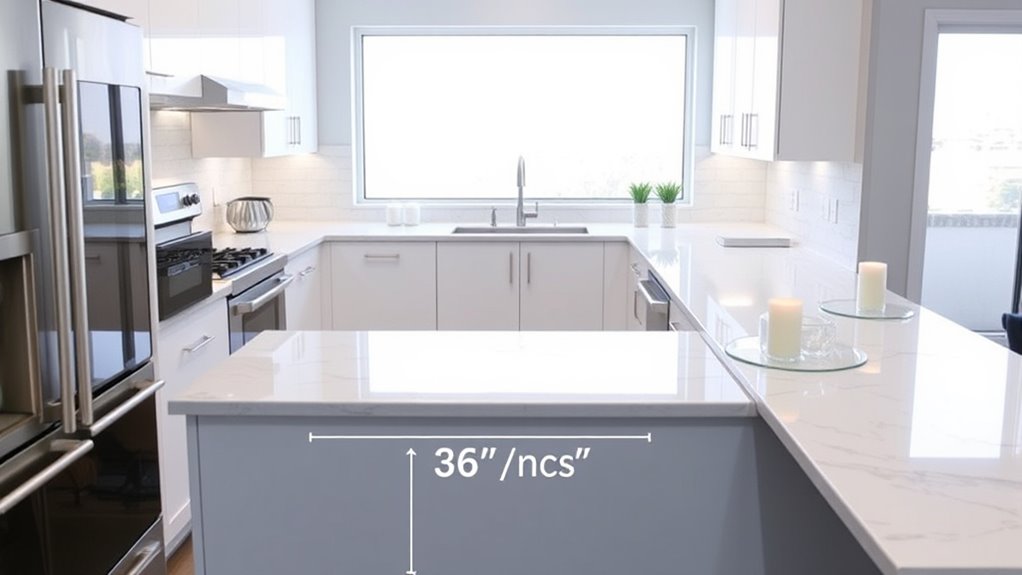
The standard counter height for kitchens is usually set at 36 inches from the floor to the countertop surface. This height is designed to fit the average person’s needs, making food prep and tasks comfortable.
When you’re standing at the counter, it should feel ergonomic, with your elbows slightly bent and your hands at a natural level for chopping, mixing, or cleaning. It also works well with standard appliances and sinks, creating a cohesive workspace.
Keep in mind, though, that personal preferences or specific needs might mean adjustments. But for most kitchens, 36 inches remains the go-to measurement, offering a balanced and functional surface for everyday use.
Why Is 36 Inches the Typical Kitchen Counter Height?
Because it offers a comfortable working height for most people, 36 inches has become the standard for kitchen counters. This height strikes a good balance between standing and reaching, making meal prep and cleanup easier.
It’s tall enough to prevent your back from bending too much, but not so high that it feels awkward. Historically, 36 inches was chosen because it fits the average height of adults, making it practical for many users.
This standardization also helps with manufacturing, installation, and remodeling. While some people might find it less ideal based on their height or specific tasks, most find 36 inches to be functional and comfortable for everyday kitchen activities.
Who Benefits From Custom Counter Heights?
If you have specific ergonomic needs or accessibility requirements, customizing your counter height can make cooking and working in your kitchen much easier.
Different users benefit when counters are tailored to their stature or mobility, which can reduce strain and discomfort.
Plus, customization offers flexibility to create a space that perfectly fits your unique lifestyle and preferences.
Ergonomics for Different Users
Different users can really benefit from custom counter heights, especially when standard measurements don’t fit their needs. If you’re taller or shorter than average, you might find standard counters uncomfortable, which can cause strain during food prep or cleaning.
For example, taller people may prefer higher surfaces to avoid bending and reduce back pain. Shorter users might need lower counters for easier access. People with joint or mobility issues also benefit from tailored heights to help prevent unnecessary strain.
Kids or teenagers may need lower counters for safe, comfortable use. Custom heights let you design a kitchen that fits your body, making it more comfortable and efficient.
Accessibility Needs Addressed
Adjusting counter height can make a big difference for people with mobility challenges or disabilities. If you use a wheelchair or walker, a lower counter allows you to work comfortably without straining or reaching awkwardly.
It also helps those with limited strength or joint issues, making everyday tasks easier. For people with visual impairments, accessible counter heights can boost safety and independence by offering better visibility and reach.
Plus, adjustable counters give caregivers flexibility when helping others, ensuring everyone can use the kitchen comfortably. Custom heights promote inclusivity, letting all users cook, prep, and clean without frustration.
Customization Flexibility
Many people can benefit from custom counter heights because they allow you to tailor your kitchen workspace to your specific needs. If you cook, entertain, or bake often, customizing your counters can make things more comfortable and efficient.
For instance, taller individuals might prefer higher counters to reduce back strain, while shorter people may find lower surfaces easier to work on. If you have hobbies like pottery or crafting, adjustable heights can make your workspace more functional.
Customization also helps those with mobility issues or disabilities by providing a more ergonomic and accessible environment. Overall, flexible counter heights create a personalized kitchen that boosts your comfort, productivity, and safety—making your space truly suited to your lifestyle.
What Factors Influence Your Perfect Kitchen Counter Height?
Your height preferences and the tasks you’ll do in the kitchen really influence the perfect counter height.
If you often prepare meals or bake, the counter should support your comfort and efficiency.
Thinking about these factors helps you pick a height that makes your kitchen both functional and comfortable.
User Height Preferences
When choosing the perfect kitchen counter height, your comfort and how you use your space are really important. Your height affects how easily you can chop, cook, or prep food without straining.
If you’re taller, a higher counter might help reduce back pain. If you’re shorter, a lower surface could feel more accessible. Think about whether you prefer standing or sitting.
Do you often entertain or cook alone? Your daily routines and physical comfort should guide your choice. Personal preferences vary—some like a slightly taller or shorter counter to match their posture.
Ultimately, customizing your counter height makes your kitchen feel natural and functional. It helps make everyday tasks easier and more enjoyable.
Kitchen Task Requirements
The tasks you do in your kitchen directly impact the ideal counter height. If you often chop vegetables, a slightly lower counter might help you work better and stay comfortable.
For baking or rolling dough, you want a counter height that lets you work without hunching or overstretching. If you regularly handle heavy or bulky foods, pick a height that reduces strain on your back and arms.
Think about your main tasks, like washing dishes or assembling ingredients. How you move and work in your space matters. Choosing the right counter height makes your kitchen more efficient and less tiring.
How to Measure and Adjust Your Counter Height During Renovation
Measuring and adjusting your counter height accurately during renovation ensures a comfortable and functional kitchen workspace. First, stand upright and measure from the floor to your elbow’s bend, which usually shows your ideal counter height. Use a tape measure for accuracy.
If you want a custom height, add or subtract a few inches based on your comfort and needs. When adjusting, mark the new height on the wall or cabinetry for reference. Make sure to consider the thickness of the countertops or materials you’ll be installing.
Double-check your measurements before cutting or installing to avoid mistakes. Remember, small adjustments can make a big difference in your kitchen’s usability. Take your time to measure carefully and verify your markings before proceeding.
Are There Different Counter Heights for Specific Kitchen Tasks?
Have you ever noticed that some kitchen tasks feel more comfortable or efficient at different counter heights?
For example, food prep often works best at a slightly lower height so you don’t strain your back or shoulders. Baking tasks like kneading dough or rolling out pastry might need a taller surface for better support.
When washing dishes or cleaning vegetables, a standard or slightly lower height can help reduce fatigue. Conversely, bar-height counters for serving or casual dining are higher to fit seating comfortably.
Customizing counter heights for specific tasks can make your kitchen more ergonomic and enjoyable to use.
While the standard height suits most activities, tailoring heights for particular tasks can boost comfort and efficiency—especially if you spend lots of time cooking or prepping.
Tips for Choosing the Best Counter Height for Your Lifestyle
Thinking about the best counter height for your kitchen depends on your daily routines and comfort preferences.
First, consider how you use your space—do you cook often or entertain guests? If you spend a lot of time chopping and preparing food, a lower counter around 36 inches might be more comfortable.
For tasks like baking or detailed work, a slightly higher surface can reduce strain. If you often sit at your counters, opt for a height that allows comfortable seating, typically around 28-30 inches.
Also, think about your height and any physical limitations. Adjusting counter height can improve ergonomics and make your kitchen more functional.
Ultimately, choose a height that fits your lifestyle to create a more enjoyable and efficient workspace.
Frequently Asked Questions
Are There Universal Standards for Kitchen Counter Heights Worldwide?
There aren’t universal standards for kitchen counter heights worldwide, but most follow common guidelines. Typically, counters are about 36 inches (91 cm) high, designed to suit the average adult.
However, this can vary based on country, culture, or personal preferences. When planning your kitchen, think about your height and needs to make sure it’s comfortable.
Custom adjustments can make cooking and prep work easier and more ergonomic.
How Does Counter Height Affect Kitchen Safety and Ergonomics?
Counter height directly impacts your safety and comfort while working in the kitchen. When counters are too high or low, you might strain your back, shoulders, or wrists, which can increase the risk of injury.
Having the right height allows you to work more efficiently, helping you reduce fatigue and prevent accidents. Adjusting the counter to match your height makes tasks like chopping or washing dishes easier and safer.
Ultimately, choosing the right counter height creates a healthier, more comfortable cooking environment for everyone.
Can Adjustable-Height Counters Be a Practical Solution?
Yes, adjustable-height counters can be a practical solution, especially if multiple people of different heights use the kitchen. They offer flexibility, allowing you to customize the height for comfortable cooking or cleaning.
You can easily switch between tasks, which helps reduce strain on your back and shoulders. However, be sure to consider stability and how easy it is to adjust the counters to ensure safety and convenience.
What Materials Are Best for Counters at Different Heights?
Imagine slicing vegetables on a sleek, granite surface or baking bread on warm, wooden counters—your choice of material shapes your kitchen experience.
For standard heights, granite and quartz are durable and stylish, perfect for busy countertops. If your counters are adjustable, consider lighter materials like wood or laminate, which are easier to modify.
Each material offers unique benefits, so choose one that matches your cooking style and aesthetic.
How Do Counter Height Preferences Vary for Children or Elderly Users?
You’ll want to adjust counter heights to suit children or elderly users. For kids, lowering counters to about 30 inches makes them more accessible and encourages independence and safety.
For seniors, consider slightly higher counters around 34 inches. This can help reduce strain on the back and knees, making it more comfortable for everyday use.
You might also add adjustable or multi-height counters. These give everyone a comfortable, ergonomic workspace that can adapt to their specific needs.
Conclusion
Imagine yourself standing at a kitchen counter, ready to chop vegetables or serve a meal, feeling just the right height beneath your hands. When you choose the perfect counter height, every task feels effortless, and your space becomes more inviting.
Standard kitchen counters are typically 36 inches high, which suits most people for everyday tasks. But if you’re taller or shorter, customizing the height can make a big difference.
Whether you stick with the standard 36 inches or customize it, your kitchen transforms into a welcoming hub where cooking feels natural and comfortable. In the end, knowing the standard height for kitchen counters helps you create a space that’s both functional and enjoyable.