
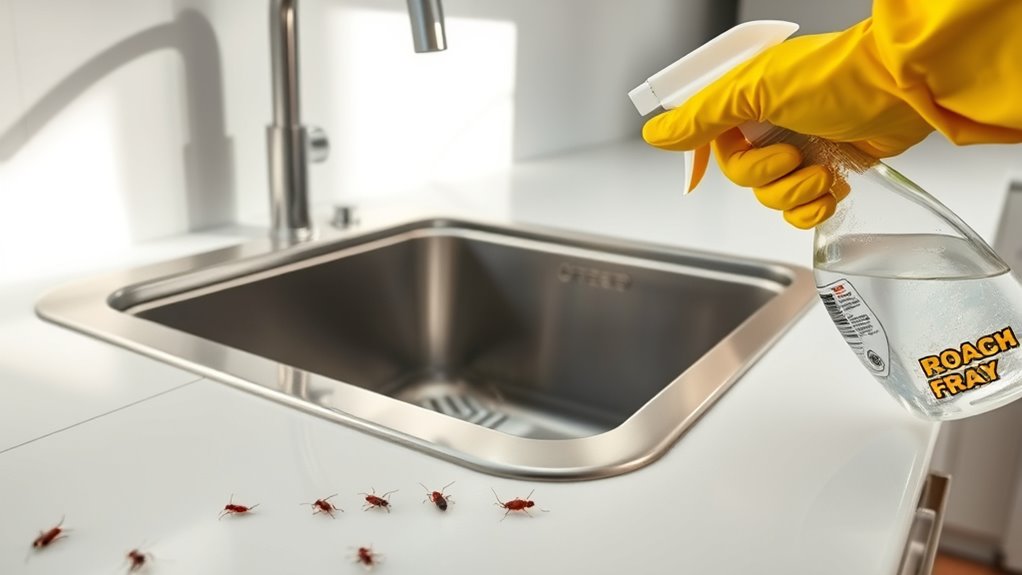
Effective Ways to Get Rid of Roaches in Your Kitchen
Dealing with roaches in your kitchen can be incredibly frustrating, and you’re not alone—many people struggle with keeping these pests at bay.
It’s a common problem that can make your space feel uncomfortable and unclean.
To get rid of roaches in your kitchen, use a mix of natural remedies like baking soda and sugar, diatomaceous earth, and essential oils, combined with proper sanitation.
Seal cracks, store food in airtight containers, and keep surfaces clean to prevent pests.
You can also consider chemical treatments like gel baits or insecticidal dust for tough infestations.
If you want to learn more about effective strategies, keep exploring the best methods to keep roaches out for good.
Key Takeaways
- Seal cracks, fix leaks, and store food in airtight containers to keep roaches from getting in and tempting them.
- You can try natural remedies like baking soda and essential oils, or use chemical bait gels for targeted control.
- Keeping your kitchen clean is key. Make sure to remove crumbs, spills, and clutter every day to make it less inviting for roaches.
- Also, consider applying diatomaceous earth or natural repellents around entry points and hiding spots to help keep them away.
- If the problem doesn’t go away or gets worse, don’t hesitate to call in professional pest control. Sometimes, DIY methods just aren’t enough.
Why Roaches in Your Kitchen Are a Problem
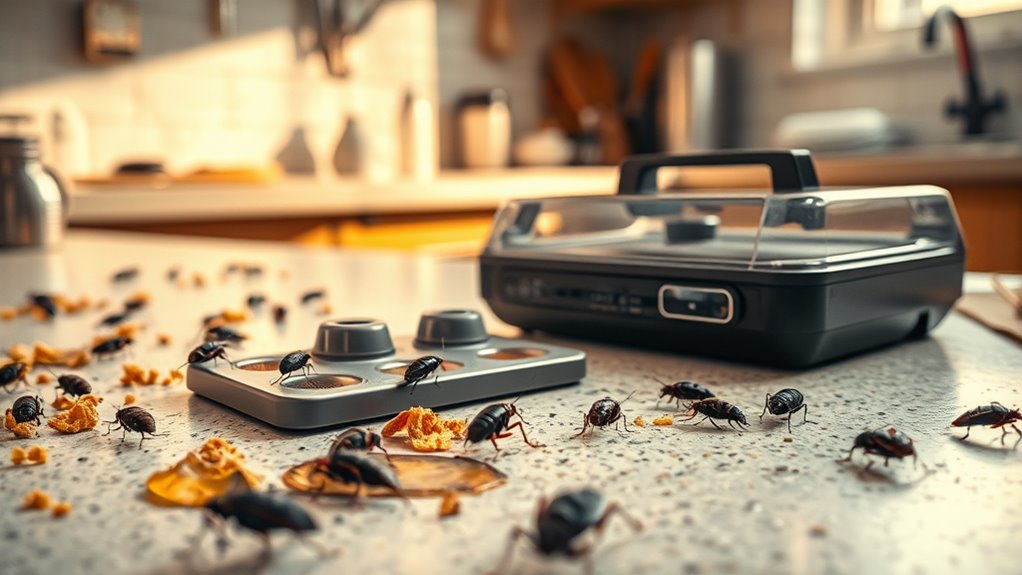
Roaches in your kitchen are a serious health concern because they carry bacteria, viruses, and parasites that can contaminate your food and surfaces. When they crawl across countertops, utensils, or food packaging, they leave behind germs that can cause food poisoning, diarrhea, and other illnesses.
Roaches spread germs that can cause food poisoning and illness in your kitchen.
They’re also known to trigger allergies and asthma, especially in sensitive people. Their presence points to unsanitary conditions, and their droppings, shed skins, and secretions can make your kitchen unsafe.
Plus, roaches reproduce quickly, which makes an infestation harder to control over time. If you see even one, it’s a sign your kitchen needs immediate attention.
Ignoring the problem only raises health risks and makes it more difficult to get rid of these pests completely.
How to Tell if You Have a Roach Infestation
You’ll know you have a roach problem if you see them crawling around or notice their droppings and egg casings.
Unpleasant odors are also a strong sign of an infestation.
Keep an eye out for these clues so you can catch the problem early.
Visible Roach Sightings
Have you noticed small dark spots or moving shapes in your kitchen or bathroom? That’s a clear sign you might have a roach problem. These insects are nocturnal, so spotting them during the day usually means an infestation is well-established.
Look under sinks, behind appliances, or in cracks and crevices—these are common hiding spots. You might see them scurrying across counters or floors, especially near food or water sources.
Sometimes, you’ll notice shed skins or tiny egg casings, which indicate active breeding. If you catch sight of even a single roach, it’s a sign that your infestation is likely larger than it appears.
Quick action is essential to prevent the problem from escalating and spreading throughout your home.
Unpleasant Odors Often Present
When roaches infest your home, they often produce a distinct, musty odor that can serve as an early warning sign. This smell is usually persistent and can linger in areas like the kitchen or under the sink.
If you notice a strange, oily scent that you can’t identify, it might be caused by the roaches’ pheromones and waste. The odor tends to grow stronger as the infestation worsens.
Pay attention to this scent, especially if it’s new or more intense than usual. Relying solely on sight can be tricky, but a persistent musty smell is a clear sign that you should investigate further.
Addressing the odor early can help prevent the problem from escalating into a full-blown infestation.
Egg Casings and Droppings
Egg casings and droppings are telltale signs of a roach infestation that you shouldn’t overlook. Egg casings, small and leathery, often hide in cracks, behind appliances, or under sinks. Droppings resemble black specks or stains, typically found near food sources and along baseboards.
Noticing these signs indicates a growing roach problem that needs immediate action. They show how widespread the infestation is and help identify high-traffic areas.
These clues also signal the need to clean thoroughly and warn you about potential health risks. Plus, they remind you to inspect hidden spots regularly to catch problems early.
Fast Ways to Get Rid of Roaches Naturally and Safely
If you want to quickly and safely eliminate roaches without using harsh chemicals, natural remedies can be very effective. One simple trick is to mix baking soda and sugar; the sugar attracts the roaches, while the baking soda reacts with their stomach acids, killing them.
You can also sprinkle diatomaceous earth around entry points and hiding spots. It damages their exoskeletons and causes dehydration, which helps control the infestation. Essential oils like peppermint, tea tree, or eucalyptus act as natural repellents—just mix a few drops with water and spray in problem areas.
Vinegar and water solutions are great for cleaning surfaces and deterring roaches from coming back. These natural methods are safe, eco-friendly, and quick to use, making them an effective way to reduce roach populations.
Chemical Treatments for Roaches: When and How to Use Them
When using chemical treatments for roaches, it’s important to follow safe application methods to protect your family and pets.
Choose the right chemicals based on how bad the infestation is and the area you need to treat.
Always read and follow the label instructions carefully to make sure you’re using these products effectively and safely.
Safe Application Methods
Using chemical treatments safely is key to getting rid of roaches without putting your health or the environment at risk. Always follow the manufacturer’s instructions carefully to avoid overusing or misusing the products.
Wear protective gear like gloves and masks, and keep children and pets away during application. Focus on treating specific areas like cracks, crevices, and behind appliances instead of spraying broad surfaces.
After applying, ventilate the space to disperse fumes. Store chemicals securely, away from food and water sources. Regularly clean the affected areas to prevent re-infestation.
Properly discard empty containers and monitor the treatment results before reapplying. Following these steps helps ensure safe, effective pest control with minimal health and environmental risks.
Appropriate Chemical Choices
Choosing the right chemical treatments is key to effectively getting rid of roaches without taking on unnecessary risks. You want to pick products that are specifically labeled for cockroach control, like gel baits, dusts, or sprays.
Gel baits are great for targeting cracks and crevices where roaches like to hide. Insecticidal dusts can be applied under appliances or behind cabinets, but handle them carefully to avoid inhaling dust.
Sprays work well for quick knockdowns but should be used sparingly and in well-ventilated areas. Always read the labels for safety instructions, and avoid overusing chemicals to protect your health.
Combining chemical treatments with good sanitation practices makes your efforts more effective. This approach helps prevent future infestations and keeps your home safer.
When choosing and applying chemicals correctly, they become a powerful tool in your pest control plan.
Preventative Measures to Keep Roaches Out for Good
To keep roaches out for good, you need to block their entry points and eliminate attractants. Start by sealing cracks and gaps around doors, windows, and pipes.
Keep your kitchen tidy—don’t leave dishes, crumbs, or food out overnight. Store food in airtight containers to prevent attracting roaches. Fix leaks promptly since water sources are essential for their survival.
Regularly dispose of trash and use trash cans with tight-fitting lids. Also, remove clutter like cardboard boxes and newspapers where roaches can hide.
- Seal all cracks and gaps to deny entry
- Store food securely in airtight containers
- Fix leaks and eliminate moisture sources
- Keep your kitchen clean and free of crumbs
- Reduce clutter to minimize hiding spots
Deep Cleaning Tips to Maintain a Pest-Free Kitchen
Maintaining a clean kitchen is one of the best ways to keep roaches at bay. Regularly wipe down counters, sinks, and stovetops to get rid of food residue that attracts pests.
Sweep and mop the floors daily to remove crumbs and spills. Don’t forget to check behind appliances, inside cabinets, and under sinks—those hidden spots are prime hiding places.
Empty trash cans often and use sealed containers for food storage to stop pests from getting in. Clean greasy surfaces with a degreaser to remove any lingering residues.
Declutter your countertops and cabinets to make it harder for pests to hide. Wash dishes promptly and dispose of food scraps properly.
Consistent deep cleaning breaks up roach habitats, making your kitchen less inviting and pest-free.
When to Call a Professional Pest Control Service
Sometimes, despite your best efforts, roaches stick around and become hard to control on your own. If you’ve tried thorough cleaning, baiting, and sealing entry points without success, it’s probably time to call a professional. They have access to stronger treatments and the expertise to get rid of stubborn infestations effectively.
You should consider calling a pest control service if the infestation covers multiple rooms or floors. Also, if roaches keep appearing despite your ongoing DIY efforts, it’s a sign you might need professional help. Increased sightings or droppings are another warning.
If you notice a risk to health or allergies, don’t wait — get help. Sometimes, the problem gets worse after initial treatments, which means it’s time to call in the pros. Recognizing when DIY isn’t enough can save you time, frustration, and potential health risks.
A professional can assess the situation accurately and develop a targeted plan to eliminate the problem for good.
Frequently Asked Questions
How Long Does It Take to Fully Eliminate a Roach Infestation?
It typically takes about two to six weeks to fully eliminate a roach infestation, depending on how bad it is.
You need to stay consistent with your treatment methods, like using baits, traps, and keeping things clean.
Keep in mind, some roaches hide deep in cracks or behind appliances, so patience is key.
Regular inspections and reapplying treatments help target remaining roaches and eventually get rid of the problem completely.
Are Homemade Traps Effective for Long-Term Roach Control?
Homemade traps can help temporarily, but they usually aren’t enough for long-term control. You might see some success with sugar and baking soda or sticky traps, but roaches often outsmart these makeshift methods.
To genuinely get rid of roaches, combine traps with consistent cleaning, sealing entry points, and professional treatments. Relying only on homemade traps risks ongoing pest problems.
Using a mix of strategies ensures a more permanent, pest-free pantry. It’s the best way to keep roaches out for good.
Can Certain Foods Attract Roaches Into My Kitchen?
Yes, certain foods can attract roaches into your kitchen. They’re drawn to crumbs, greasy residues, and sweet or starchy items like bread and sugar.
If you leave food out or don’t clean up spills promptly, you create an inviting environment for roaches. To prevent this, store food in airtight containers, clean surfaces regularly, and dispose of trash promptly.
Keeping your kitchen tidy helps reduce the chances of roach infestations.
What Are the Health Risks Associated With Roach Bites?
Roach bites are rare, but they can pose health risks. About 30% of people develop allergic reactions, like asthma or skin rashes, from roaches.
If a roach bites you, it could transmit bacteria or parasites, leading to infections or food poisoning.
You should see a doctor if you notice bites or allergic symptoms, especially since roach infestations can worsen asthma or trigger other allergic reactions.
How Often Should I Reapply Natural Roach Repellents?
You should reapply natural roach repellents every one to two weeks for maximum effectiveness. Regular reapplication keeps the repellents strong and working to deter roaches from your kitchen.
If you notice roaches coming back or the scent fading, try reapplying weekly or every two weeks. Keeping your space clean and dry helps too, making it less attractive to roaches and helping your efforts last longer.
Conclusion
Don’t wait until the problem spirals out of control. Act now to reclaim your kitchen from roaches. Whether you try natural remedies, chemical treatments, or call in experts, the key is consistency.
But what if these methods aren’t enough? The next step could be more surprising than you think. Stay vigilant, keep your kitchen spotless, and prepare yourself. Your pest-free home might be closer than you realize, just around the corner.
Remember, tackling roaches in your kitchen requires persistence and the right approach. With these effective strategies, you can finally get rid of roaches and enjoy a cleaner, healthier space.