7 Easy Tips to Organize Your Kitchen Efficiently
Many people struggle with keeping their kitchens organized and clutter-free. It’s easy for everything to feel chaotic, making meal prep frustrating and time-consuming. If you’re tired of digging through piles of stuff, you’re not alone.
Start by evaluating your kitchen to spot problem areas and remove rarely used items. Declutter, keeping only essentials and items you love, then group similar tools together.
Use smart storage solutions like wall-mounted racks and labeled containers to maximize space.
Create dedicated zones for cooking, prep, and cleanup to boost efficiency. Regularly check and tweak your organization to keep everything tidy.
Keep going, and you’ll uncover even more simple tips to make your kitchen work better for you.
Key Takeaways
– Assess and declutter by removing unused or rarely used items to free up space.
Take a good look at what you actually use in your kitchen. If something hasn’t been touched in months, consider donating or storing it elsewhere.
Creating dedicated zones for cooking, prep, and cleaning can really boost your workflow.
Think about how you move through your kitchen and organize each area accordingly.
Use vertical storage options like wall-mounted racks and shelves for better organization.
This way, you can save counter space and keep your essentials within easy reach.
Label containers clearly and group similar items together for quick access.
It makes finding what you need faster and keeps everything looking tidy.
Finally, maintain regular cleaning routines and re-evaluate your organization.
This helps keep your kitchen efficient and clutter-free over time.
Assess Your Kitchen and Find Problem Spots
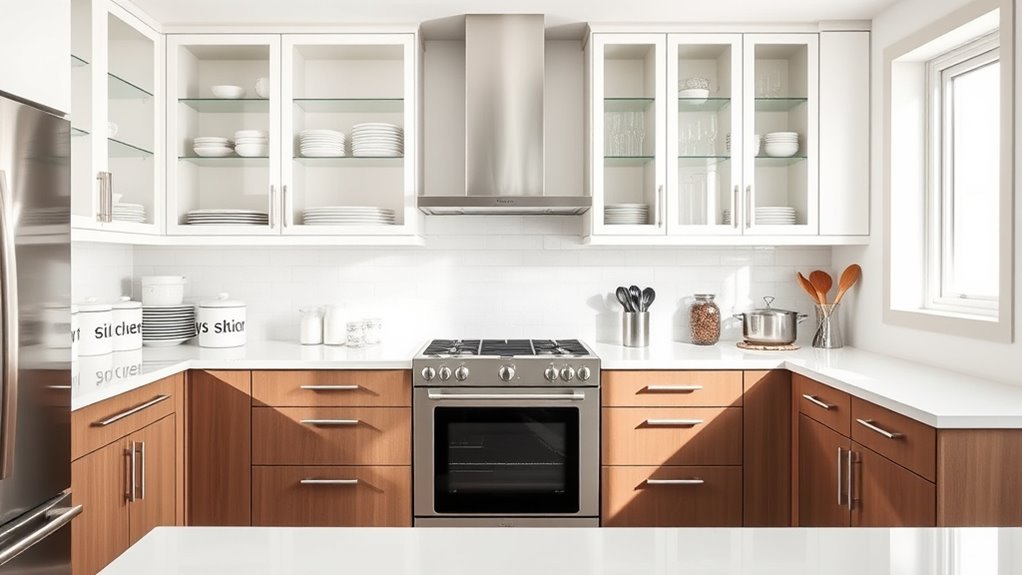
Start by taking a good look at your kitchen and identifying areas that cause clutter or inefficiency. Notice where things pile up or get lost, like overflowing drawers or unused counter space. Pay attention to frequently used items—are they easy to reach or buried behind other stuff?
Examine your cabinets, shelves, and counters for problem spots. Are there items you rarely use that take up valuable space? Do you see any awkwardly placed appliances or utensils? Spotting these issues now helps you understand what needs fixing.
Don’t rush—be thorough. The goal is to identify the specific trouble areas that slow you down or create messes so you can focus your efforts on improving those problem spots in the next steps.
Declutter and Organize What You Use and Love
Once you’ve identified the problem areas in your kitchen, it’s time to focus on decluttering and organizing the items you actually use and love. Start by removing everything from your cabinets and countertops. Touch each item and ask yourself if you’ve used it in the past year or if it brings you joy.
If not, set it aside to donate or discard. Keep only the essentials and your favorite tools, and put them where you can easily access them. Group similar items together, like baking supplies or utensils.
This process helps you see what you truly need and creates a streamlined space. Remember, decluttering isn’t just about tidiness. It’s about making your kitchen more functional and enjoyable to use daily.
Use Smart Storage Solutions to Maximize Space
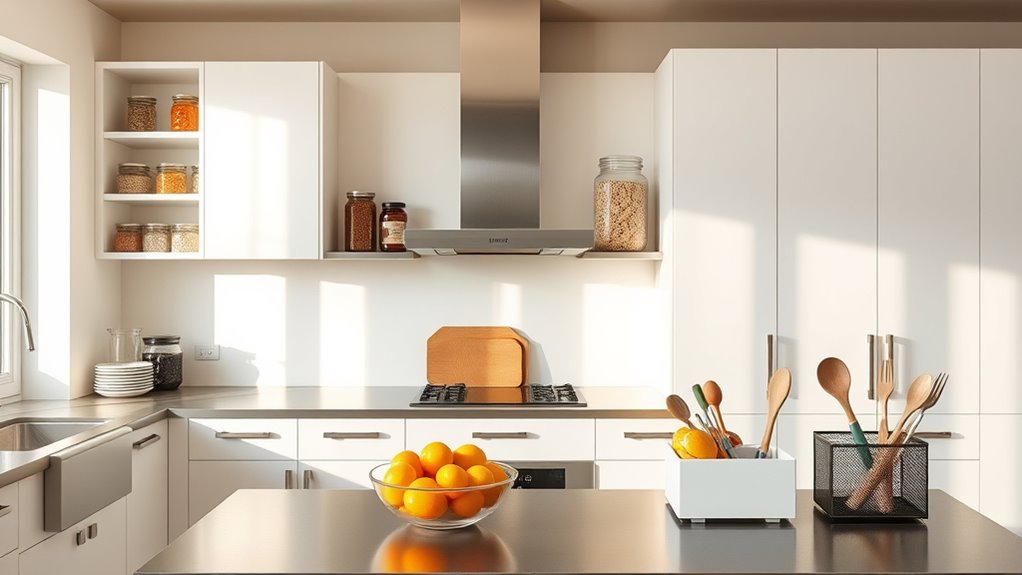
To make the most of your kitchen space, consider using vertical storage options like wall-mounted racks or shelves. They help you take advantage of unused wall space and keep essentials within reach.
Incorporate multi-functional containers that serve more than one purpose. This saves room and helps reduce clutter on your countertops and cabinets.
These smart solutions keep everything accessible while maximizing your available space, making your kitchen more organized and efficient.
Utilize Vertical Storage Options
Maximizing your kitchen space often comes down to thinking vertically. You can turn unused wall space into valuable storage by adding shelves, hanging racks, or pegboards. This keeps countertops clear and items within reach.
Use wall-mounted racks for pots, pans, or utensils, freeing up cabinet space. Install hooks for mugs or utensils to make them easily accessible. Vertical storage solutions are perfect for small kitchens, creating organization without clutter.
Consider adding a tall pantry or stacking containers to maximize height. Here’s a quick guide:
| Storage Option | Ideal Use |
|---|---|
| Wall Shelves | Spices, cookbooks, decorative items |
| Hanging Racks | Pots, pans, utensils |
| Pegboards | Small tools, kitchen gadgets |
| Tall Cabinets | Bulk items, less-used appliances |
Use these smart solutions to make every inch count.
Incorporate Multi-Functional Containers
Incorporating multi-functional containers into your kitchen helps you make the most of limited space by combining storage solutions. These versatile containers can serve multiple purposes, which reduces clutter and frees up cabinet or counter space.
For example, try stackable containers that work as both storage and serving dishes or choose jars with built-in measuring cups for quick ingredient access. Bento-style boxes are great for meal prep and snacks, while nesting containers save space when not in use.
Look for transparent options so you can easily see what’s inside, and pick durable materials like glass or high-quality plastic. Choosing containers that serve more than one function helps you stay organized and creates a more efficient, clutter-free kitchen.
Label and Store With Clear Containers for Easy Access
Using clear containers makes it easy to see what’s inside at a glance, so you won’t waste time searching. Labeling each container helps you identify ingredients quickly and keeps your kitchen organized.
This simple step boosts visual clarity and makes your cooking process more streamlined. It’s a small change that can really make a difference in your kitchen routine.
Visual Organization Benefits
Labeling and storing items in clear containers can really improve the visual organization of your kitchen. When everything is visible at a glance, you save time searching for ingredients or tools.
Clear containers create a tidy, uniform look, reducing clutter and making your space appear more open. You can easily identify contents without opening each container, which streamlines your workflow.
This visual clarity helps you maintain order and prevents over-purchasing since you see what you already have. Plus, consistent storage makes your kitchen look more appealing and inviting.
With everything arranged neatly and visibly, you’ll feel more motivated to keep your space organized. Overall, clear containers boost both the aesthetics and functionality of your kitchen, making daily tasks quicker and more enjoyable.
Easy Ingredient Identification
Clear containers with labels make it easy to identify ingredients at a glance, saving you time when cooking or meal prepping. When you store items in transparent containers, you can instantly see what’s inside, so you don’t have to open multiple jars or boxes.
Labeling each container with the ingredient name guarantees that everyone in your household can find what they need quickly. Use waterproof markers or printed labels for clarity and durability.
Store similar items together—like flours, grains, and nuts—in designated containers to streamline your workflow. This not only keeps your kitchen organized but also reduces spills and waste because you know exactly what’s inside each container.
Create Dedicated Zones for Cooking, Prep, and Cleanup
To make your kitchen workflow smoother, set up dedicated zones for cooking, prep, and cleanup. Place your cooking area near the stove, oven, and main ingredients like pots, pans, and spices.
Keep your prep station close to your ingredients and cutting tools, with knives, cutting boards, and bowls within easy reach. Your cleanup zone should include a sink, trash can, and dish rack, all positioned for quick access after cooking.
Clearly defining these zones helps reduce clutter and prevents you from constantly moving around. Use storage containers and labels to keep tools and ingredients organized within each zone.
This setup makes working in your kitchen more efficient, cuts down on mess, and creates a space that’s more enjoyable to cook in.
Add Time-Saving Tools and Organizers
Boost your kitchen’s efficiency by incorporating time-saving tools and organizers that streamline your cooking process. Invest in a good set of stackable containers to keep ingredients fresh and easily accessible.
Use pull-out shelves or drawer dividers to organize utensils, spices, and pantry items, so everything’s within reach. Consider a multi-tiered rack for your baking sheets and cutting boards, saving space and reducing clutter.
A digital timer can help you keep track of multiple dishes at once, preventing overcooking. Magnetic strips for knives or wall-mounted spice racks free up counter space while keeping essentials handy.
These tools minimize search time and simplify your workflow, allowing you to focus more on cooking and less on rummaging through clutter. Efficient tools make kitchen organization quick and effortless.
Keep Your Kitchen Tidy With Routine Checks and Adjustments
Maintaining a tidy kitchen means doing regular checks and adjustments to keep clutter at bay. Spend a few minutes each week scanning your countertops, cabinets, and drawers.
Take out expired food, broken tools, or items you no longer use. Rearrange things to make the most of your space and make items easy to reach. Keep your most-used tools close by and store infrequently used items in less accessible spots.
Make it a habit to wipe down surfaces during these checks to stay clean. If something isn’t working, don’t be afraid to tweak your organization. Maybe a new drawer divider or different shelf heights will help.
Sticking to this routine with small, regular tweaks will keep your kitchen neat, functional, and a joy to use over time.
Frequently Asked Questions
How Often Should I Reassess My Kitchen Organization?
You should reassess your kitchen organization every three to six months. Regular checks help you spot clutter, unused items, or areas that need better storage solutions.
If your space starts feeling chaotic or inefficient, do a quick review sooner. Staying proactive keeps your kitchen functional and tidy.
What Are the Best Tools for Small Kitchen Spaces?
You should use space-saving tools like stackable containers, slim pull-out organizers, and magnetic strips for knives. Compact dish racks and foldable cutting boards help maximize limited counter space.
Consider hanging pots and pans or installing hooks under cabinets to free up drawers. Using multi-purpose tools, like a combo can opener and bottle opener, keeps your kitchen clutter-free.
These tools help you make the most of your small kitchen, keeping it organized and functional.
How Do I Prevent Clutter From Accumulating Again?
Did you know that the average kitchen has over 75 items? To keep clutter from returning, set aside 10 minutes weekly to tidy up.
Regularly assess what you no longer use and donate or discard it. Use clear containers for easy visibility and assign specific spots for your most-used items.
Sticking to these habits helps prevent clutter from piling up, making your kitchen more functional and a nicer place to cook.
Which Storage Solutions Are Eco-Friendly and Sustainable?
You can choose eco-friendly storage solutions like bamboo containers, glass jars, or stainless steel canisters, which are durable and recyclable. Opt for compostable or biodegradable materials for wraps and bags. Reuse and repurpose existing containers whenever possible.
Avoid plastic options that harm the environment. By selecting sustainable materials, you reduce waste and minimize your ecological footprint. This helps make your kitchen both organized and eco-conscious.
How Can I Involve Family Members in Organizing?
Getting your family involved is a win-win; it turns chores into a team effort. You can assign each person specific tasks, like organizing utensils or cleaning shelves, making it feel less like a burden.
Encourage everyone to share ideas and celebrate small victories together. This not only speeds up the process but also teaches responsibility.
Conclusion
By following these tips, you’ll turn your kitchen into a well-organized, efficient space. Think of it like a well-tuned machine—each part working seamlessly together. Regularly assess and adjust, just like tuning a guitar, to keep everything in harmony.
When everything has its place, cooking becomes easier and more enjoyable. So, take a proactive approach and watch your kitchen transform into a clutter-free haven that saves you time and stress.
Organizing your kitchen with these simple steps will make your daily routines smoother and more fun. With a little effort, you’ll create a space that’s both functional and inviting.